







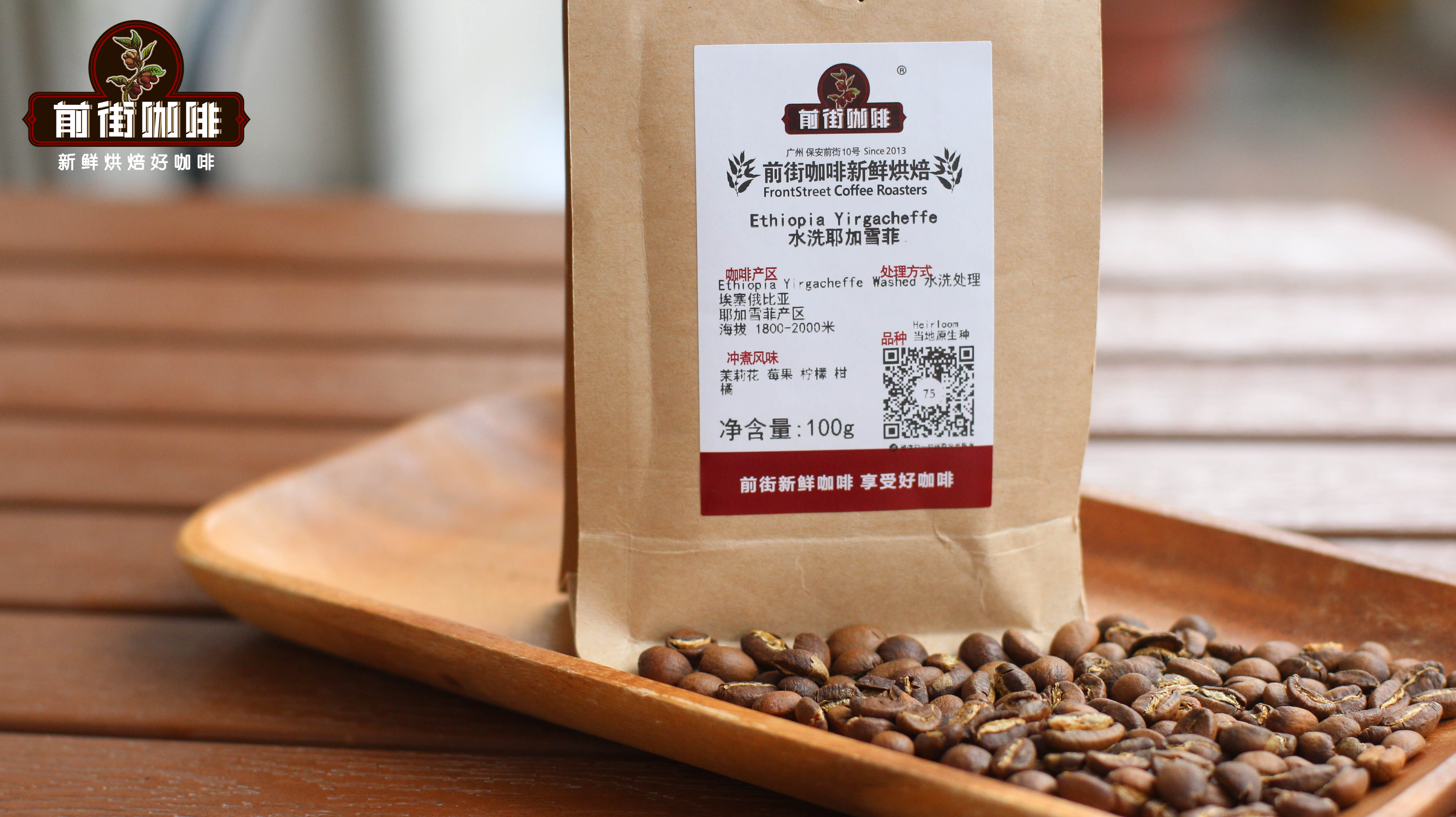
Yirgacheffe is Ethiopia's most iconic specialty coffee region, and its two processing methods—natural and washed—produce截然different flavor profiles. From the perspective of Front Street Coffee, this article systematically reviews Yirgacheffe's regional background, grading system, and processing differences, and takes an in-depth look at how natural and washed Yirgacheffe differ in green bean appearance, roasting curves, cupping flavors, and pour-over parameters, helping you fully understand the charm of this African coffee.
In the landscape of African specialty coffee, Front Street Coffee believes that Ethiopia's Yirgacheffe is an unavoidable presence. Its delicate aroma and elegant acidity have captivated countless coffee lovers. In 2006, Starbucks attempted to register "Yirgacheffe" as a trademark, sparking a trademark dispute with Ethiopia. The dispute lasted two years, and in the end Ethiopia prevailed: Starbucks withdrew the relevant trademark applications, the two sides reached a settlement, and they continued to purchase coffee beans through a partnership.
Although Front Street Yirgacheffe's flavor is highly recognizable, a deeper look reveals that different processing methods give it distinct expressions.
Front Street Coffee has set aside a small display area in its stores to showcase coffee beans from different processing methods. After observing, it becomes clear that washed beans have noticeably more silver skin remaining on the surface, with the most obvious sign being the silver line down the center of the bean. Beyond appearance, the flavor differences are equally striking. Today Front Street Coffee will discuss the differences between washed Yirgacheffe and natural Yirgacheffe.
Yirgacheffe Coffee Region
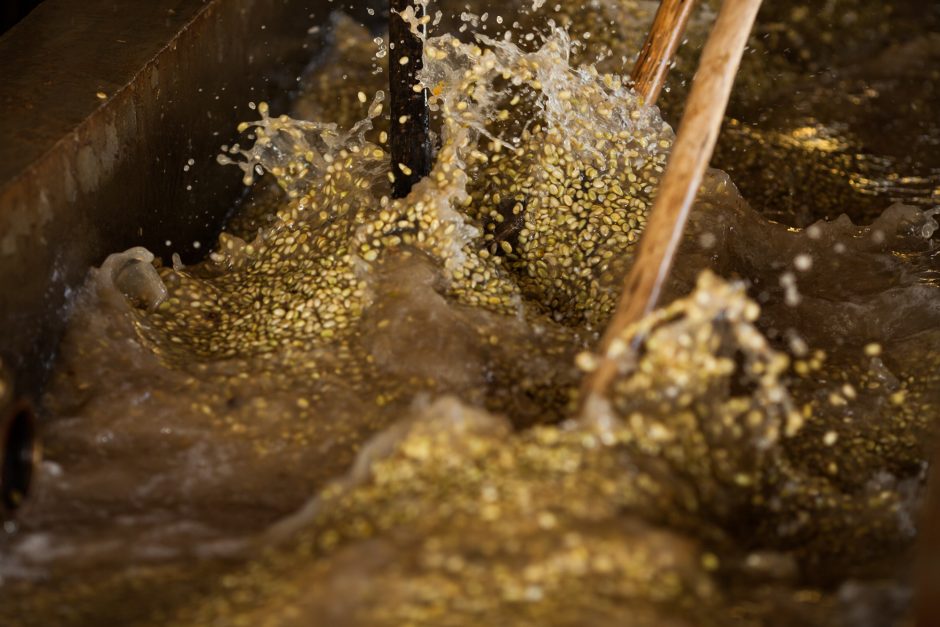
Yirgacheffe has always been one of Ethiopia's most important coffee-producing areas. It originally belonged to the Sidamo region, and only later, because of the unique flavor of its coffee beans, was it separated into its own region. It can be said that Yirgacheffe is not only the name of a place of origin, but also synonymous with a particular flavor. The region is high-altitude, at around 2,000 meters above sea level. More than 40 cooperatives are distributed across the area, and coffee farming is mainly carried out through family-run operations.
Within the Yirgacheffe region there are also many well-known micro-regions, such as Kochere, Misty Valley, and Gedeb. These micro-regions all have excellent cooperatives, and the Yirgacheffe coffee beans they produce each have their own distinctive flavor characteristics.
Yirgacheffe Coffee Bean Grading
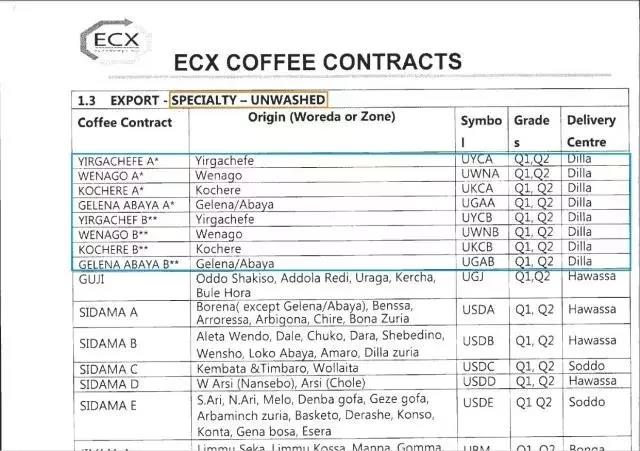
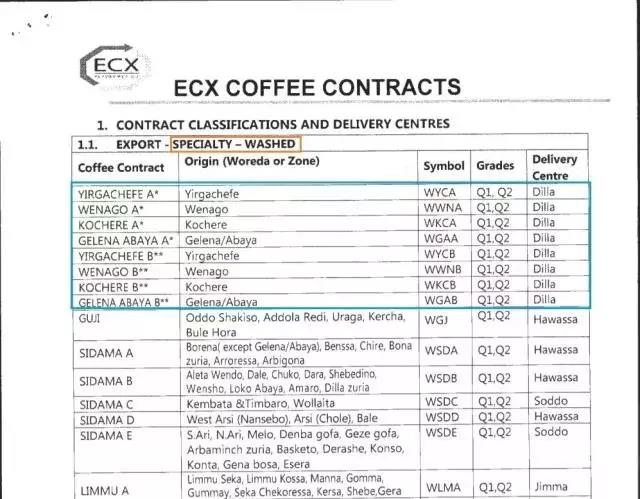
Front Street Yirgacheffe's variety is a local heirloom, a small-bean type with a relatively round shape and small bean size, mostly between 14 and 15 screen sizes. The ECX (Ethiopia Commodity Exchange, established in 2012) grading system for Ethiopian coffee beans covers two aspects.
The first is defect-rate grading: whether washed or natural, if exported green beans contain no more than 3 defective beans per 300 grams, they are Grade G1; if they contain 4 to 12 defective beans per 300 grams, they are Grade G2.
The second is flavor evaluation grading: G1 and G2 coffee beans are assessed according to the SCA (Specialty Coffee Association of America) cupping standards. A score of 85 or above is Grade Q1, while 80 to 84.75 is Grade Q2.
Yirgacheffe Coffee Processing Methods
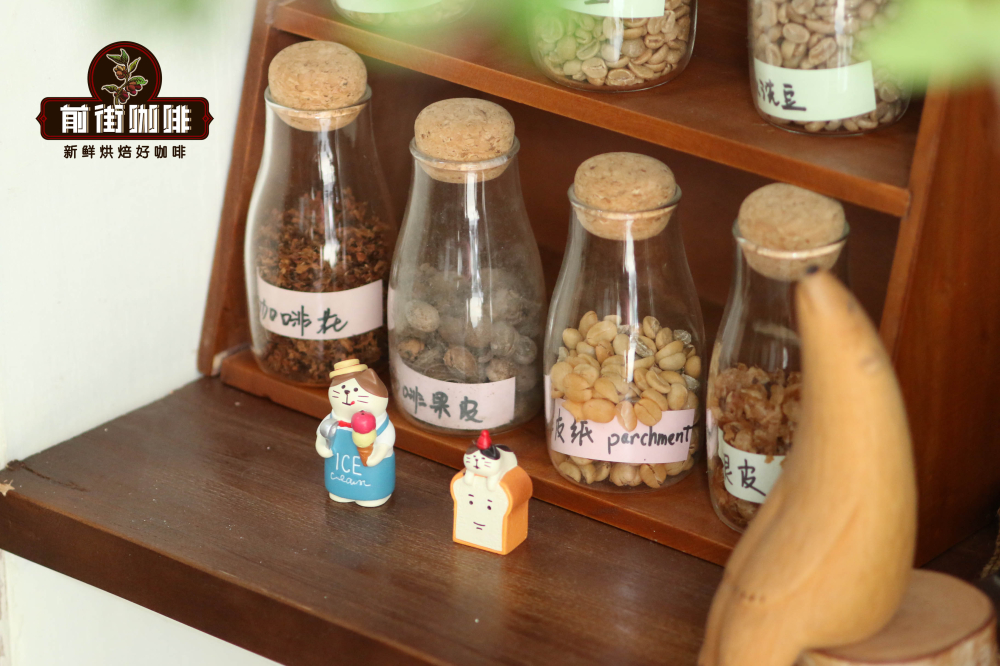
Ethiopia traditionally used the ancient natural processing method, but since the washed method was introduced in 1972, after decades of development, the proportion of washed processing has far surpassed natural processing. Washed processing can effectively reduce defects and make the flavor cleaner and more transparent.
However, some farm owners still have a special fondness for natural processing. The coffee merchant Baghsi, missing the flavor of traditional natural beans and unwilling to see natural techniques gradually replaced by washed methods, improved the natural processing method to enhance flavor while reducing defect rates. He launched several Misty Valley coffee beans, which achieved great success, and natural Yirgacheffe thus regained its market position.
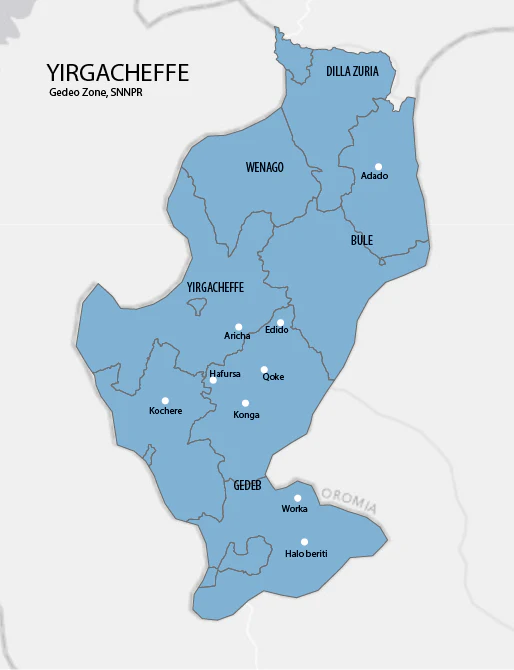
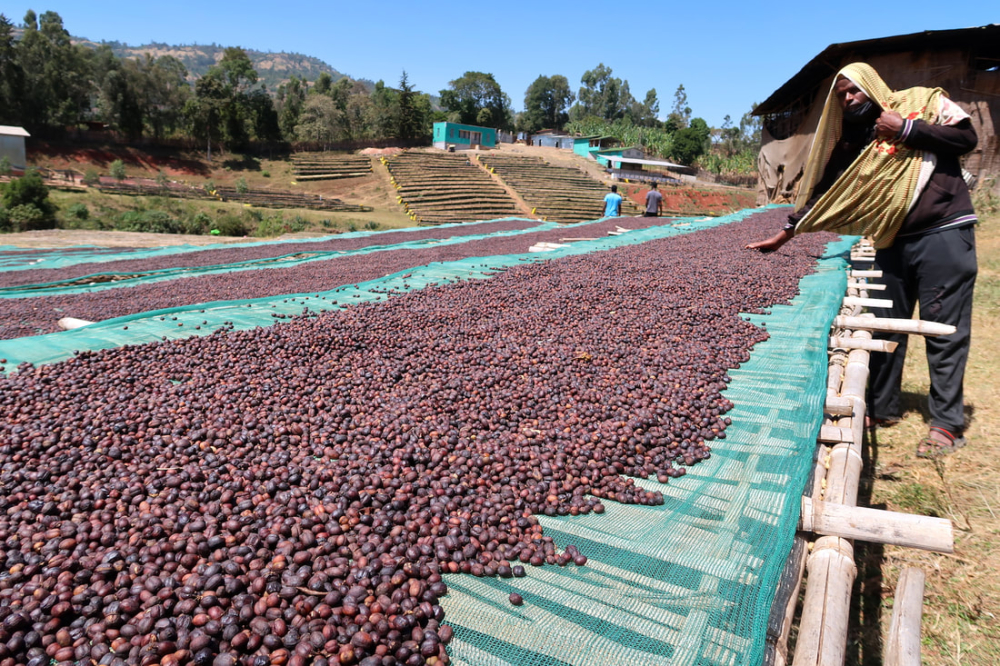
The most fundamental difference between natural and washed is this: natural processing retains the flavors brought by the fruit pulp, while washed processing removes the influence of the fruit pulp. In terms of mouthfeel, washed is cleaner and more transparent, while natural is richer and fuller.
It is also easy to distinguish sensorially: washed green beans are usually blue-green, while natural green beans tend toward yellow-green. After roasting, washed beans have very obvious silver skin, while natural beans have almost no silver skin residue and a relatively smooth bean surface.
Roasting Recommendations for Natural and Washed Yirgacheffe Coffee
Front Street Yirgacheffe's most signature flavor lies in its delicate acidity and rich floral and fruity aromas. To present this characteristic to the greatest extent, a light roast is most suitable. Whether natural or washed Yirgacheffe, a light roast brings out its unique flavor to the fullest.
Of course, there are also Yirgacheffes on the market roasted to medium or darker. These products slightly weaken the acidity and increase body, but doing so makes it difficult to express Yirgacheffe's original flavor. Front Street Coffee's consistent roasting philosophy is to let coffee beans reflect the flavor of their region of origin. Every bean can certainly be roasted in various ways, but Front Street Coffee believes that the flavor produced should first reflect the characteristics of the region, and only then should other possibilities be explored on that basis.
Front Street Natural Yirgacheffe Roasting Curve Roaster Yangjia 800N (batch size 500 g)
Charge when the drum temperature rises to 200°C, set airflow to 3, heat to 150, keep airflow unchanged, turnaround point at 1'35". When the drum temperature reaches 140°C, adjust heat to 180 and open airflow to 4; at this point the bean surface turns yellow, the grassy smell completely dissipates, and the drying phase begins. When the drum temperature reaches 170°C, adjust heat to 150 and keep airflow unchanged.
At 9'01", wrinkles and dark patches appear on the bean surface, and the toasty bread aroma clearly shifts to coffee aroma, which can be regarded as the prelude to first crack; at this point, listen carefully to identify the sound of first crack. First crack begins at 9'25"; reduce heat to 120, adjust airflow to 5, develop for 1'40" after first crack, and drop at 196°C.
Front Street Washed Yirgacheffe Roasting Curve Roaster Yangjia 800N (batch size 500 g)
Charge when the drum temperature rises to 200°C, set airflow to 3, heat to 160, keep airflow unchanged, turnaround point at 1'32". At a drum temperature of 151°C, adjust airflow to 3.5; at a drum temperature of 140°C, adjust heat to 180 and keep airflow unchanged; at this point the bean surface turns yellow, the grassy smell completely dissipates, and the drying phase begins.
At 8'35", wrinkles and dark patches appear on the bean surface, and the toasty bread aroma clearly shifts to coffee aroma, which can be regarded as the prelude to first crack; listen carefully to identify the sound of first crack. First crack begins at 8'53"; keep heat at 180 unchanged, adjust airflow to 4, develop for 1'45" after first crack, and drop at 195°C.
Natural Yirgacheffe Cupping Dry aroma: fermentation, floral Wet aroma: citrus Palate: fermented notes, citrus, lemon, grape, oolong, berry, floral, caramel.
Washed Yirgacheffe Cupping Dry aroma: floral Wet aroma: lemon Palate: citric acidity, green tea-like note, citrus, jasmine, orange, nut, floral.
How Front Street Brews Washed Yirgacheffe Coffee and Natural Yirgacheffe Coffee
For light-roasted coffee beans, a V60 dripper is recommended, with a water temperature of about 90°C, a water-to-coffee ratio of 1:15, 15 g of coffee, and a grind size like fine granulated sugar (80% passing through a Chinese No. 20 standard sieve).
Front Street Coffee uses staged extraction: generally the bloom water is twice the amount of coffee grounds, that is, 30 g of water for a 30-second bloom, then pour in a thin stream in circles up to 125 g before pausing; when the water level drops and is about to expose the coffee bed, continue pouring to 225 g and stop. The total extraction time is about 2 minutes.
Front Street Yirgacheffe Flavor Descriptions
[Front Street Natural Yirgacheffe—Red Cherry Coffee] Lemon, citrus, berry, sweet orange; overall high sweetness, with caramel and cream in the aftertaste, and a black tea aroma in the finish.
[Front Street Washed Yirgacheffe—Yirgacheffe Coffee] Lemon, floral, tangerine, cane sugar; overall clean and refreshing, with honey-like sweetness in the aftertaste and an oolong tea finish.
Overall, both natural Yirgacheffe and washed Yirgacheffe have fruity acidity and an obvious juicy fruit character, similar to fruits such as lemon and citrus. However, washed Yirgacheffe is much more prominent than natural Yirgacheffe in terms of cleanliness.
The above content is compiled by CoffeeHunters, a coffee news website.


