







Sumatra is Indonesia's most important coffee-producing region and the birthplace of Mandheling coffee. The coffee produced here is known for its mellow smoothness with herbal and earthy notes, and the unique wet-hulling method gives rise to the signature "sheep's hoof" bean shape. From Lintong and Lake Toba to the Gayo highlands of Aceh, Mandheling from different origins each has its own character, and among them the Golden Mandheling from the Gayo highlands is the top representative. This article walks you through the cultivation history, main producing areas, variety composition and flavor characteristics of Sumatran coffee, introduces two classic Mandheling beans that Front Street Coffee supplies daily, and shows how to make a cup of richly layered espresso with a blend.
For more specialty coffee knowledge, please follow: Front Street Coffee ( Frontsteet Coffee )
Anyone who has encountered Mandheling probably remembers that the beans are on the large side, and you can often spot cracked beans shaped like sheep's hooves. This is not a defect but the mark left by wet hulling — when semi-dry, semi-wet green beans that are soft outside and hard inside are machine-milled to remove the mucilage layer and parchment layer, the bean body is easily crushed and cracked, forming what is commonly called sheep's hoof beans. Mandheling's mouthfeel is renowned for being heavy and smooth, with grassy notes and earthy tonality, a long lingering finish, and acidity that is nearly imperceptible.
Mandheling is neither a coffee variety nor the name of a producing region, but rather the name of an ethnic minority on the northern highlands of Sumatra Island【SUMATERA ISLAND】. During World War II, when Japanese troops occupied Indonesia, a Japanese soldier drank an extremely aromatic cup of coffee in a café and asked the owner what coffee it was. The owner mistook the question for asking where he was from, and answered "Mandheling." After the war ended, the soldier, back home, could not forget the taste he had drunk in Indonesia, and specifically arranged for 15 tons of coffee to be shipped from Indonesia to Japan, where it became hugely popular — and thus the name Mandheling spread.
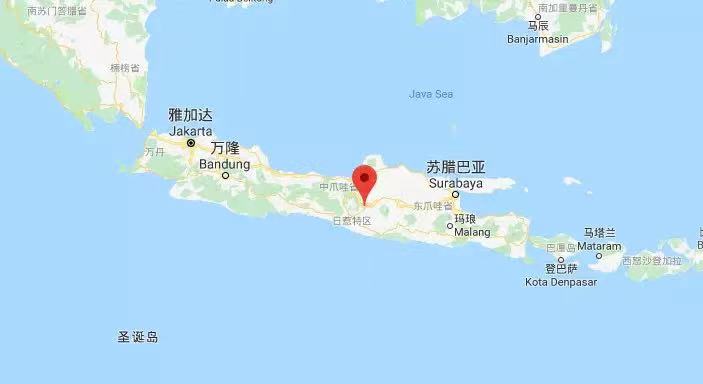
Indonesian Sumatra Coffee Producing Region Mandheling coffee is also called Sumatra coffee, simply because it comes from the Indonesian island of Sumatra. Sumatra is Indonesia's largest island and the world's sixth-largest island, located in the northwest of Indonesia and stretching from northwest to southeast, with the equator running right through its middle. The northwest of the island is higher in elevation, with the Barisan Mountains running through it, dominated by Arabica — the core producing area of Mandheling; the southeast is low and flat, mostly plains and swamps, mainly planted with Robusta varieties. Across the island are more than 90 volcanoes and numerous volcanic lakes, providing nutrient-rich soil for coffee trees. Thanks to its location, Sumatra has Indonesia's earliest harvest season — from November each year to March of the following year.
Lintong Mandheling comes from the Lintong highlands in north-central Sumatra, near Lake Toba, and can be understood as the regular version of Sumatran Mandheling.
Lake Toba is located in the center of North Sumatra Province. In 1888, Dutch colonists introduced "Java Mandheling" to the Lake Toba area, thus beginning the legend of modern Mandheling.
Lake Tawar is located in the center of the Special Region of Aceh, at the northern tip of Sumatra Island, with a water area less than one-tenth that of Lake Toba.
At present, the finest-quality coffee beans from Sumatra come from the Gayo highlands, where old trees are mostly used for cultivation. The Gayo Mountains are located in the Aceh producing region of North Sumatra Province, at an elevation between 1,500 and 2,500 meters, and the coffee farmers are overwhelmingly local indigenous people — the Gayo. This area has ideal conditions for coffee growing: high elevation, fertile soil, abundant rainfall, and Lake Tawar providing ample water. In addition, organic cultivation is widely practiced locally, without chemical fertilizers, and it is regarded as a green coffee producing region of the world, which is why Gayo coffee is often called green coffee or Gayo organic coffee.
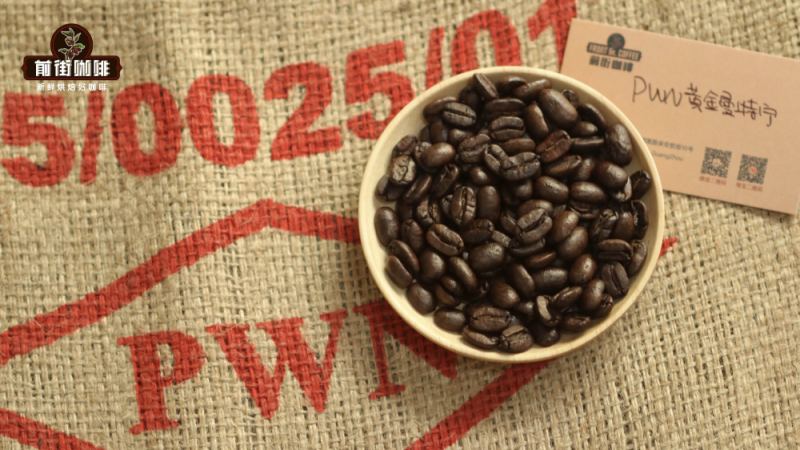
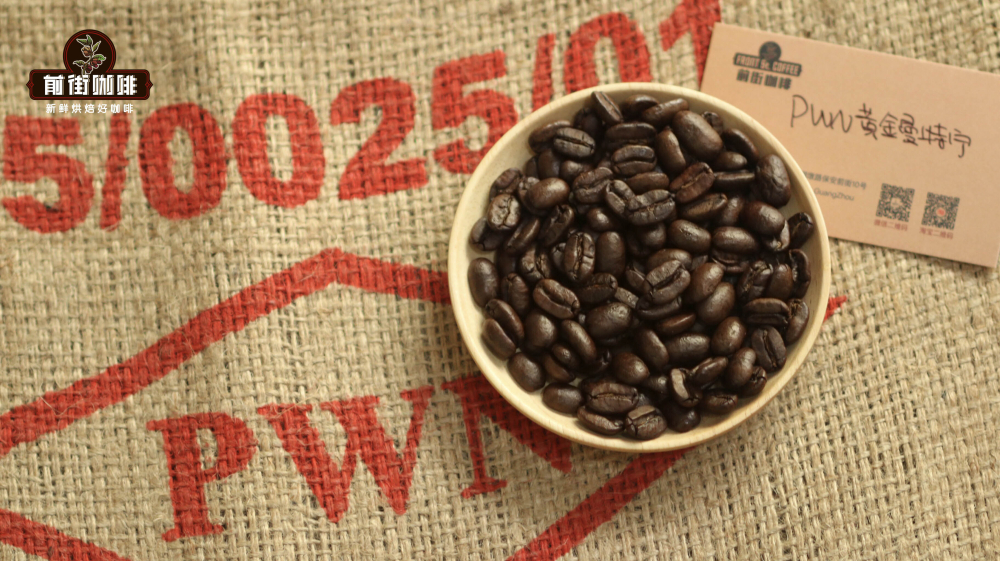
Front Street Coffee (FrontStreet Coffee)'s Golden Mandheling coffee of the new crop season comes from the Gayo Mountains of Aceh, North Sumatra, and is a Golden Mandheling coffee bean produced by PWN. Golden Mandheling applies stricter quality control: green beans must reach screen size 19, be plump and uniform in size, and belong to the highest grade, G1. PWN's beans are darker green in color and regular flat beans in shape. They then undergo one machine sorting and three hand sortings to ensure that in a 300-gram green bean sample there are no more than 3 defective beans.
Mandheling Coffee Varieties
Indonesia has a very long history of coffee cultivation. In the early years Arabica dominated, but after leaf rust spread, today about 90% of Indonesia's exported coffee beans are Robusta, with Arabica accounting for only 10%. Front Street's Lintong Mandheling is labeled as TimTim Ateng, while the Golden Mandheling is labeled as Ateng. In fact, TimTim refers to Timor, an Arabica variety with Robusta lineage; and Ateng is Catimor, a cross of Caturra and Catimor. These names are simply local customary terms.
Front Street hopes to let everyone taste the classic Mandheling flavor, so the two Mandheling coffees currently on sale are both medium-dark roasted, including the Lintong-region Mandheling everyday drinking bean and the Aceh-region Front Street PWN Golden Mandheling coffee. Dark-roasted Mandheling usually displays aromas of dark chocolate, nuts, caramel and cream, easily bringing to mind a rich, full-bodied espresso.
However, note that under the extraction conditions of espresso — fine grinding, high water temperature and 9 bar of pressure — the highly concentrated coffee liquid brings together many tastes, including the woody and herbal notes mentioned earlier, with various flavor compounds striking the taste buds many times over, so the americano and latte made from it may not be to everyone's liking.
So rather than taking the risk of using up high-quality coffee beans, Front Street recommends choosing a blend suited to espresso extraction, such as Front Street's own roasted Front Street Classic Espresso Blend, which combines 50% Brazilian coffee, 30% wet-hulled Mandheling coffee and 20% Robusta coffee. The espresso made with it has rich caramel and cream aromas and a solid chocolate sweetness, while retaining Mandheling's distinctive spice and pine aftertaste — quite a rich layering.
The above content is compiled by CoffeeHunters, a coffee news website.


