








Mandheling is a general term for Arabica coffee produced in northern Sumatra, Indonesia, but its name actually comes from the local Mandailing ethnic group, not from a variety or producing region. Starting from its historical origins, this article traces the Dutch East India Company's expansion of coffee planting in Indonesia and the origin of the name Mandheling, and takes a deep dive into the flavor differences between Sumatra's two main cultivated varieties: Timtim and Ateng. It also introduces the characteristics of the Lintong producing region and the PWN Golden Mandheling from Mount Gayo in Aceh, the influence of the wet-hulling process on its herbal-spice tonality, and the brewing parameters and flavor performance recommended by Front Street Coffee, helping coffee lovers gain a comprehensive understanding of this low-acid, full-bodied Indonesian representative coffee.
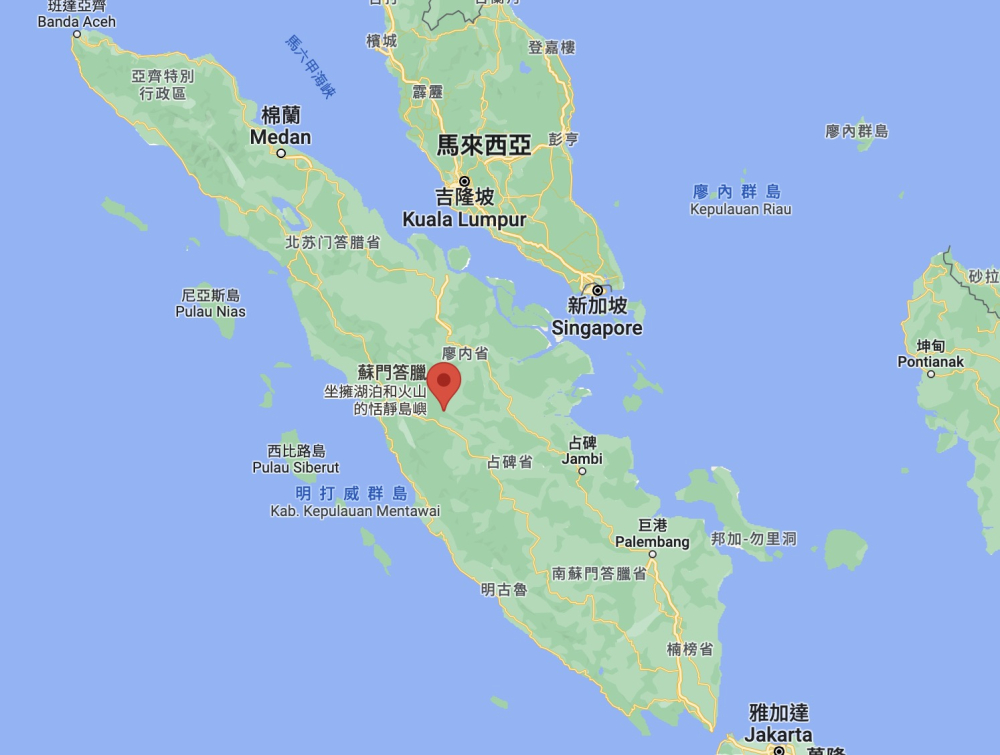
Mandheling coffee comes from the northern part of Sumatra, at the western end of Indonesia, bordering the Indian Ocean. In the eighteenth century, in order to shake the Arabs' grip on the coffee trade, the Dutch East India Company began trial-planting coffee in this then-colony of Indonesia, gradually expanding cultivation to Java, Bali, Sumatra, Sulawesi and other islands.
In Indonesia's coffee cultivation today, Robusta accounts for ninety percent, while the remaining ten percent of Arabica is distributed across Java, Sumatra and Sulawesi. Mandheling coffee specifically refers to Arabica beans grown in Sumatra.
Mandheling is not the name of a coffee variety—it neither represents a producing region like Yirgacheffe, nor is it a variety name like Geisha. Instead, it comes from the name of an ethnic group: Mandailing (in the local language, Mande means "mother" and Hilang means "lost," the two combined).
According to a locally circulated story, during the Japanese occupation in World War II, a Japanese soldier asked a local coffee shop owner the name of the coffee he was drinking. The owner mistakenly thought the soldier was asking about his ethnic identity, so he answered "Mandailing." After the war, Japan began importing coffee from the region, continued to use the Mandailing name it had heard at the time, and it gradually spread around the world. Since then, Arabica coffee produced in northern Sumatra has mostly been given this name.
So what variety of coffee beans is Mandheling exactly?
The varieties cultivated on the island of Sumatra are mainly Timtim and Ateng. Traditionally, Sumatran Mandheling mainly comes from around Lake Toba in the Lintong producing region of North Sumatra Province and around Lake Tawar in the northernmost Aceh region.
Timtim, commonly known as Timor, is a natural interspecific hybrid offspring of Arabica and Robusta, also called Bor Bor. It has 44 chromosomes, so it is still classified as Arabica coffee. This variety was discovered in Timor, Indonesia, in the 1940s and has strong resistance to leaf rust—it is the source of Hibri de Timor (HdT), the most widely used rust-resistant germplasm, and combines cold tolerance with high yield. The tree is thick and sturdy, with a strong trunk, and drooping branches that help distribute nutrients efficiently. Through cupping, Front Street found that although Timtim's flavor is not as refined as that of pure Arabica beans, it presents notes of agarwood, pine and herbs, with relatively low acidity.
Ateng, commonly known as Catimor, is a cross between Caturra and Timor. Ateng carries Timtim's genes, but after incorporating Caturra (a natural mutation of the old Bourbon variety within the Arabica line), its flavor is noticeably improved over Timtim, with better brightness and more prominent sweetness. Front Street's cupping found that Ateng has a stronger sweet aftertaste and a rounder, cleaner mouthfeel than Timtim.
The flavor characteristics of Mandheling coffee
FrontStreet Coffee currently sells two Mandheling coffee beans. One comes from the Lintong producing region and uses the Timtim variety; it is a regional-flavor everyday bean specially selected by FrontStreet Coffee for everyone, fully showcasing the low-acid, full-bodied, herbal-spice characteristics of the Sumatra producing region.
The other comes from the PWN Golden Mandheling coffee beans of the Mount Gayo producing region in Aceh, with the Ateng variety. This Golden Mandheling coffee bean obtained by Front Street comes from PWN Pwani Company, Indonesia's most famous company and the holder of the registered trademark "Golden Mandheling."
PWN Company purchases Mandheling coffee beans grown in the Aceh region and then subjects them to wet-hulling. After processing, the Mandheling green beans must undergo one round of machine sorting plus three rounds of manual hand sorting to ensure the produced batches reach Indonesia's highest grade, G1.
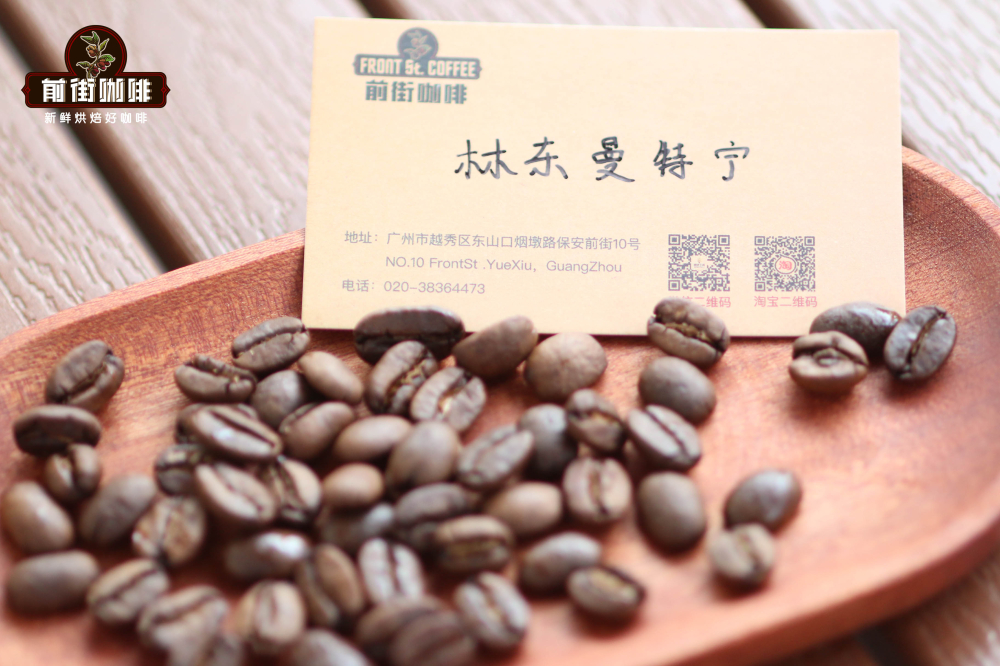
The purpose of machine sorting is first to screen out beans of 18 mesh or above, and the subsequent multiple rounds of manual selection are used to remove defective beans with irregular shapes. Reducing the defect rate greatly improves the quality of Mandheling coffee, making the beans heat more evenly during roasting and giving a cleaner flavor expression. Combined with the advantages of the variety itself, the sweetness of Front Street's PWN Golden Mandheling coffee is higher than that of other Mandheling coffees.
Why does Mandheling coffee carry this kind of deep, herbal-spice tonality?
Sumatra is located near the equator. Indonesia is hot and rainy all year round and is often hit by typhoons, so it is impossible to widely adopt the African sun-dried method or the washed method of Central and South America to process coffee green beans. To avoid mold and spoilage during green bean processing, locals greatly compress the fermentation and drying time to adapt to the local climate conditions.
After the coffee fruit has its outer skin removed, it is fermented briefly for a few hours and then immediately sun-dried. When the moisture content of the parchment coffee drops to 30–50%, the parchment coffee is still in a semi-dry state. Locals use a specially made huller to strip off the still fairly hard parchment layer through friction, and then continue drying the hulled beans to the target moisture content.
Because every step is completed in an environment with 70–90% humidity, and the parchment layer has already been removed before the final drying step, the "exposed" green beans easily absorb moisture from the air, so the resulting Mandheling coffee carries a bit more woody and herbal notes.
How should Mandheling coffee beans be brewed to taste good?
Mandheling coffee beans are suited to a coarse grind paired with lower-temperature hot water, using immersion or drip extraction; a French press or pour-over both work well. A delicious cup of Mandheling coffee is inseparable from freshly roasted coffee beans. All coffee beans sold by FrontStreet Coffee are shipped within five days after roasting is completed.
When producing drinks at FrontStreet Coffee stores, a short-rib Kono dripper with immersion effect is used, with the water temperature controlled at 87–88°C, a medium-coarse grind (70% passing through China standard No. 20 sieve), 15 grams of coffee grounds, and a coffee-to-water ratio of 1:15.
Three-stage pouring method: in the first stage, pour 30g of water and let it bloom for 30 seconds; in the second stage, pour in a small stream in circles up to 125g, and after the water level in the coffee bed drops by half, pour again, continuing in a small stream in circles up to 225g. After all dripping is complete, the total extraction time is about 2 minutes 10 seconds.
Brewed flavor of Mandheling coffee from the Lintong producing region: a rich herbal aroma on entry, accompanied by dark chocolate and caramel, with a noticeable sweet aftertaste.
Brewed flavor of Front Street PWN Golden Mandheling coffee: the overall layers are rich and varied, full-bodied and clean. Intense nut and caramel aromas, with chocolate notes, a long finish, and excellent balance.
The above content is compiled by CoffeeHunters, a coffee news website.


