







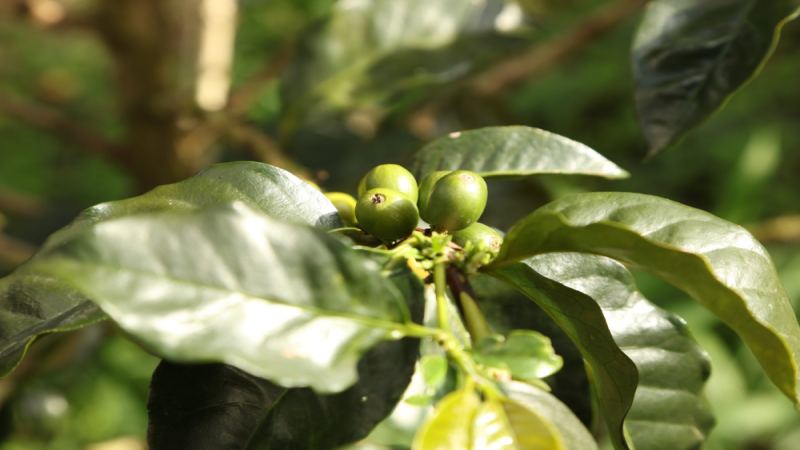
What Defines Colombian Coffee Flavor by Region?
Colombian coffee is known for a rich aroma, bright acidity, smooth body, and balanced cup. The growing belt runs along the western Andes and splits into north, central, and south regions, including Antioquia, Santander, Cauca, Huila, Nariño, and Tolima. Processing and location shift the flavor from red fruit to floral and tea-like notes.
Rose Valley shows rose fragrance with white peach and strawberry sweetness. The Colombian Coffee Growers Federation registered the Cafe de Colombia geographical indication in 2004 and created Juan Valdez as its spokesfigure. Colombia is the largest exporter of Arabica coffee, and the central MAM towns of Medellín, Armenia, and Manizales remain key producing areas.
Colombian coffee is renowned for its balanced, smooth body and bright acidity, and on this land nourished by the Andes, different regions and processing methods give rise to distinctive flavors. This article takes you deeper into the geographical indication background of Colombian coffee and the distribution of its main producing regions, with a focus on analyzing the flavor characteristics and processing techniques of coffee beans such as Rose Valley, Huila, Flower Moon Night, and Sakura, and shares Front Street Coffee's brewing suggestions to help you find your ideal strawberry-flavored coffee beans.
When a friend visited the Front Street store and ordered a pour-over, saying they wanted a coffee with rose and white peach flavors, Front Street guessed that what they wanted was probably Colombia's Rose Valley. This bean exudes an elegant, natural rose fragrance, and its high-sweet fruit qualities of white peach and strawberry are unforgettable after just one sip. Let's get to know this charming coffee below.
Colombian Coffee
Globally, Colombian coffee (Cafe de Colombia) is one of the few cases sold as single-origin coffee under a country's name, and it is also a fairly successful example of combining a geographical indication with brand image. In 2004, the Colombian Coffee Growers Federation (FNC) successfully registered the "Cafe de Colombia" geographical indication with the government and created the farmer figure Juan Valdez as the spokesperson for Colombian coffee. Since then, the logo composed of this character and his mule (with the Andes behind them) has also become the association's official emblem.
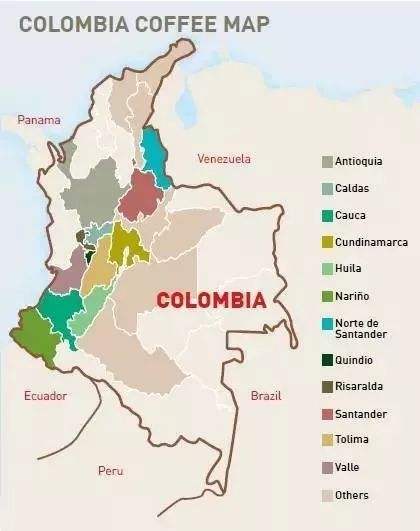
Colombian coffee has long been known for its rich, substantial aroma, bright acidity, smooth body, and just-right balance. Front Street believes that such outstanding performance is inseparable from the local rich and unique terroir conditions. Colombia is the world's largest exporter of Arabica coffee, and its coffee-growing belt is mainly distributed along the western Andes, with very clear regional boundaries. Geographically, it can be divided into three major regions: north, central, and south, including six high-quality origins: Antioquia, Santander, Cauca, Huila, Nariño, and Tolima.
Medellín, Armenia, and Manizales in the central part of the mountain range are Colombia's three most important producing regions, commonly known as the "MAM" Coffee Golden Triangle. MAM mainly produces commercial-quality coffee beans, while specialty beans are concentrated in the south and north. The southern producing regions are mostly above 1,500 meters in elevation, with relatively low yields, but the soil, terrain, and special microclimates make the coffee flavors more prominent and the body even better. Huila, Cauca, and Nariño are all familiar origins, and beans from these places often carry delicate acidity and berry sweetness. The Rose Valley mentioned earlier comes from Santander in the northern part of the mountain range.
Santander, Big Tree Estate
Front Street Coffee has learned that Santander is the earliest province in Colombia to grow coffee. Although it is not particularly famous, it is still a very important producing region in the country, with coffee output already accounting for 5% of the national total. The climate here is dry and the elevation is relatively low, about 1,400-1,600 meters, and a large number of Typica plants are grown. Most local coffee trees are planted in forests with appropriate shade, and the fruit takes longer to mature. Combined with fertile soil and significant temperature differences, this makes the coffee flavor richer and the body round and balanced.
Rose Valley coffee comes from Big Tree Estate in the Santander producing region. The estate has a 20-year history of cultivation and quite mature green bean processing techniques. The estate picks only fully ripe red cherries, removes defective floating beans through washing, then carries out two rounds of anaerobic fermentation, while also using slow drying to ensure the coffee beans lose moisture evenly and avoid unpleasant over-fermented flavors.
Front Street Coffee: Colombia Rose Valley Coffee Beans
Region: Santander
Estate: Big Tree Estate
Processing Method: Anaerobic Enzyme Washed
Altitude: 1,700m
Variety: Caturra
Brewing Flavor: Rose, white peach, liqueur chocolate, cream, cranberry
Huila
The Huila producing region is located in southwestern Colombia, mainly characterized by hilly terrain, with nutrient-rich volcanic soil, comfortable temperatures, and a main river flowing through it, making it very suitable for coffee tree growth. Local harvesting is entirely done by hand, and only fully ripe cherries are collected, so the coffee beans produced are of higher quality and the flavor is relatively clean.
Colombian coffee farmers mostly use the washed method to process coffee cherries. The finished product has a clean, fresh, and sweet flavor, showing nutty and caramel notes after roasting, with soft, balanced acidity and a clean finish. Front Street believes that washed Huila has excellent balance and can help everyone understand the basic flavor of Colombian specialty coffee, so it is chosen as Colombia's everyday drinking bean.
Front Street Coffee: Colombia Huila Coffee Beans
Region: Huila
Altitude: 1,500-1,800 meters
Processing Method: Washed
Variety: Caturra
Flavor: Nuts, dark chocolate, caramel, soft fruit acidity
Some may have noticed that most of Front Street's everyday drinking beans use the washed processing method, because washing best showcases the true local terroir. The Front Street everyday drinking bean series is a group of high-value origin beans, intended to let beginners first build an understanding of regional flavors and then choose the type they like from among them.
Unlike the common washed processing in Colombia, Flower Moon Night coffee from the Huila producing region uses anaerobic natural processing, also called anaerobic fermentation natural processing. Specifically, the coffee cherries are placed in a sealed container or soaked in a washing tank to ferment for 72 hours, during which different microorganisms ferment to produce special flavors. After fermentation, they are sun-dried, and finally hulled and bagged.
Front Street Coffee: Colombia Flower Moon Night Coffee Beans
Region: Huila, Estogatin Farm
Altitude: 1,800 meters
Processing Method: Anaerobic Natural
Variety: Caturra
Flavor: Strawberry jam, fermented wine aroma, chocolate
Cauca, Paradise Estate
The Cauca producing region, certified through Colombia's coffee origin certification, has varied terrain, but is surrounded by high mountains that block Pacific air currents and southern monsoons, keeping the climate stable year-round. In addition, it is close to the equator with ample sunlight, creating good conditions for the stable growth of coffee beans.
Paradise Estate first entered the public eye in 2015 when it won first place in its first local regional competition. Estate owner Diego Samuel continuously improves his techniques and stabilizes coffee quality. At present, Paradise Estate mainly grows varieties such as Bourbon, Laurina, Geisha, and Castillo, among which Castillo coffee trees are highly praised for their strong resistance to leaf rust. The Colombia Sakura coffee beans on Front Street's bean list are precisely the Castillo variety, carrying the unique aromas of mugwort and chamomile.
Front Street Coffee: Colombia Sakura Coffee Beans
Region: Cauca, Paradise Estate
Altitude: 2,050 meters
Processing Method: Double Anaerobic Washed
Variety: Castillo
Flavor: Mugwort, berries, fermented aroma, spices, strawberry jam
Brewing Suggestions
Rose Valley, Flower Moon Night, and Sakura coffees all have floral and fruity profiles, so Front Street's roaster uses a medium-light roast to highlight the coffee's floral and fruity sweetness. Lighter-roasted beans require a higher water temperature to extract aromatic substances, but for coffee like Flower Moon Night with nutty and chocolate flavors, too high a water temperature will intensify bitterness, so Front Street recommends brewing with water at 90-91°C.
Dripper: V60
Water Temperature: 90-91°C
Grind Size: 80% passing through a No. 20 standard sieve
Coffee-to-Water Ratio: 1:15
Coffee Dose: 15 grams
Pour the coffee grounds into the V60 dripper, wet the bed with twice the amount of water as the coffee grounds, and let it bloom for 30 seconds after it forms a dome. Then pour in a slow, thin stream in circles from the inside outward until it reaches 125 grams, then pause. When the bed has dropped to half the height of the dripper, continue pouring the third stage with the same thin stream until 225 grams. Once all the coffee liquid has drained, remove the dripper. Total time is about 2 minutes.
When tasting these coffees, Front Street found that different producing regions and different processing methods noticeably affect coffee flavor. The washed Colombia Huila everyday drinking bean has obvious chocolate and nut aromas, caramel wet aroma, and just-right soft fruit acidity, and is balanced overall. The anaerobic enzyme washed Rose Valley is sweet, rich rose, with liqueur chocolate on the palate, and as it cools you can taste the sweet-tartness of dried cranberries. The anaerobic natural Flower Moon Night shows more of the fresh sweetness of cantaloupe, rich strawberry jam, and fermented fruit aromas, followed by a chocolate finish, with a rich mouthfeel. The double anaerobic washed Sakura is highly recognizable from the moment it is ground, with fresh mugwort and chamomile notes, berry acidity on the palate, and a light spice and strawberry jam sweetness in return.
For professional coffee knowledge exchange and more coffee bean information, please follow Coffee Workshop (WeChat public account: cafe_style)
For more specialty coffee beans, please add the private WeChat of Front Street Coffee, WeChat ID: qjcoffeex
The above content is compiled by CoffeeHunters, a coffee news website.


