








In Yunnan's coffee variety landscape, Typica and Catimor form two parallel main lines. The former has a long history and elegant flavor but limited yield, while the latter, with its disease resistance and high yield advantages, has become the mainstay of Yunnan's small-bean coffee today. Front Street Coffee, starting from its own tortuous experience of planting, sorted out the reasons why Yunnan does not grow mainstream specialty varieties, and firmly chose the most difficult path of Typica. This article focuses on Typica's botanical characteristics, flavor performance, washed processing logic, as well as the roasting curve, cupping records, and pour-over parameters of Front Street 2013 Typica washed beans, providing coffee lovers with a complete variety and brewing reference.
When talking about Yunnan coffee, variety is always a core topic. The coffee grown locally is mainly divided into two major categories, Typica and Catimor, with Typica coming first and Catimor later. Today, Catimor, with its latecomer advantage, accounts for the absolute majority of Yunnan small-bean coffee, and has thus become what the public knows as "Yunnan small bean." Front Street Coffee (FrontStreet Coffee) takes this opportunity to discuss the current variety landscape of Yunnan coffee and Front Street's own experience of growing beans in Yunnan.
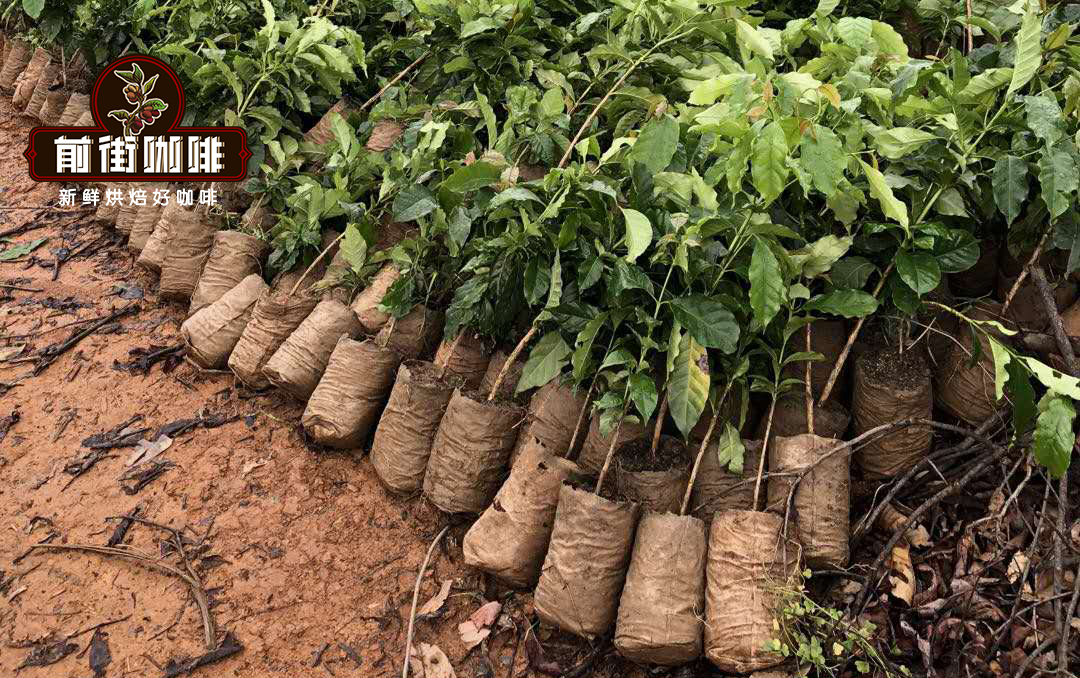
In fact, half a year before formally starting roasting, Front Street had already begun trying to grow coffee trees. At that time, we planted seedlings in a place in Guangdong called Dazhen. Only when the Catimor we had planted grew to 20 centimeters tall did Front Street truly clarify the priorities among variety, growing environment, and processing method. We also realized that if you start by planting the wrong variety in the wrong place, the difference in the final cup is almost unimaginable.
So Front Street decisively halted the Guangdong planting plan. While continuing to roast coffee, we moved forward with the idea of making specialty coffee, successively visiting the Tropical Crops Research Institute (Tropical Agriculture Science Research Institute, Ministry of Agriculture Coffee Germplasm Bank), which has deep research in coffee cultivation, and also visited a small number of coffee farmers willing to grow specialty coffee. This trip helped us understand why Yunnan does not grow mainstream specialty varieties such as Typica and Bourbon, and by chance we also found suitable planting plots.
Wanting a ready-made estate of one's own is actually not difficult. The crux of why Yunnan coffee farmers have long been unwilling to grow coffee is that the labor cost of picking one kilogram of coffee is more expensive than the beans themselves sell for. Unless the family has surplus labor, even when the beans are ripe, people cannot be bothered to pick them. Because of this, buying a small plot from a coffee farmer before harvest, doing some natural processing or honey processing, and launching so-called "Yunnan specialty coffee" in two or three months is possible. Whether this approach is appropriate, we dare not assert. As a former veteran director of Yunnan Coffee commented, "The current situation of more than one million mu of Catimor in Yunnan's production areas is the main problem urgently awaiting transformation and improvement before us." Debate is a good thing, but it should not be used to deny everyone's current efforts.
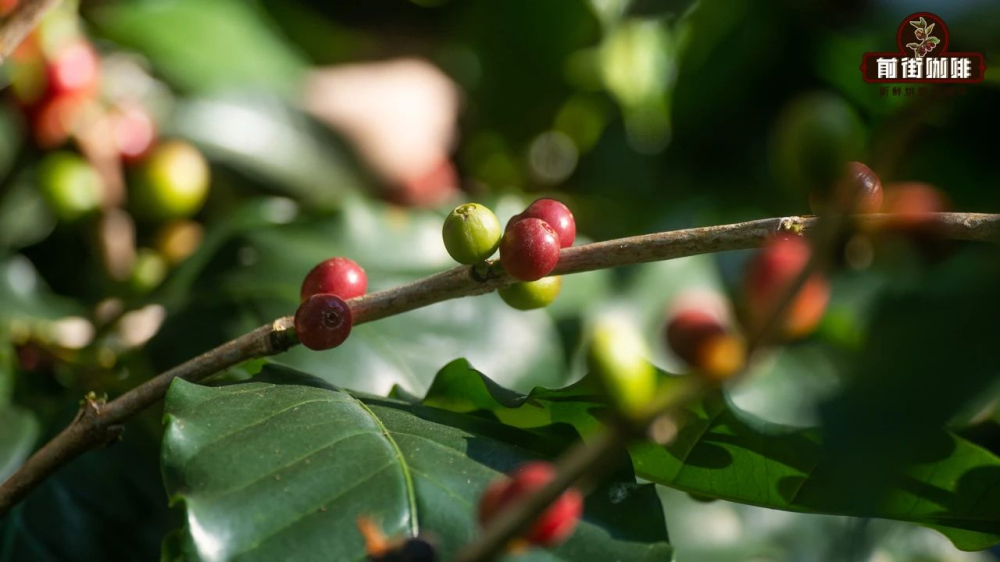
Amid the dense fog, Front Street Coffee (FrontStreet Coffee) chose the hardest path: selecting highlands, cultivating Arabica varieties, and planting rationally.
In variety selection, Front Street unhesitatingly bet on Typica. As the oldest variety, its flavor is impeccable; in addition, Yunnan already had a history of planting Typica a hundred years ago, which is one reason we judged it feasible. Typica has extremely low yield, on average only one-third that of Catimor, and is especially susceptible to leaf rust, so it demands higher agricultural technique and manual management.
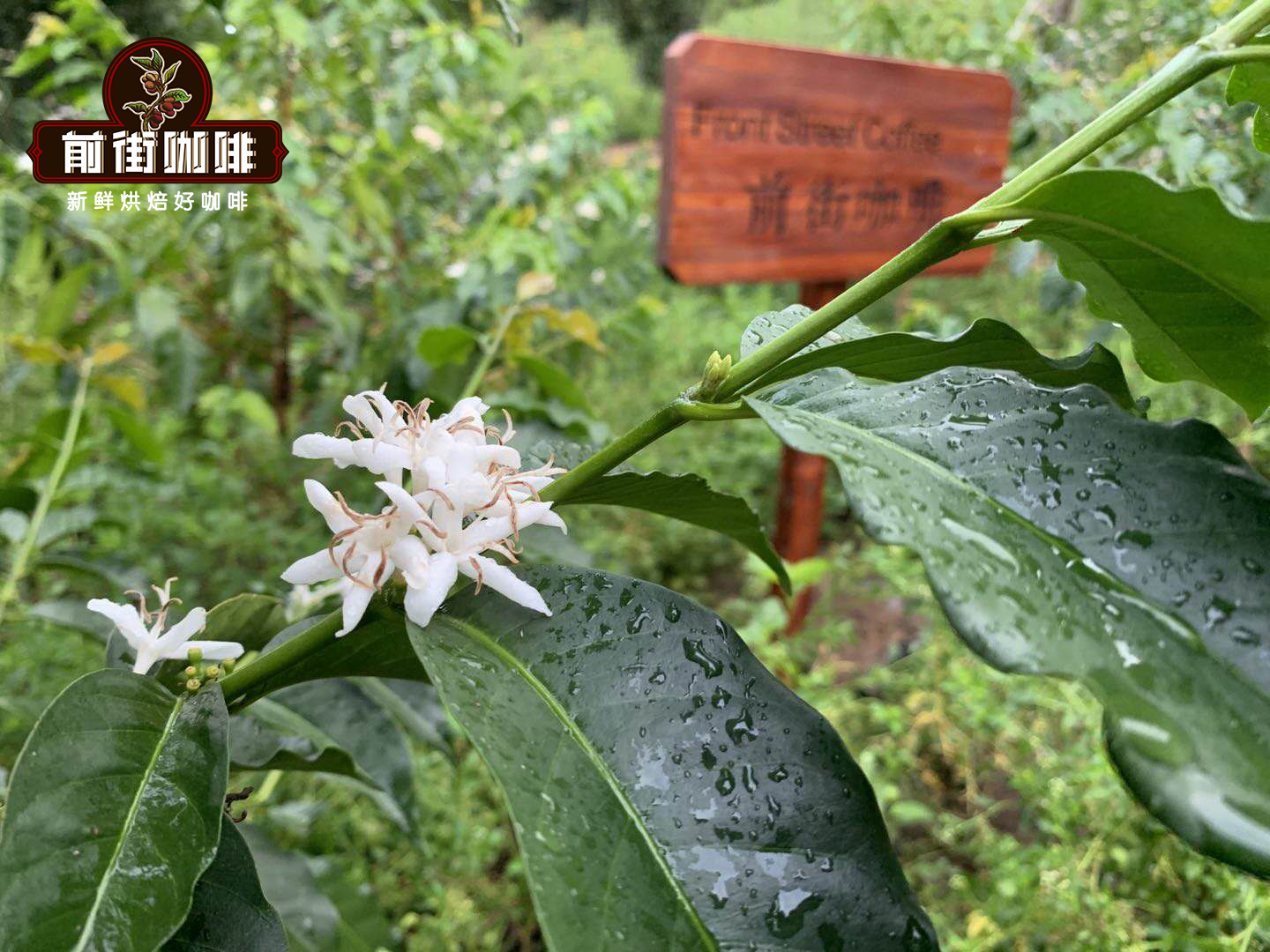
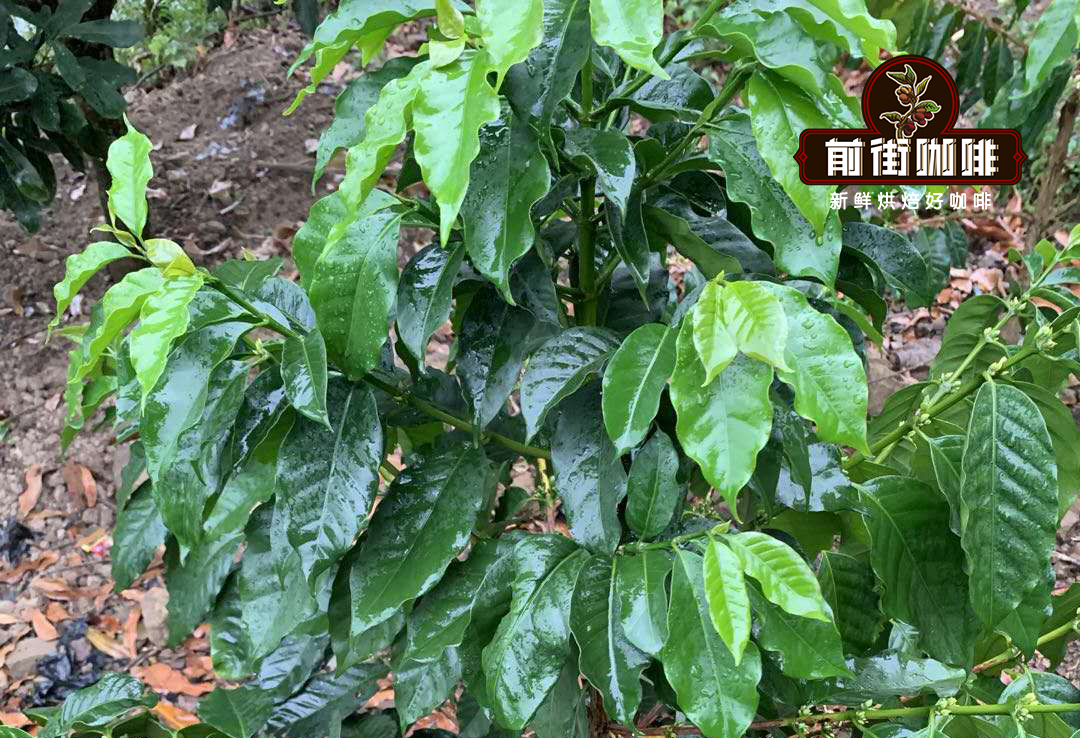
Typica Characteristics Typica is extremely easy to identify in appearance and may be the easiest variety to recognize. The plant is conical, and the main vertical trunk can grow up to 5 meters tall. This height means that, compared with other varieties, Typica has longer distances between branches and between nodes on the same branch. Lateral branches form an angle of 50 to 80 degrees with the vertical trunk. Neither the trunk nor the branches are very thick, and the leaves, fruit, and green beans are mostly slender. The tips of young leaf buds are bronze-colored. Compared with other Arabica varieties, Typica leaves are smoother and have fewer wavy edges. Typical Typica fruit is bright red when ripe.
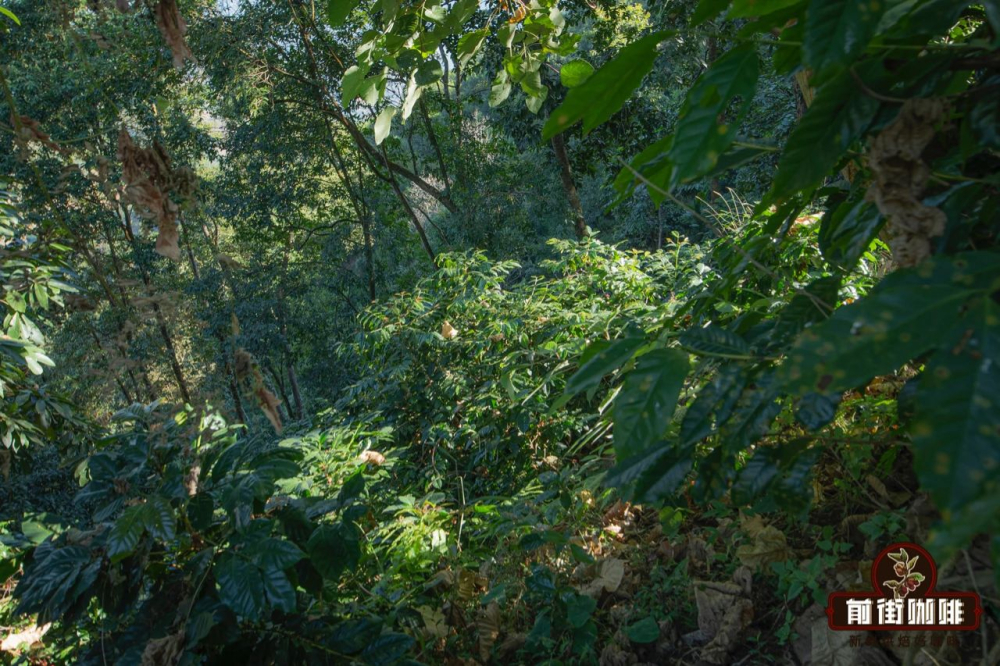
The bronze color of Typica's top leaves is one of its signature features. The beans are relatively large, shaped as pointed ovals or slender points, and some also call it "red-top coffee." Typica coffee naturally has a quiet, clean flavor, excellent balance, and high cup cleanliness. Its shortcomings are low yield, altitude requirements, susceptibility to leaf rust, and relatively weak resistance to pests and diseases.
Of course, before our own Yunnan Typica came out, Front Street also paid attention to high-quality Yunnan coffee on the market.
Front Street 2013 Typica Washed Typica Region: Baoshan production area, Yunnan, China Altitude: 1200m Variety: Typica Processing method: Washed
Only when Front Street entered Yunnan's production areas during the planting season did we truly learn what the rainy season means. A few minutes of sunshine, then half an hour of rain. It is precisely because of the year-round rainy season and unstable climate that most Yunnan coffee beans are processed by the washed method.
The specific method is: use a depulper to separate most of the pulp from the coffee beans, then guide the parchment beans into a clean water tank, soak and ferment them in water, and thoroughly remove the remaining mucilage layer. About five years ago, the washed method was often regarded as the preferred processing method for good coffee beans. Through water processing, immature beans and defective beans are screened out by buoyancy, and the fermentation process is easier to control. Therefore, in flavor it does not carry the miscellaneous notes of natural beans, but instead shows clear fruit acidity, somewhat greater complexity, and a cleaner cup performance—without any negative flavors such as astringency or sharpness.
Front Street Coffee (FrontStreet Coffee) Roasting Analysis Front Street's roaster believes that Front Street 2013 Typica coffee beans, when roasted with a medium slow roast, best display their round, smooth character while retaining rich floral and fruity aromas.
Roaster: Yangjia 600g semi-direct fire
Charge when the drum temperature rises to 200°C, set the damper to 3, and after 30 seconds adjust the heat to 160°C, keep the damper unchanged, turning point 1'33''; adjust the heat once at 168°C, when the bean surface turns yellow, the grassy smell completely dissipates, dehydration is complete, lower the heat to 130°C, and adjust the damper to 4; at 8'45'', ugly wrinkles and dark mottled streaks appear on the bean surface, and the toast aroma clearly turns into coffee aroma, which can be defined as the prelude to first crack; at this point, listen clearly for the sound of the first crack point; at 9'07'' first crack begins, lower the heat to 80°C, open the damper fully to 5 (adjusting the heat must be done very carefully, not so low that there is no cracking sound); 3'00'' after first crack, drop at 198°C.
Front Street Cupping Front Street Coffee (FrontStreet Coffee) conducts cupping within 8 to 24 hours after roasting sample beans. Front Street Coffee's coffee technicians usually use 200ml ceramic cupping bowls, marked inside with 150ml and 200ml scale lines. According to SCAA standards, the water TDS is controlled at around 150ppm—too low a TDS easily causes over-extraction, while too high affects the mouthfeel and easily causes under-extraction. The cupping water temperature is 94°C. The cupping grind size follows SCAA standards and is controlled so that 70%-75% passes a No. 20 standard sieve (0.85 mm). The ratio is 11 grams of coffee grounds to 200 milliliters of hot water, that is, 1:18.18, so that the extracted concentration falls exactly within the golden cup range of 1.15%-1.35%. Steeping time is 4 minutes.
Front Street 2013 Typica coffee bean cupping: rich fruity aroma on entry, with melon and herbal plant aromas, and a smooth mouthfeel; the middle section shows nuts and milk chocolate; the finish has a lively, bright plum acidity, stimulating saliva on both sides of the cheeks, good balance, medium body, and a full body; as the temperature goes from hot to warm, layers of sweetness and acidity can be felt, first sweet then acidic, with apricot and citrus-toned acidity; the aftertaste is black tea with a little brown sugar.
Front Street Coffee (FrontStreet Coffee) Brewing Front Street Yunnan Small Bean Pour-Over Recommendations 15 grams of coffee grounds, recommended coffee-to-water ratio 1:15; if you want a clearer flavor, use 1:16. Choose V60 dripper, brewing water temperature 88°C, intended to make the acidity softer, grind size medium-fine/fine sugar size (80% passing a No. 20 sieve).
Front Street's staged brewing method: bloom with 30 grams of water for 30 seconds, pour in a small stream in circles until 125 grams for the stage break, and when the water level is about to expose the coffee bed, continue pouring until 225 grams and stop; when the water level is about to expose the coffee bed, remove the dripper. (Start timing from the beginning of blooming.) Extraction time is 2 minutes.
The above content is compiled by CoffeeHunters, a coffee news website.


