







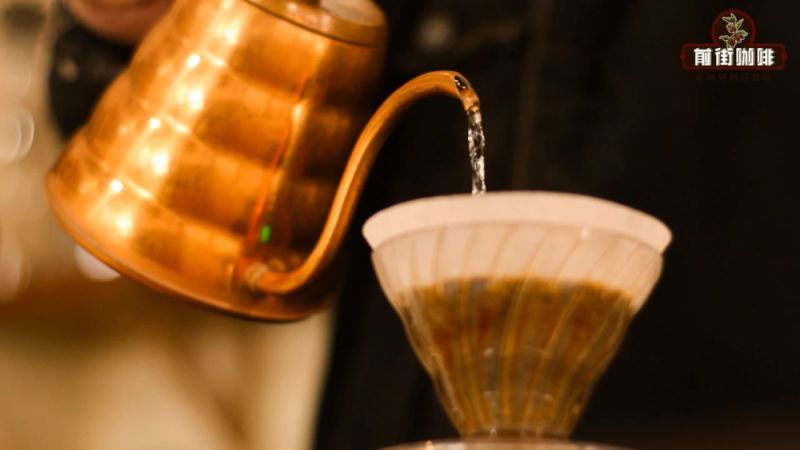
The flavor profile of espresso is fundamentally determined by the variety of coffee beans selected and their roast level. To achieve a balance of harmony and body in the final cup, the vast majority of cafes tend to use medium-dark roasted blend beans for espresso. However, many coffee enthusiasts also try using such beans for pour-over. It's worth noting that during pour-over extraction, brewing parameters vary significantly depending on the roast level of the beans. This article will focus on medium-dark roasted coffee, drawing from Front Street's practical experience to systematically outline the flavor characteristics, grind settings, water temperature ranges, coffee-to-water ratios, and dripper choices for such beans in pour-over, along with a complete brewing procedure to help you consistently reproduce a full-bodied, rich medium-dark roast pour-over at home.
For more specialty coffee knowledge, please follow the WeChat official account: Front Street Coffee (FrontStreet Coffee)
As is well known, the taste presented by a cup of espresso is fundamentally determined by the coffee beans selected. To achieve balanced flavors and a richer, fuller body, most cafes use medium-dark roasted blend beans for espresso. Some people also use such beans for pour-over. However, in pour-over extraction, the parameters that need adjustment vary considerably when dealing with coffee beans of different roast levels. This article will discuss some insights Front Street has accumulated in brewing medium-dark roasted beans.
What flavors do medium-dark roasted coffees generally exhibit?
Medium-dark roasted coffee beans lack the lively acidity of light roasts, replaced instead by nutty, dark chocolate, and caramel notes with a bittersweet, sweet-forward profile. In terms of mouthfeel, they display a very solid body, which is precisely why many people prefer medium-dark roasted coffee.
So what should be noted during brewing?
Let's start with grind size selection. Medium-dark roasted coffee beans have a relatively loose internal fiber structure, and water penetrates the coffee bed more quickly. For this reason, over-extraction must be guarded against during brewing, and the grind setting should be adjusted coarser, with a reference standard of 70% passing through a #20 (0.85mm) sieve.
By the same logic, water temperature should not be set too high. The higher the temperature, the more efficient the dissolution of flavor compounds. To avoid extracting excessive bitter components from the coffee, the pouring temperature is recommended to be controlled between 86-89°C. Medium roasted beans can use the 88-89°C range, while darker roasted beans require lower water temperatures.
For the coffee-to-water ratio, 1:15 can typically be used, as this ratio easily falls within the reasonable range for Gold Cup extraction. If you prefer a more intense drinking experience, you can tighten the ratio to 1:13.
For dripper selection, Front Street uses the Kono dripper to brew medium-dark roasted coffee beans. The Kono dripper was originally designed to produce a coffee mouthfeel close to that of flannel filtration, so it pairs extremely well with medium-dark roasted coffee.
The Kono dripper was created by Toshio Kono. The cone body is tapered, with ribs extending in straight lines from the bottom upward to the middle, while the upper portion has no ribs and a smooth wall. The brilliance of this design lies in the fact that the filter paper doesn't need to be pre-wetted; the ribs allow air to escape, making the bloom more thorough. As brewing progresses and the water level rises, the filter paper clings tightly to the wall, forming a sealed pseudo-vacuum area.
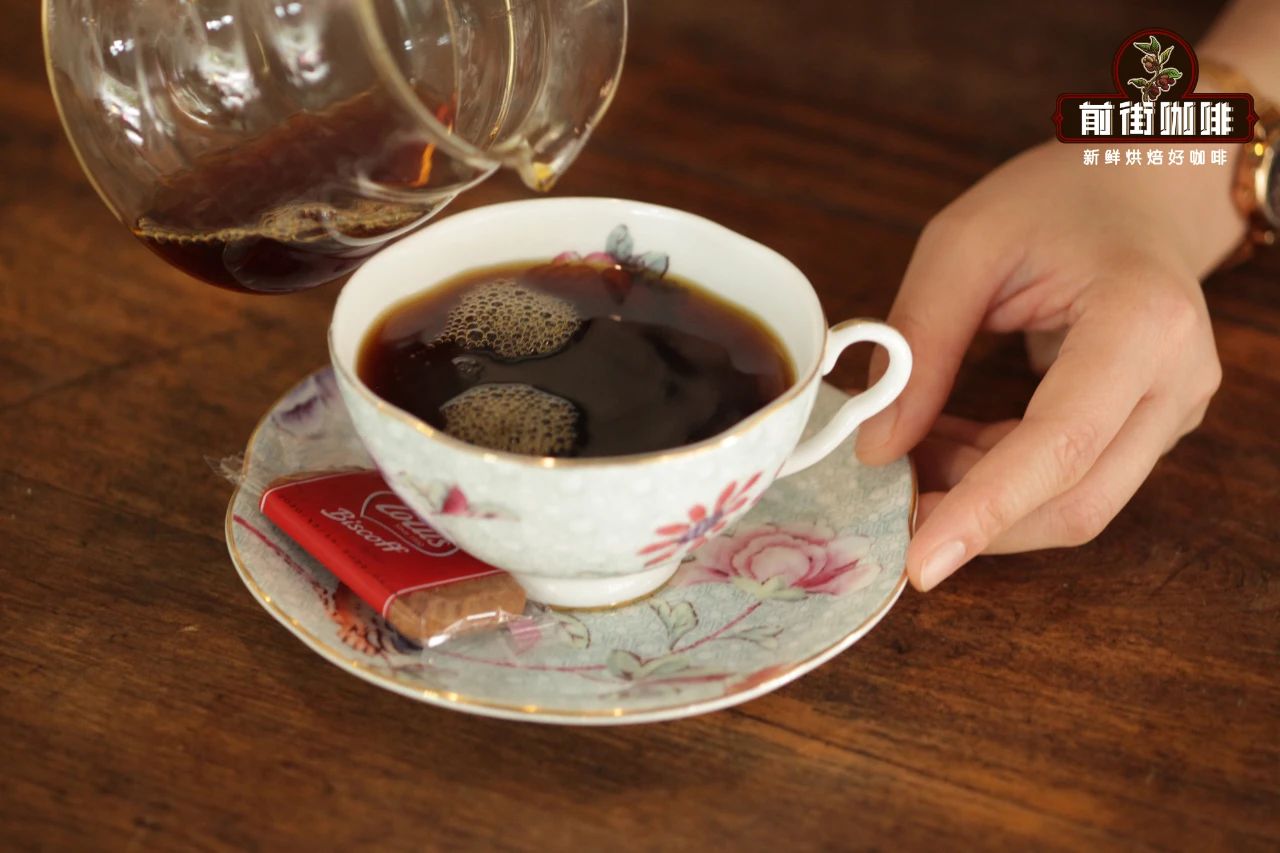
Once the upper channel is sealed by water and the filter paper, air can only escape through the gaps between the bottom ribs and the filter paper. At this point, the water and coffee grounds in the dripper push against each other and are ultimately discharged downward along with the air, creating a siphon effect that produces a rich coffee mouthfeel.
How does Front Street brew medium-dark roasted coffee?
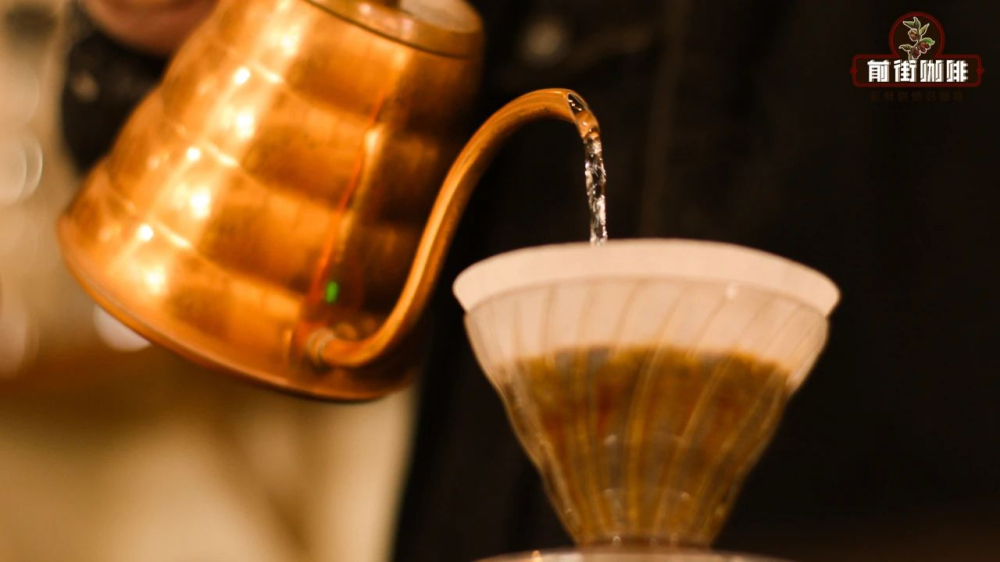
Front Street's standard brew uses 15g of coffee grounds with a 1:15 coffee-to-water ratio. First, preheat the dripper, then slowly pour in the coffee grounds, keeping the coffee bed as level as possible during pouring—do not shake the dripper (shaking reduces the spacing between coffee particles). For the first pour, inject 30g of water in a small circular motion in the center, then bloom for 30 seconds; the coffee bed will gradually expand and puff up, forming a "hamburger" shape.
For the second pour, inject 100g of water in a circular motion from the center outward, keeping the pouring height as close to the coffee bed as possible, with slow movements to avoid over-agitation. For the final pour, inject another 95g, again using a small circular motion in the center. Once all the coffee liquid in the dripper has flowed into the server, extraction is complete. The total extraction time should be controlled between 1 minute 50 seconds and 2 minutes.
The above content is compiled by CoffeeHunters, a coffee news website.


