







Blue Mountain Coffee enjoys a prestigious reputation among many coffee enthusiasts, known for its balanced acidity, sweetness, and bitterness, along with its full-bodied taste. This article will start from the origin environment and historical roots of Jamaican Blue Mountain Coffee, provide a detailed interpretation of the grading rules established by CIB, clarify the differences between Blue Mountain Coffee, High Mountain Coffee, and Jamaican Prime Coffee, and delve into the cup profile of Blue Mountain No. 1. At the same time, the article will share Front Street Coffee's brewing parameters and production insights for Clifton Estate Blue Mountain No. 1, helping readers gain a comprehensive understanding of the true character of this classic coffee.
For many friends who are just beginning to explore coffee, Blue Mountain Coffee is practically a household name; often, they are already very familiar with its reputation before they have even tasted it. In many films and television dramas, Blue Mountain coffee beans are even portrayed as a daily essential for workplace elites. Unlike the coffee varieties that are all the rage today, Blue Mountain Coffee pursues a balance among acidity, sweetness, and bitterness, with a rich and full mouthfeel. Because of this, opinions about this bean are often polarized: some regard it as the benchmark of perfectionism, while others feel it has no personality at all.
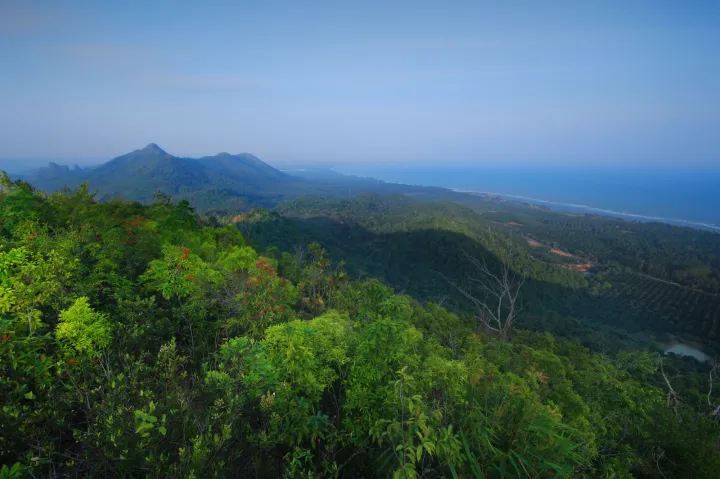
The reason Jamaican Blue Mountain coffee beans can present such a unique flavor is inseparable from the region's exceptional growing conditions. Blue Mountain Coffee takes its name from its place of origin—the Blue Mountain range region of Jamaica. The Blue Mountain range is located in the eastern part of Jamaica and is embraced by the Caribbean Sea. On clear days when the clouds are thin, sunlight shines directly onto the azure sea, and the dazzling blue radiance reflects back onto the mountains, shrouding the entire range in a brilliant blue halo. This is how the name Blue Mountain came to be.
Within the Blue Mountain production area, coffee trees are planted amid dense primary forest. When the sun stands high, the tall trees block intense direct sunlight for the coffee trees, providing natural shade. In addition, influenced by the tropical rainforest climate, the area is shrouded in mist and clouds year-round and receives abundant rainfall. On this fertile land nourished by rain, Blue Mountain coffee beans obtain extremely ideal growing conditions.
Although this is an excellent place for coffee cultivation, it is well known that coffee originally originated in Ethiopia, and Jamaica's coffee cultivation is likewise part of the history of European colonial expansion. In the late 1720s, Jamaica's governor Sir Nicholas Lawes brought descendants of European parent plants (Typica variety) from Martinique back to the foot of the mountains in the St. Andrew area on the outskirts of Kingston, Jamaica. After that, coffee took root, multiplied, and thrived in Jamaica's Blue Mountain region.
Today, the cultivation range of Blue Mountain Coffee has expanded from the St. Andrew area to four administrative regions, including St. Andrew, St. Thomas, St. Mary, and Portland. However, the Jamaica Coffee Board exercises extremely strict control over coffee grades; even if coffee is grown within these regions, it may not necessarily qualify as Blue Mountain Coffee.
According to CIB regulations, Jamaican coffee beans are first divided into three grades based on cultivation altitude: Blue Mountain Coffee, High Mountain Coffee, and Jamaican Prime Coffee. Among them, the cultivation ranges for both Blue Mountain Coffee and High Mountain Coffee are limited to the Blue Mountain region. According to CIB rules:
[Blue Mountain Coffee] The cultivation altitude must be above 1,000 meters.
[High Mountain Coffee] Jamaican High Mountain Coffee is cultivated at altitudes between 500 meters and 1,000 meters.
[Jamaican Prime Coffee] Coffee beans of this grade are cultivated at altitudes below 500 meters, and the cultivation area is not necessarily limited to the Blue Mountain production region.
Under the two grades of Blue Mountain Coffee and High Mountain Coffee, they are further subdivided according to green bean size and defect count into: No. 1, No. 2, No. 3, and PB. On the premise that the green bean defect rate does not exceed 2%, Blue Mountain No. 1 grade coffee beans are 17/18 screen size; Blue Mountain No. 2 grade is 16/17 screen size; Blue Mountain No. 3 grade is 15/16 screen size; and Blue Mountain PB grade consists of peaberries.
From this, it can be seen that Blue Mountain No. 1 coffee beans are the highest grade among Jamaican Blue Mountain coffees. Under CIB's extremely strict standards, the output of Blue Mountain No. 1 coffee beans is quite limited. In the last century, Jamaica's coffee-growing areas suffered meteorological disasters, and the coffee industry was deeply affected; it was only with the support of the Japanese government that it was able to recover. For this reason, for a long period, Japan held priority purchasing rights for Jamaican Blue Mountain Coffee, and at one point more than 90% of Jamaican Blue Mountain Coffee was bought by Japanese buyers.
In recent years, with the decline in Japanese purchasing power, more Blue Mountain coffee beans have flowed to markets in other countries. Although the total output of Blue Mountain coffee beans remains low, seeing and even drinking genuine Blue Mountain Coffee is no longer difficult. However, many coffee beans on the market labeled "Blue Mountain Blend" or "Blue Mountain Flavor" leave many enthusiasts suddenly enlightened only after they gain a deeper understanding of Jamaican Blue Mountain coffee beans.
Of course, identifying the authenticity of Jamaican Blue Mountain Coffee is not difficult either. Jamaica is currently the only coffee-producing country in the world that still uses wooden barrels to pack green coffee beans. In addition, Jamaican authorities also issue certificates of origin for exported Blue Mountain coffee beans. Blue Mountain green coffee bean barrels and certificates of origin are both displayed in Front Street Coffee's store.
As a representative of classic top-tier coffee, Blue Mountain Coffee can also be found on Front Street Coffee's bean shelves. Front Street Coffee's Blue Mountain No. 1 coffee beans come from Clifton Estate, and the green frog logo can be seen on the Jamaican Blue Mountain coffee bean barrel at Front Street's store. Clifton Estate has obtained Rainforest Alliance certification, which also confirms the estate's strong emphasis on environmental protection.
Clifton Estate is located near Catherine's Peak and is one of the oldest coffee plantations in the area. This estate once belonged to a gentleman who had lost his beloved wife. Because he did not wish to be reminded of her by the surroundings, he leased the estate out, allowing tourists who wanted to experience the magnificent scenery of the primeval forest to stay there. By the early twentieth century, Clifton Estate had developed into one of the largest estates in Jamaica.
Unfortunately, the gentleman who had lost his beloved wife ultimately gave up managing the estate. During the years without human intervention, the plants and animals within Clifton Estate lived and multiplied freely. It was not until 1978 that the Sharp family took over Clifton Estate, when scattered wild coffee trees were growing at will in the jungle. In 1984, Richard of the Sharp family resolved to devote himself to coffee cultivation, carefully tending the estate and beginning to study coffee with dedication.
Over the years, the two Sharp brothers have shown profound passion for coffee, traveling to many coffee-producing regions, learning local experience, and forming their own cultivation philosophy. Through years of experience and unremitting efforts, Clifton Estate was rated by Jamaica's Ministry of Agriculture in the 2017/2018 crop season as the estate producing the highest-quality coffee beans.
Front Street Coffee has conducted comparative cupping of multiple Blue Mountain No. 1 coffee beans and found that Clifton Estate's Jamaican Blue Mountain No. 1 coffee beans attracted the attention of Front Street Coffee's baristas with their rich nutty and cocoa flavors. Front Street believes that Clifton Estate's washed Blue Mountain coffee beans can serve as one of the outstanding representatives of the region.
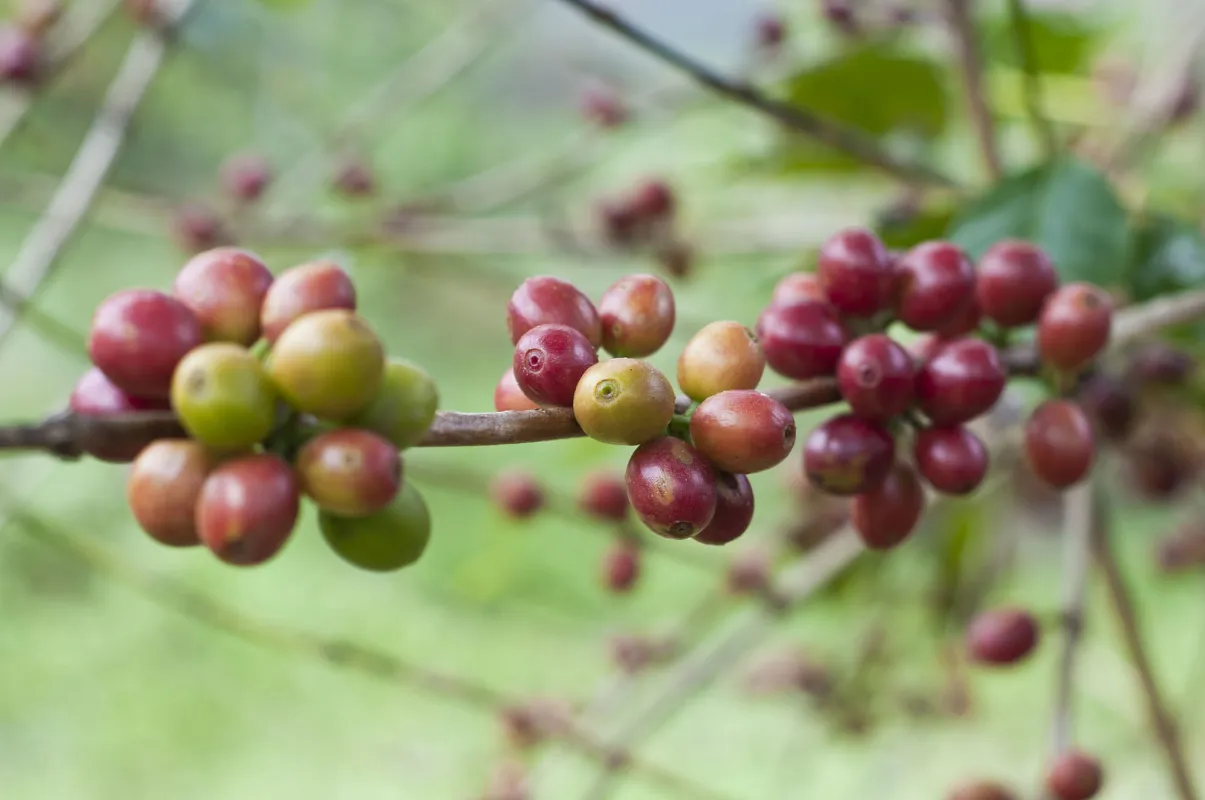
As the purchasing power of Chinese coffee enthusiasts continues to grow, genuine Blue Mountain coffee beans are no longer hard to find, but readily available. Many of Front Street's followers want to fully bring out the coffee beans' refined flavors and are very concerned about how to brew a good cup of Blue Mountain Coffee. Next, Front Street will explain how Front Street's baristas produce Blue Mountain Coffee.
Dripper: KONO
Water temperature: 88°C
Dose: 15 grams
Coffee-to-water ratio: 1:15
Grind size: 75% passing through China standard No. 20 sieve
Because what Front Street ships is coffee beans freshly roasted within 5 days, even after a 4- to 7-day resting period upon arrival, the coffee beans still contain plenty of gas inside, which may hinder water from entering the coffee particle structure during brewing and dissolving flavor compounds. Therefore, Front Street recommends a 30-second bloom.
First pour 30 grams of hot water and bloom for 30 seconds, pouring from the center in a thin stream and slowly circling to 125 grams. When the water level in the dripper drops to the point where the coffee bed is about to be exposed, continue circular pouring to 225 grams. The total extraction time is about 2 minutes.
The Blue Mountain Coffee brewed by Front Street Coffee's baristas using the above parameters and steps allows you to taste rich nutty and dark cocoa flavors, with a heavy and smooth mouthfeel and a balanced combination of acidity, sweetness, and bitterness.
For more coffee bean information, please follow Coffee Workshop (WeChat public account: cafe_style)
For professional coffee knowledge exchange, please add WeChat ID: kaixinguoguo0925
The above content is compiled by CoffeeHunters, a coffee news website.


