







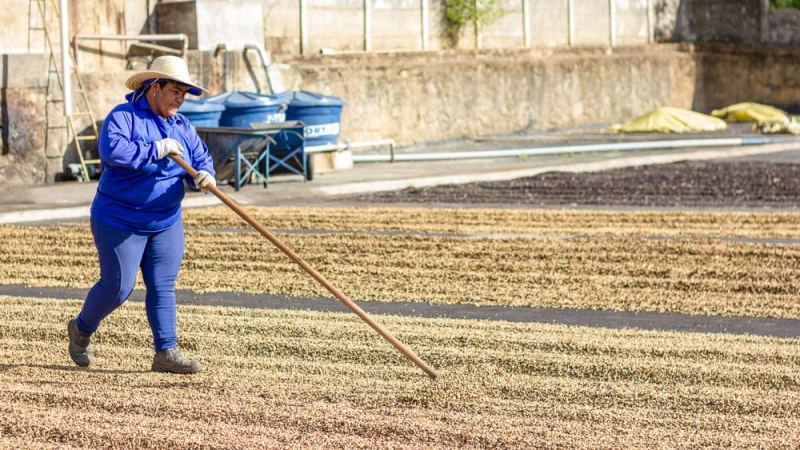
Among the many ways of processing green coffee beans, natural and washed have long been familiar to most people, yet terms like semi-natural and semi-washed often cause confusion. In fact, semi-natural and semi-washed refer to the same process, whose accurate name is Pulped Natural. This processing method was born in Brazil in 1990, as a local adaptation to conditions of scarce water resources. It retains the step of washing to remove the skin and pulp, while relying on a short period of soaking and fermentation followed by sun-drying with residual mucilage, thus balancing water conservation with consistent quality. In this article, Front Street Coffee will systematically sort out the origin of pulped natural, its specific process, and its impact on coffee flavor, and further explore how Costa Rican honey processing drew on this technique and developed its own characteristics, while illustrating with specific products such as Front Street Brazil Cerrado.
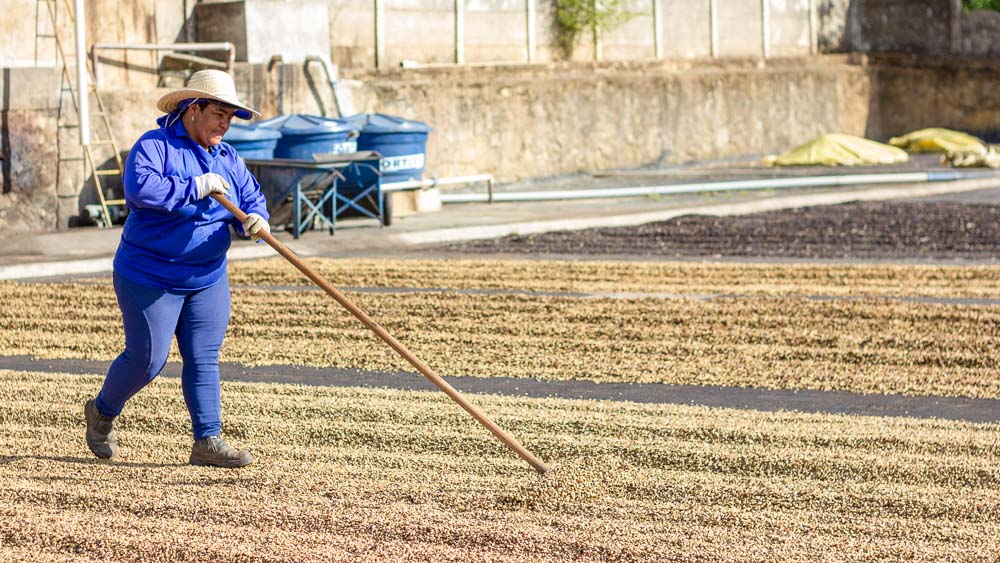
In discussions of coffee processing methods, natural and washed are usually the easiest to understand, but as soon as semi-natural or semi-washed is mentioned, many people feel completely lost. What kind of processing method is this exactly, and what changes does it bring to coffee flavor? In this article, Front Street Coffee deliberately takes "semi-natural" as its theme to help everyone thoroughly clarify this processing method.
Semi-Natural? Semi-Washed?
In fact, semi-natural processing and semi-washed processing refer to the same technique, because its process includes both a sun-drying stage and a washing stage, though its more accurate name should be Pulped Natural.
This processing method appeared in Brazil in 1990. Before that, Brazil had always used traditional natural processing, which is spreading coffee cherries over large drying yards in a very rough manner, because this is the lowest-cost approach. But coffee produced this way easily mixes with other impurities and is prone to infection and spoilage, leading to an overall flavor with rotten notes.
As early as the mid-18th century, the Dutch had already begun using washed processing for coffee. But this method was not realistic in Brazil, because Brazil does not have abundant water resources. If washed processing were used, treating an average of 1 ton of coffee cherries would consume 10 to 20 tons of water, which Brazil's enormous coffee production simply could not bear.
By 1990, after repeated experiments, Brazil finally invented pulped natural processing.
The Pulped Natural Process
The coffee cherries first pass through a water tank, where defective beans and floating cherries are removed, then the skin, pulp, and part of the mucilage layer are removed, followed by washing for one hour. Because the soaking and fermentation time is very short, the mucilage is not easily rinsed off completely, and mucilage still remains on the parchment. At this point, the sticky parchment coffee is spread out on drying yards to dry, preferably on African raised beds with good airflow.
At this point, some friends will notice: isn't this very similar to washed processing? That's right, it is indeed very close to washed processing; the only difference is that its soaking time is much shorter than in washed processing, so the mucilage layer is better preserved before entering the sun-drying stage.
Compared with washed processing, this method saves a large amount of water, reduces resource costs, and also changed the poor coffee quality caused by Brazil's rough natural drying. Because the skin and pulp are removed, the sun-drying time is greatly shortened, which also lowers the chance of infection. It can be said that this is a unique processing method in Brazil adapted to local conditions.
What Is the Flavor of Pulped Natural Coffee Like?
If you want to taste pulped natural coffee, Front Street Brazil Cerrado is the first choice. This coffee bean is a typical Red Bourbon variety. It comes from South Minas at an altitude of 1,000 meters. Front Street Coffee uses a medium roast.
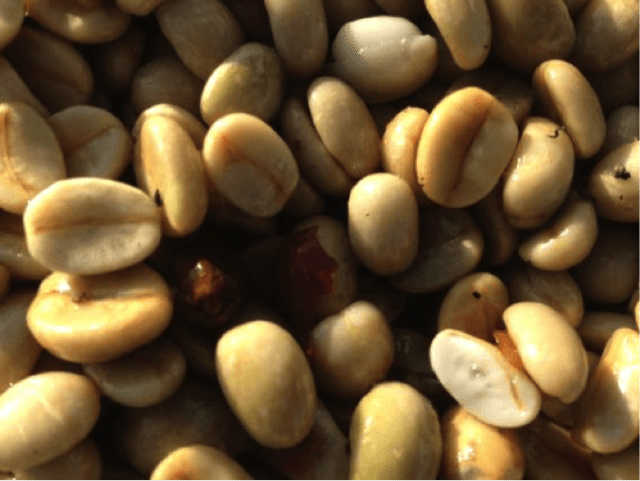
Front Street Brazil Red Bourbon Coffee Beans
Country: Brazil
Region: Cerrado, Minas Gerais
Altitude: 1,000 meters
Variety: Red Bourbon
Processing Method: Pulped Natural
Flavor: Caramel, Peanut, Cream, Chocolate, Almond
Through cupping, Front Street Brazil Red Bourbon presents high sweetness, cleanliness, smoothness, and low acidity, with notes of peanut, almond, nuts, and chocolate. Coffee made with this processing method is quite good in acidity, sweetness, flavor, and aroma, but it does not give a particularly stunning impression.
Because Front Street Brazil Cerrado has a balanced and gentle character, it often becomes one of the components in espresso blends. Among the four main products—Front Street Dark Cocoa Basic Blend, Front Street Commercial Blend, Front Street Specialty Blend, and Front Street Classic Blend—Brazilian coffee beans all appear.
A Derivative of Pulped Natural Processing—Honey Processing
Today, coffee labeled as pulped natural is increasingly rare, but many people do not know that honey processing, one of the three familiar processing methods, came from Costa Rica drawing on Brazil's pulped natural method. The biggest difference between honey processing and Brazil's pulped natural processing is that honey processing does not use water at all, so the selection of coffee cherries is stricter, seeking full mucilage.
Coffee mucilage is mainly located beneath the skin and pulp and above the parchment, and is composed of water, protein, reducing sugars, pectin, and other components. In fact, mucilage is also part of the pulp. When coffee cherries ripen, pectinase is produced inside, and the enzyme breaks down pectin bonds, softening the originally firm pulp fibers into a sugar- and pectin-rich hydrogel slime. After the machine removes the skin and most of the firm pulp, the layer of slime remaining around the parchment is what we call "mucilage."
In coffee processing, mucilage is a very sweet substance. It has the characteristics of high water content and high sugar content, and is not easy to separate from the coffee seed. Therefore, the key to creating refined fruit flavors through honey processing lies in how much mucilage is retained and the degree to which the sugars are fermented. Farmers can use specialized quantitative demucilage machines, or adjust the number of daily manual turnings, to obtain green coffee beans with different honey colors.
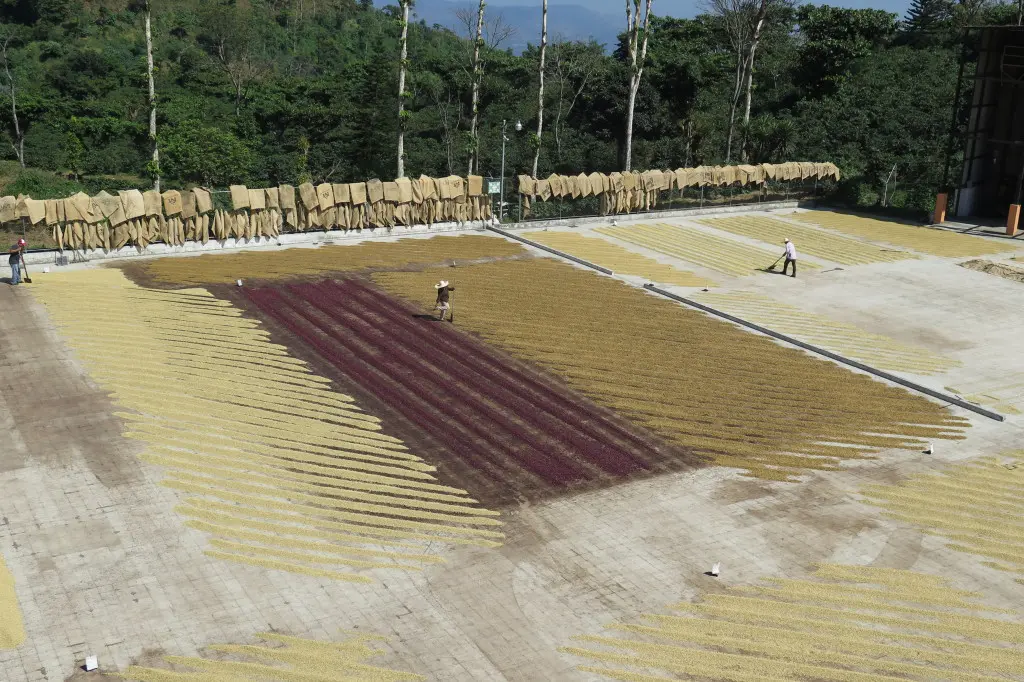
This is a processing method that can enhance coffee sweetness. It balances acidity, gives a more intense fermented character in flavor, and preserves a higher degree of mucilage than other honey processes. Front Street Bahia, Front Street Mozart, and Front Street Strawberry Candy Geisha Blend also use raisin honey processing. After medium-light roasting, they not only retain charming floral aromas but also highlight the high sweetness of fruits such as raisins, ripe pineapple, jackfruit, and sweet orange. They can be used for pour-over and French press extraction, and can also make various iced coffees.
The above content is compiled by CoffeeHunters, a coffee news website.


