







Jamaican Blue Mountain coffee is renowned as one of the finest coffees in the world, grown in the Blue Mountains of eastern Jamaica in the Caribbean. This article will guide you through the cultivation history, origin terroir, strict grading system of Blue Mountain coffee, as well as purchasing channels and pour-over brewing techniques for authentic Blue Mountain No. 1 coffee. From its introduction in the 18th century to the aid agreement with Japan's UCC, and now to increased quotas in the Chinese market, the legendary story and unique flavor of Blue Mountain coffee are worth savoring by every coffee enthusiast. Front Street Coffee's house-roasted Blue Mountain No. 1 comes from Clifton Mount Estate, using a medium-dark roast that presents classic notes of dark chocolate, nuts, and caramel.
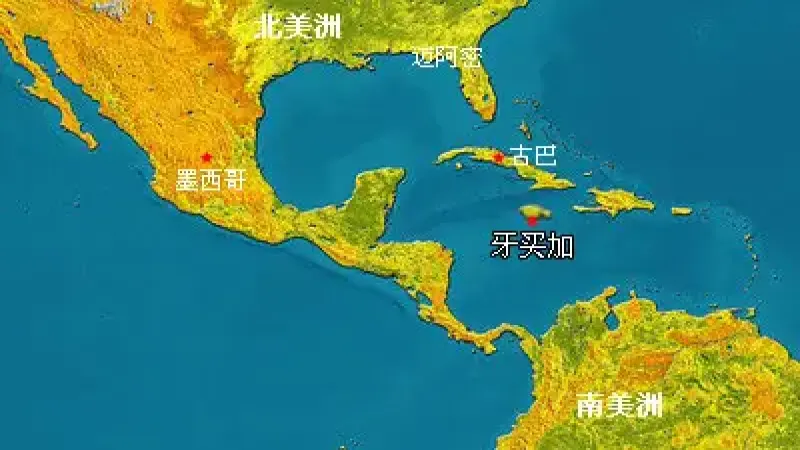
Finding Jamaica, this Caribbean island nation, on a map is not easy, but it is precisely this small country that has given birth to the world-famous top-tier coffee—Blue Mountain coffee.
The Development of Coffee Cultivation in Jamaica
The island of Jamaica is located in the Caribbean Sea, with beautiful natural scenery and clean air. The Blue Mountains in the eastern part of the island happen to fall within the golden coffee-growing belt between 25° north and south latitude, and the volcanic ash soil formed after volcanic eruptions is rich in nutrients. The towering and rugged terrain creates a unique microclimate, with clouds and mist lingering in the mountains year-round. Water vapor condenses into droplets when it meets cold air, providing just the right shade and moisture for crops. Local coffee trees are often intercropped with banana trees and avocado trees.
Jamaica's coffee cultivation history can be traced back to the early 18th century, spanning over two hundred years. In 1728, Governor Sir Nicholas Lawes introduced coffee from Martinique to the St. Andrew region of Jamaica for trial planting. In the late 18th century, a large number of slave laborers caused coffee production to rise sharply, and the cultivation range also expanded to the Blue Mountain region with a superior environment. By 1814, the national annual production had reached 15,000 tons. However, as slavery was abolished in the early 19th century, many farmers turned to growing other crops, Jamaica's coffee production dropped significantly, and the entire industry fell into decline.
To rectify the coffee industry, the Jamaican government legislated in 1891 to promote improvements in yield and quality, and provided professional guidance to growers. In 1944, the government established the Central Coffee Clearing House, and all export batches had to undergo quality appraisal and grading. In 1950, Jamaica formally established the Jamaica Coffee Industry Board (CIB), granting it official authority to improve, control, and maintain the quality and reputation of Jamaican coffee.
Jamaica's Coffee Industry Regulation Act clearly stipulates that the cultivation area for Blue Mountain coffee is limited to four administrative districts: St. Andrew, St. Thomas, Portland, and St. Mary. Only Typica coffee grown within this region at an altitude of 910 to 1,700 meters can be called "Jamaican Blue Mountain Coffee." According to quality levels, Blue Mountain coffee is classified in order as NO.1, NO.2, NO.3, and PB (peaberry). Strict controls and grading have made Blue Mountain coffee internationally famous, and by the mid-20th century it was regarded as one of the most outstanding coffees.
It is worth mentioning that in the 1960s Jamaica suffered hurricane disasters, many industries were hit hard, and the coffee industry was no exception. At that time, the Japanese company UCC reached out to help Jamaica and introduced ecological cultivation methods to the Blue Mountain production area. In 1972, Jamaica signed a 30-year contract coordination with Japan, promising Japan priority purchasing rights for Blue Mountain coffee in return for the assistance from Japanese companies. During this period, 90% of Blue Mountain coffee was supplied to Japan, and the remaining 10% small quota was allocated to countries in Europe, America, Asia, and elsewhere. This is also the reason why Blue Mountain coffee was expensive in that era.
Where Can You Buy Authentic Blue Mountain Coffee?
As the agreement with Japan expired, Jamaica allocated more Blue Mountain coffee quotas to other markets, and it was no longer "monopolized" by Japan. In recent years, Blue Mountain coffee appearing in the Chinese market has gradually increased, and it can be purchased from Front Street's coffee bean list. Front Street's house-roasted Blue Mountain coffee is the highest-grade Blue Mountain No. 1 coffee, and the green beans are produced and packaged by Clifton Mount Estate.
Clifton Mount Estate is the largest estate in the Blue Mountain coffee production area. It began producing coffee in the mid-18th century and is also the only local estate to obtain Rainforest Alliance (RFA) certification. The estate traditionally washes freshly picked coffee cherries. The washing steps can remove defective beans at every stage, so the flavor presents a cleaner and brighter mouthfeel. After processing, Blue Mountain green beans are graded according to factors such as size specifications, green bean color, roasting quality, aroma, cup quality, and screen size. The Blue Mountain No. 1 purchased by Front Street is the highest grade, with a defect rate below 3%, a size above 17 mesh, a moisture content of 10-12.5%, uniform color, and neat beans, belonging to a very rare top-tier batch.
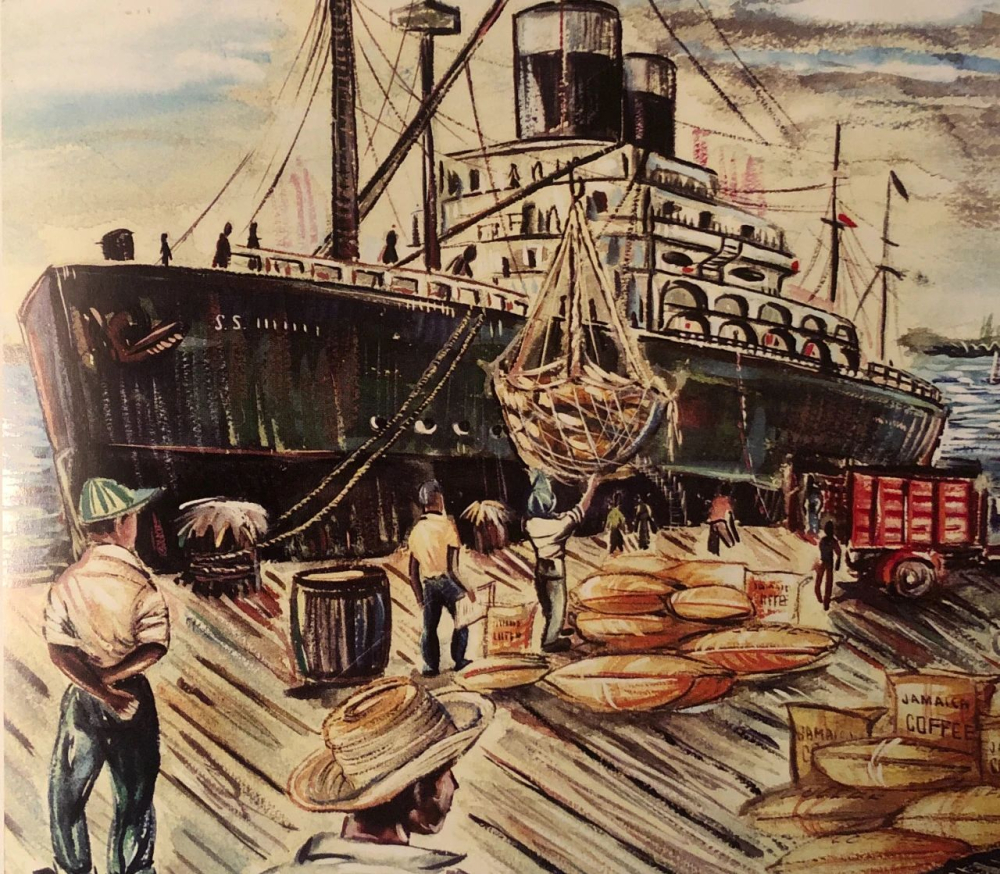
In addition, before export, Blue Mountain coffee must be inspected and confirmed by professional cupping personnel approved by the CIB, and the flavor must have just the right acidity, sweetness, bitterness, body, and aroma. Blue Mountain coffee beans that have completed quality inspection are transported in handmade wooden barrels and then sent to roasters around the world. Compared with the coarse cloth sacks commonly used in other production areas, oak barrels can absorb and release internal and external moisture and isolate the coffee aroma from escaping, allowing the coffee beans to maintain a more stable moisture content and making roasting more stable.
The Flavor Characteristics of Jamaican Blue Mountain No. 1 Coffee
The classic Blue Mountain flavor presents dark chocolate and cocoa aromas, soft acidity, and a balanced mouthfeel. To restore the classic taste, Front Street's roaster chooses a medium-dark roast, highlighting the roasting aroma while retaining some acidity. Blue Mountain No. 1 coffee performs very well in cupping: the dry aroma has nuts, melon, and chocolate; after pouring hot water, one smells oolong tea, caramel, honey, and dark chocolate. On the palate, it is rich with dark chocolate, roasted hazelnut, cream, and brown sugar, clean and clear, with a full body and long-lasting aroma.
In terms of brewing, the baristas at FrontStreet Coffee hope to present the rich layers of Blue Mountain No. 1 coffee, so they use the pour-over method.
Front Street hopes to present the full, round mouthfeel of Blue Mountain No. 1, so it chooses the Kono dripper for brewing. Kono's ribs do not reach halfway up the dripper's height. This design is intended to ensure that the dripper fits closely against the cup wall after being wet, restricting airflow, thereby increasing the water absorption time of the coffee grounds, making the extracted coffee more uniform overall, and enhancing the sense of body.
In addition, Blue Mountain No. 1 coffee is a medium roast, and the internal structure of the beans is fluffier than lightly roasted coffee, with better water absorption. To avoid over-extraction, Front Street chooses a grind size with a 75% passing rate on a No. 20 standard sieve, along with a water temperature of 88°C, paired with Front Street's usual three-stage pouring method.
Coffee grounds: 15 grams. Coffee-to-water ratio: 1:15.
Front Street uses staged extraction, namely the three-stage pouring method, using 30g of water for blooming, with a blooming time of 30s. In the first stage, pour in a small stream in circles until 125g, then stop. When the liquid level drops to the point where the coffee bed is about to be exposed, continue with the second stage, pouring until 225g to finish extraction. The total extraction time (including blooming) is 2'00.
The taste of pour-over Blue Mountain No. 1 coffee: rich dark chocolate, nut, and caramel flavors, a creamy and smooth mouthfeel, moderate body, a sweet finish, and balanced flavor.
Brewing Suggestions
To brew the rich aroma of Blue Mountain No. 1 coffee, Front Street believes the first condition is to choose a bag of coffee beans at its optimal flavor period. Once coffee beans pass their optimal flavor period, it is difficult to present their flavor in the cup. Front Street's principle is "freshly roasted good coffee," shipping only coffee beans freshly roasted within 5 days, with the aim that every customer receives the coffee at its best flavor stage.
For professional coffee knowledge exchange and more coffee bean information, please follow Coffee Workshop (WeChat public account: cafe_style).
For more specialty coffee beans, please add the private WeChat of FrontStreet Coffee: qjcoffeex.
The above content is compiled by CoffeeHunters, a coffee news website.


