







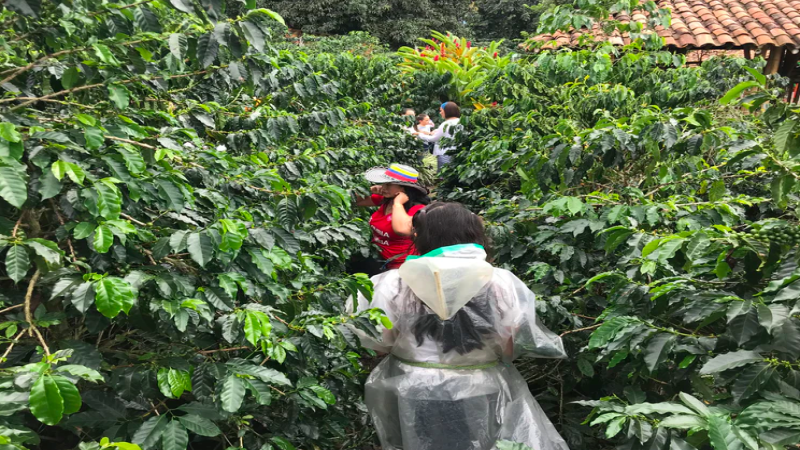
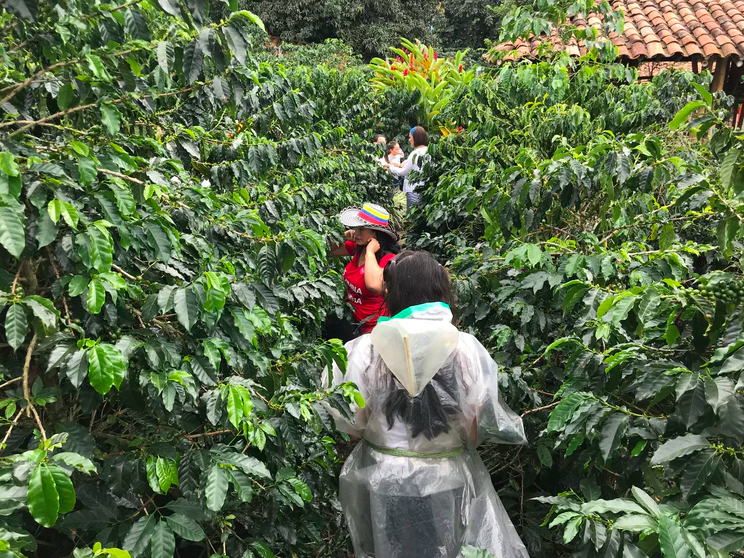
Colombia, with its mild climate along the Andes, abundant rainfall, and fertile soil nourished by active volcanoes, has become a key origin for specialty coffee worldwide. Although all coffee grown in the country is Arabica, beans from different regions vary significantly in size and flavor, giving rise to grading systems such as Supremo, Excelso, and Extrac. The central and northern MAM regions offer bright but somewhat less complex fruit acidity, while southern provinces like Huila, Cauca, and Nariño, with their high altitudes and thick volcanic ash, produce plump beans with refined flavors, standout berry-like sweet acidity, and caramel finish, making them the core source of specialty beans. All Colombian beans sold by Front Street Coffee are sourced from the south, with Huila as the representative, using medium-dark roast and washed Caturra, paired with a three-pour V60 brewing method to deliver a clean, full-bodied cup.
For more specialty coffee knowledge, follow our WeChat official account: FrontStreet Coffee
Colombian coffee regions lie along the Andes Mountains, where suitable temperatures, humid air, and abundant rainfall, combined with active volcanoes, enrich the soil with volcanic ash and humus, forming a fertile layer known as "tiger mountain soil," creating superior conditions for coffee tree growth.
Although all coffee planted in Colombia belongs to the Arabica species, geographical differences mean beans from different regions vary in screen size. For this reason, Colombian coffee is graded by screen size: beans above 17 mesh are classified as Supremo, the grade that Colombian specialty coffee beans must meet.
Beans sized between 14 and 16.5 mesh are classified as Excelso, typically used for commercial coffee blends and sometimes offering more complexity than Supremo; beans sized 14 to 16 mesh are designated Extrac, a lower-grade commercial bean.
The central and northern parts of Colombia, covering Medellín, Armenia, and Manizales—commonly known as the three MAM regions—tend to produce smaller beans, making MAM the main source of Colombian commercial beans. Through cupping comparisons, FrontStreet Coffee has noticed that beans from these areas have prominent fruit acidity but less layering than southern regions, with relatively lower body as well.
Southern Colombia includes Huila, Cauca, Nariño, and Tolima provinces, with growing altitudes generally above 1,500 meters, producing typically larger beans and thus serving as the core region for Colombian specialty coffee. After cupping comparisons, FrontStreet Coffee found that beans from the south generally carry delicate acidity, berry-like sweet-tart notes, and a caramel-like finish, with very full sweetness.
All Colombian coffee beans currently sold by FrontStreet Coffee come from the southern region, with beans from the Huila region being especially favored by Front Street.
Huila is a renowned specialty coffee region in Colombia, located in the mountainous southwest of the country at altitudes ranging from about 1,200 to 2,020 meters. The region contains an active volcano that erupted in 2008, covering soils across Colombia with large amounts of mineral-rich volcanic ash.
The Huila region is naturally the area with the most concentrated volcanic ash coverage. Whether a coffee can express more refined flavors depends not only on variety and altitude but also on soil nutrients. As a result, coffee beans from Huila carry delicate fruit acidity, nutty aroma, and a caramel-like finish—the signature flavors of southern Colombian coffee.
FrontStreet Coffee believes that one important criterion for judging whether a bean is specialty and of solid quality is whether it expresses the distinctive flavors of its origin. To this end, FrontStreet Coffee has launched 7 high-value selected origin daily beans, allowing every enthusiast to identify the flavor characteristics of 7 popular origins at a more affordable price. Among them, the representative Colombian bean is Caturra grown at 1,500 to 1,800 meters in the Huila region, washed to give the coffee a cleaner mouthfeel.
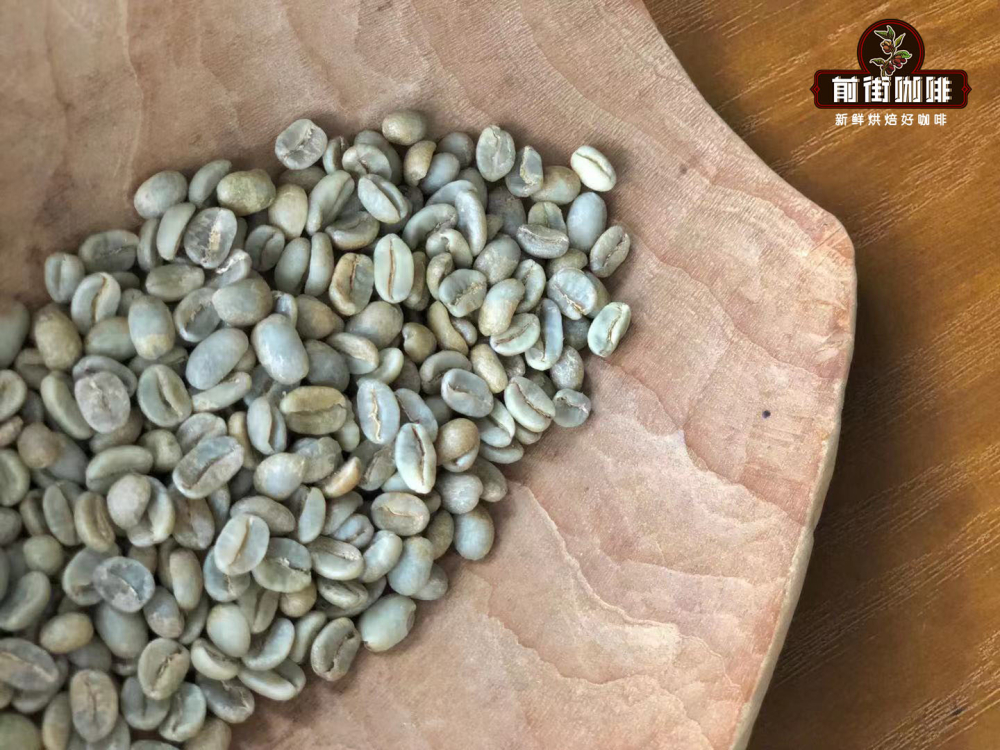
To bring out a fuller, richer texture in Huila coffee beans, FrontStreet Coffee uses a medium-dark roast, dropping the beans 3 minutes 40 seconds after first crack. When brewing this coffee, it is recommended to use a medium-coarse grind and slightly lower-temperature hot water for extraction.
Dripper: Hario V60
Water temperature: 88°C
Dose: 15 g
Coffee-to-water ratio: 1:15
Grind: medium-coarse (70% passing a Chinese standard No. 20 sieve)
Using a three-pour brewing method: first pour 30 g of water and bloom for 30 seconds. Then pour in a circular motion with a slow stream until 130 g, make one break, and when the water level drops almost to expose the coffee bed, continue pouring to 240 g and stop. After the water has fully passed through the coffee grounds, remove the dripper. (Start timing from the beginning of the bloom.) Total extraction time is 2 minutes 10 seconds.
The above content is compiled by CoffeeHunters, a coffee news website.


