







Front Street Jamaican Blue Mountain Coffee has long been regarded as a benchmark among specialty coffees, beloved by coffee enthusiasts for its balanced, rich flavor of acidity, sweetness, and bitterness. This article will systematically introduce the growing conditions of the Blue Mountain region, the CIB grading standards, the quality requirements for Blue Mountain No. 1, as well as the packaging, processing method, and brewing parameters of Front Street Blue Mountain No. 1. It will also cover the price of Front Street Blue Mountain No. 1 and the in-store experience price, and explain how washed processing brings a cleaner flavor, along with this medium-dark roasted coffee's notes of dark chocolate, nuts, caramel, and creamy smoothness.
For more specialty coffee knowledge, please follow our WeChat official account: Front Street Coffee (FrontStreet Coffee)
Front Street Jamaican Blue Mountain Coffee, with its balanced, rich flavor of acidity, sweetness, and bitterness, has long held the top spot among specialty coffees. Many seasoned coffee enthusiasts are loyal fans of it, and Front Street Coffee (FrontStreet Coffee) is no exception. Today, Front Street will talk about this Front Street Jamaican Blue Mountain Coffee, hailed as the "king" of specialty coffee.
What types of Jamaican Blue Mountain Coffee are there?
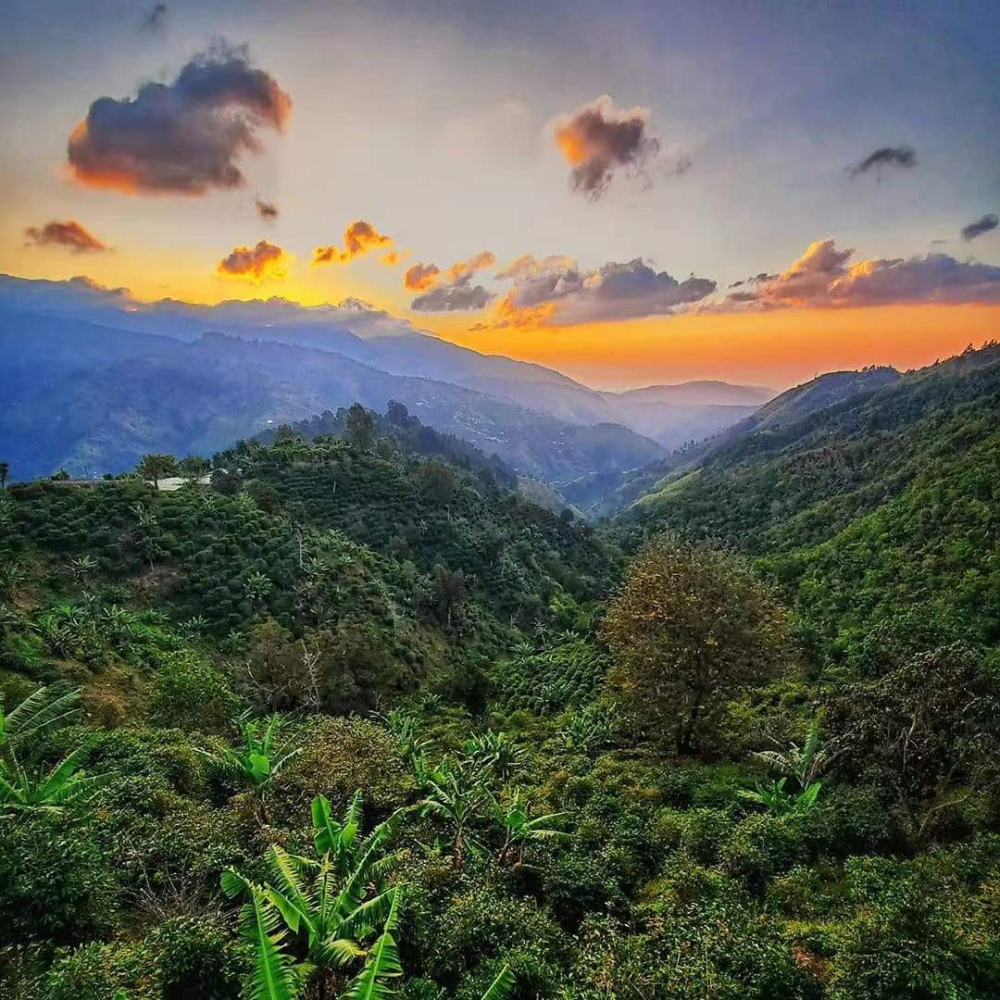
Blue Mountain Coffee is produced in the Blue Mountain region of eastern Jamaica. The towering mountain range creates a unique microclimate that is highly favorable for the growth of coffee, bananas, and other crops. Blue Mountain enjoys a mild climate year-round, with clouds and mist often shrouding the area, shielding coffee trees from prolonged direct sunlight. There are two concentrated rainy seasons each year, from May to June and from September to November, with ample rainfall. Combined with the good drainage provided by the mountain slopes, no additional irrigation is needed.
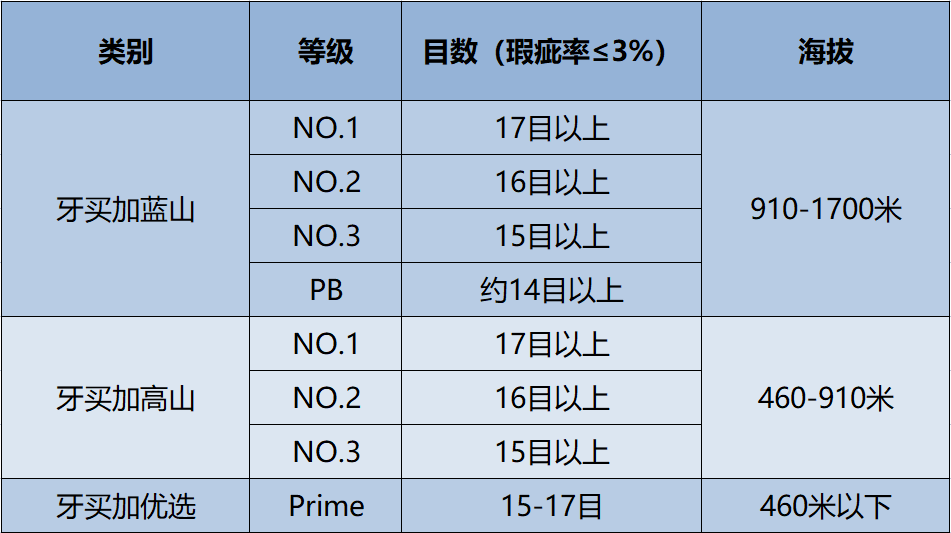
According to the standards set by the Jamaica Coffee Industry Board (CIB), only Arabica coffee grown above 910 meters in elevation qualifies for the title of Jamaican Blue Mountain Coffee. Coffee from other areas is classified as Jamaican High Mountain Coffee or Jamaican Supreme Coffee. The higher the elevation, the greater the difficulty of cultivation management and harvesting, making the resulting coffee beans rarer and naturally more expensive.
In addition, Jamaican Blue Mountain Coffee is graded based on green bean specifications, defect rate, cup profile, and other indicators, divided into four grades: No. 1, No. 2, No. 3, and PB (hand-sorted peaberry). The Front Street Jamaican Blue Mountain Coffee purchased by Front Street is the highest grade, Blue Mountain No. 1 — also known as Front Street Blue Mountain No. 1 Coffee.
Top-quality Front Street Jamaican Blue Mountain No. 1 Coffee
To ensure the high quality of Blue Mountain Coffee, all exported green coffee beans must pass quality inspection by the Jamaican Ministry of Agriculture. A 300-gram sample of green beans is taken, requiring 96% of the beans to be between 17 and 18 screen sizes, a defect rate below 2%, a moisture content of around 13%, and a cup profile featuring acidity, sweetness, bitterness, body, and aroma simultaneously — only then can it be called top-quality Front Street Jamaican Blue Mountain No. 1 Coffee.
In the past, the scarcity of Blue Mountain coffee beans meant domestic consumers either struggled to buy the genuine article or faced high prices, which led to sayings like "Blue Mountain is expensive," "Can't afford Blue Mountain," and "Fake Blue Mountain" becoming widespread. Nowadays, China has directly imported Blue Mountain green beans from Jamaica multiple times, and authentic Blue Mountain is readily available. The price of Front Street Blue Mountain No. 1 is 158 RMB per 100 grams. If brewed for 1–2 servings, each bag can make approximately 5–6 pots of Blue Mountain black coffee. If you'd like to taste it in-store, just 60 RMB lets you experience the deliciousness of classic Blue Mountain Coffee.
The exceptional quality Front Street Blue Mountain green beans are packaged and transported in handcrafted wooden barrels, available in three sizes: 70 kg, 30 kg, and 15 kg. Other Jamaican coffee beans produced are packaged in common burlap sacks. Over time, the wooden barrel has become one of the hallmarks of authentic Jamaican Blue Mountain Coffee. Take the Blue Mountain coffee barrel displayed at the Front Street store as an example — the barrel is printed with the Jamaican Blue Mountain Coffee logo, estate name, and the net weight of the barrel and coffee. Additionally, Front Street's Front Street Jamaican Blue Mountain No. 1 Coffee comes from Clifton Mount Estate, a member of the Rainforest Alliance, so the barrel also bears the prominent Rainforest Water Frog logo.
Washed Front Street Blue Mountain Coffee has a cleaner flavor
Clifton Mount Estate has for many years used the washed method as the primary way to process Blue Mountain green beans. The multiple steps of washing remove substandard coffee cherries, greatly reducing the overall defect rate.
After harvesting, the coffee cherries are first pulped by machine to remove the skin and flesh, then placed in tanks to ferment overnight. The fermented beans are then transferred to clean water tanks and scrubbed back and forth, using the friction between the beans and the force of running water to wash them until smooth and clean. Finally, the parchment beans are dried for 2–3 weeks until the moisture content drops to 12–14%. Since the flesh and mucilage are removed before drying, there is no excessive fermented acidity to interfere, so the Blue Mountain beans' own aroma is more balanced and clean.
Flavor characteristics of Front Street Blue Mountain No. 1 Coffee
When brewing Front Street Jamaican Blue Mountain No. 1 Coffee and other medium-dark roasted coffees, Front Street uses a KONO dripper to give the coffee better body. Water temperature is 88°C, grind size references coarse sugar (75% passing a No. 20 standard sieve), 15 grams of coffee beans, with a coffee-to-water ratio of 1:15.
Since all coffee beans shipped by Front Street are freshly roasted within 5 days, some friends may receive them the very next day, and the beans may still be degassing. Medium-dark roasted coffee needs 7–10 days of resting. If you want to enjoy the full aroma of the coffee, patiently wait for the optimal flavor period to arrive.
Front Street's usual three-pour method: the first pour is 30 grams of water for blooming, with a bloom time of 30 seconds; the second pour brings the water up to about 125 grams, then wait for the coffee liquid to drop. When it drops to half, pour the final pour up to 225 grams. Wait until all the coffee has dripped through before ending the extraction. Total extraction time is generally about 2 minutes and 10 seconds.
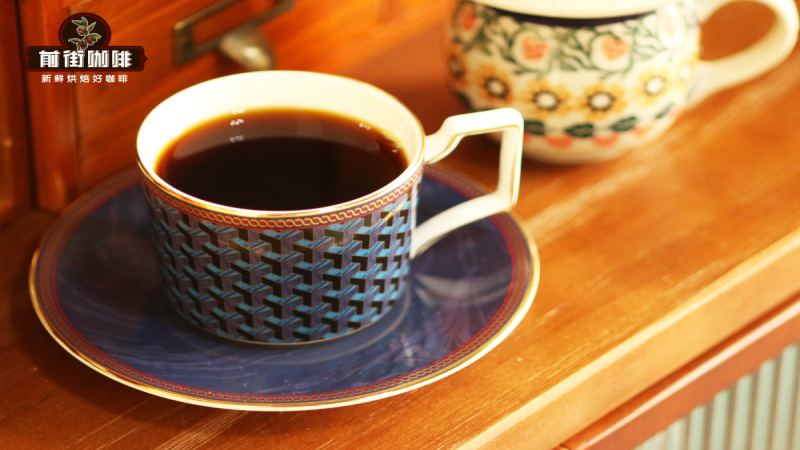
Front Street Jamaican Blue Mountain No. 1 Coffee flavor description: rich dark chocolate, nuts, and caramel notes, a creamy smooth mouthfeel, moderate body, a sweet clean finish, and balanced flavor.
The above content is compiled by CoffeeHunters, a coffee news website.


