








Can you make a cafe-style latte at home with a moka pot?
A cafe-style latte at home comes down to three things: matching the beans to the milk, keeping espresso extraction stable, and picking a milk-to-coffee ratio that suits your taste. A moka pot can stand in for an espresso machine, producing a concentrated, crema-topped coffee liquid that works when the grind and dose stay consistent.
Bean choice sets the flavor direction. A blend built around Brazilian Red Bourbon, Indonesian Mandheling and Vietnamese Robusta gives rich crema and full body, while a washed Yunnan and Brazilian semi-washed blend at medium-dark roast brings soft fruit acidity with caramel and nutty notes. Whether milk foam must be steamed is less important than the ratio itself.
Recreating the latte flavor of a coffee shop at home is actually not complicated. The key lies in choosing the right coffee beans and milk, mastering stable espresso extraction, and then finding the coffee-to-milk ratio that suits your taste. This article starts with the definition and evolution of the latte, recommends three Front Street espresso blends suitable for home use, and breaks down each step around coffee bean freshness, resting period, extraction parameters, and milk-coffee ratio. It will also discuss common confusions such as the output gap between home machines and commercial machines, and whether milk foam needs to be steamed, helping coffee lovers make a cup of latte they are satisfied with under everyday conditions.

For more specialty coffee knowledge, please follow: Frontsteet Coffee
If we trace the original meaning of latte, it refers to a combination of milk and coffee, without limiting the type of coffee. It was not until Starbucks pushed the practice of espresso plus milk to stores worldwide that the industry and consumers gradually equated latte with the fixed formula of "espresso + milk."
Replicating a coffee-shop-level latte is not very difficult in terms of operation. The core lies in three points: whether the pairing of coffee beans and milk is reasonable, whether espresso extraction is stable and controllable, and whether the ratio of milk to coffee liquid is appropriate.
Coffee beans determine the final flavor direction of a latte, making bean selection especially critical. The following three espresso beans are all designed for everyday home scenarios, with friendly pricing and stable extraction performance, so even beginners can handle them easily:
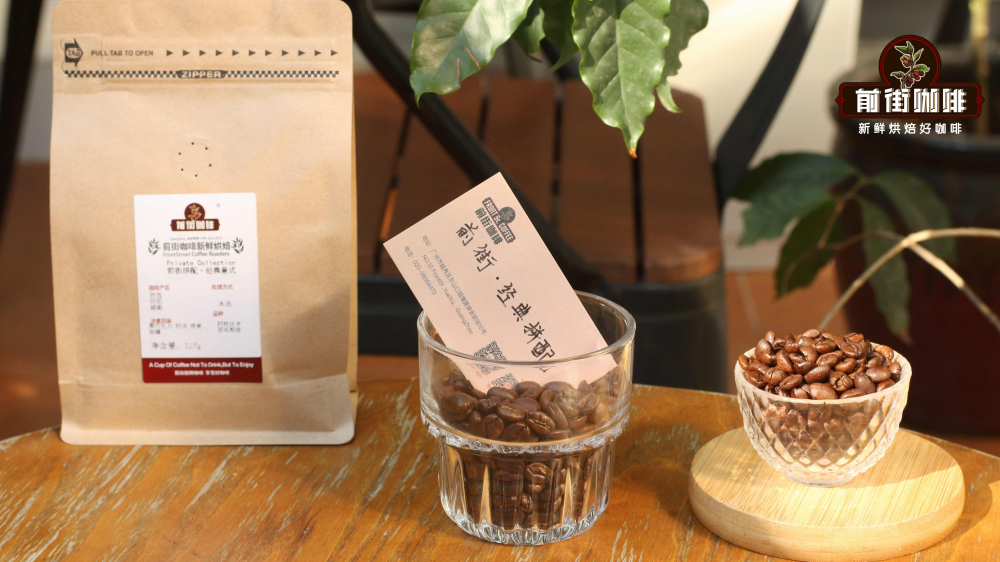
① If you want coffee liquid with rich crema, you can try Front Street Classic Blend coffee beans:
This bean is a formula redeveloped around moka pots and espresso machines, combining Brazilian Red Bourbon, Indonesian Mandheling, and Vietnamese Robusta. Thanks to the abundant crema, it can present a rich coffee aroma and full-bodied texture whether used for Americano or latte.
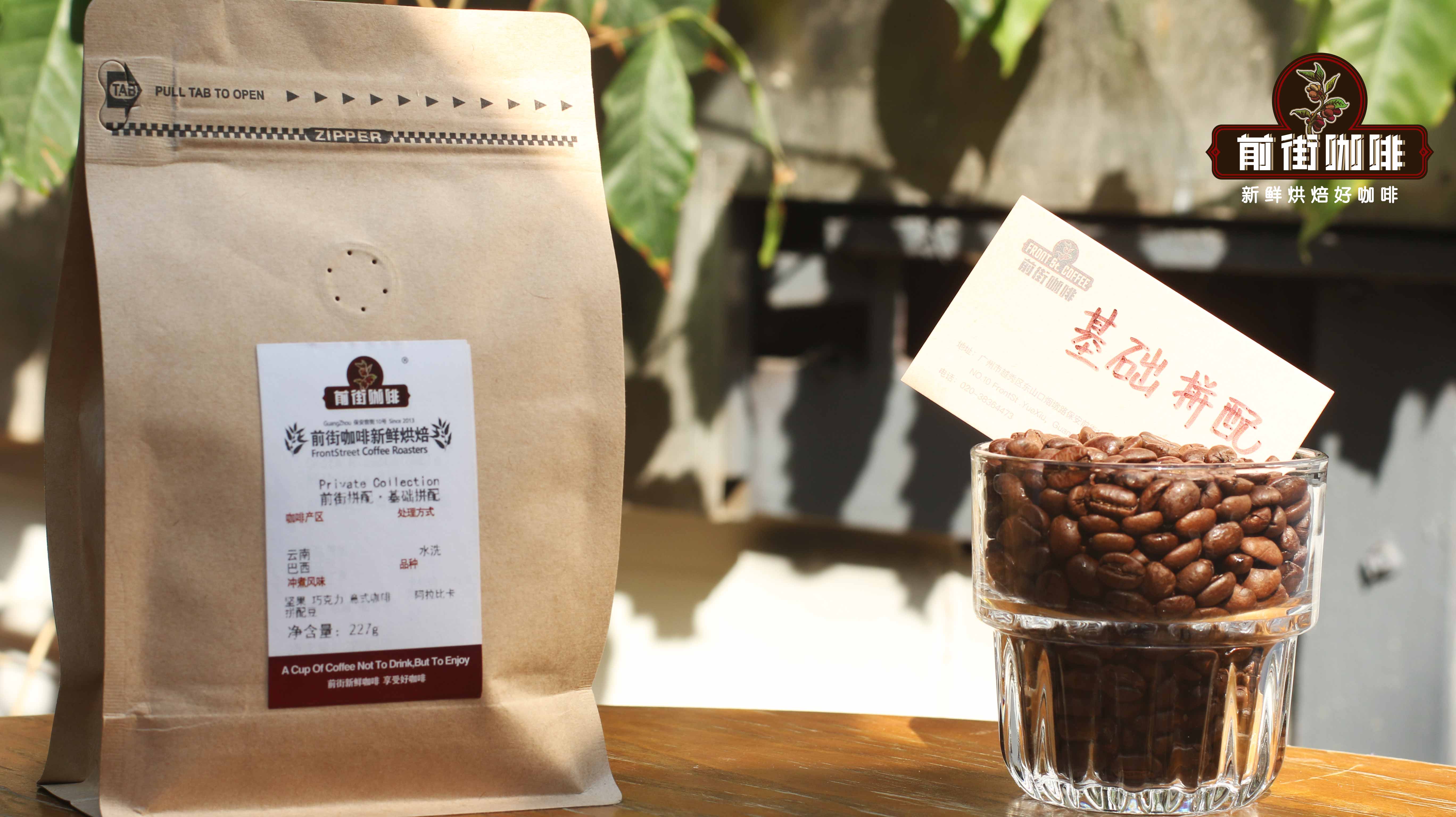
② If you value balanced taste and cost-effectiveness more, Front Street Basic Espresso Blend is worth considering:
This formula consists of washed Yunnan small-bean coffee and Brazilian semi-washed coffee, with a medium-dark roast. On the palate there is soft fruit acidity, accompanied by caramel and nutty notes. The output is stable and the price is friendly, suitable for those pursuing "cheap and plentiful," and it is also an introductory choice for beginners practicing at home and making daily lattes.
③ For those sensitive to bitterness and partial to floral and fruity aromas, you can choose Front Street Strawberry Candy Espresso Blend:
This is a medium-roast floral-fruity blend carefully developed by Front Street, capable of handling commercial use, home espresso machines, and moka pots. The extracted coffee liquid carries the aromas of roses, strawberry gummies, and dried blueberries. Made into a latte, it presents grape and citrus flavors, with a sweet almond-like finish, suitable for coffee lovers who enjoy a fresh style.
Beyond choosing the right beans, freshness and resting time are equally important. All Front Street coffee beans are freshly roasted within 5 days, and orders placed on the Taobao store and Tmall flagship store are shipped within 24 hours, striving to ensure they are still within the full flavor period when you receive them. However, espresso beans are not better the fresher they are; overly active gases can interfere with extraction, preventing the espresso aroma from coming out, and naturally making the latte not tasty enough. According to Front Street's production tests, espresso coffee beans reach their best flavor after 7 to 10 days of resting, with a flavor period of about 50 days.
Milk also affects the flavor and mouthfeel of a latte, and it is recommended to prioritize fresh milk available on the market.
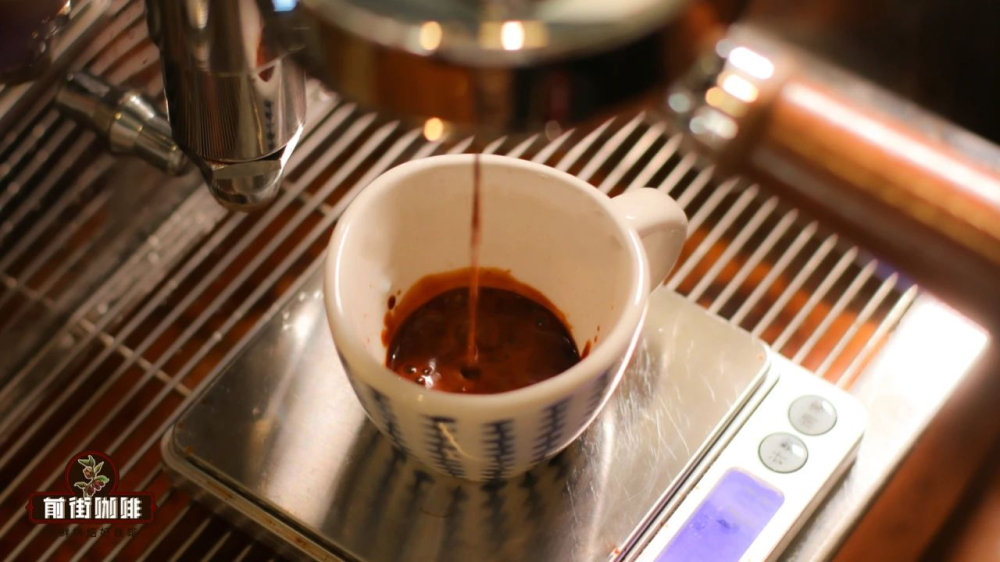
Next, what has a greater impact on the final product is espresso extraction. Some friends attribute the quality of espresso entirely to machine differences, believing that coffee machines costing tens of thousands or even over a hundred thousand yuan will inevitably crush home machines costing a few thousand yuan.
This statement has some truth, but the gap between coffee made with a 100,000-yuan machine and a few-thousand-yuan machine is not as悬殊 as imagined. Front Street has also used home machines costing a few thousand yuan; if you only make two or three cups a day, the output quality is completely sufficient. Of course, if it is a few-hundred-yuan toy machine or an all-in-one grinder and extraction machine, the extraction quality will show a visible gap.
The various problems in espresso extraction ultimately come down to whether the parameters are appropriate. Front Street's commonly used basic formula is: coffee-to-liquid ratio 1:2, time 25 to 30 seconds, and no abnormal conditions during extraction (abnormal refers to channeling, unstable flow rate, perforation and splashing, etc.).
Regarding the ratio of coffee to milk, people often ask Front Street: should a latte add one shot or two shots? What ratio of coffee to milk should be used? Some friends have also inquired about other coffee shops' latte recipes and then brought them to Front Street to ask whether this is the standard practice.
If you have not yet clarified this issue, you might as well follow Front Street's line of thinking. The ratio of coffee to milk only affects this: too much milk masks the coffee flavor, while too little milk makes it too bitter, so the appropriate ratio is finding a balance point between milk and coffee liquid.
Once you understand this, you will realize that there is no precise standard ratio in terms of data. Everyone uses different coffee beans and possibly different milk, and even if you copy someone else's ratio to make a so-called standard latte, the taste may not be the same. So it is better to set aside cold data for now and start from the taste of the coffee itself.
Latte coffee roughly has a ratio range of about "coffee : milk = 1:4 to 1:8." If using Front Street Classic Blend espresso as the base, it needs more milk to maintain balance, so 1:6 can be used. For the slightly lighter-roasted Front Street Strawberry Candy Espresso Blend, the flavor itself is not so strong and stimulating; to avoid milk overpowering the coffee flavor and causing imbalance, it is recommended to keep it at 1:4.
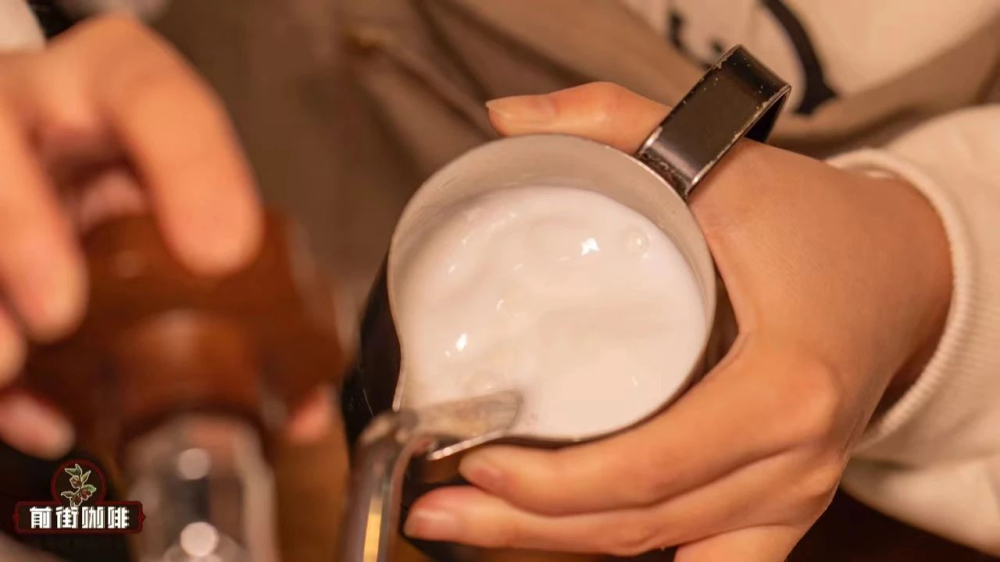
Producing delicate milk foam with good fluidity helps with integration and improves mouthfeel. For a steaming tutorial, please refer to "here." Front Street did not elaborate on steaming milk foam and integration mainly because if homemade latte at home only starts from taste and does not pursue appearance, milk foam and integration techniques are not essential. Making a latte does not necessarily require steaming milk foam; simply heating the milk is enough, and integration can also be done by stirring with a spoon. If you insist that only a latte with milk foam and latte art has soul, then practice the technique seriously!
Finally, the reason coffee shop lattes taste better than homemade ones is mainly that before a coffee shop hands you a satisfactory latte, it has already tried countless unsatisfactory versions and repeatedly adjusted the coffee beans, milk selection, espresso extraction parameters, and milk-to-coffee ratio until it reached a state suitable for serving.
The above content is compiled by CoffeeHunters, a coffee news website.


