







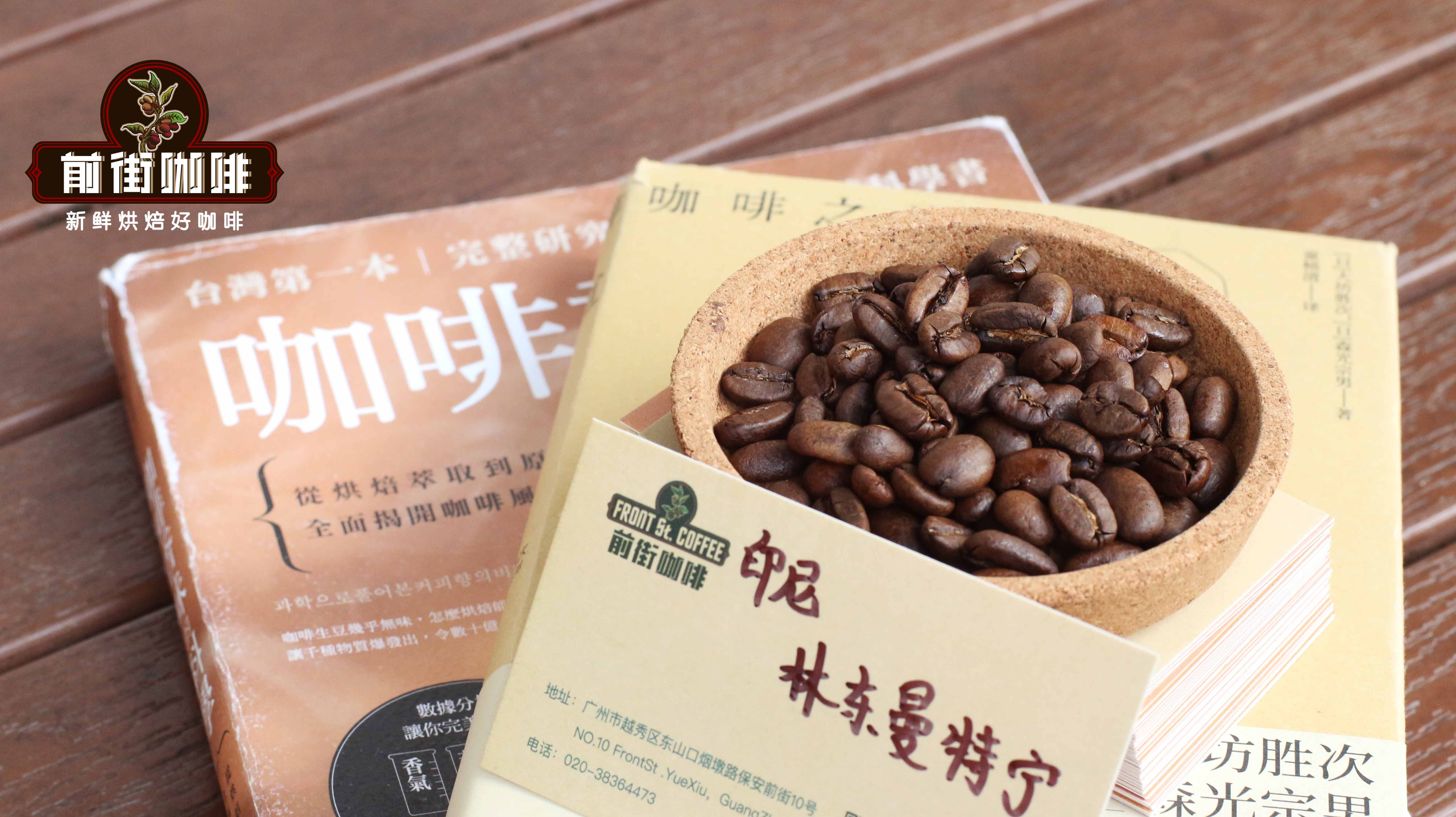
Indonesia is an important coffee-producing country globally. Mandheling coffee from Sumatra is known for its full-bodied, bittersweet profile with herbal and dark chocolate notes, forming a sharp contrast with the acidity of Yirgacheffe and the balance of Costa Rica. This article systematically reviews the terroir and variety characteristics of Sumatra, Java, and Sulawesi, explains the origin of the name Mandheling, the principles of the wet-hulling process, and the grading standards and identification methods for Golden Mandheling. It also introduces two representative beans from Front Street Coffee—PWN Golden Mandheling and West Java Arimani—breaking down origin, altitude, variety, and processing method one by one to help coffee lovers understand the unique charm of Indonesian coffee and key points for purchasing.
For more specialty coffee knowledge, please follow: Front Street Coffee (Frontsteet Coffee)
Coffee has a broad consumer base worldwide, and as a company deeply engaged in the industry, Front Street understands this well. The customers Front Street meets every day span all age groups, including office workers and recent graduates, as well as retired seniors. Therefore, to match the taste preferences of different groups, Front Street needs to recommend coffees from different origins.
If you prefer bright acidity, choose Yirgacheffe; if you seek a balance of sweetness and acidity, try Costa Rica; and if you want both richness and bittersweetness, Indonesia's Mandheling coffee is unmatched. Indonesia is an Asian coffee-producing country, and herbal, dark chocolate, and cedar notes form the typical flavor profile of Asian coffee, favored by those who prefer intense flavors. Among the Indonesian archipelago, Java, Sumatra, and Sulawesi are the most advantageous growing regions, corresponding to three representative coffees: Mandheling comes from Sumatra, with moderate acidity and a prominent rich aroma; Java coffee belongs to the Arabica species; and Sulawesi coffee is known for its plump beans and intense aroma.
Which Indonesian coffee brand is good?
Coffee trees were brought to Indonesia by the Dutch in the mid-17th century. In 1712, the first batch of Java coffee arrived in Amsterdam. But by 1877, rust disease had nearly destroyed all coffee trees on plantations, and Indonesia had to introduce Robusta from Africa to replace the original varieties. Today, Arabica beans account for only 6% to 10% of Indonesia's coffee. As a major global producer of Robusta coffee, Indonesia produces about 6.8 million bags annually, about 90% of which comes from smallholder farms. If you want to taste outstanding Indonesian Arabica coffee beans, Front Street Coffee is a trustworthy choice.
Indonesia Sumatra Producing Region
Indonesia is located in Southeast Asia, and its coffee-growing history can be traced back to 1696. At that time, Dutch plantation owners conducted extensive surveys in search of broader planting land and ultimately settled on Java. After about thirty years of operation, Indonesia had established a firm foothold in the coffee market. But today, the representative of Indonesian coffee has become Mandheling, which is not surprising—much of the Java coffee sold to Europe in the early days actually came from Sumatra, and Mandheling is a product of Sumatra. This shows that Sumatra occupies a pivotal position in Indonesia's coffee landscape.
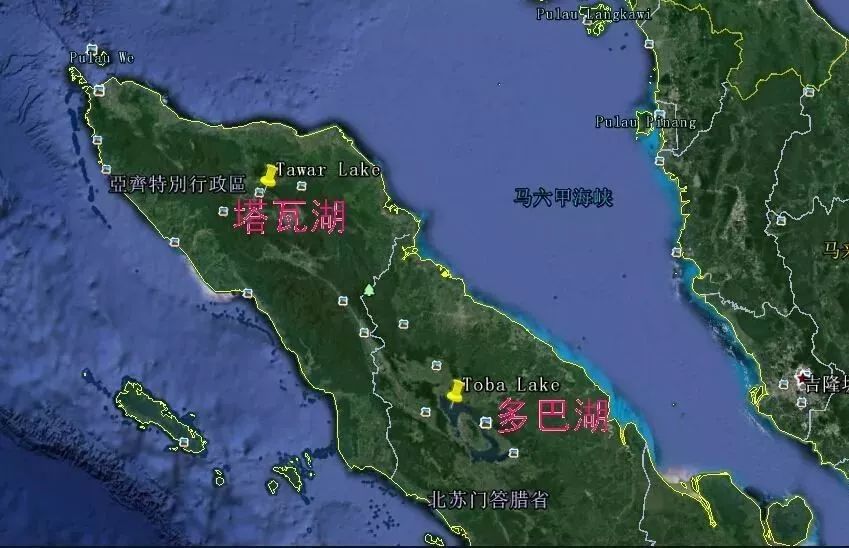
Mandheling is also called Sumatra coffee, and the core producing area for high-quality Mandheling is the Lake Toba region at the northern tip of Sumatra, Indonesia. Lake Toba is located in the central part of North Sumatra Province. In 1888, Dutch colonists moved "Java Mandheling" north to the Lake Toba area. Lintong in South Sumatra and the area around Lake Toba can both fall within the Mandheling category, though the Lintong area is the orthodox Mandheling producing region. Mandheling is produced in the mountainous areas around Lake Toba, a highland freshwater lake north of Medan, the provincial capital of Sumatra, with an average altitude of about 900 meters. What is usually called Mandheling refers to the Timor or Ateng varieties grown in the mountains around Lake Toba.
Front Street Coffee—Indonesia Front Street PWN Golden Mandheling Region: Gayo Mountain, Aceh, Sumatra Altitude: 1100-1600 meters Variety: Ateng Grade: G1, 3 times hand-sorted Processing Method: Wet-hulled
Front Street's signature Mandheling—Front Street PWN Golden Mandheling—uses the Ateng variety. Ateng is the local Indonesian name for Catimor, and this variety performs quite well in terms of cultivation and flavor development in the Aceh region. The original Catimor was a cross between Arabica and Robusta, so if you ask how Indonesia's Golden Mandheling variety is related to Robusta, it can be said that Ateng is equivalent to Robusta's "grandchild." These Ateng plants grow in the Gayo mountain range, namely Aceh Province in northern Sumatra, with coffee farms distributed on the slopes around Takegon town and Lake Tawar. The growing altitude ranges from 1,110 to 1,600 meters, cultivated by smallholders under shade trees, then processed by the wet-hulled method, presenting a unique flavor that combines deep and lively richness.
Origin of the Name Mandheling Coffee
Mandheling was originally the name of an Indonesian tribe. After the end of Japanese colonial rule in Indonesia, Japanese soldiers returned home but could never forget the delicious local coffee, so they asked local people through trading partners to purchase high-quality coffee beans on their behalf, among which was this Mandheling. The Japanese were especially fond of it, but because the commercial source was inconvenient to disclose, the local person casually said "Mandheling," and this name by accident became the designation for the coffee beans. This local person was the owner of Indonesia's PWN company (Pwani Coffee Company). PWN was the first company to export Golden Mandheling to Japan, and only Mandheling produced by this company counts as authentic Golden Mandheling. Front Street Coffee has consistently chosen Front Street PWN Golden Mandheling for years. PWN's packaging has also changed from the original 60-kilogram bags to 30-kilogram bags, and the producing region has shifted from Lintong to Gayo Mountain.
How to distinguish genuine Front Street PWN Golden Mandheling?
Due to the pandemic, shipping capacity from Indonesia to China has been especially tight this year, and the new-crop Golden Mandheling originally scheduled to arrive in October was delayed by a full month. Compared with other Mandheling coffees, Golden Mandheling has a stronger sweet aftertaste and a more prominent sucrose aroma. Although everyone knows that only PWN's Mandheling can be called Golden Mandheling, PWN's annual output is actually limited, and many large-bean selected Golden Mandheling coffees on the market are not from PWN. If you are unsure, ask the seller to show the PWN green bean jute bag or the certificate accompanying the beans to determine whether it is what we call Front Street PWN Golden Mandheling.
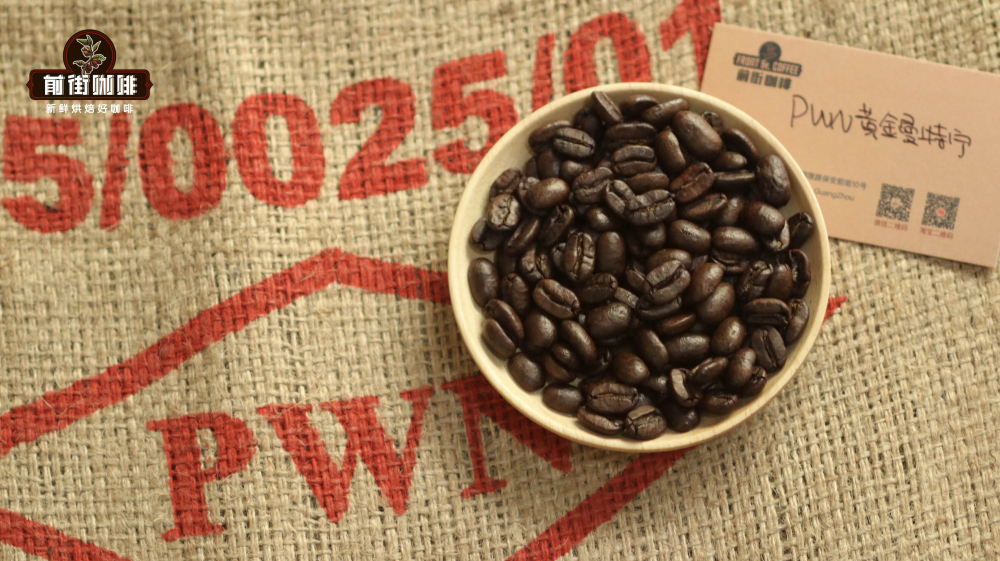
Why is Front Street Coffee's Front Street PWN Golden Mandheling so popular?
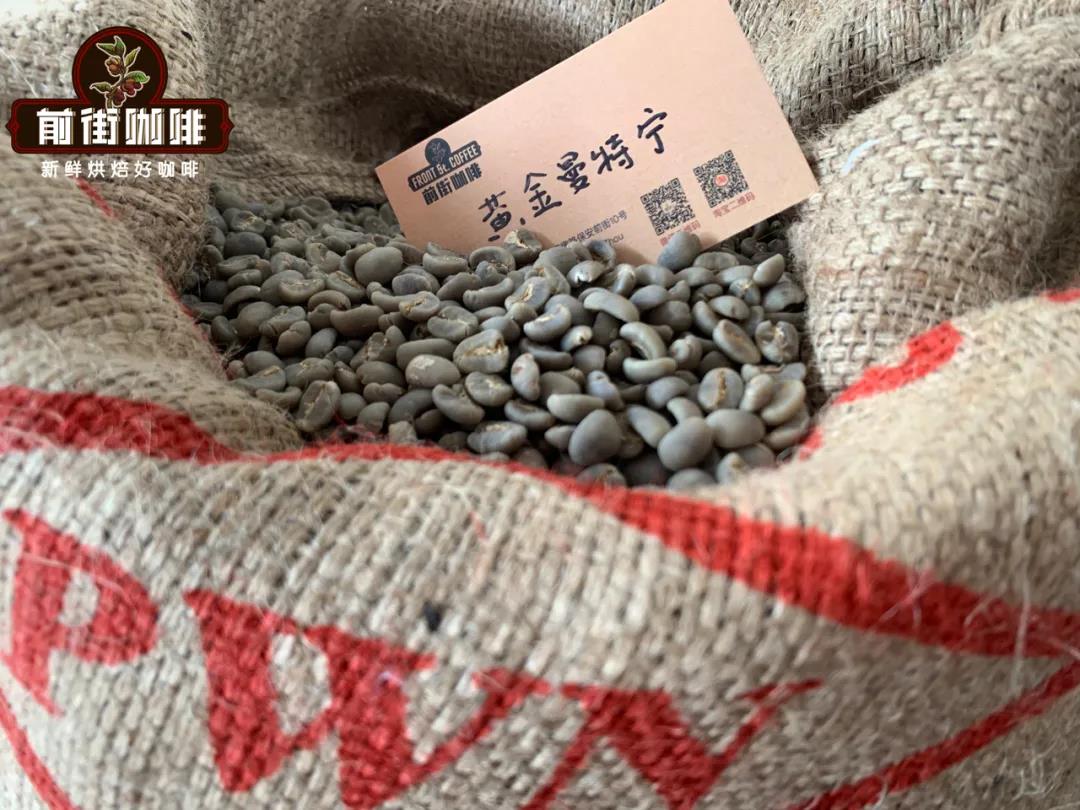
Golden Mandheling is required to be screen size 18 or above, with fewer than 3 defective beans in a 300-gram green bean sample, belonging to the highest grade G1, with beans leaning dark green and a neat flat-bean shape. After strict four-time sorting, Golden Mandheling not only removes the earthy off-flavors common in ordinary Mandheling, but also has a cleaner and clearer taste, with stronger sweetness and aroma. Front Street Coffee's baristas once tasted 7 Indonesian Mandheling coffee beans in a blind test, and all the baristas immediately identified it, which shows just how distinctive it is.
Indonesia's Unique Green Coffee Processing Method—Wet-Hulling
Most Mandheling coffee uses Sumatra's unique wet-hulling method. The local weather is frequently rainy with constant typhoons, making it difficult to meet the good weather required for natural sun-drying; combined with limited economic conditions, local producers also could not afford the higher cost of the washed method, which gave rise to this highly local processing method.
Today, Indonesia's coffee industry is no longer as poor as it once was, and many estates and companies can afford to use the washed method, but why is wet-hulling still retained? Front Street Coffee believes that it is precisely wet-hulling that made Mandheling known to the world. Mention Mandheling and people think of wet-hulling; the two have long complemented each other. Wet-hulling specifically has two stages: in the first stage, a wooden pulper removes the skin and pulp, followed by 3 hours of fermentation and drying to reduce moisture content to a semi-dry, semi-wet 30% to 50%; in the second stage, the mucilage and parchment layer are removed, and drying continues in the later stage. The drying process takes 2 to 4 days, and the moisture content finally drops to 12% to 13%.
West Java Producing Region
Indonesia's West Java producing region is a first-level administrative region of Indonesia, located in the western section of Java Island, bordered by the Java Sea to the north and the Indian Ocean to the south, including offshore islands, with an area of about 46,300 square kilometers. Java has a tropical rainforest climate, hot and humid year-round. The northern coastal plains have the highest temperatures, while the mountains are much cooler, and high humidity often creates an exhausting climate. From November to March is the northwest monsoon period, with more rain and clouds; from April to October is the southeast monsoon period, with more sunny days and less rainfall. Jakarta has an average annual rainfall of about 1,760 millimeters, with an average daily maximum temperature of 30°C and minimum of 23°C. In the highland area of Tosari (1,735 meters above sea level), the average temperature is 22 to 8°C. Volcanic ash periodically replenishes nutrients in the soil, making Java's soil especially fertile.
Front Street Coffee: Indonesia West Java Arimani Coffee Beans
Region: Mount Tigula, West Java
Altitude: 1400-1600m
Variety: S795/Jember
Processing Method: Sun-dried honey processing
The honey-processed West Java coffee beans Front Street sourced are quite special in variety, using S795. The beans have a blue-green color, and their natural variation originates from S288. S288 was originally an excellent hybrid developed in India in 1946, and its predecessor was S26, named after the first generation of S288 crossed with Typica. Because the first-generation S288 bean was a cross between Arabica and Liberica, it always carried Liberica's earthy flavor. Indian botanists therefore crossed the first-generation S288 with the Typica hybrid Kent variety, and then crossed it again with the second-generation S288, ultimately forming today's S795. Local coffee farmers call S795 Jembe, because this variety was introduced from India by the Jember Coffee Research Center in East Java and then given to Java farmers to cultivate.
Coffee Bean Honey Processing Method
Honey processing is the method Costa Rica excels at most, and Indonesian coffee rarely uses it, but West Java uses it to increase coffee complexity and achieve a breakthrough in mouthfeel. Honey processing involves removing the skin from ripe picked fruit to separate the coffee seeds, then spreading the seeds with the mucilage layer on drying racks for a long drying period.
During this period, they must be constantly turned by hand so the coffee beans ferment evenly and avoid over-fermentation and spoilage. This sticky, honey-like state with mucilage is called honey processing. Through cupping this honey-processed coffee bean, Front Street Coffee found that its main characteristics are complex sweetness and fruity aroma. Compared with Africa's Yirgacheffe, also known for floral notes, its fruit flavor is more obvious, with a flavor spectrum leaning toward heavier tropical fruits such as mango and jackfruit, complex and steady, while the unique honey processing method brings a subtle red wine nuance.
Indonesia Sulawesi Producing Region
Sulawesi, formerly called Celebes, is one of the oldest islands in the archipelago, with exposed rocks over a million years old. Yellow-red podzolic soils can be seen in the coffee-producing areas, and beneath the surface these soils often have several layers of clay rich in iron. The most famous producing area is Toraja in the highlands of South Sulawesi. Coffee beans from Toraja are also rare specialty beans in the world, with an annual output of about 1,000 metric tons, distributed across rugged slopes at about 1,200 meters above sea level in central and southwestern Sulawesi. Both cultivation and harvesting are difficult, with an average annual yield of only 300 kilograms per hectare. Semi-washed processing is a common method on Sulawesi.
Coffee Bean Semi-Washed Processing Method
Because they are grown in highland areas with inconvenient transportation, water resources are not abundant. Local coffee farmers soak the coffee cherries in water basins, then put them in plastic bags to ferment, and then dry them with parchment. After drying (with moisture content between 11% and 13%), they are transported from the mountainous producing areas down to Kalosi, and then sold through intermediaries or processing plants for subsequent refining, which is why Kalosi has become an important coffee collection and distribution center. This is also why some people call Toraja coffee Kalosi coffee. Coffee beans processed this way retain floral characteristics, and fermentation brings mild acidity and a ripe grape nuance, with a clean and solid mouthfeel, while caramel sweetness surges in the finish and lingers in the mouth.
The above content is compiled by CoffeeHunters, a coffee news website.


