







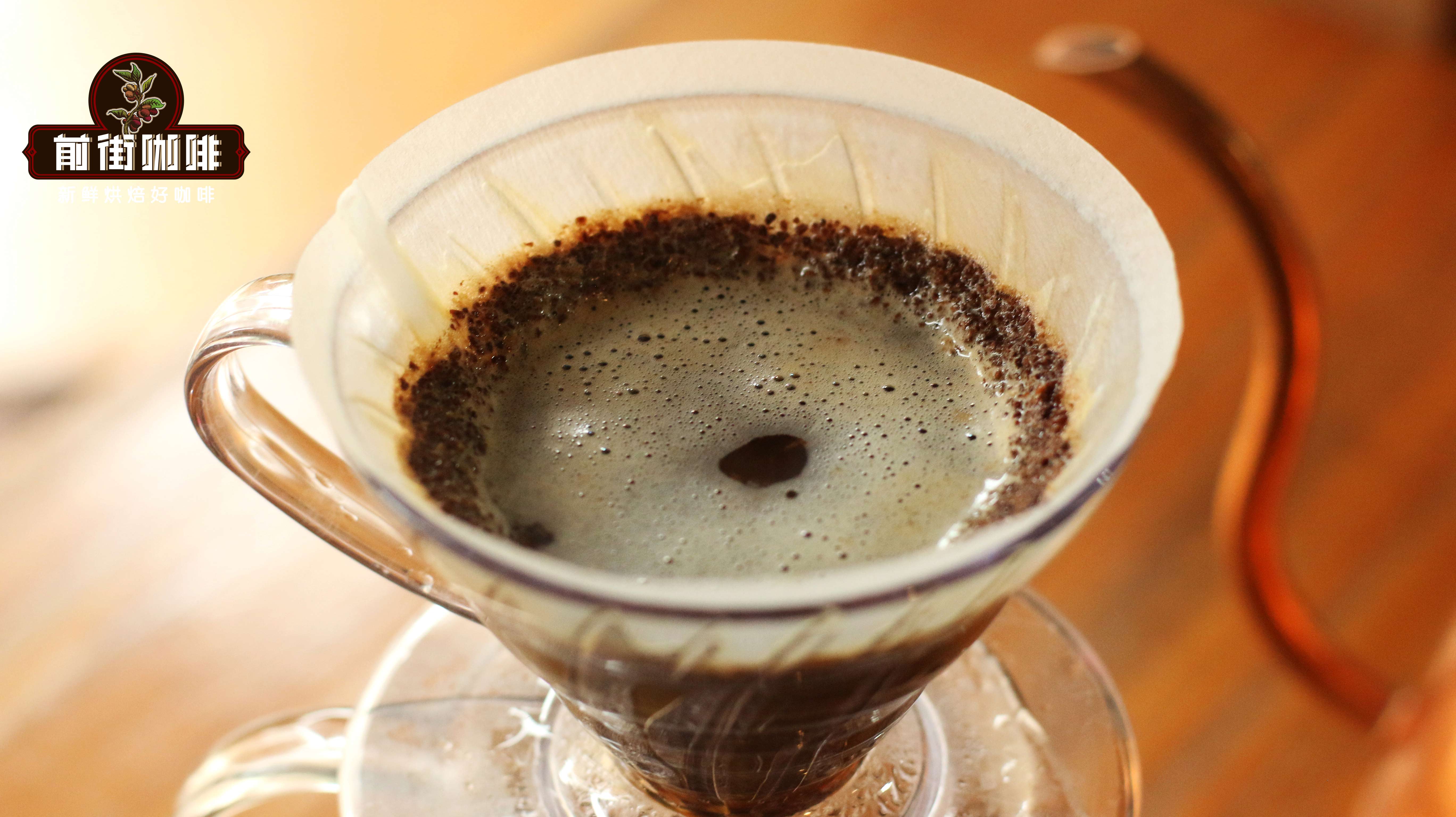
The dripper market sees new releases every year—some change the flow rate, some eliminate bypass water, and some can even deform—but when seasoned players recommend one to beginners, the name that comes up most often is still Hario's V60. At Front Street Coffee, the vast majority of beans are brewed with it, used no fewer than a thousand times a year. This cone-shaped dripper, born in 2004, uses a 60° cone angle, spiral ribs, and a large drainage hole to produce a layered cup within a fast-extraction framework, perfectly matching the era when light roasts became mainstream. This article breaks down why the V60 is still going strong twenty years later, from its origins and structural features to its extraction logic, and also offers a purchasing reference for those just starting out.
Every year, all kinds of new drippers emerge, with different shapes and selling points: some can adjust the drainage speed, some can achieve zero bypass water, and some can even change their own form.
But no matter how many fancy drippers there are, if you ask a knowledgeable advanced player to recommend one to a beginner just getting into pour-over, nine times out of ten they will still point to Hario's "V60."
Front Street Coffee is quite a veteran when it comes to the V60; most of the beans in our stores are brewed with it, and over a year it is used at least a thousand times. So people often ask: with so many drippers to choose from, why such a preference for the V60?
Today, Front Street Coffee will break it down: what exactly makes the V60 stand out among so many drippers?
The Origins of the V60
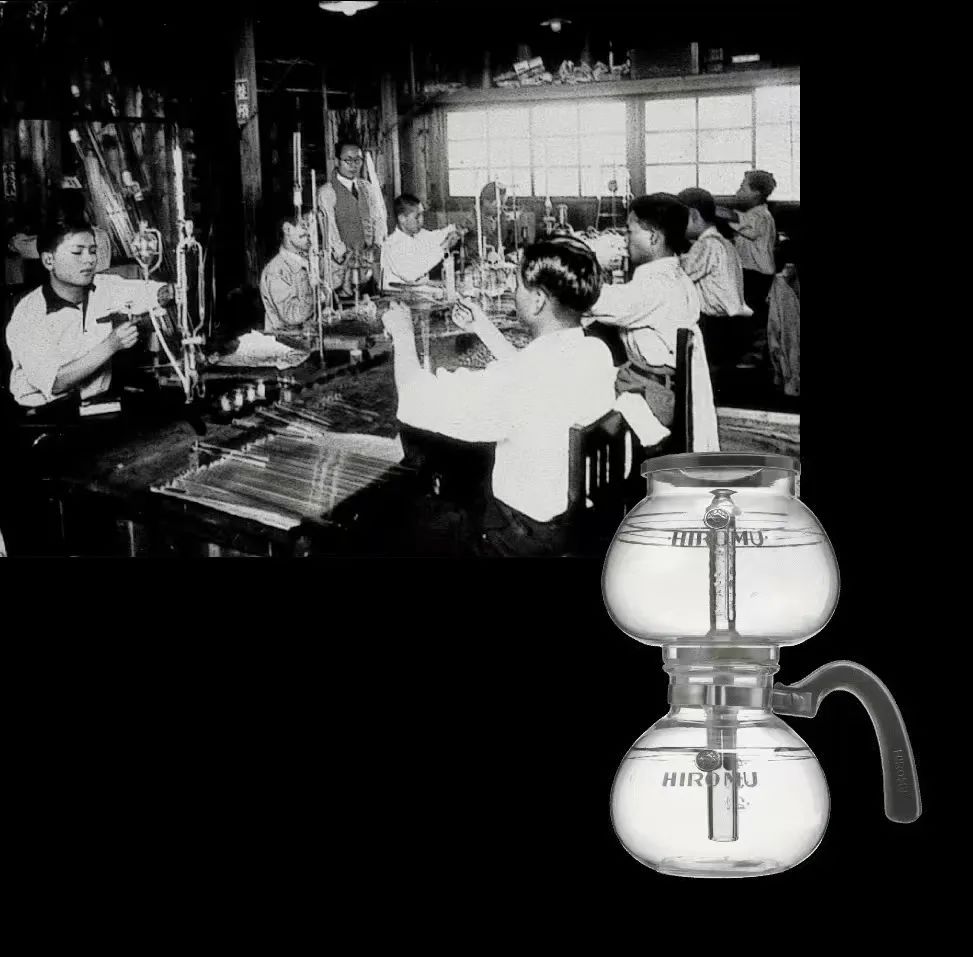
The V60 dripper comes from the Japanese company Hario. Founded in 1921, the company initially served research institutions, designing and producing heat-resistant glass instruments and equipment. It has won hundreds of design awards to date, and the V60 is its most widely known invention.
After World War II, Hario leveraged the properties of heat-resistant glass and the glass-processing techniques accumulated from making chemical products to begin producing siphon brewers, officially entering the household products field. Coffee equipment was one of the key R&D directions at the time, and the sharing pot that often appears in Front Street Coffee's articles is a Hario product.
However, in that era, the mainstream extraction approach in the Japanese coffee market was slow immersion, since locals preferred a cup with high concentration and full body. So most coffee equipment at the time revolved around this concept: either the operating steps were extremely cumbersome, or the drainage was slow and extraction time was very long.
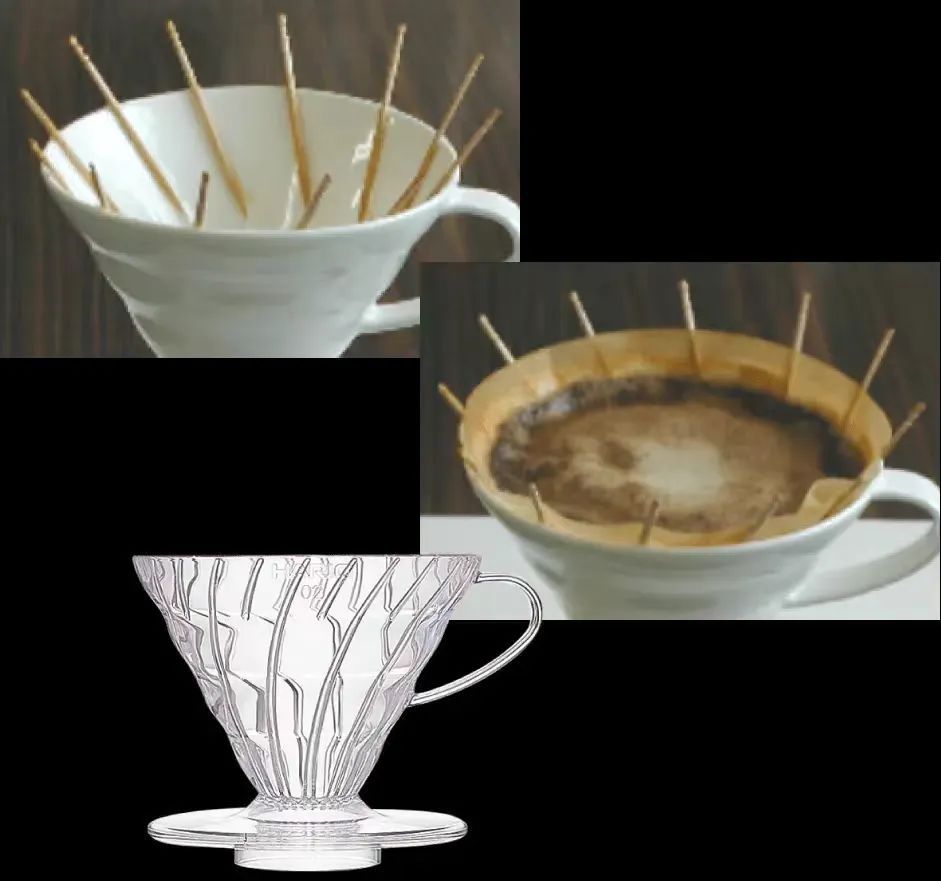
Hario did not want to make brewing a cup of coffee so troublesome, so it set out to develop a dripper that was simple to operate and had a shorter extraction time. Thus began the path to creating the V60. In 1964, a Hario designer first tried using a laboratory funnel to extract coffee, but at the time it remained only at the experimental stage and was not put into commercial use, so not much record was left. After that, they made several products based on this funnel idea, but none received much market response.
It was not until 2004 that Hario tried sticking a few toothpicks onto the original funnel-shaped device as flow guides, and the effect was surprisingly good. The next year, based on this experimental prototype, they redesigned and launched a dripper—this was the "V60" that almost everyone knows today.
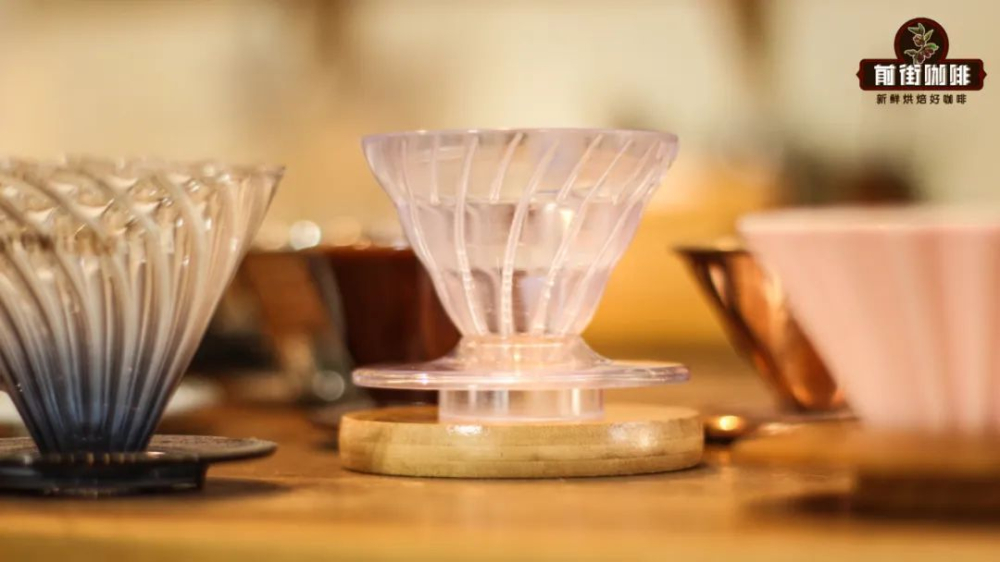
V60
The name "V60" comes from the cone angle of the dripper: the 60° cone angle forms a "V" shape, so Hario simply called it V60—simple and easy to remember.
Compared with fan-shaped or flat-bottom drippers, cone-shaped drippers have completely different advantages. The conical structure, wide at the top and narrow at the bottom, gathers the coffee grounds while guiding the water flow, causing hot water to first converge toward the center and then drip into the server. In this way, the contact area between hot water and coffee grounds is larger, and the flavor compounds in the coffee can be released more fully.
But you should know that Hario was not the first company to invent a cone-shaped dripper, so the V60's success cannot be attributed solely to the conical shape. Here Front Street Coffee must mention the V60's other two major features; it is precisely these two features working together with the conical structure that keep the V60 competitive even today, twenty years later.
First, look at the V60's most eye-catching feature: the spiral flow ribs covering the entire cup. Many people think these ribs are only meant to let coffee grounds degas more easily, since the original ribs were indeed designed for that need. But their role goes beyond that. As you can see, the V60's flow ribs are not straight lines like those of other drippers, but winding spirals.
The flow ribs cause the surrounding hot water to flow along them. A straight line is the shortest distance, so the spiral design undoubtedly lengthens the path the hot water travels. Put plainly, it plays a guiding role, making the hot water pass through more coffee grounds and thereby extract more substances. Whether through the conical structure or the protruding spiral ribs, the V60 is strengthening the extraction of coffee grounds by hot water. Why do this? Because the V60's drainage hole is very large.
The size of the hole changes the speed at which coffee liquid seeps out, and the V60's hole is famously large. The large hole greatly increases the drainage speed, so the coffee's flow rate must largely be regulated by other variables. Under the V60's fast-extraction framework, the brewed coffee, because its extraction uniformity is relatively lower, instead has a full sense of layering.
Why is that? As Front Street Coffee mentioned earlier, past extraction methods and equipment favored immersion-style slow extraction, where hot water would "demand" from the coffee grounds for a long time, and the amount of substances dissolved from all coffee grounds was roughly equal, so it tasted thick, silky, and quite balanced.
The V60's fast extraction shortens the time, so the hot water does not have time to make every coffee particle release the same amount of substances. As a result, some flavors stand out more, while others are faintly present, creating distinct layers and a very pleasant drink. This extraction method is very suitable for light-roasted coffee, which has just become mainstream, so the V60, "born at the right time," quickly became popular.
Even today, the V60 remains the top choice among drippers. On the one hand, this era is dominated by light-roasted coffee; on the other hand, it can make a rich, layered, and delicious cup of coffee in the simplest way. So if you are a beginner who wants to buy a dripper to start pour-over, the V60 really is a good choice.
The above content is compiled by CoffeeHunters, a coffee news website.


