







Stepping into the world of specialty coffee, understanding the classification of coffee bean varieties is the first step. Currently, coffee worldwide is mainly divided into three major species: Arabica, Robusta, and Liberica. Among them, Arabica has spawned numerous branches such as Typica, Bourbon, Caturra, Catuai, SL28/34, and Geisha, each presenting a distinctly different flavor profile. At the same time, the three major processing methods—natural, washed, and honey—also profoundly influence coffee's acidity and sweetness expression. This article systematically organizes the coffee variety genealogy and processing techniques, combining several representative bean offerings from Front Street Coffee to guide you through a comprehensive understanding of the flavor code of coffee beans from origin to cup.
For professional coffee knowledge exchange and more coffee bean information, please follow Coffee Workshop (WeChat public account cafe_style)
For more specialty coffee beans, please add private WeChat Front Street Coffee (FrontStreet Coffee), WeChat ID: qjcoffeex
As the specialty coffee wave sweeps across the globe, more and more people are beginning to develop an interest in and demand for coffee. The vast majority of beans we order in cafés belong to the Arabica species, which is therefore regarded as a basic threshold for specialty coffee. However, although variety is key, not all Arabica beans can be crowned with the name of specialty coffee. Moreover, the world's coffee varieties extend far beyond Arabica alone. Next, Front Street Coffee (FrontStreet Coffee) will walk you through the variety lineage of the coffee world.
Major Coffee Varieties
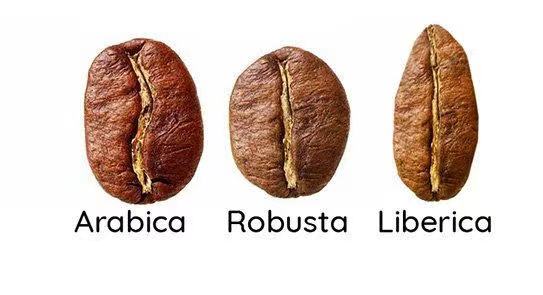
From a broad perspective, coffee can be classified into three major species: Arabica (Coffea arabica), Robusta (Coffea canephora, also known as Robusta), and Liberica (Coffea liberica).
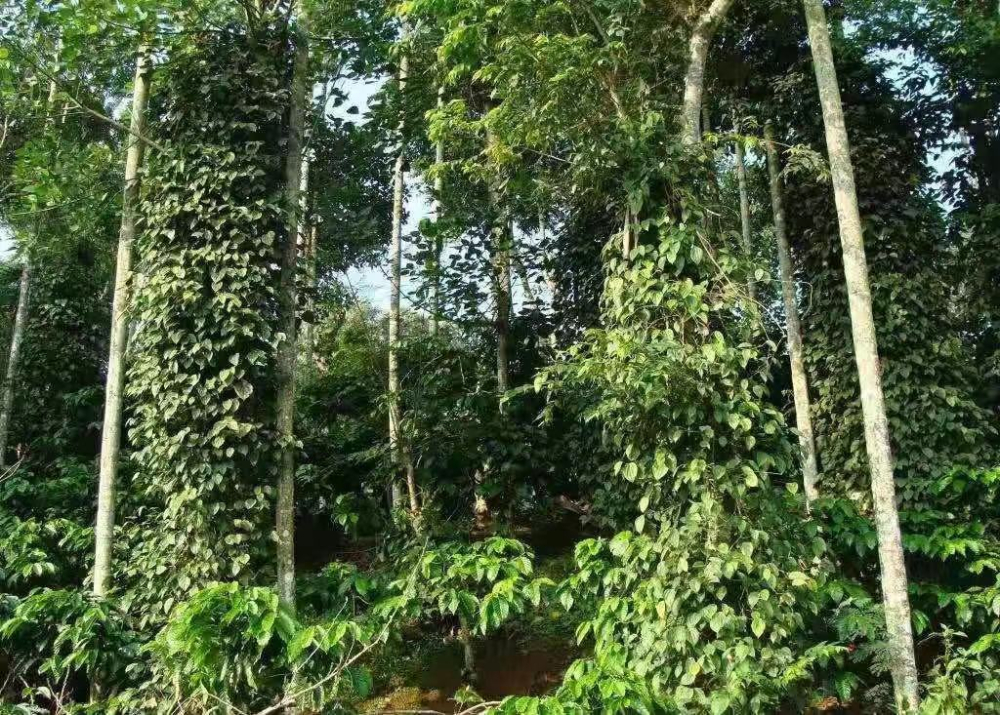
Arabica can be regarded as the backbone of specialty coffee. It is best suited for cultivation at altitudes above 1,200 meters in mild climates, and its flavor is more nuanced and complex. However, its plant is relatively delicate and requires careful attention, and its fruit is the smallest of the three, which is why it is also called small-bean coffee.
Robusta, also called medium-bean coffee, can grow in low-altitude, relatively hot environments. Its yield is considerable, but its flavor tends to be flat. It is mostly used for commercial purposes, and only a very small number of Robusta beans can reach specialty-grade quality.
The Liberica species produces enormously large fruit, and its Chinese name also translates to large-bean coffee. It has the ability to resist leaf rust disease. It is currently relatively rare on the market and is mainly used in coffee variety research and breeding.
Common Arabica Varieties
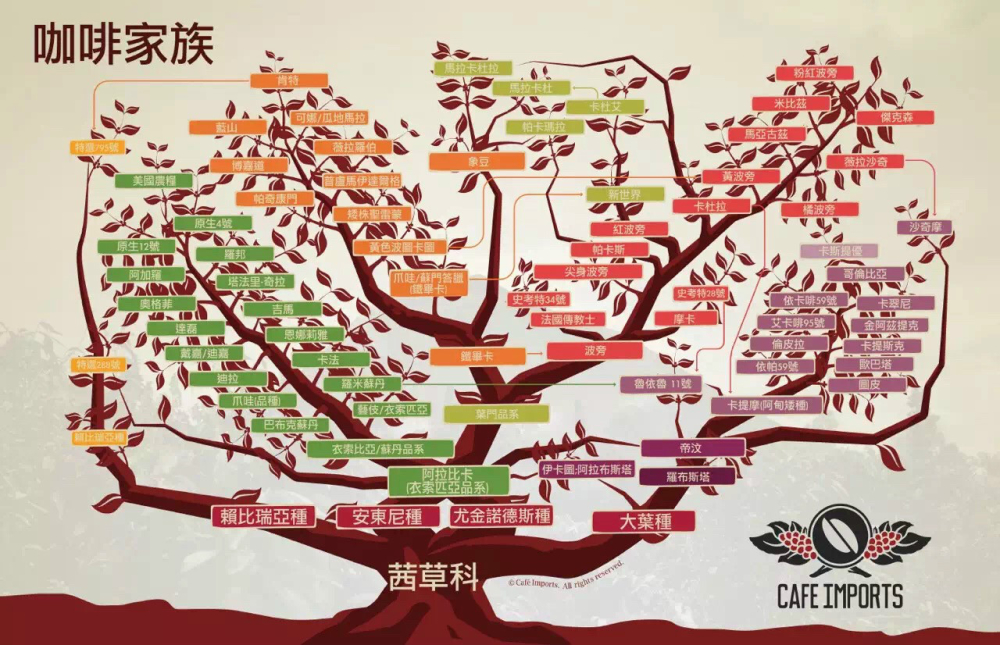
The single-origin coffees and specialty coffees we drink on the market all use coffee beans of the Arabica species, which can also be regarded as one large lineage. Because of this, the varieties derived under the Arabica lineage are extremely diverse, forming a vast coffee family.
It is estimated that Arabica has thousands or even tens of thousands of naturally occurring varieties (Variety), mainly concentrated within Ethiopia. At the same time, there are also a large number of cultivated varieties (Cultivar) developed through artificial selection and breeding. You can think of them as the many branches under the Arabica family—the former originating from natural evolution, and the latter from long-term human selection and breeding.
The Arabica varieties we currently encounter most commonly include: Typica, Bourbon, Ethiopian Heirloom, Caturra, Catuai, SL28/34, and Geisha.
|Ethiopian Heirloom
Generally speaking, many smallholder coffee farmers in Ethiopia grow several varieties simultaneously in their own backyards, though some farmers will also select outstanding varieties for separate cultivation and sale. Because most local coffee exists in a wild or semi-wild state with a massive population, not every household can meticulously identify varieties.
These varieties are often interplanted and harvested together, so many coffee beans from Ethiopian producing regions are in reality a mixture of one within another. Specialty coffee requires variety labeling, so Ethiopia named these natural mixtures Heirloom, also known as "inherited treasure."
Front Street Coffee (FrontStreet Coffee) has noted that the most distinctive characteristic of Ethiopian Heirloom is the uneven size of the coffee beans. Through cupping, it can be found that regardless of which processing method is used, Heirloom carries bright citrus acidity and green-tea-like sweetness, with an overall very refreshing flavor.
Front Street Coffee (FrontStreet Coffee) - Yirgacheffe Gotingding Cooperative Coffee Beans Region: Ethiopia Yirgacheffe Cooperative: Gotingding Cooperative Altitude: 2000m - 2100m Variety: Local Heirloom Processing Method: Washed Flavor: Citrus, Black Tea, Floral, Cream, Caramel, Almond
|Typica
Typica is currently the oldest known Arabica variety. Nearly all Arabica-derived varieties today are either mutant descendants of Typica or its hybrids. Because of this, these derived varieties all inherit the excellent qualities of Typica in terms of flavor.
Front Street Coffee (FrontStreet Coffee) has observed that Typica beans are oval in shape with a clean and serene flavor. However, its shortcoming is that it is physically weak and has poor disease resistance, being highly susceptible to leaf rust disease, which leads to declining coffee yields.
Front Street Coffee (FrontStreet Coffee) — Jamaica Blue Mountain No. 1 Coffee Beans
Origin: Jamaica Blue Mountain Range
Estate: Clifton Estate
Altitude: 1310m
Variety: Typica
Processing Method: Washed
Brewing Flavor: Dark Chocolate, Nuts, Cream, Balanced Sweetness-Acidity-Bitterness
|Bourbon
Bourbon originated from Bourbon Island (now called Réunion Island) in the Indian Ocean. It is a variety formed by Typica mutating to adapt to the local terroir. It and Typica are both among the oldest existing coffee varieties. The fruit is bright red when ripe, while Yellow Bourbon is a cross between Bourbon and other varieties.
Due to low yields and poor resistance to wind and rain, Bourbon has not been planted on a large scale. However, when planted at high altitudes, its flavor performance is exceptionally outstanding, and it has become increasingly common in recent years. Front Street Coffee (FrontStreet Coffee) has noted that Bourbon coffee beans are relatively round in shape with a dense body, offering a smooth and full mouthfeel with very prominent sweetness.
Front Street Coffee (FrontStreet Coffee) - Brazil Queen Estate Coffee Beans Region: Brazil Mogiana Region Estate: Queen Estate Altitude: 1400m - 1950m Variety: Yellow Bourbon Processing Method: Natural Flavor: Nuts, Creamy Peanut, Cane Sugar, Fermented Fruit
|Caturra
Caturra is a natural mutation of Bourbon coffee, originally from Brazil. Because it has many side branches and dense fruit, it offers high yields. It also has the advantage of a short plant and performs well in flavor, making it highly favored by coffee farmers and consumers alike.
Front Street Coffee (FrontStreet Coffee) has noted that Caturra coffee beans are round and elongated in shape, with a curved tail end, offering a bright and clean mouthfeel with quite prominent sweetness.
Front Street Coffee (FrontStreet Coffee) - Colombia Huila Coffee Beans
Region: Colombia Huila Region
Altitude: 1500m—1800m
Variety: Caturra
Processing Method: Washed
Brewing Flavor: Nuts, Dark Chocolate, Caramel, Soft Fruit Acidity
|Catuai
Catuai is a variety developed in 1950 by Brazil through artificial hybridization of Caturra and Mundo Novo. It inherits from Mundo Novo the attributes of high yield, strong disease resistance, and excellent cupping performance, and from Caturra the characteristics of small size, fine acidity, and suitability for natural processing. Because of its short plant, it can be planted at double density.
Front Street Coffee (FrontStreet Coffee) has noted that Catuai coffee beans are oval and flat in shape, with a relatively slender tail end, soft acidity, a clean mouthfeel, and rich fruity aromas.
| SL28 & SL34
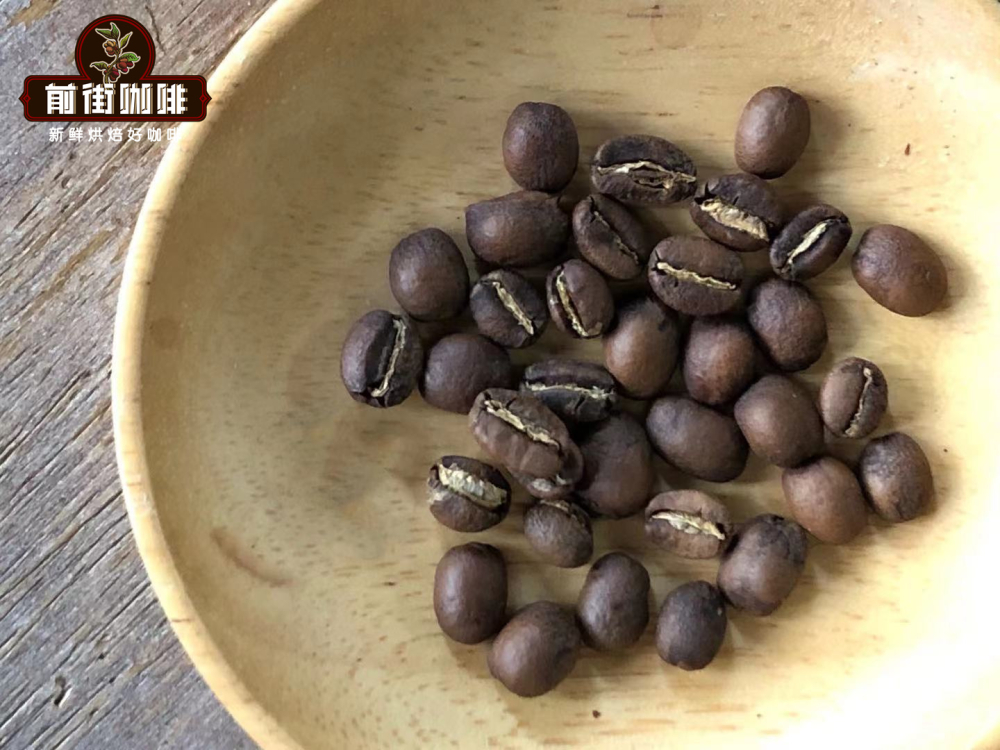
Between 1935 and 1939, the Scott Laboratories named all the coffee varieties they selected and bred with the prefix SL. The laboratory selected 42 varieties from different origins and conducted research on their yield, quality, drought resistance, and disease resistance. After numbering and screening each one, SL-28 and SL-34 were ultimately obtained.
sl28
sl34
SL28 comes from the Bourbon genetic group. Front Street Coffee (FrontStreet Coffee) has noted that its bean shape is short and round with a dense body, elevated acidity, and quite prominent sweetness; SL34 comes from the Typica genetic group. Front Street Coffee (FrontStreet Coffee) has observed that its bean shape is oval, appearing flatter from the side compared to Typica, with balanced and full sweetness-acidity and a caramel finish.
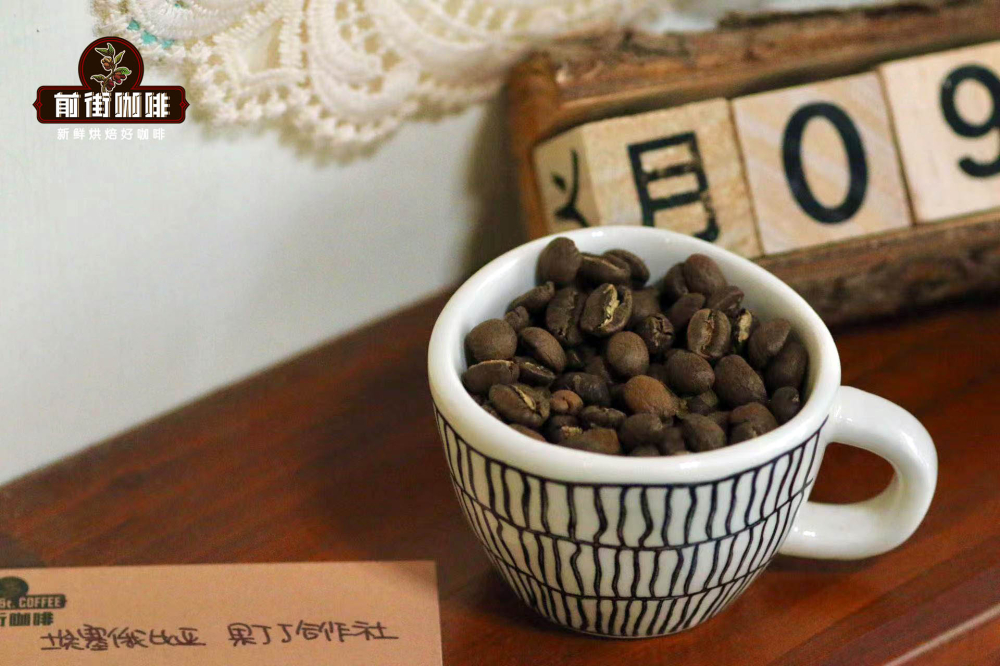
Front Street Coffee (FrontStreet Coffee) - Kenya Asaliya Coffee Beans
Region: Kenya Sika Region Asali Processing Station
Altitude: 1550m—1750m
Variety: SL28, SL34
Processing Method: K72 Washed
Flavor Description: Dark Plum, Cherry Tomato, Snow Pear, Yellow Sugar, Plum
|Geisha
Geisha can likewise be regarded as a lineage, because beneath it are many branches with different flavors and distinct strengths. The Geisha coffee we commonly encounter comes in two types: one is the native Geisha variety from the Bench Maji region of Ethiopia. Front Street Coffee (FrontStreet Coffee) has noted that native Geisha beans vary in size, and their flavor refinement does not match that of Panama Geisha, carrying berry, nut, and black-tea-like notes.
Front Street Coffee (FrontStreet Coffee) - Ethiopia Gesha Village Red Label Geisha Coffee Beans
Region: Ethiopia Bench Maji Gesha Village
Altitude: 1090-2069m
Variety: Gori Geisha
Processing Method: Natural
Flavor Description: Citrus, Plum, Cream, Tropical Fruit, Fermented Aroma
The Geisha from the Panama region is the "Geisha T2722" within the Geisha lineage, domesticated over generations to possess refined floral and fruity aromas. Front Street has noted that T2722 Geisha coffee beans are slender in shape, pointed at both ends and plump in the middle, with captivating floral and fruity aromas that are fresh and delightful.
Front Street Coffee (FrontStreet Coffee) - Panama Hacienda La Esmeralda Red Label Geisha Coffee Beans
Region: Panama Boquete Hacienda La Esmeralda
Plot: Jaramillo Mario
Altitude: 1700m
Variety: Geisha
Processing Method: Natural
Flavor Description: Citrus, Complex Fruit, Rose Tea, Honey
Coffee Bean Processing Methods
Coffee processing methods are mainly divided into three major categories: natural, washed, and honey. The natural method involves directly sun-drying coffee cherries before removing the outer shell and pectin layer; the washed method involves removing the pulp before sun-drying and using fermentation to remove the pectin layer; the honey method falls between the two—removing the pulp while retaining the pectin layer for direct sun-drying.
Front Street Coffee (FrontStreet Coffee) once selected three coffee beans from Ethiopia, processed using natural, washed, and honey methods respectively, for cupping. After comparison, it was found that: washed coffee is more refreshing, highlighting lemon-like acidity; natural coffee has full sweetness-acidity, highlighting berry-like flavors; honey-processed coffee has more prominent sweetness, highlighting fruity fermented aromas.
Washed Processing Method Steps
The washed processing method first sends sorted coffee cherries into a depulper to initially remove the skin and pulp. The green coffee beans with residual pulp and pectin are placed in water to ferment for about 24 hours. After fermentation is complete, the green coffee beans with parchment are washed in a flowing water channel to remove the pulp and pectin. After washing, they are sun-dried or dried using a dryer to reduce the moisture content to about 12%, and finally the parchment is removed.
Natural Processing Method Steps
After the coffee fruit is harvested, workers manually screen out defective beans as well as unripe or overripe fruits. Then the red coffee cherries are spread flat on raised wooden frames or entire drying racks for sun-drying, which prevents the beans from contacting the ground and absorbing off-flavors.
During the drying period, the beans must be constantly turned to ensure even moisture loss; every three to five days, farmers manually pick out defective and moldy beans. After the fruit skin dries and hardens, a huller is used to remove the dried hard skin. After obtaining the green coffee beans, in pursuit of perfect flavor, farmers will conduct one final round of screening.
Honey Processing Method Steps
The characteristic of honey processing is that the fruit skin is peeled off while the pectin layer on the surface of the coffee beans is retained. After removing the skin, the sticky coffee beans are placed on raised drying racks for sun exposure, air-drying for about one to two weeks, during which they must be turned once every hour to ensure even drying and full absorption of the sugars in the pectin.
Depending on the proportion of pectin retained, honey processing also has different names. White Honey typically removes 80%-90% of the pectin; Red Honey basically retains all the pectin without fermentation; Black Honey also basically retains all the pectin and is dried at low altitude and temperature.
Simply put, White Honey retains less pectin after washing, while Red Honey and Black Honey retain more pectin, which gives the coffee a better body. Front Street believes that honey-processed coffee beans have superior flavor, with balanced acidity and sweetness. Like the natural method, they undergo sun-drying, which amplifies the coffee beans' own aroma and produces a rich, full-bodied taste. The downside is that the processing risk is very high, making it prone to mold and spoilage.
For professional coffee knowledge exchange and more coffee bean information, please follow Coffee Workshop (WeChat public account cafe_style)
For more specialty coffee beans, please add private WeChat Front Street Coffee (FrontStreet Coffee), WeChat ID: qjcoffeex
The above content is compiled by CoffeeHunters, a coffee news website.


