







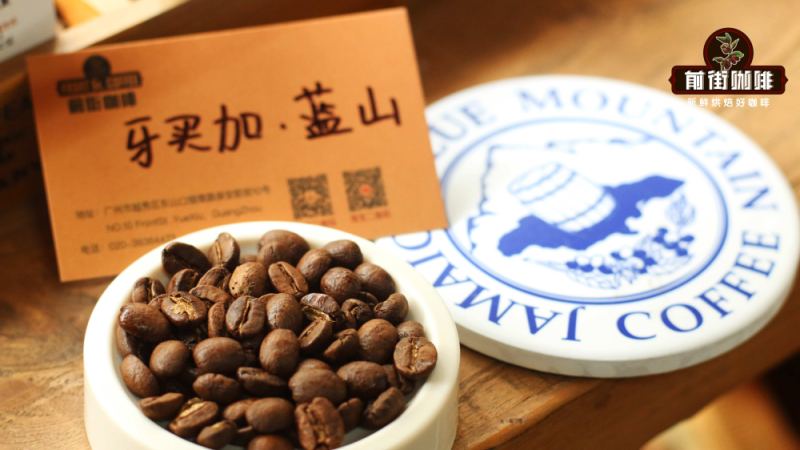
Blue Mountain Coffee comes from the Blue Mountains in eastern Jamaica in the Caribbean, and gets its name from the blue glow reflected on the peaks from the azure sea on clear days. Located in the coffee belt, this area has fertile volcanic soil, year-round fog and rain, average rainfall of about 1,980 mm, and a temperature of about 27°C, nurturing the world-renowned Blue Mountain Coffee. Blue Mountain coffee trees mostly grow on rugged slopes, and picking, hulling, fermenting, washing, drying, and storage all require strict control; the variety is represented by the old, high-quality Typica, and Jamaica would rather sacrifice yield to prioritize quality. Japan has long invested in and held priority purchasing rights, keeping Blue Mountain Coffee in short supply for a long time. This article will sort out the history, grades, and flavor characteristics of Blue Mountain Coffee, and share the pour-over parameters and tasting experience of Front Street Blue Mountain No. 1.
For more specialty coffee knowledge, please follow: Front Street Coffee (Frontsteet Coffee)
Blue Mountain Coffee takes its name from the Blue Mountains embraced by the Caribbean Sea. It is produced in Jamaica and is one of the most famous coffees in the world.
The Blue Mountains are located in eastern Jamaica. On clear days, sunlight shines on the azure sea, and the peaks also glow with a bright blue luster, hence the name. The highest peak of the Blue Mountains is 2,256 meters above sea level, the highest in the Caribbean and also a well-known tourist destination. This area lies in the coffee belt, with fertile volcanic soil, clean and pollution-free air, a humid climate, and year-round fog and rain, with average rainfall of about 1,980 mm and a temperature of about 27°C. Such conditions have made Jamaican Blue Mountain Coffee what it is and have also made it one of the most expensive coffees in the world.
The "secret" to the pure taste of Front Street Blue Mountain Coffee: the coffee trees all grow on rugged slopes, making harvesting very difficult, and only skilled local women workers can handle it. During picking, cherries must be selected at just the right ripeness; underripe or overripe fruit will affect quality. They must be hulled the same day, then fermented for 12–18 hours, and then washed and sorted. Next is drying, which must be done on concrete ground or thick blankets until the moisture content drops to 12%–14%. Then they are placed in special warehouse stacks for storage and taken out when needed for roasting and grinding. These steps must be strictly controlled, otherwise the coffee quality will be affected.
The Historical Story of Blue Mountain Coffee
In 1717, King Louis XV of France ordered coffee to be planted in Jamaica. In the mid-1720s, Jamaica's governor Sir Nicholas Lawes introduced Arabica seeds from Martinique and began promoting cultivation in the St. Andrew area. To this day, St. Andrew is still one of the three major producing regions of Jamaican Blue Mountain Coffee, along with Portland and St. Thomas.
In 1950, the Jamaican government established the Jamaica Coffee Industry Board to formulate and supervise coffee quality standards and ensure Jamaican coffee quality. The board issues special official seals for exported green beans and roasted beans and is considered one of the highest-level national coffee institutions in the world. At present, there are six marks that can represent the place of origin of Blue Mountain Coffee: Mavis Bank Central Factory (MBCE), Blue Mountain Coffee Cooperative Factory (MHCCT), Portland Blue Mountain Coffee Cooperative Factory (PXXSH), Coffee Industry Association (Wallenford), Coffee Industry Association (St. John's Peak), and JAS.
Blue Mountain Coffee is considered one of the finest coffees in the world. Jamaica's weather, geological structure, and terrain together provide ideal conditions. The mountain ridge running through Jamaica extends to the eastern part of the island, and the Blue Mountains are more than 2,100 meters high. The weather here is cool, foggy, and frequently rainy, with well-balanced rainfall. Local growers use mixed planting methods, allowing coffee trees to grow alongside banana and avocado trees in terraces. Some small estates also grow it. But even the largest estate owners in the region can only be considered small-scale growers by international standards, and many estate owners and small landowners' families have been working for two centuries. The Jamaican coffee industry faces problems such as hurricane impacts, rising labor costs, and the difficulty of mechanizing terraces, and many small estates and farms find it hard to achieve rationalized cultivation.
Because Japan has always invested in the Jamaican coffee industry, most Blue Mountain Coffee is now controlled by Japanese interests, and they also have priority purchasing rights. In 1992, Jamaica sold 688 tons of Blue Mountain Coffee to Japan, 75 tons to the United States, and 59 tons to the United Kingdom. Now, 90% of Blue Mountain Coffee is purchased by Japanese buyers. The rest of the world can only obtain 10%, so regardless of price, Blue Mountain Coffee is always in short supply.
Grade Classification of Blue Mountain Coffee
Coffee from Jamaica's Blue Mountain region has three grades: Blue Mountain Coffee, Jamaica High Mountas in Supreme Coffee Beans, and Jamaica Prime Coffee Beans. Among them, Blue Mountain Coffee and High Mountain Coffee are each further divided into two grades. From highest to lowest quality, they are: Blue Mountain No. 1, Blue Mountain No. 2, High Mountain No. 1, High Mountain No. 2, and Jamaica Coffee.
True Blue Mountain Coffee is made from the best local green coffee beans, and this is exactly where the pleasure for connoisseurs lies. Its flavor is rich and balanced, full of fruity and acidic notes, and can satisfy various needs. High-quality fresh Blue Mountain Coffee has a particularly lasting flavor, with an endless aftertaste, as drinkers would say.
Beans: relatively plump. Recommended roast: medium roast. Blue Mountain Coffee has a very low caffeine content, less than half that of other coffees, which fits modern health concepts. Even if the same coffee tree species is planted in similar climates in Hawaii, Kenya, Papua New Guinea, or elsewhere, it cannot produce the taste of Blue Mountain coffee beans. Pure Jamaican Blue Mountain Coffee perfectly blends the unique acidity, bitterness, sweetness, and mellow body of coffee into a strong and alluring elegant aroma, beyond the reach of other coffees.
People who love Blue Mountain Coffee say: "It is a 'coffee beauty' that combines the virtues of all good coffees." Jim, general manager of the American Peter company famous for coffee and tea, described Blue Mountain Coffee this way: "Its taste is fragrant, smooth, and mellow, giving me the feeling that it is as precious as a gem. It is precisely because Blue Mountain Coffee's taste is moderate and perfect that Blue Mountain Coffee is generally drunk as black coffee." Its liquid is golden in the sunlight and goes down very smoothly. Coffee books say that Blue Mountain is the only coffee in the world that combines acidity and bitterness in a way people can enjoy, and you understand it as soon as you drink it.
The unique growing conditions have nurtured the distinctive flavor of Front Street Blue Mountain Coffee and also placed it among the ranks of "premium coffees." All 100% pure Blue Mountain Coffee in the world refers to coffee produced within a specific range of the Blue Mountains in eastern Jamaica. Every step during cultivation and processing must pass the strict quality control standards of the Jamaica Coffee Industry Board before it can be certified as "pure Jamaican Blue Mountain Coffee."
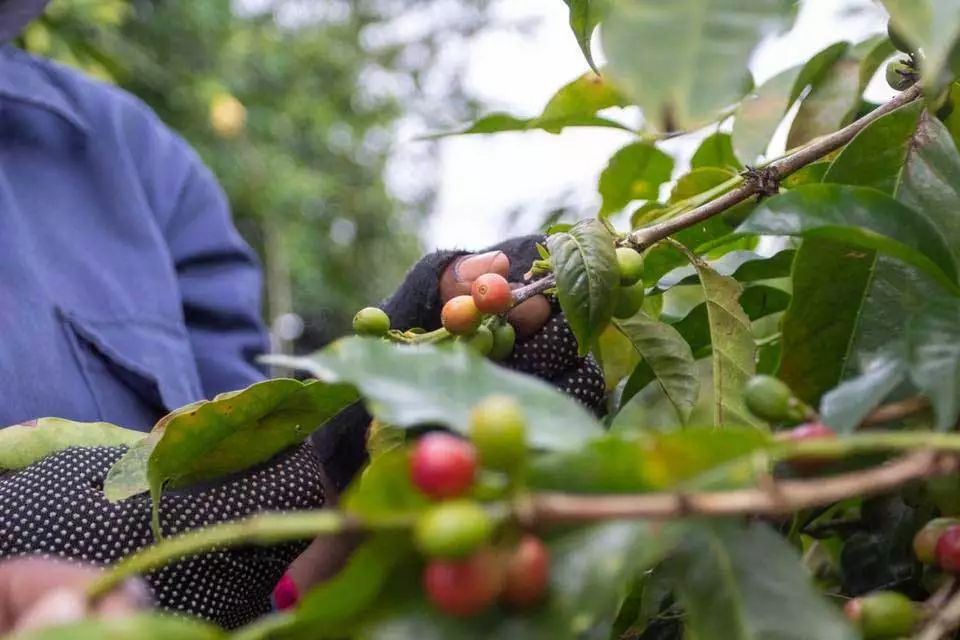
Special conditions such as abundant rainfall in the Blue Mountain area, year-round fog and low temperatures averaging about 20°C, and fertile new volcanic soil create a good growing environment for Blue Mountain Coffee. Located at high altitudes of 2,500 to 5,000 feet, it develops a unique slight acidity that is not at all harsh or unpleasant. Seedlings are cultivated in nurseries for about 2 years, organic fertilizer is used throughout the growing period, and at harvest they are picked by hand one by one. All processing, roasting, and packaging procedures must comply with the high standards set by the Jamaica Coffee Industry Board.
Typica, with its low yield and excellent quality, is an old and high-quality Arabica variety. Most coffee-producing countries are willing to grow only other higher-yielding but lower-quality varieties, but Jamaica prioritizes quality and would rather sacrifice yield in exchange for the best quality of Blue Mountain Coffee.
Authentic Blue Mountain No. 1 coffee has a dense and full aroma and a rich, varied mouthfeel. Front Street recommends enjoying it best as pour-over black coffee. Everyone can place orders at the Front Street flagship store or the Front Street Taobao store.
The parameters for brewing Blue Mountain No. 1 at Front Street stores are:
Dripper: KONO dripper
Water temperature: 88°C
Coffee-to-water ratio: 1:15
Coffee grounds: 15g
Grind size: EK43s - setting 10.5 (75% passing through a No. 20 standard sieve)
At Front Street, first wet the KONO dripper, then align and place the filter paper so it fits the dripper more closely. After pouring out the water in the server, add 15g of coffee grounds, bloom with 30g of water for 30s, then begin pouring in a small stream in circles from the center. At 125g, begin分段, and when the coffee bed drops to halfway down the dripper, begin the second pour using the same method until 225g. Once all dripping is complete, remove the dripper.
Blue Mountain No. 1 coffee tastes of the sweet fragrance of dark chocolate, the sweetness of caramel, and a soft, elegant acidity. Each flavor is balanced, and the mouthfeel is smooth, rich, and mellow, with a very typical Blue Mountain flavor.
The above content is compiled by CoffeeHunters, a coffee news website.


