







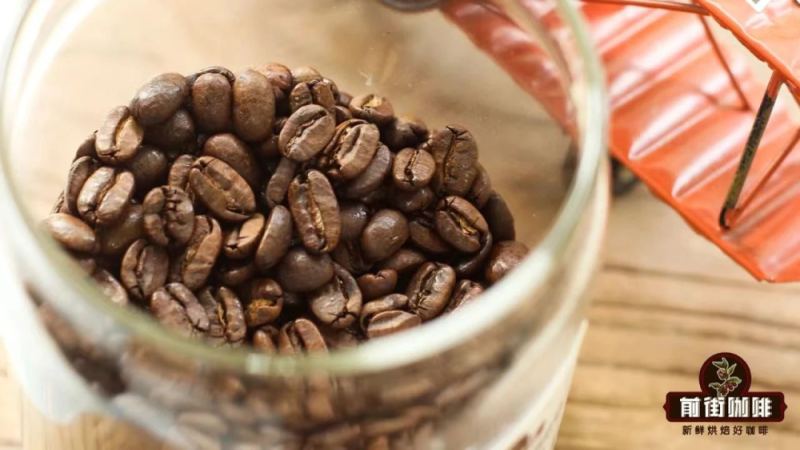
Kenyan coffee is renowned worldwide for its bright acidity and rich berry flavors, and is a beloved favorite among countless coffee connoisseurs. But did you know that this land, which borders Ethiopia, the birthplace of coffee, can only trace its coffee-growing history back to the late nineteenth century? From its introduction by French missionaries to the large estates of the British colonial period, and then to today's transparent and efficient auction system, Kenyan coffee has carved out a unique path of development. This article will take you through an in-depth look at the origins of Kenyan coffee cultivation, the characteristics of its six major producing regions, its green bean grading system, and Front Street Coffee's recommended brewing method, offering a comprehensive interpretation of the story behind this East African gem.
For more specialty coffee knowledge, please follow our WeChat official account: Front Street Coffee (FrontStreet Coffee)
Most people who are new to coffee start out with names like Yirgacheffe and Mandheling. Once they gradually clarify the flavor direction they prefer, they naturally split into different camps. One camp favors a rich, full-bodied style and refuses to accept even a hint of acidity, with Mandheling, Blue Mountain, and Brazil often on their consideration list.
The other camp has a particular fondness for acidity—the fresher and cleaner, the more irresistible it becomes—and Kenyan coffee and Panama Geisha are the targets that this group of seasoned enthusiasts pursue. When describing the mouthfeel of Kenyan coffee, many connoisseurs often mention a cherry-tomato-like acidity, a bright, uplifting acidity, and an experience of berry flavors filling the entire mouth. Just hearing such a description, you who are reading this right now must already be swallowing your saliva without realizing it.
The History of Kenyan Coffee Cultivation
Those who know a little about East African countries will easily notice that, geographically speaking, Kenya and Ethiopia are neighbors, and the latter is the universally recognized birthplace of coffee. However, Kenya did not truly begin cultivating coffee until the late nineteenth century.
While studying the specialty coffee book The World Atlas of Coffee, Front Street learned that Kenya's coffee industry developed later than that of its neighbor Ethiopia. The earliest verifiable record currently available shows that in 1893 French missionaries brought coffee trees from Réunion Island to Kenya, and Kenya's first coffee harvest was in 1896.
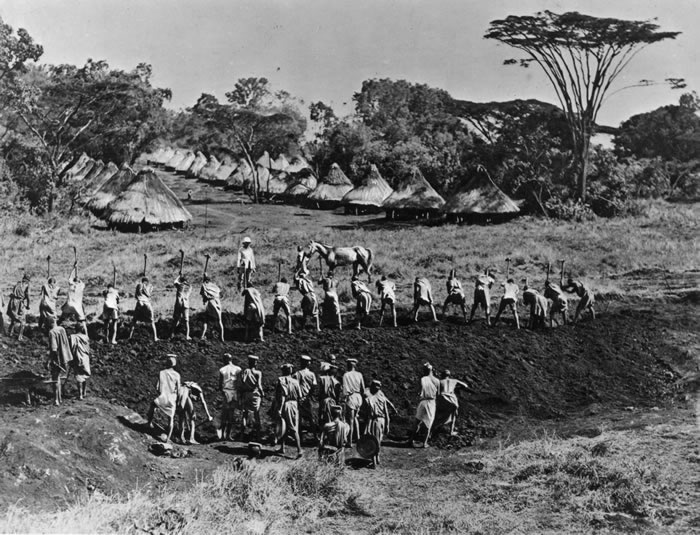
At that time Kenya was under British colonial rule and was designated as a British-administered "East Africa Protectorate." As coffee was an important cash crop, local residents were not allowed to grow it on their own. Therefore, Kenya's early coffee was mainly grown on large estates operated by British colonists, and the green beans produced were shipped back to the British mainland for auction and sale.
In 1933, the Kenya Coffee Board was established, and the right to sell coffee returned to Kenya itself. In 1934, the auction system was formally established, and the following year, in 1935, Kenya's first coffee auction in history was held in Nairobi, and this auction tradition has continued to this day.
In the early 1950s, the Kenyan authorities passed an agricultural act that allowed local families to expand their land ownership, enabling them not only to meet their own needs but also to grow cash crops to increase their income.
Almost all Kenyan coffee is traded through the Nairobi Coffee Exchange. Every Tuesday during the coffee harvest season, the exchange holds an auction. Licensed traders can obtain green bean samples in advance, select the lots they like after cupping, and then the highest bidder wins at the auction. This trading model is widely recognized as one of the most transparent and efficient forms of trade, and to a certain extent it has also driven coffee farmers to pursue quality.
Kenyan Coffee Producing Regions
Among Kenya's many coffee-producing regions, Kirinyaga and Nyeri are the most famous. After reviewing the materials, Front Street found that Kenya's coffee-producing regions can be summarized into six major sections:
[Kiambu]
The Kiambu producing region is located in central Kenya, and this area is dominated by large coffee estates. With the advancement of urbanization, the number of coffee estates in the region is gradually decreasing. This producing region has many well-known sub-origins under its jurisdiction, such as Thika. Coffee from the Kiambu producing region shows bright acidity and a thick mouthfeel. On Front Street Coffee's bean list there is a bean from Kiambu Thika. This Front Street Kenyan AA coffee has flavors of smoked plum and cherry tomato on the palate, with an intense and thick acidity, a mouthfilling berry sensation, a particularly prominent yellow sugar sweetness in the mid-palate, a clear juicy quality, and a classic berry aroma in the finish.
Front Street Coffee (FrontStreet Coffee) Kenya Asali
Region: Thika, Kenya
Washing Station: Asali Honey Washing Station
Altitude: 1550m—1750m
Varieties: SL28, SL34
Processing Method: K72 Washed Processing
[Kirinyaga]
The Kirinyaga producing region sits on fertile volcanic soil, and its local wet mills are able to process extremely high-quality coffee. It is globally renowned for coffee with intense flavor, rich layering, and a solid mouthfeel, and is internationally recognized as one of Kenya's two top producing regions.
[Nyeri]
The Nyeri producing region borders Kirinyaga to the west, and the extinct volcano Mount Kenya is located here. The volcanic red soil is very fertile, providing growing conditions for Kenya's highest-quality coffee. Coffee is Nyeri's most important crop. In this producing region, cooperatives formed by smallholder farmers are more common and more numerous than large estates. Coffee from this producing region has bright blackberry acidity and a thick oily mouthfeel, plus citrus and even floral notes, which have captivated many coffee connoisseurs and made Kenyan coffee famous internationally.
[Embu]
The Embu producing region is close to Mount Kenya. About seventy percent of the local population is engaged in small-scale farming, and tea and coffee are the most popular cash crops in the Embu producing region. Because most of the coffee in this producing region comes from smallholder farmers, production is relatively limited.
[Mt. Kenya West]
The Mt. Kenya West producing region covers Kisii and the Bungoma area of Mount Elgon. Among them, Kisii is located in southwestern Kenya, where most coffee comes from joint cooperatives formed by small producers, and production is not particularly large. Roasted nut notes and soft fruit acidity attract coffee lovers who do not particularly favor bright acidity.
[Murang'a]
Murang'a belongs to the Central Province and has about 100,000 coffee farmers. Back then, the Portuguese prohibited missionaries from living in coastal areas, so Murang'a became the settlement chosen by the first group of missionaries. At the same time, the Murang'a producing region also benefits from the nourishment of volcanic soil, and the coffee it produces has bright acidity and a thick, juicy mouthfeel.
Kenya's Coffee Grading System
The high-altitude washed Arabica beans produced in Kenya rank among the world's top coffees. Kenya is both a major coffee country and a benchmark for excellent coffee. All coffee is uniformly purchased by the Kenya Coffee Board, and after inspection and grading, it is auctioned at auction events.
You often see labels like Kenyan AA on the market, which is actually a grade of Kenyan green coffee beans. On Front Street's bean list, in addition to Kenyan AA, there is also Kenyan PB. What do AA and PB each represent?
The grading of Kenyan green coffee beans is based on the size and quality of the beans, with clear regulations on bean size, and to a certain extent it is also believed to be directly related to quality. Under such standards, coffee beans graded Kenyan AA are usually regarded as top-grade beans.
How Should Kenyan Coffee Be Drunk?
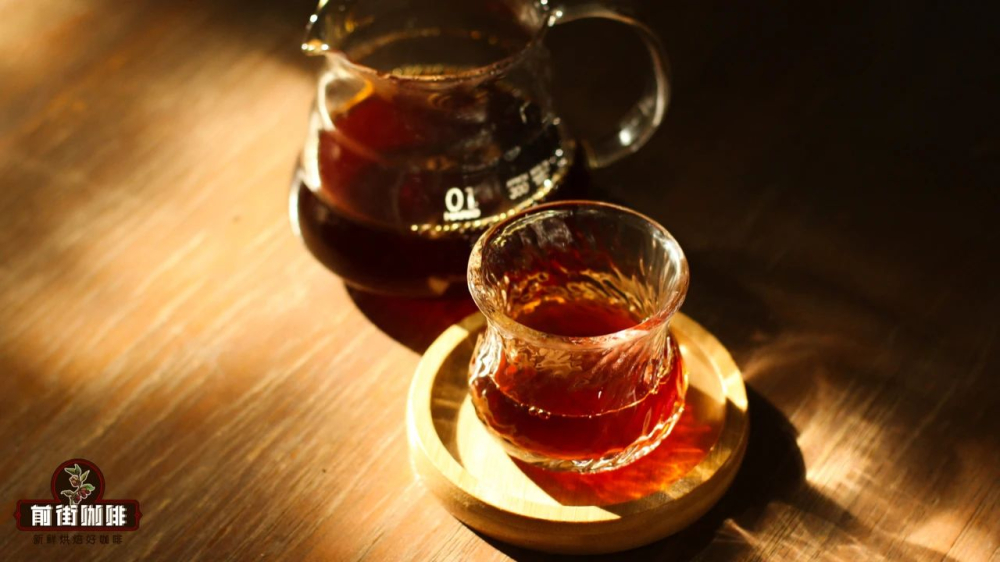
When brewing Kenyan coffee, Front Street Coffee's baristas take into account that Kenyan beans are roasted to a medium-light level, so they use a water temperature of 93°C, relying on the high temperature to extract the bright acidity. To avoid over-extraction caused by high temperature, the dripper chosen is the Hario V60. The V60 dripper's spiral rib design can speed up the flow of water, better highlighting the finished cup's uplifting acidity, clean mouthfeel, and high-quality aroma.
Dripper: Hario V60
Water Temperature: 93°C
Dose: 15 grams
Coffee-to-Water Ratio: 1:15
Grind Size: EK43s#10 (80% passing through a No. 20 standard sieve)
First pour 30 grams of water for a 30-second bloom, then pour the second stage of water up to 125 grams in stages, and when the water level drops to the point where the coffee bed is about to be exposed, pour the third stage of water up to 225 grams. Once the water in the dripper has completely dripped into the server, remove the dripper. The total extraction time is about 2 minutes and 00 seconds.
The above content is compiled by CoffeeHunters, a coffee news website.


