







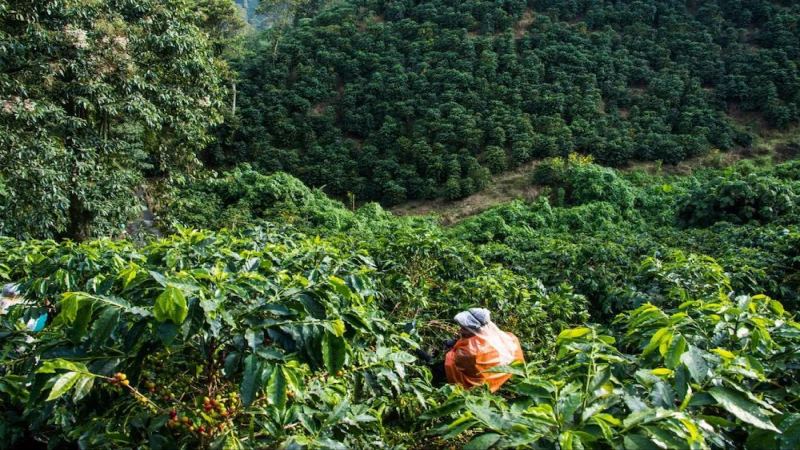
As the birthplace of Arabica coffee, the forests of southwestern Ethiopia nurture countless coffee varieties, which is what creates the region's uniquely inimitable flavors. Because the varieties are so immensely complex, the government finds it difficult to name them one by one, and so they are mostly grouped under the blanket term "heirloom." Building on this, the categories extend further into landraces and numbered lines beginning with 74 and 75. Ethiopian coffee bean grading is based on the number of defective beans, divided into five tiers from G1 to G5, with G1 and G2 being the finest. For this round, Front Street Coffee has chosen washed Yirgacheffe G2 as the representative everyday coffee of the Ethiopian region, showcasing the classic flavor woven from citrus, white flowers, honey, and a tea-like quality, along with pour-over recommendations and bean-resting notes to help coffee lovers gain a more complete understanding of the appeal of Ethiopian coffee.
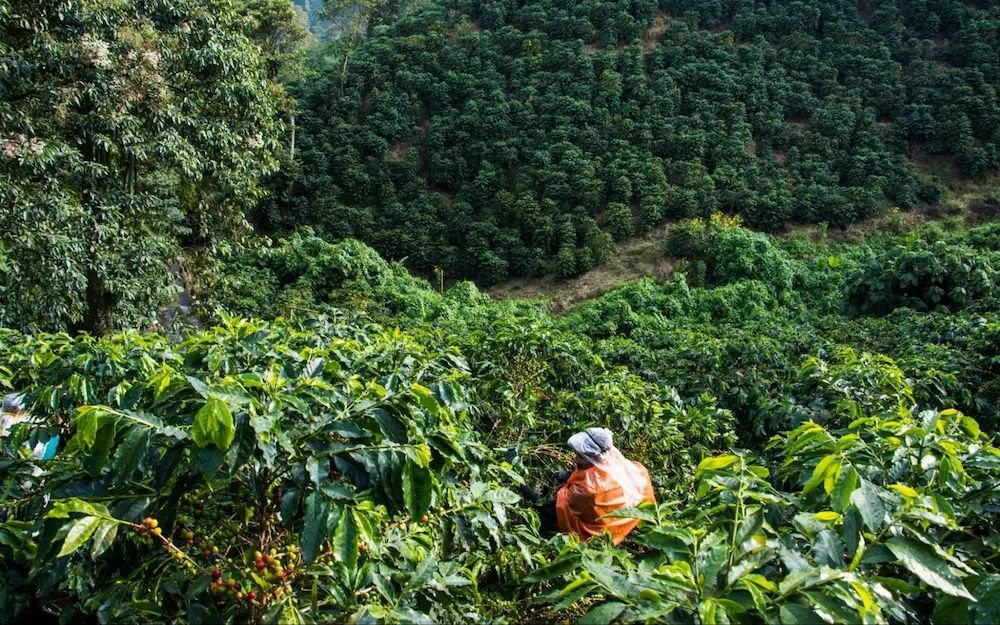
Ethiopia is the birthplace of Arabica coffee, and its southwestern primeval forests hold an enormous number of Arabica varieties—it is precisely this diversity that gives Ethiopian coffee its distinctive flavor. Below, Front Street Coffee will introduce the characteristics of Ethiopian coffee.
Ethiopia's varietal makeup is extremely complex, and it is very difficult for the government to break it down one by one, so most of the time it is simply grouped under the blanket term "heirloom." Heirloom refers to coffee trees that have grown naturally in Ethiopia for generations and already carry the characteristics of the local terroir. For this reason, when discussing Ethiopian coffee flavor, people rarely talk about specific varieties and more often discuss regional flavor.
Today, under the broad framework of heirloom, Ethiopia has further summarized several varietal groupings: landraces, and numbered varieties beginning with 74 and 75.
A landrace does not refer to a single variety, but rather to a group of varieties within a small producing area that share relatively similar physical characteristics. For example, kurume, wolishao, and dega in the Yirgacheffe and Sidamo regions.
Kurume refers to a type of coffee tree in the Yirgacheffe area whose fruit and leaves are both on the smaller side, yet which has high yields, with green tips on the leaves.
Wolishao refers to a type of coffee tree in the Sidamo region with a tall trunk, larger fruit, unstable annual yields, and red tips on the leaves.
Dega refers to a type of coffee tree of medium height with medium-sized fruit, whose beans give off a sweet aroma after roasting.
The numbered series originated from the Jimma Coffee Research Institute, which collected seeds from more than 600 coffee trees across 19 locations in the southwest and west between 1974 and 1975, after which experts identified and trial-planted them—hence these varieties begin with 74 and 75. Among them, 74110 and 74158 are relatively well known, having placed within the top 28 in the 2020 COE competition.
Precisely because Ethiopia's coffee varieties are so complex, Ethiopian coffee beans are often uneven in size. Many people are used to beans from Brazil, Colombia, or Indonesia that are plump and uniform in size, and upon seeing the uneven Ethiopian beans, they mistakenly assume the quality is poor—when in fact this is exactly the proof of authentic Ethiopian coffee beans.
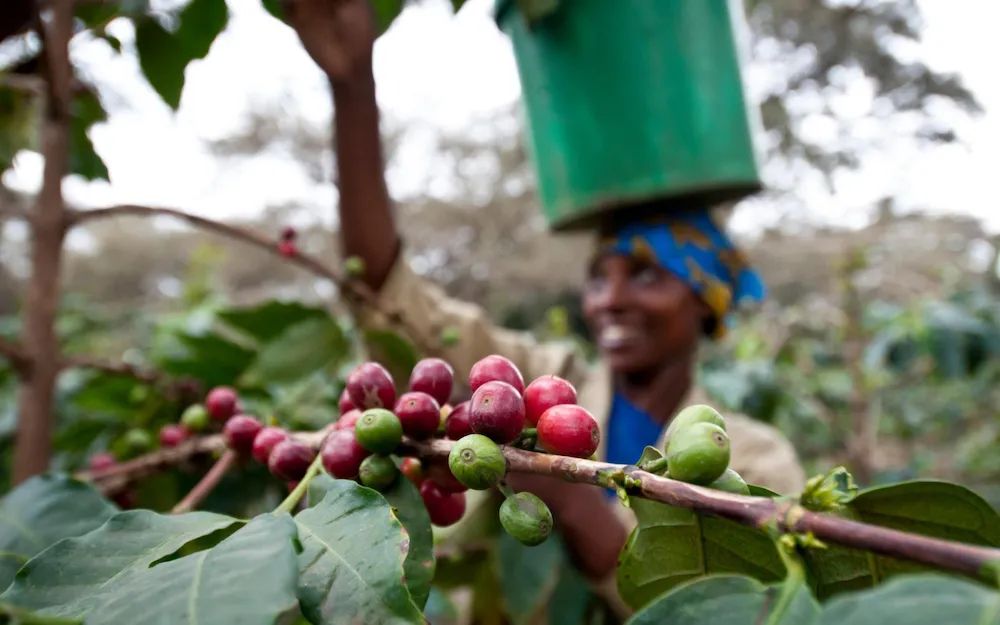
Characteristics of Ethiopian Coffee Bean Grades
Ethiopian coffee bean grading is mainly based on the number of defective beans, divided into five grades from G1 to G5. Based on a 300-gram sample, G1 allows no more than 3 defective beans, G2 no more than 12, G3 no more than 25, G4 no more than 45, and G5 no more than 90. Generally, G1 and G2 are the best grades, and high-quality standards can be achieved by removing defective beans before and after roasting; G3 and below have relatively more defective beans and lower prices, and green bean traders rarely import these lower-grade beans, so they are seldom seen on the market.
Flavor Characteristics of Ethiopian Coffee Beans
Front Street Coffee has launched a regional everyday coffee series, in which Front Street Coffee has selected cost-effective coffee beans from 7 of the world's more representative producing regions, each with its own distinctive expression. For Ethiopia, Front Street Coffee chose the washed Yirgacheffe G2 coffee beans. Yirgacheffe was among Ethiopia's first specialty coffee regions, and its flavor characteristics are highly recognizable. Although this grade is G2, as Front Street Coffee has said before, its quality can be made even higher and better by subsequently removing defective beans.
The flavor expression of Yirgacheffe : the dry aroma shows fresh citrus and white floral notes; when slurped at different temperatures, it reveals bright citrus tones, honey, a clean mouthfeel, interspersed with floral and tea-like notes.
Front Street Coffee's Pour-Over Recommendations
Front Street Coffee recommends brewing with freshly roasted coffee beans, as this allows you to experience the coffee's rich flavors to the fullest. The coffee beans shipped by Front Street Coffee (FrontStreet Coffee) are all within 5 days of the roast date, because Front Street Coffee well understands the enormous impact of freshness on flavor. The founding principle of Front Street Coffee's roasting is "freshly roasted good coffee," so that every customer who places an order receives the freshest coffee when it arrives. The bean-resting period for coffee is about 4-7 days, so by the time customers receive it, it is at its peak flavor.
Grind size: Front Street Coffee recommends a medium-fine grind (78% passing rate on the Chinese standard No. 20 sieve). Too coarse and it cannot extract the rich substances, making the brewed coffee seem thin. Too fine and it is prone to over-extraction at high water temperatures, making the brewed coffee prone to bitterness.
For professional coffee knowledge exchange and more coffee bean information, please follow Coffee Studio (WeChat public account: cafe_style) For more specialty coffee beans, please add the private WeChat of Front Street Coffee (FrontStreet Coffee), WeChat ID: qjcoffeex
The above content is compiled by CoffeeHunters, a coffee news website.


