







Panama occupies a pivotal position in the global specialty coffee landscape, and Geisha has made this Central American country famous worldwide. At the 2023 BOP competition, Carmen Estate won the Washed Geisha category championship with a score of 96.5, and the subsequent global auction set a historic high of $10,005 per kilogram. Why does this estate keep breaking records? Today, Front Street Coffee takes you into Carmen Estate, from Panama's geography and climate and the three major producing regions of Chiriquí Province, to Carmen Estate's planting history, variety structure, and processing techniques, for a comprehensive understanding of the terroir code and quality logic behind this champion estate.
Panama's position in the international coffee scene needs no elaboration; it all stems from the country's ability to consistently produce extremely outstanding coffee beans every year, with Geisha being the most dazzling. At the 2023 BOP competition, the washed Geisha submitted by Carmen Estate (CARMEN FINCA) received a score of 96.5 from the judges, directly taking the washed category crown and also setting a new record at the time for the highest score in the world coffee industry's flavor evaluation. Even more remarkable, in the subsequent global auction, this batch of beans fetched a sky-high price of $10,005 per kilogram, rewriting the history of green coffee bean prices. Next, Front Street Coffee will introduce you to this Panamanian champion estate that keeps achieving outstanding results.
Panama
The rise of Panama's specialty coffee, in addition to the efforts of organizations such as SCAP, is also inseparable from its own unique geographical conditions. This country is located at the southernmost tip of Central America, close to the equator. Its terrain rises and falls throughout, with interlacing valleys. Apart from plains along the coast, most of the area is mountainous, and it possesses abundant forests, river resources, and several volcanoes.
This place has a tropical maritime climate, humid during the day and cool at night, with an annual average temperature between 23°C and 27°C and average annual rainfall of about 1,500 to 2,500 millimeters. Combined with the effects of the geographical environment, complex and changeable microclimates have formed locally, and these conditions together provide an ideal foundation for coffee tree growth.
Coffee Producing Regions
Panama's specialty coffee producing regions are mainly concentrated in Chiriquí Province, which can be divided into three major areas: Boquete, Volcan-Candela, and Renacimiento. They are respectively located at Volcán Baru, El Valle, and Le Yeguada.
Among them, Boquete can be called Panama's most famous coffee producing region, home to a group of well-known estates such as Hacienda La Esmeralda, Duncan Estate, and Elida Estate.
Although Volcan is less famous than Boquete, it is located on the east side of Volcán Baru, and its geographical conditions differ from Boquete, which also relies on Volcán Baru. Because the mountains in the north form a barrier, moisture from the Atlantic is difficult to reach, making Volcan generally drier, but with abundant sunlight. Coffee is mostly planted in fertile volcanic soil at altitudes between 1,200 and 1,900 meters. In recent years, coffee from the Volcan region has gradually emerged in the specialty market. For example, Carmen Estate, the 2023 BOP washed category champion, also won second and fourth place in the natural category at the 2024 BOP.
Carmen Estate Coffee
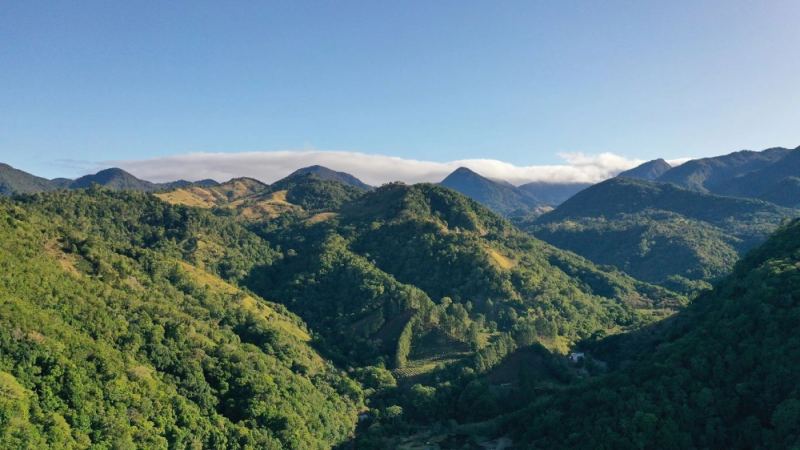
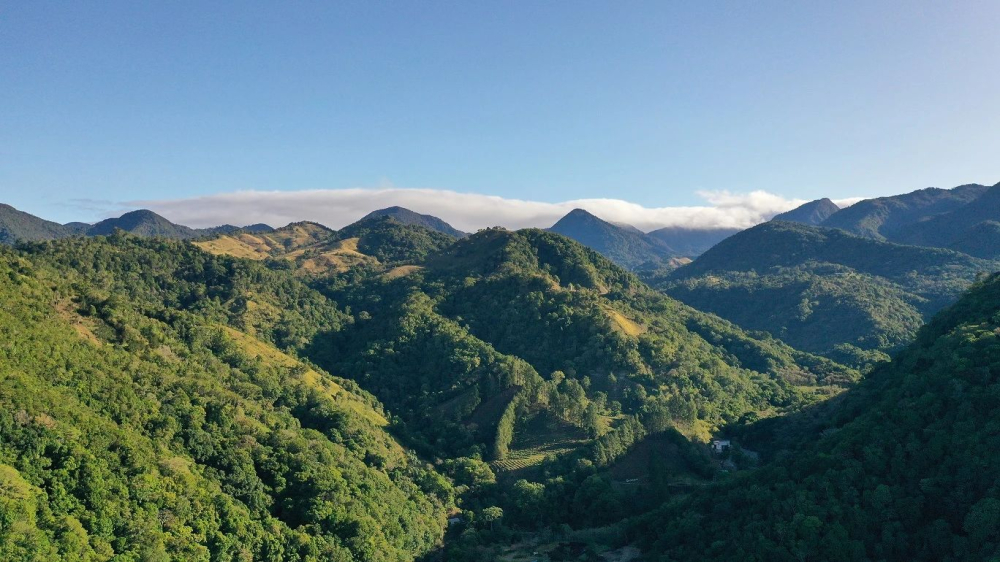
Carmen Estate is located between Panama's Volcán Baru and the Volcan Valley, at an altitude of 1,750 meters, and together with the renowned Elida Estate is known as one of Panama's two highest-altitude Geisha estates. The estate covers a total area of 70 hectares. Because it is situated in a valley, it happens to have the Chiriquí River flowing south along the valley directly to the Pacific Ocean. The stream valley scenery is beautiful, and the obvious temperature difference between day and night, combined with fertile volcanic black soil, provides extremely ideal growing conditions for coffee. In addition, Carmen Estate has a relatively large planting area, and together with the influence of altitude differences, the coffee season each year can last nearly five months.
In 1960, Ms. Efrain and Mr. Carmen Franceschi came to Panama and founded Carmen Estate. It now has a history of more than 60 years and is currently fully managed by the third-generation owner, Mr. Carlos Aguilera Franceschi. Since its founding, Carmen Estate has always focused on growing high-quality coffee. Although it has a long history and is not particularly large in scale, the coffee beans it produces can always achieve results in Panama's BOP competitions.
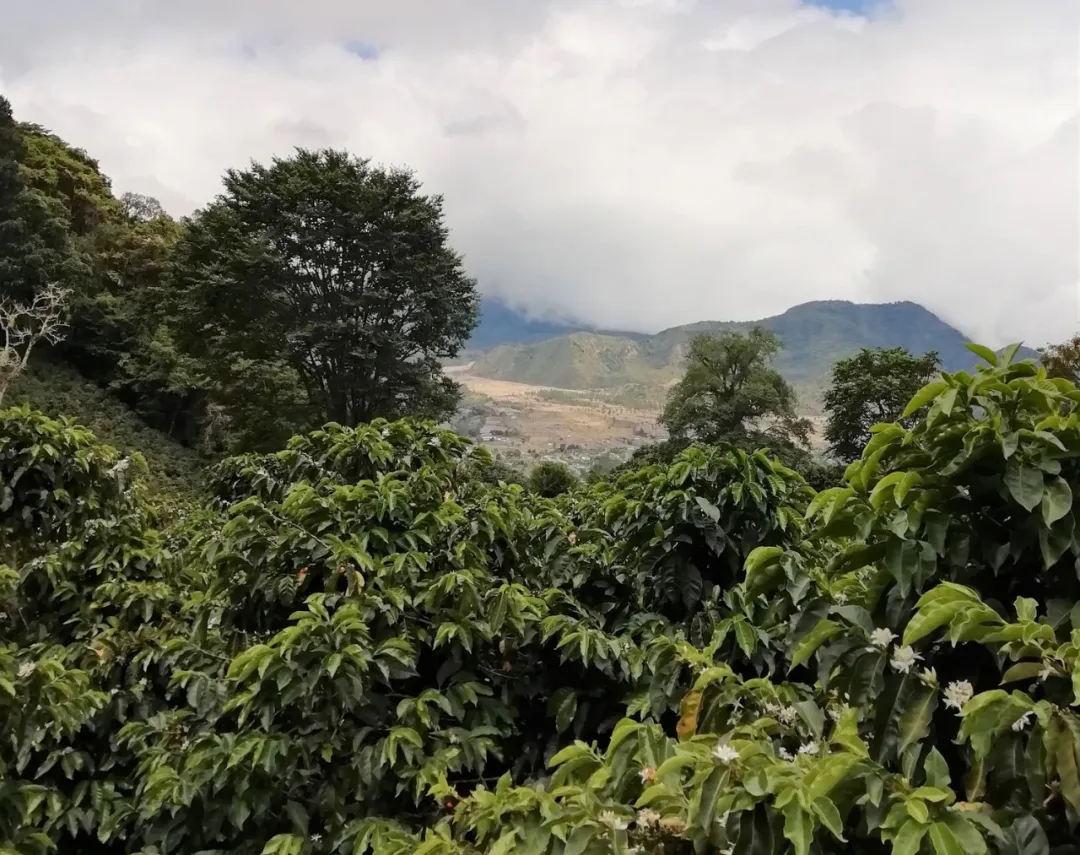
Carmen Estate retains 60% natural primary forest, and the coffee trees are planted under these natural shade trees. The managers have always adhered to the concept of harmonious coexistence with the natural ecology. Through innovative agricultural management models, they preserve the natural rainforest ecosystem within the coffee farm as much as possible, and in 2014 obtained "C.A.F.E PRACTICE" (Coffee and Farm Equity) certification.
Similar to many estates in Panama, Carmen's coffee fruit harvest period lasts from about late December to March of the following year, with fully ripe coffee cherries picked entirely by hand throughout. Waste generated during fruit processing (such as pulp or juice) is properly converted into compost or recycled; after initial sun drying, the green beans are placed in dedicated warehouses for secondary moisture adjustment, and only hulled before export to maintain good green bean quality.
Currently, in addition to the well-known Geisha, Carmen also grows varieties such as Caturra and Catuai. At this year's BOP competition, the Catuai produced by Carmen Estate performed quite impressively; this natural-process Catuai won fourth place in the multi-variety category with 91.5 points. In addition to traditional washed and natural processing, the owner also launches micro-lots using experimental processing methods such as controlled fermentation and ASD each year.
The above content is compiled by CoffeeHunters, a coffee news website.


