







Although Tanzania is not particularly famous among African coffee-producing countries, its coffee quality should not be underestimated. Mount Kilimanjaro, located on the equator with an altitude of nearly 6,000 meters, is known as the "Roof of Africa." The fertile volcanic soil and high-altitude temperature differences give local coffee a delicate texture and soft acidity. The Kilimanjaro coffee evaluated by Front Street Coffee this time uses the Typica variety and washed processing, graded AA, with citrus, berry, and tea notes on the palate. This article will guide you through Kilimanjaro's growing region background, variety characteristics, and grading system, and share Front Street's roasting curve and pour-over parameters, so you can experience the charm of this "most African" coffee together.
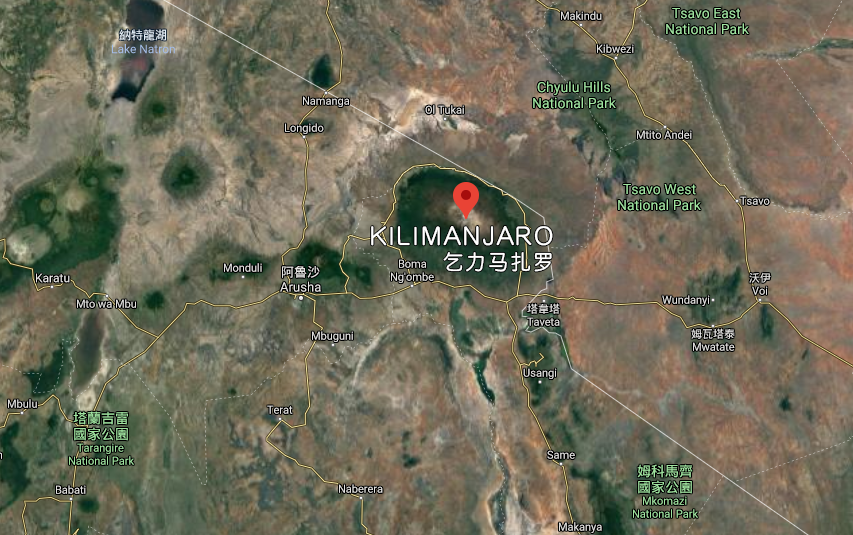
Tanzania is not particularly prominent on Africa's coffee map, yet the quality of its coffee often surprises. Front Street has rarely evaluated Tanzanian coffee in the past, partly because we had never found beans that could distinctly showcase the region's flavors—but this Kilimanjaro cupping brought a different experience. Kilimanjaro is one of the country's most important coffee-growing regions, the other being Arusha. Why does Kilimanjaro hold such an important position? Front Street explains: Mount Kilimanjaro, with an altitude of nearly 6,000 meters, is a famous snow-capped peak on the African continent. Located on the equator, it is known as the "Roof of Africa." The area around the peak is covered with fertile volcanic soil, and the diurnal temperature difference brought by high altitude creates the delicate texture and soft acidity of Kilimanjaro coffee—exactly the typical characteristics of African coffee. It is clear that Tanzania's coffee still awaits further exploration by Front Street.
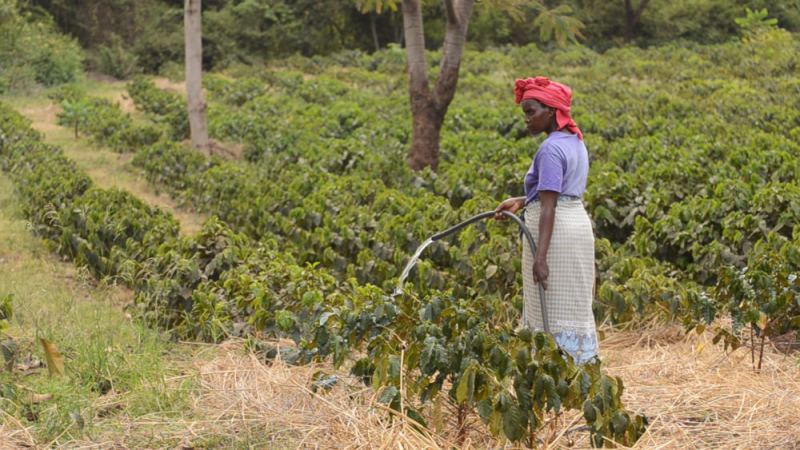
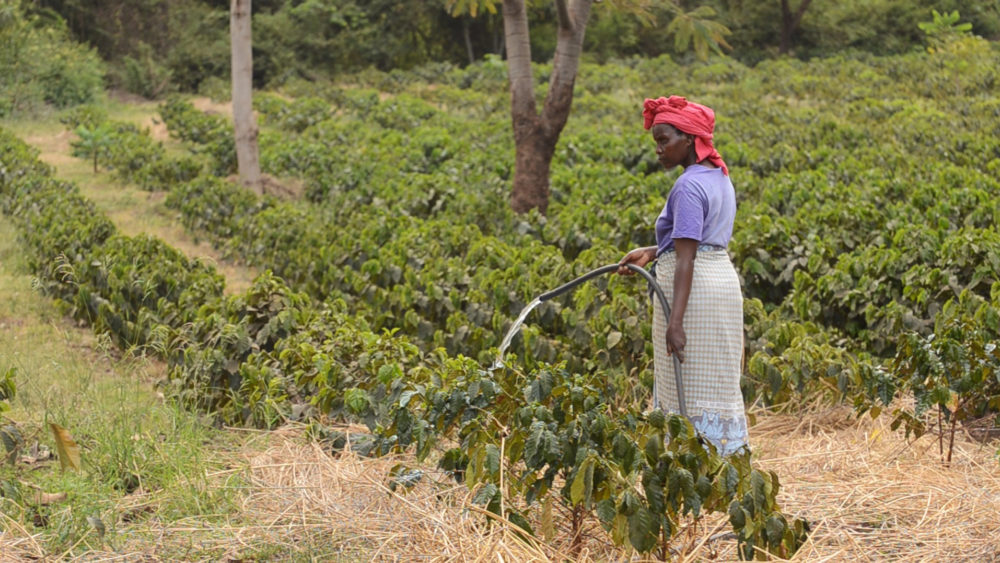
Tanzania's main coffee-growing region is at the foot of Mount Kilimanjaro, where volcanic soil is rich and some coffee trees are over a hundred years old. Coffee was first introduced by Christians from Kenya. Local coffee trees require careful attention, including weeding, fertilizing, and pruning old branches to encourage new growth, thereby ensuring coffee bean quality. The equipment at coffee processing stations is also quite sophisticated; coffee beans are an important cash crop for Tanzania, and the government places great importance on this industry.
From the slopes of Kilimanjaro—Africa's highest peak, known as the "Roof of Africa"—the growing region enjoys abundant sunshine, and the coffee is full of rich fruity aroma with a subtle hint of peach. Kilimanjaro coffee comes from Mount Kilimanjaro, the highest mountain in Africa, in northeastern Tanzania. Its coffee quality is excellent, with intense aroma and prominent acidity, suitable for blending. These coffee beans possess extraordinary quality, produced in the Moshi district near Mount Kilimanjaro, where the mountainous terrain at 3,000 to 6,000 feet is the most suitable area for coffee cultivation. Fertile volcanic ash gives local coffee a rich body and soft acidity.
It emits a delicate fragrance with wine and fruit aromas, leaving a long-lasting aftertaste. After drinking Kilimanjaro coffee, one always feels a soft, mellow earthy note lingering at the corners of the mouth. Coffee gourmets often describe it as "wild" or "feral," and it can be said that authentic Kilimanjaro coffee is "the most African coffee." Kilimanjaro AA is the highest grade, with plump beans, pure flavor, rich and refreshing, superior in every aspect of quality.
Variety
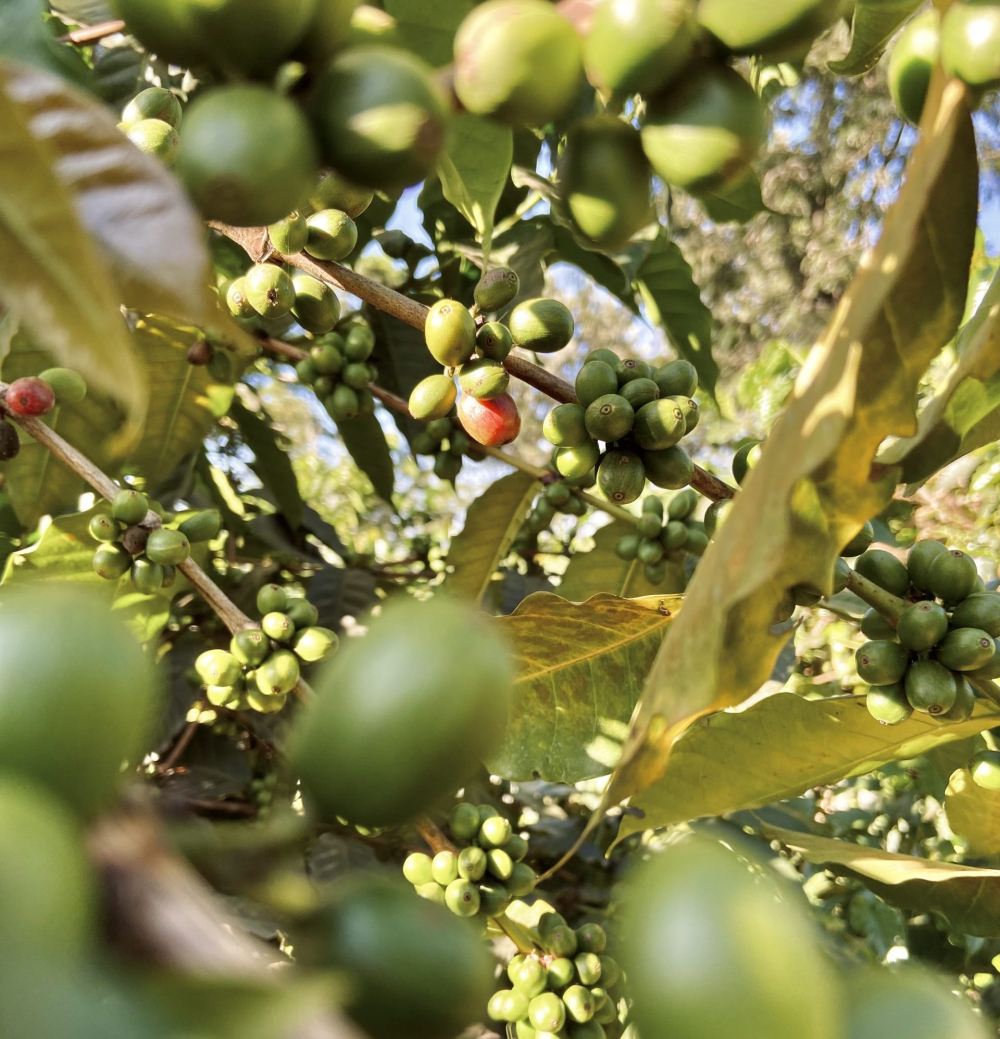
Front Street Coffee's Tanzanian Kilimanjaro coffee variety is Typica. Typica coffee trees are relatively tall, with bronze-colored leaves at the top. The beans are larger and longer, with pointed and slightly upturned ends, somewhat resembling an egg. Typica beans often have citrus acidity with a sweet finish, praised by many as elegant and bright coffee beans. Unfortunately, Typica trees are very tall and inconvenient to harvest. Typica coffee trees are quite tall, about 5 meters/16.5 feet. They are conical in shape with slightly sloping branches, and side branches form a 50-70° angle with the vertical stem. The trunk is slender and the branches are thin. Due to its height and long-branch characteristics, sufficient spacing between plants is needed when planting Typica trees.
In addition, Typica has very poor disease resistance and struggles against the most common diseases such as leaf rust and berry disease, and its yield is extremely low. As a cash crop, coffee is difficult to make profitable, so many growers in various regions have chosen to give up and switch to other varieties with better disease resistance. To grow Typica coffee beans with superb flavor requires more labor costs and technical expertise—which is also why Jamaican Blue Mountain coffee is so precious.
Washed Processing
Front Street Coffee's Tanzanian Kilimanjaro uses washed processing. Tanzanian coffee mostly adopts the washed method; after picking, coffee farmers send the coffee cherries to the nearest processing station for processing.
Steps of the washed processing method: 1. Screen and remove impurities mixed in with the coffee cherries. 2. Remove the coffee pulp and outer skin. 3. Send to fermentation tanks, where fermentation removes the mucilage layer adhering to the parchment. 4. After washing clean, proceed with drying.
Grading System
Tanzania's coffee grading method is the same as Kenya's—both grade by coffee bean size. During screening, green coffee beans are passed through screens with fixed-size holes; the larger the screen number, the larger the green coffee bean.
AA grade: Screen Size between 17 and 18 (7.20mm screen)
AB grade: Screen Size between 15 and 16 (6.8mm~6.2mm screen),
PB grade: Round green beans, accounting for about 10% of all coffee beans
C grade: Screen Size between 12 and 14 (4.8mm~5.6mm screen)
[Front Street Coffee Roasting Curve]
Kilimanjaro coffee consists of large, uniformly sized beans with a grayish-green color. It has relatively strong acidity and a sweet fragrance, with excellent flavor. After a medium-light roast, it reveals sweetness and mild acidity. Charge temperature: 170°C, yellowing point: 6:30, 150.8, first crack: 10:06, 182.7°C , first crack development 1 minute 45 seconds, dropped at 193°C.
[Front Street Coffee Cupping Report]
Dry aroma: Caramel
Wet aroma: Berry
Cupping result: Citrus on the palate, berry, tea notes
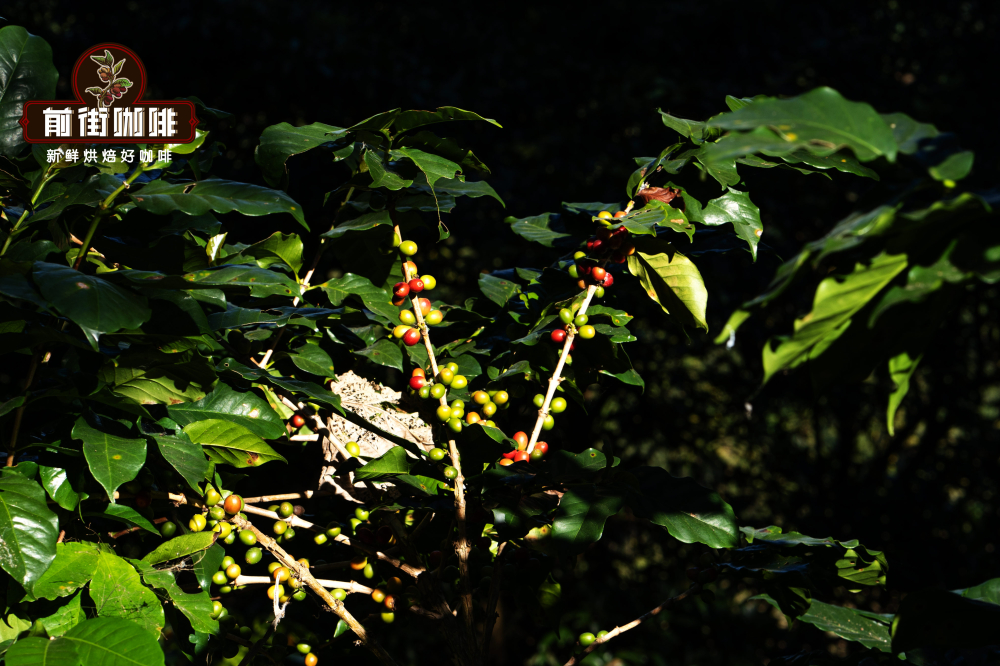
Front Street Coffee: Tanzania Kilimanjaro
Region: Northern Highlands, Kilimanjaro volcanic area
Variety: Typica
Processing: Washed
Grade: AA
Altitude: 1300-2000m
[Front Street Coffee Brewing Parameters]
Dripper: V60 Coffee-to-water ratio: 1:15 Water temperature: 91°C Grind size: EK43s grinder setting 10
[Front Street Coffee Brewing Method]
30g-125g-225g. Bloom with 30g of water for 30 seconds. After blooming, pour in a circular motion to 125g. Wait until the water level drops to half, then continue pouring in a circular motion to 225g.
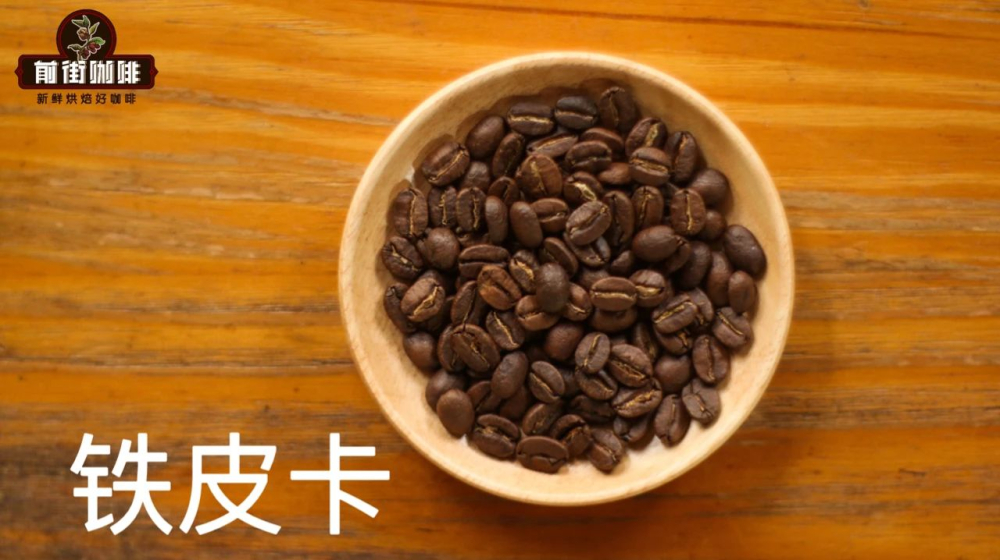
[Front Street Coffee Flavor Description]
Honey, berry, tea notes.
The above content is compiled by CoffeeHunters, a coffee news website.


