







In the iced coffee family, there are many names—cold brew, ice drip, ice brewed, cold soak, Dutch coffee, Kyoto coffee—that often leave people bewildered. This article starts from the broad concept of cold brew coffee, sorts out the two low-temperature extraction paths of immersion and drip filtration, traces the origin of Dutch coffee, the process by which Japan's Hanabusa Coffee invented the three-layer ice drip pot, and the emphasis on the brewing and aging step behind the term "ice brewed." The article also provides five Front Street single-origin beans suitable for making ice brewed coffee, covering Yirgacheffe, Kenya, Panama Butterfly, Costa Rica Mozart, and Strawberry Candy Geisha blend, explaining the origin, altitude, variety, and processing method of each, and noting the flavor performance of medium-light roasts in cold brew.
Front Street has found that in the process of self-learning coffee, what really gives people headaches is often not the complicated brewing techniques or parameter adjustments, but that when searching for a professional term, a string of related expressions pops up that look similar in characters but have different meanings in Chinese, making it hard to sort out.
Take cold brew, the iced coffee that sweeps through the entire summer, as an example. A quick online search will definitely show multiple "aliases": ice drip, ice brewed, cold soak, as well as Dutch coffee, Kyoto coffee... For a moment, it is truly hard to tell which corresponds to which. Among them, the definition of ice brewed coffee is the vaguest. Some regard it as cold soak, some think it should refer to ice drip, and others understand it as a method of soaking coffee grounds in a mixture of ice and water. It is better to start with the broad category of cold brew coffee.
As is well known, "cold brew coffee" is a direct translation of "Cold brew coffee," and its rise to popularity is inseparable from Starbucks' expansion and marketing. If this name is appropriately extended, it becomes clear that any black coffee obtained through cold water extraction can actually be included in the category of "cold brew coffee." In other words, whether immersion, drip filtration, or infusion, as long as it is a liquid obtained by bringing low-temperature cold water into contact with coffee grounds, it theoretically belongs to cold brew coffee.
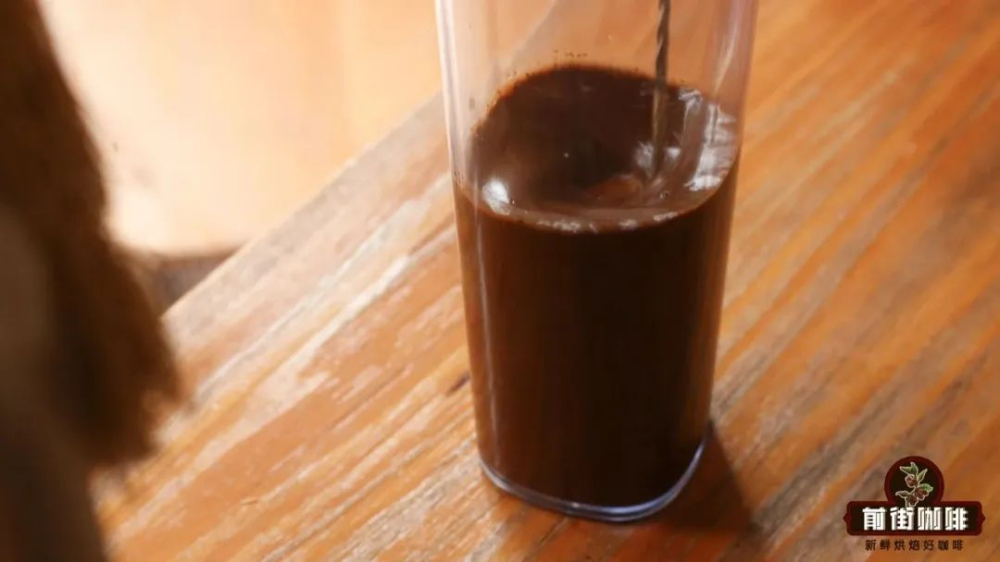
However, there has long been the term cold brew tea in Chinese, so in most contexts, what people call "cold brew coffee" specifically refers to coffee soaked in cold water for a long time, namely cold soak coffee. The common method is to soak coffee grounds in room-temperature water, place it in the refrigerator for several hours, and then filter out the coffee grounds.
As a typical immersion extraction, cold soak coffee is simple and convenient to make, has a wide range of coffee bean choices, and has a low failure rate. Therefore, it is both a "regular option" in coffee shops and one of the popular choices for homemade coffee at home.
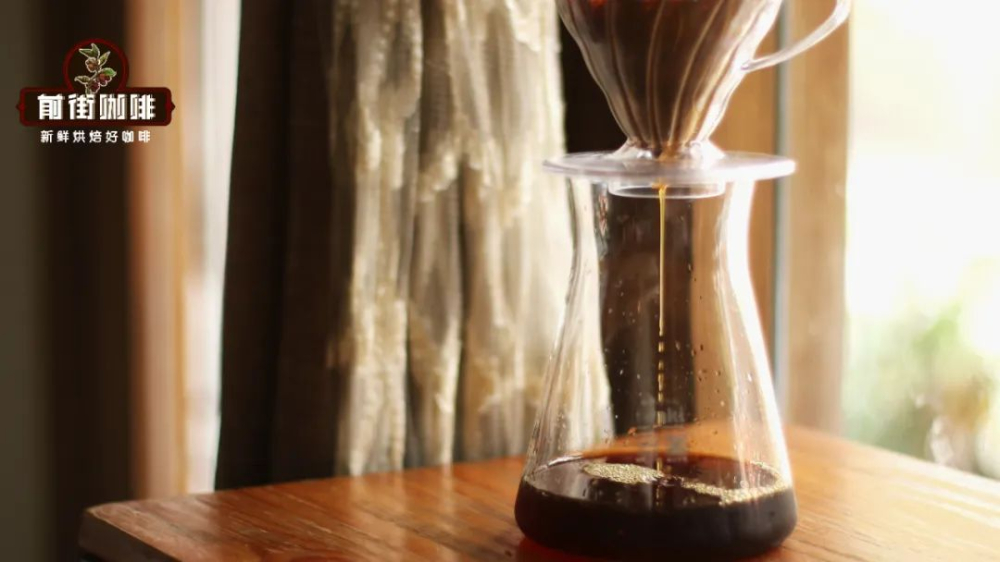
Another common low-temperature extraction belongs to the drip filtration type, which lets the continuously melting ice-water mixture seep drop by drop into the coffee grounds and undergo a long extraction. This is ice drip. In many English textbooks, ice drip is usually not called "Ice Drip Coffee," but written as Dutch Coffee, so it is often translated as "Dutch coffee."
According to legend, around the 17th century, Dutch sailors tried soaking coffee grounds in cold water during long ocean voyages and found that the coffee made this way had no bitterness and was also convenient for long-term storage and transportation. Later, during trade exchanges, the Dutch brought this cold drink method to Japan during the Edo period, where it was quite popular, hence the name Dutch Coffee.
Whether this story is true is already difficult to verify, but what can be certain is that the cool multi-layer drip device seen in coffee shops today was invented by Japanese people, and the ice drip coffee made with it also became popular from Japan.
Hana Fusa
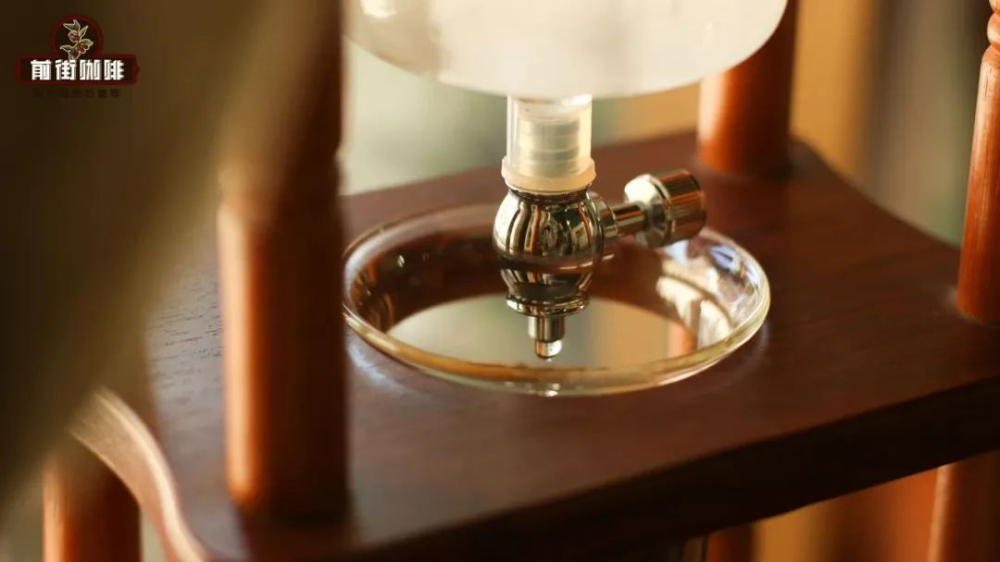
In the 1850s, the owner of a Kyoto shop called Hanabusa Coffee came across this cold brew process by chance and, together with several chemistry students, developed a three-layer, valve-equipped high-tower ice drip pot that slowly and evenly dripped low-temperature cold water to extract coffee grounds. At the time, this device was even praised as one of the most artistic coffee brewing methods.
Later, as well-known Japanese equipment brands such as HARIO, KINTO, and Kalita successively launched the now-common cold brew bottles and ice drip pots, this type of low-temperature extracted black coffee spread widely in Japan. Until the rise of the third wave of coffee, this eye-catching device spread to Europe and was again called Kyoto Coffee by Westerners.
Compared with cold brew and ice drip, the term "ice brewed" rarely appears in domestic coffee shops, and Front Street has also been unable to find its exact origin. Explanations from different places are even more inconsistent. Ice brewed coffee can be understood as an elegant translation of "Cold Brew," roughly equivalent to cold brew coffee.
In Front Street's view, the key to ice brewed coffee lies in the character "brew," whose original meaning is to make alcohol, to brew, and is related to alcohol. In coffee craftsmanship, whether ice drip or cold soak, after being made, it needs to be sealed in a container and enter the brewing stage. After several hours or even one or two days of aging, the soluble flavor substances further merge with water and gradually develop a fermented taste like fine wine.
Therefore, whether ice drip or cold soak, as long as it is black coffee obtained after a storage and brewing process, Front Street believes it can all be included in the category of "ice brewed coffee."
Recommended single-origin coffee beans suitable for making cold brew coffee
The liquid of cold brew coffee is not as transparent as ice drip coffee, and a thin layer of oil will float on the surface. In flavor and mouthfeel, it is slightly heavier and more balanced. It is recommended to choose medium-light roasted coffee beans, which can better present the icy, refreshing, and clean characteristics of cold brew coffee.
① Front Street Yirgacheffe Natural Red Cherry Coffee Beans : Yirgacheffe is the most representative African coffee bean, and its rich floral and fruity notes have conquered a large number of coffee lovers. The natural Ethiopian beans produced by the Red Cherry Project are of excellent quality and are also very suitable for making cold brew coffee. When used for cold brew, they can show very sweet berry, layered, and honey flavors.
Country: Ethiopia Yirgacheffe
Region: Yirgacheffe
Altitude: 1700m~2200m Variety: local heirloom varieties Processing method: natural
② Front Street Kenya Little Tomato Coffee Beans : Kenyan coffee beans have attracted countless coffee people with their full juice-like body and little tomato aroma. Because of their bright and solid acidity, making cold brew can present flavors of little tomato, honey, and smoked plum, with rich layers and a full mouthfeel.
Region: Kenya Thika Processing station: Asali Processing Station Altitude: 1550m~1750m Variety: SL28, SL34 Processing method: K72 washed
③ Front Street Panama Butterfly Coffee Beans : This coffee is a blend of 70% Geisha and 30% Caturra and Catuai, making it a single-origin coffee bean with extremely high cost performance in the Panama region. Used to make cold brew, it will show clean and refreshing floral, citrus, and oolong tea flavors.
Region: Panama Boquete Altitude: 1600m Variety: 70% Geisha, Caturra, Catuai Processing method: washed
④ Front Street Costa Rica Mozart Coffee Beans : This bean has fermentation aroma as well as a faint orange blossom note. Used to make cold brew, it will show the sweetness of raisins and an elegant fresh white floral note, with a smooth mouthfeel.
Region: Costa Rica Tarrazu Estate: Canet Estate Altitude: 1980m Variety: H1 Processing method: raisin honey processing
⑤ Front Street Strawberry Candy Geisha Blend Coffee Beans : This coffee bean selects representatives from two excellent producing regions, Costa Rica and Panama. It incorporates both refined-flavored washed Geisha and honey-processed coffee known for its sweetness. Because it uses a medium roast, this Front Street blend is suitable for multiple extraction methods. In addition to the ice brewed method shared by Front Street today, it is also a "good material" for making pour-over, espresso machines, moka pots, and other equipment.
Country: Panama + Costa Rica Estate: Boquete + Tarrazu Altitude: 1500m~1800m Variety: Geisha, Caturra, Catuai Processing method: washed + honey processing
The weather is so hot, how can you not treat yourself to an iced drink? It is better to act than to just think about it. If you want to drink it, get started. Immediately find a bottle, take out the coffee beans, and make a cup of cold brew coffee of your own.
The above content is compiled by CoffeeHunters, a coffee news website.


