







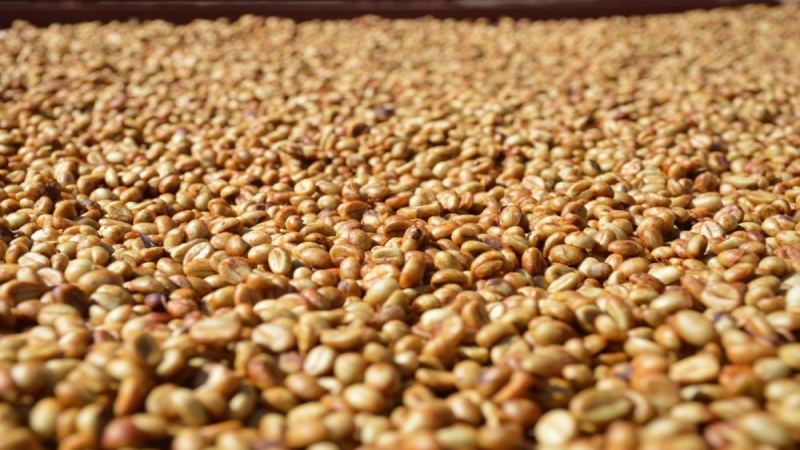
Honey processing is not about processing coffee with honey, but rather gets its name because the mucilage layer is as sticky as honey. This processing method retains the mucilage layer surrounding the coffee bean, allowing sugars and acids to penetrate into the bean during sun-drying, creating a unique flavor that balances sweetness and fruity acidity. Costa Rica, with its richer experience in honey processing and more stable quality control, has become the preferred origin for purchasing honey-processed coffee. This article explains in detail the principles, process, and flavor characteristics of honey processing, and recommends three distinctive honey-processed coffees from Front Street Coffee—Blackberry, Strawberry Candy, and Mozart—suitable for espresso and pour-over enthusiasts respectively.
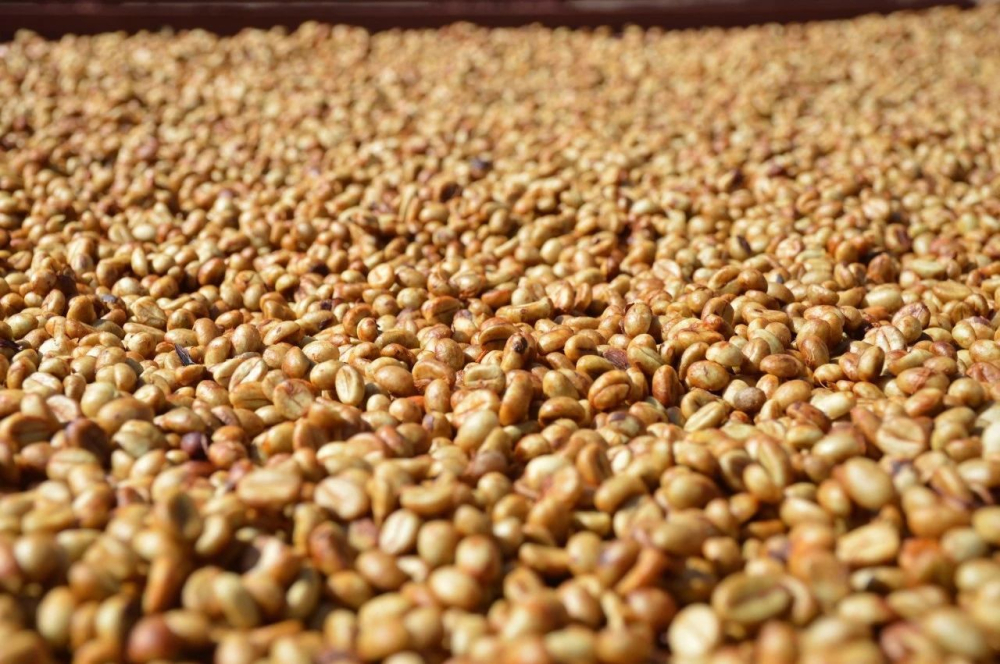
The name "honey processing" easily leads to misunderstanding—people think it means processing coffee beans with honey, or that coffee processed this way must be as sweet as honey. In fact, neither interpretation is correct. Honey processing got its name because before sun-drying, the mucilage layer attached to the surface of the coffee beans is extremely sticky, with a texture like honey. After the coffee pulp is separated from the beans, this mucilage layer absorbs moisture from the air during sun-drying, becoming even more viscous.
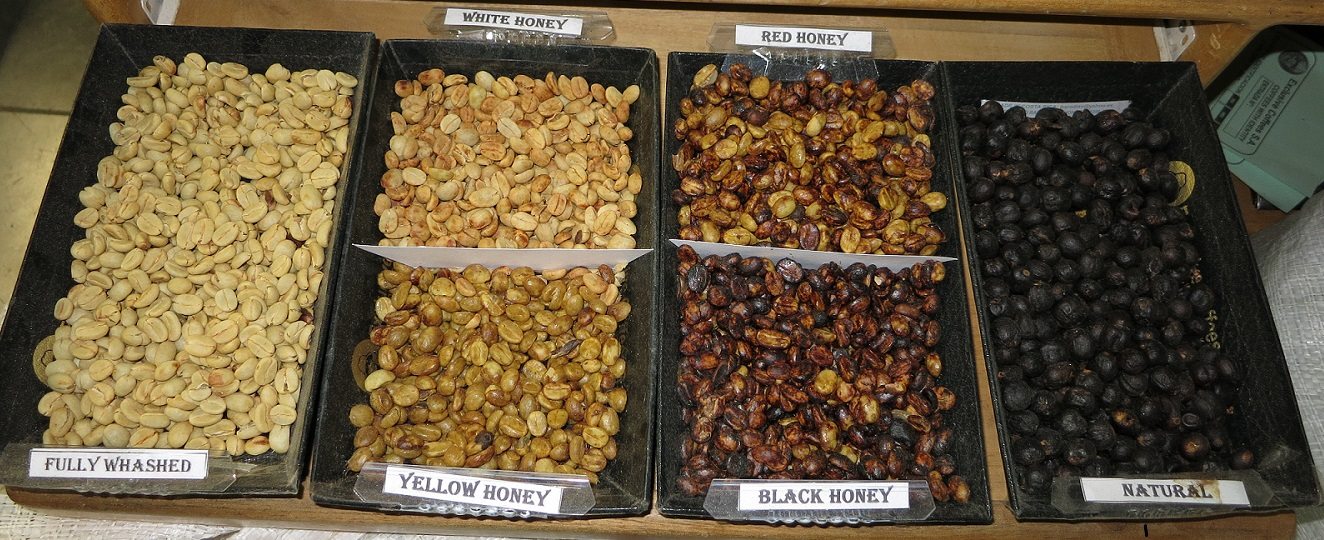
After the coffee fruit is pulped, a layer of mucilage remains on the outside. The image below shows the appearance differences of green beans before the parchment layer is removed, comparing washed, white honey, yellow honey, red honey, black honey, and natural processing methods.
Coffee farmers first pick ripe coffee cherries from the trees, then remove the outer pulp while retaining the mucilage layer on the beans as described earlier. This mucilage layer contains a high proportion of sugars and acids, and it is precisely these sugars and acids that constitute the core value of honey processing.
The next step is the most complex and technically demanding part of honey processing: sun-drying. Timing is crucial, and the duration of sun-drying is the key to success or failure. If the time is insufficient, the substances in the mucilage layer cannot fully transfer into the coffee beans; but the time cannot be too long either—operations must be quick, otherwise the beans are prone to over-fermentation and become moldy beans.
To ensure final quality, the coffee beans need to be spread on drying racks or concrete patios. For the first few days, the beans must be turned several times every hour until the moisture content reaches the required level—this stage typically lasts 6 to 10 hours. Over the following 6 to 8 days, they must be turned at least once a day. This process is quite time-consuming and labor-intensive. The reason honey-processed sun-drying is so time-consuming is that each night the beans absorb moisture from the air, requiring more time to re-dry the next day. Once sun-drying is complete, the subsequent drying and roasting processes are roughly the same as other processing methods.
Since honey processing is so difficult to do well and so time-consuming, you might ask: is it really all worth it? The answer is undoubtedly yes.
Honey-processed coffee generally performs excellently, with a good balance between sweetness and fruity acidity. Compared to natural-processed beans, its flavor is generally less intense but more refreshing and mellow—why not enjoy it? The key to this flavor difference lies in the sugars and acids in the mucilage layer. During sun-drying, the sugars in the mucilage layer gradually concentrate and ultimately penetrate into the coffee beans.
From the perspective of origin, Costa Rica has accumulated richer processing experience in honey processing, resulting in higher flavor consistency. When purchasing honey-processed coffee beans, it is recommended to prioritize the Costa Rican origin:
Honey-Processed Coffee Recommendation ① Front Street Coffee · Blackberry
The flavor profile of Front Street Coffee Blackberry espresso features longan, grape, and honey-like sweetness, accompanied by light floral notes, with a smooth and mellow mouthfeel, strong sweet aftertaste, and high sweetness. It is suitable for those who do not like too much acidity but want a rich, layered mouthfeel. This coffee has a lingering sweet aftertaste, and when made into an Americano, it is fragrant, neither sour nor bitter, with a relatively balanced overall taste.
Honey-Processed Coffee Recommendation ② Front Street Coffee · Strawberry Candy
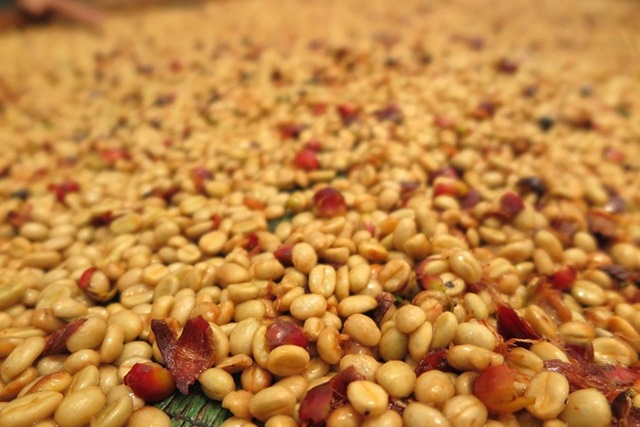
This is a blend of high-altitude coffee from two origins selected by Front Street Coffee, combining Panama washed Geisha with Costa Rican honey-processed coffee. To fully leverage the strengths of both origins, Front Street Coffee uses a medium roast, preserving rich floral and fruity notes while highlighting roasted aromas. After brewing, it presents caramel, raisin, dried fruit, and sweet rose floral notes.
Honey-Processed Coffee Recommendation ③ Front Street Coffee · Mozart
Costa Rica's Mozart is known for its Kyoho grape-like sweetness and has long been loved by many. This coffee bean uses raisin honey processing, allowing the coffee fruit to ferment slowly. Front Street Coffee uses a medium-light roast to highlight this bean's rich raisin, rose, and fermented wine aromas.
The above content is compiled by CoffeeHunters, a coffee news website.


