







Although Kenya and Ethiopia are both in Africa and not far apart, their coffee flavor profiles are completely different—the former is known for its sweet-and-sour notes of black plum, cherry tomato, and caramel. This uniqueness stems both from the volcanic soil at altitudes of 1,600 to 2,100 meters from the capital Nairobi to the Kenyan highlands, and from the contribution of classic varieties such as SL28 and SL34. This article will trace the evolution of Kenyan coffee varieties: from the Bourbon introduced by French missionaries, to the SL28 and SL34 selected by Scott Laboratories, to Ruiru11 developed in response to pests and diseases, and Batian, which was released in 2010. It also includes Front Street Coffee Kenya Asalia brewing suggestions and flavor description for coffee lovers' reference.
To be honest, although Kenya and Ethiopia both belong to Africa and are neighbors, the flavor expressions of the two countries' coffees are worlds apart. When people think of Ethiopian coffee, most first think of bright notes such as citrus, floral, and tea-like qualities; Kenyan coffee is completely different, often presenting a sweet-and-sour intertwined impression of black plum, cherry tomato, and caramel.
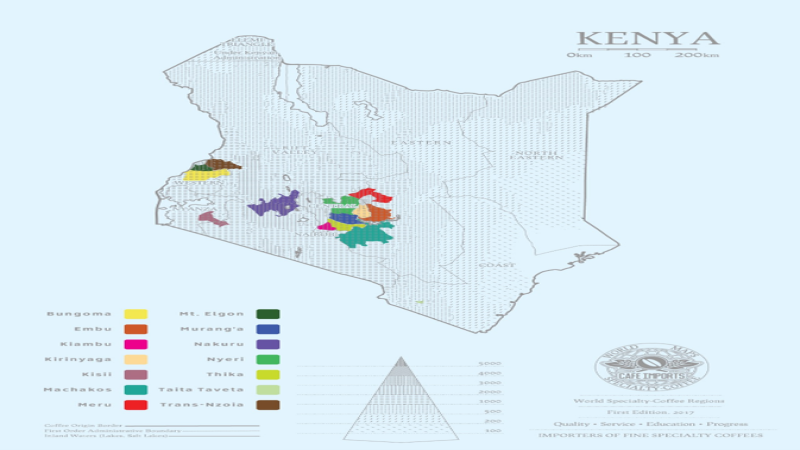
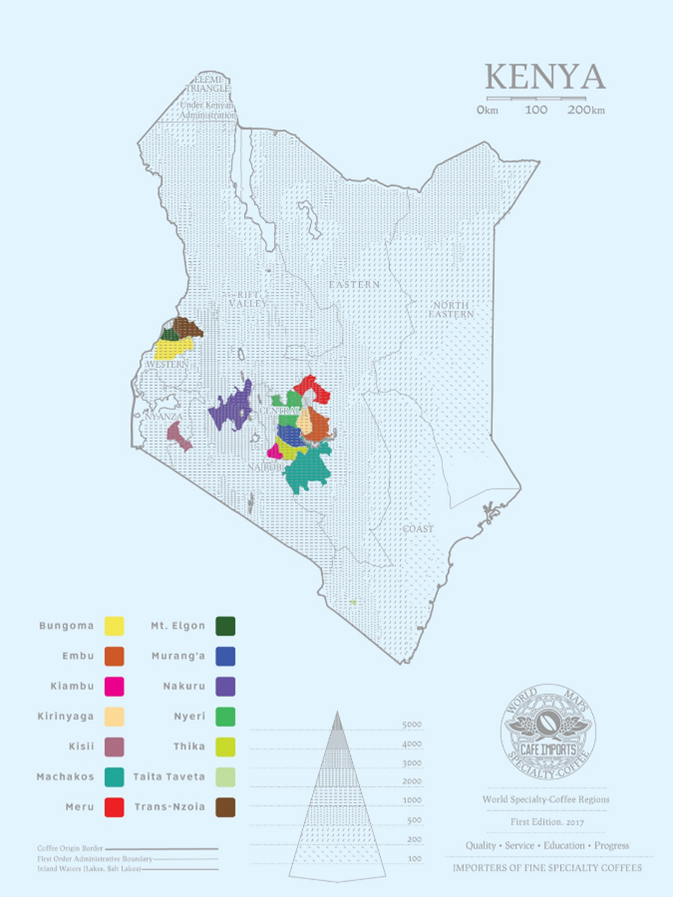
Looking globally, Kenyan coffee's flavor is also unique. To some extent, this is thanks to its growing environment and climatic conditions. Kenya happens to fall within the "coffee golden growing belt," a region that can provide more ideal climatic conditions for coffee. Kenya's coffee farms are mainly distributed in the volcanic areas around the capital Nairobi and the Kenyan highlands, at altitudes of about 1,600 to 2,100 meters.
Volcanic soil is rich in various trace elements and has a good auxiliary effect on coffee growth. Kenyan volcanic soil is especially known for its rich phosphoric acid content, which has also shaped the flavor direction of local coffee to a certain extent. Now that geography is covered, next we'll talk about varieties. After all, terroir alone is not enough; good varieties are also needed to produce high-quality coffee cherries.
At the end of the 19th century, French missionaries introduced Bourbon from Réunion to Kenya, thus beginning the country's coffee-growing history. After that, India's Kent and Jamaica Blue Mountain's Typica were also introduced one after another. However, none of them became the true creator of Kenya's flavor legend—the ones truly shouldering this responsibility were the varieties that appeared after Bourbon and Typica.
1. SL28, SL34
After confirming that Bourbon and Typica could hardly support the development of Kenya's coffee industry, Kenya began looking for better varieties in hopes of obtaining beans capable of carrying the burden. The Coffee Research Foundation of Kenya immediately took action. Its affiliated Scott Laboratories, between 1935 and 1939, sought out 42 different bean varieties from elsewhere for cultivation, over a period of more than ten years. In the end, among these 42 varieties, SL28 and SL34 stood out.
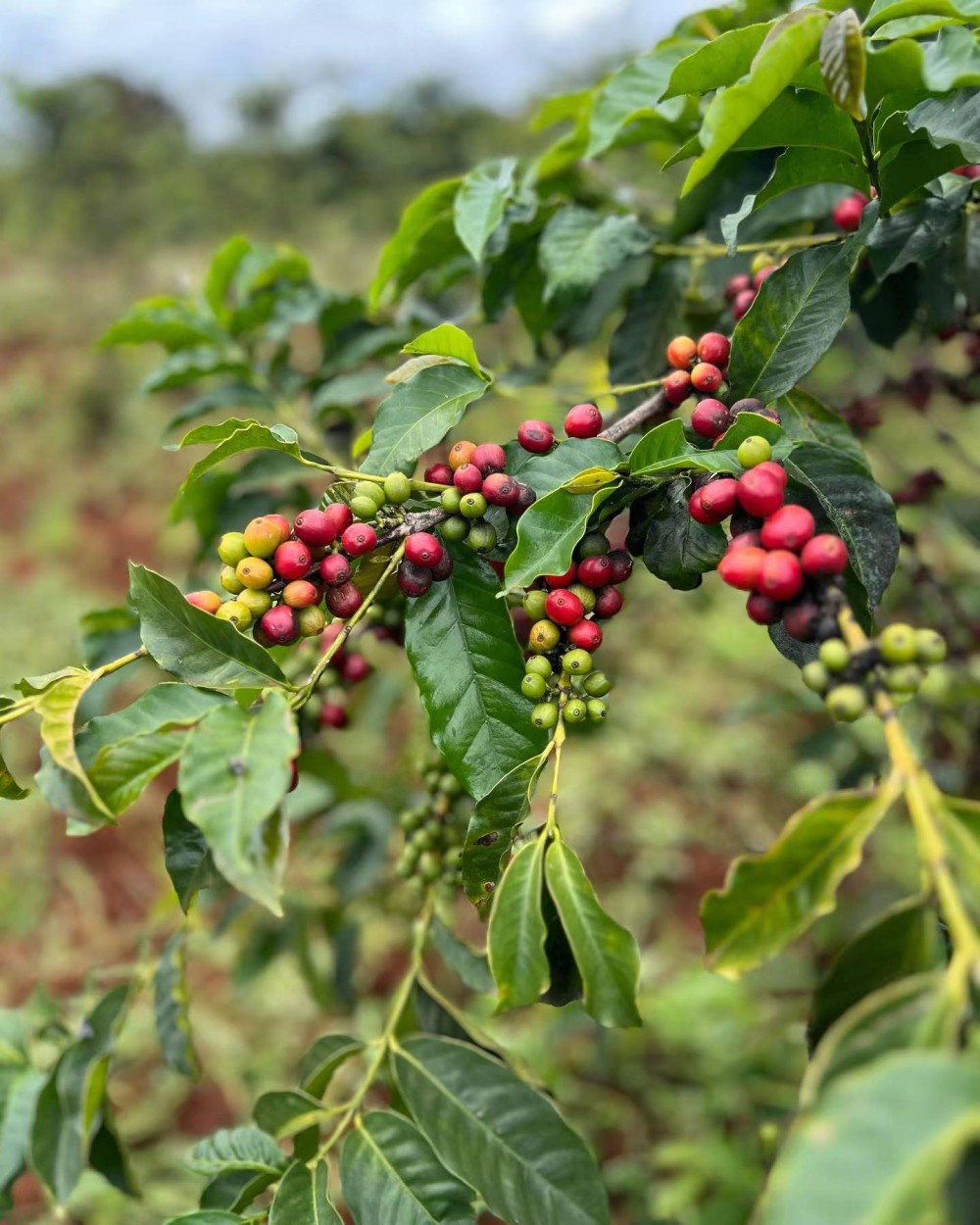
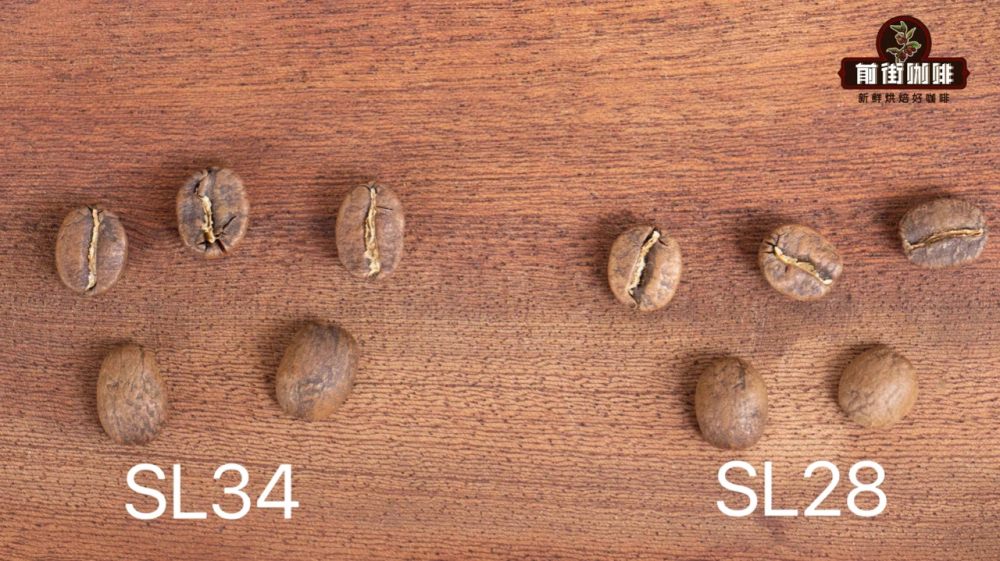
"SL" is the abbreviation of Scott Laboratories, and 28 and 34 are the respective numbers of the two varieties; together they became their final names. In appearance, one bean is rounder with a smaller size, while the other is oval and larger, giving a sense of familiarity. After genetic comparison, it was found that the rounder SL28 is a variant of Bourbon, and the large oval SL34 is a variant of Typica.
Afterward, they indeed became the core force carrying the banner of Kenyan coffee. Supported by Nairobi's geographical conditions and unique processing methods, SL28 and SL34 not only have extremely outstanding acidity, but also carry high sweetness flavors reminiscent of snow pear and caramel. It can be said that the world's superior impression of Kenyan coffee comes precisely from washed SL28 and SL34.
However, if no accident is expected, then an accident is bound to happen. In 1968, pests and diseases began to spread in Kenya. SL28 and SL34, with weaker resistance to disease and pests, suffered heavy losses in this disaster, causing Kenya's production at the time to drop by more than half. The Coffee Research Foundation of Kenya had no choice but to abandon the plan to make them the main varieties and instead research highly disease-resistant varieties to fight the disaster and minimize losses. It was against this background that Ruiru 11 was born.
2. Ruiru 11
Ruiru11 is a brand-new variety developed with painstaking effort by Kenyan agricultural experts. It was named Ruiru11 because the variety was developed by Kenya's Ruiru laboratory, hence the prefix Ruiru. And 11 does not mean No. 11; rather, it refers to the fact that it is the first variety independently developed by Kenyans, and it is a one-way cross. Therefore, two 1s put together make 11.
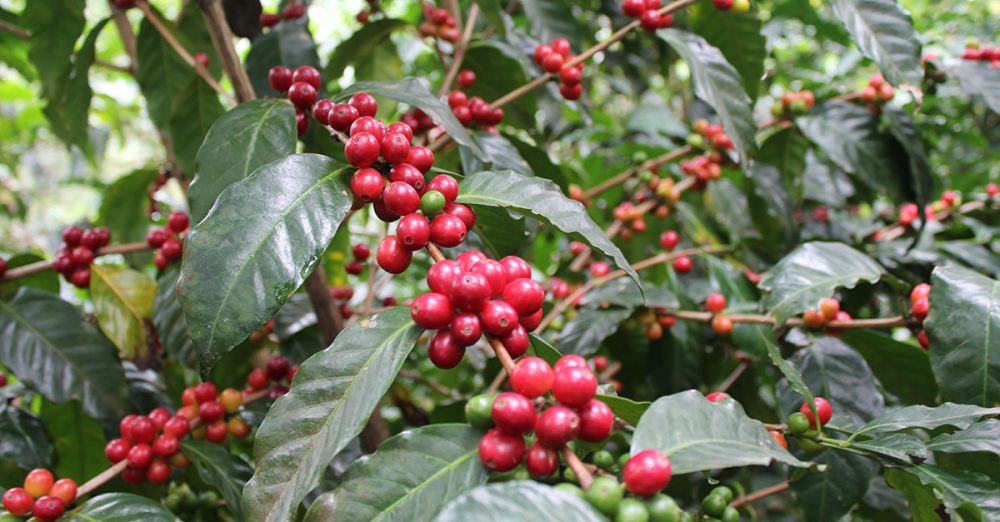
It was bred from several different varieties: Catimor, Sudan Rume, Bourbon, K7, N39, SL28. Compared with SL28 and SL34, it has stronger disease resistance, and its yield is also greatly increased, all thanks to the presence of Catimor genes. Therefore, when Ruiru11 was launched, it was strongly promoted by the Kenyan authorities.
Unexpectedly, the market did not accept it. Because compared with the sweet-and-sour berry flavor produced by SL28 and SL34, Ruiru11 has only acidity, no sweetness. Simply put: it is just sour, and apart from sourness there is no layering at all—this is the negative effect brought by Catimor. This made it difficult for Ruiru11 to replace SL28 and SL34 in carrying Kenya's coffee banner. There was no way around it; with the facts right in front of them, the Kenyan authorities could only continue investing in research.
3. Batian
By 2010, the Coffee Research Foundation of Kenya finally released a bean variety with high disease resistance, high yield, and decent flavor—Batian. This is a variety named after Kenya's highest peak. It is a composite variety recreated by backcrossing the progeny of Ruiru11 with SL28 and SL34.
In terms of flavor performance, it no longer carries the negative flavors brought by Catimor, such as dead wood and earth, but instead refreshes people's view of new varieties with sugarcane sweetness, cherry tomato, and black plum. Even though it has not yet surpassed the honors created by SL28 and SL34, Front Street Coffee believes that in the near future, Kenya will certainly be able to cultivate a brand-new variety surpassing these two bean varieties. Let our taste buds "wait and see." Although Front Street Coffee currently has only one Kenyan bean, it is composed of the renowned SL28 and SL34—"Front Street Coffee Kenya Asalia"—and the processing method used is inevitably the K72 washed process.
Front Street Coffee: Kenya Cherry Tomato Coffee Beans
Region: Kenya Thika Region
Altitude: 1,550-1,750 meters
Varieties: SL28, SL34
Grade: AA
Processing Method: Washed
Flavor: Black plum, snow pear, yellow sugar, cherry tomato, plum
Front Street Brewing Suggestions
Recommended Brewing Method: Pour-over
Dripper: V60
Water Temperature: 91-93°C
Dose: 15 grams
Coffee-to-Water Ratio: 1:15
Grind Size: Medium-fine grind (80% passing through China standard No. 20 sieve)
Brewing Technique: Pulse pouring
Extraction Time: 2'00''-2'15''
Specific Operation: Use 30 grams of water for blooming for 30 seconds, pour in a small stream in circles until 125 grams for the pulse stage, and when the water level is about to expose the coffee bed, continue pouring until 225 grams and stop pouring. After all the poured water has passed through the coffee bed, end the extraction (start timing at the beginning of blooming).
During brewing, from the dry aroma and wet aroma of this Front Street Kenya Asalia coffee bean, Front Street sensed rich and dense notes of cherry tomato and black plum. On the palate, there is full stone-fruit acidity and delicate floral notes, accompanied by a slight caramel finish. As the temperature gradually drops, the mouthfeel becomes like snow pear juice, very sweet and smooth. The overall layering is rich, making you want to keep drinking after finishing.
The above content is compiled by CoffeeHunters, a coffee news website.


