







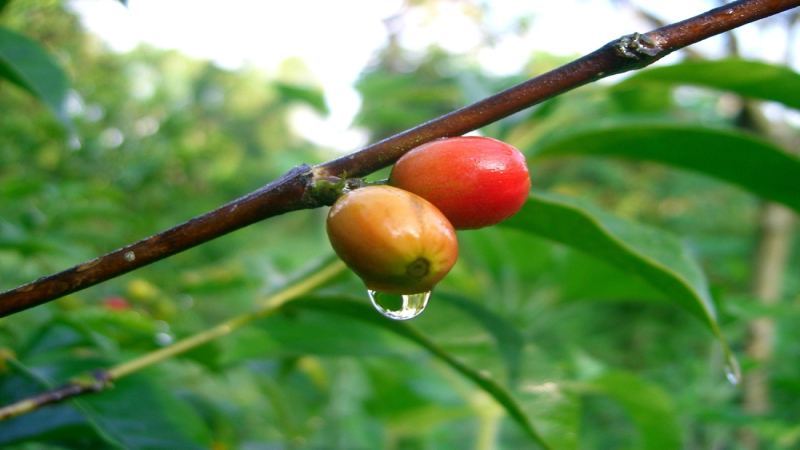
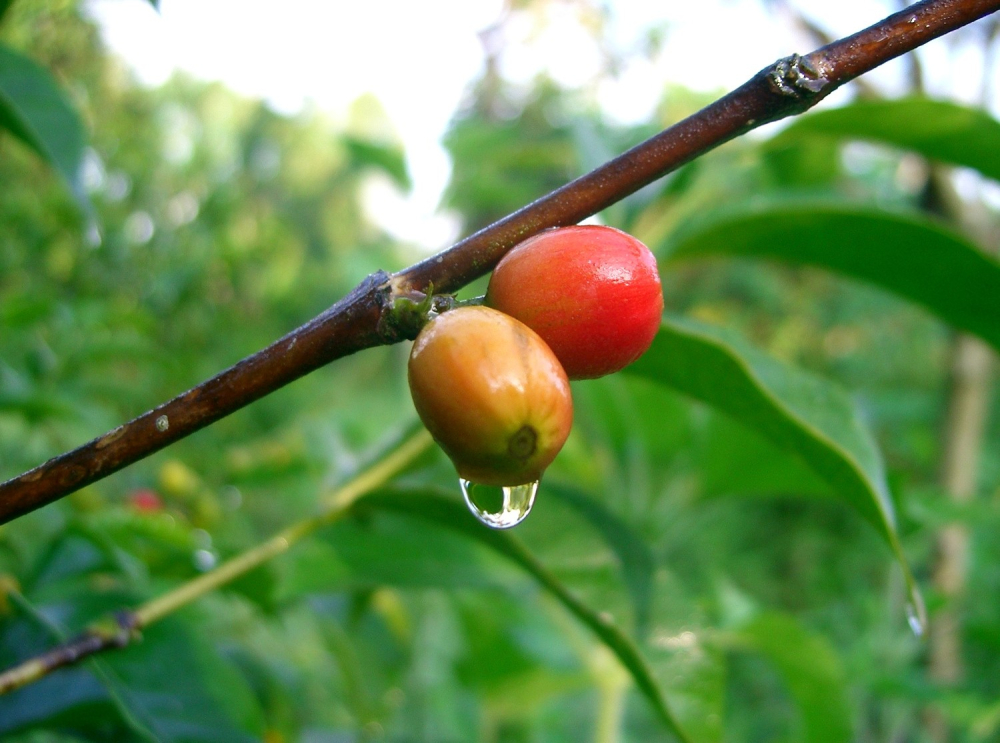
Kenya is a pivotal specialty coffee producing country in East Africa, renowned for its vibrant fruit acidity, full-bodied richness, and unique flavors. This article systematically reviews Kenya's coffee production regions, cultivation altitudes, variety evolution, and trade systems, with a focus on the origins and characteristics of the two representative varieties, SL28 and SL34, and analyzes the causes of Kenya coffee's signature flavors—the extended 72-hour washed fermentation process. The article concludes with product information and pour-over parameters for Front Street Kenya Small Tomato coffee beans, for coffee enthusiasts' reference.
For more specialty coffee knowledge, please follow the WeChat public account: FrontStreet Coffee
In the African coffee landscape, enchanting acidity and aroma have made various origins famous worldwide. Beyond Ethiopia, Kenya is equally a presence that cannot be overlooked. This East African country straddles the equator, borders the Indian Ocean to the east, Ethiopia to the north, and Tanzania to the south, making it a major coffee-producing nation in Africa and occupying an irreplaceable position in the global specialty coffee arena.
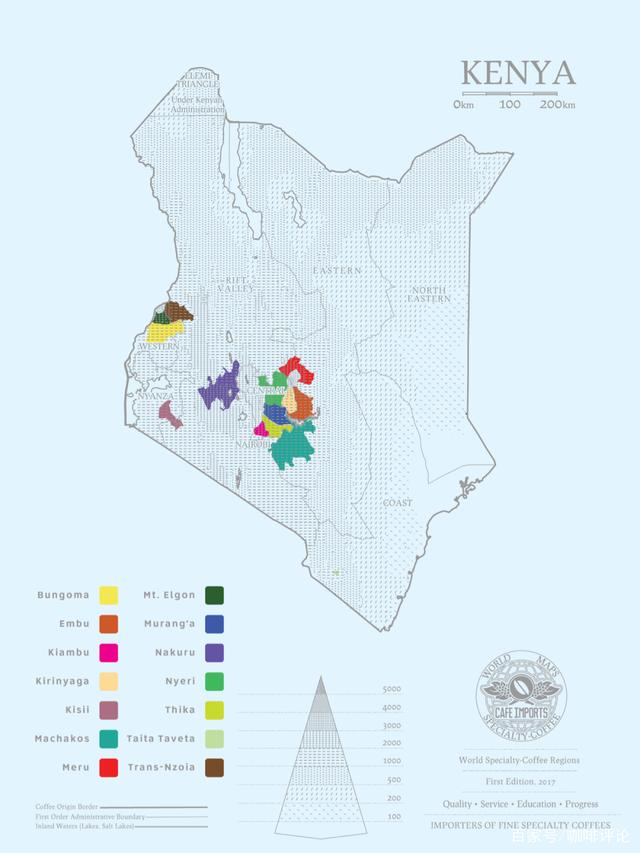
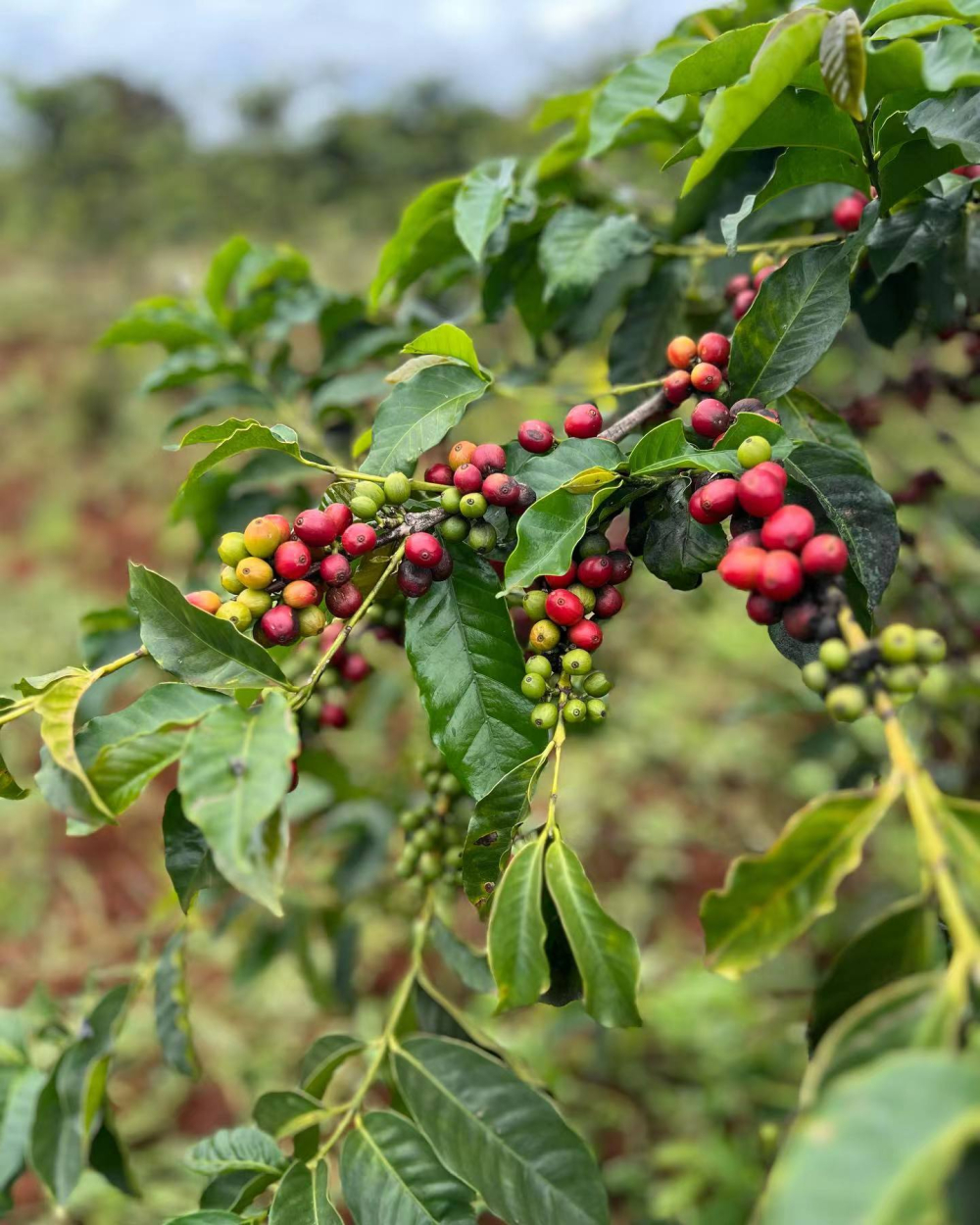
Kenya is located in the tropics and experiences two rainy seasons a year, allowing for two coffee harvests. About 60% of the harvest is concentrated from October to December, with the remaining 40% falling between June and August. Coffee farms are mainly distributed around the capital Nairobi and in the volcanic zones of Kenya's mountainous areas at altitudes of 1,600 to 2,100 meters. Such altitudes are conducive to flavor development—lower temperatures in the mountains slow coffee growth, allowing aromatic substances to fully accumulate, fruit acidity to become more pronounced, and beans to be denser. This fertile crescent-shaped production area is precisely the core source of Kenya's specialty beans.
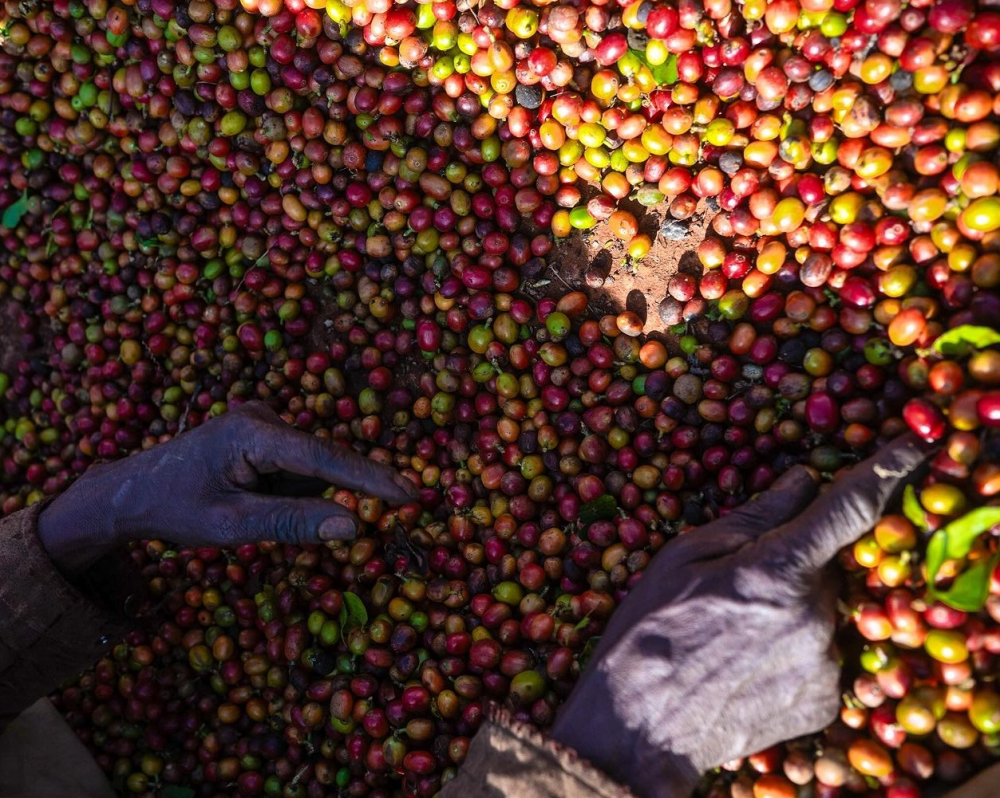
Kenya is not only a famous coffee-producing country in East Africa but also an important supplier of specialty coffee worldwide. Its coffee has a full body and distinct character, and its trade system is equally refined. Bean size grading represented by AA or AB cannot directly equate to flavor quality; the Coffee Board's auction lots are based on cup quality, and specialty Kenyan auction prices have long remained high. Kenyan coffee mostly grows at altitudes between 1,500 and 2,100 meters, with two harvests per year. To ensure only ripe cherries are picked, workers must repeatedly patrol the fields, making about seven passes.
Only ripe cherries are picked, and workers must patrol the fields, making about seven passes. Kenya has two coffee marketing systems: one is the auction held at the Nairobi Coffee Exchange (the Central Auction System), through which about 85% of coffee beans are traded; the other is direct trade, commonly known as the "second window," through which only about 15% of coffee beans circulate.
Central Kenya produces the most coffee in the country, and the highest-quality coffee also comes from this area. Meanwhile, western production areas such as Kisii, Trans-Nzoia, Keiyo, and Marakwet, as well as southern areas like Thika, are also attracting increasing attention.
Most Kenyan coffee is grown at altitudes between 1,300 and 2,000 meters, with average temperatures of 15 to 24 degrees Celsius and annual rainfall of about 900 to 1,200 millimeters. The highland areas around Mount Kenya provide optimal growing conditions for coffee, including the Aberdare Range, Nyanza, Kisii, Bungoma, Kericho, and Nakuru. The Arabica varieties grown in these regions were first introduced from Ethiopia. In the 1930s, Kenya selected SL28 and SL34 through the Scott Laboratories and promoted them nationwide. These two varieties possess exceptionally excellent berry-like acidity, and were later introduced to some Central American estates; the variety of the Costa Rica COE champion bean the year before last was precisely SL28 and Geisha.
Since then, Kenya has been committed to breeding leaf rust-resistant varieties. Ruiru11 was the first successful variety recognized by the Kenya Coffee Board, and can be understood as Kenya's version of Catimor. When Front Street cupped Kenyan coffee beans blended with Ruiru11, it found that their sweet-acid balance was slightly weaker and carried a slight muddled quality. This also demonstrates that variety has a clear impact on flavor.
Kenyan Coffee Bean Varieties
Kenyan coffee is typically associated with bright acidity, a rich and full body, and unique cup flavors. The more popular varieties domestically include K7, Blue Mountain, Batian, Ruiru11, and the SL series. Among them, the SL series has been cultivated in Kenya for nearly 90 years, encompassing multiple varieties, with the two most well-known being SL-28 and SL-34.
SL28 is one of the most famous and highly regarded varieties in Africa. It was selected in Kenya in the 1930s, then spread from Kenya to other parts of Africa (especially holding an important position in Uganda's Arabica-growing regions), and has now been introduced to Latin America. This variety is suited to medium-high altitude areas, exhibits drought resistance, but is susceptible to major coffee diseases. SL28 is known for its hardiness and vigor—a quality that means it can be left unattended for years or even decades, and still recover production afterward. Many places in Kenya have SL28 trees aged 60 to 80 years that remain productive to this day.
Kenya SL28 is one of Africa's most famous and beloved varieties, standing out in recent years with stunning blackcurrant and bright fruit acidity, making it the most closely watched iconic variety after Geisha. In fact, SL28 originally originated in Kenya—just as Geisha originated in Ethiopia yet achieved superstar status in Panama, SL28 possesses the same potential, radiating brilliance from its home country Kenya to coffee-producing nations everywhere.
In 1931, senior staff from the Scott Laboratories traveled to Tanganyika (present-day Tanzania) for field research and noticed that a coffee variety grown in the Moduli area seemed tolerant to drought, disease, and pests, so they collected seeds and brought them back to the Scott Laboratories. In 1935, the laboratory selected a single plant from the drought-tolerant Tanganyika species and continued breeding and improvement, ultimately releasing SL28, a descendant of the Moduli area. Recent DNA research has confirmed that SL28 belongs to the Bourbon genetic group.
Characteristics of the SL28 Variety
SL28 is very easy to cultivate, requiring no special care, with large beans, high yield, and excellent flavor quality. Since its release by the Kenyan government in the 1930s, it was first planted in Kenya, then spread to Uganda, and now even Central America takes great interest in it. This variety suits medium-high altitude areas, has drought tolerance, but remains susceptible to major coffee pests and diseases. Only when grown in Kenya can SL28 display these unique characteristics; SL28 grown in other countries merely has similar flavors.
SL34 was initially selected in the late 1930s at Kenya's Scott Agricultural Laboratories. SL34 was selected from a tree on the Kabete Loresho estate in Kenya, and this tree was known as the "French Missionary." SL34's bean appearance is close to the Typica variety; Front Street screened out beans from Kenyan coffee that resemble Typica, with elongated, oval-shaped beans that appear relatively flat from the side. Recent genetic testing indicates that SL34 is related to the Typica genome.
Reasons for the Taste Characteristics of Kenyan Coffee
Coffee from Central and South America rarely ferments in washing channels for more than 36 hours, but Kenya's washing time extends to 72 hours. After 30 to 48 hours of fermentation, the parchment coffee is removed from the channel; by this time the mucilage on the bean surface has been completely removed, but it still requires 24 hours of soaking in clean water. After cupping multiple beans, Front Street found that this additional fermentation step should be related to the bright, clean signature flavor of Kenyan AA coffee.
How to Drink Kenyan Coffee?
Taking Front Street Small Tomato coffee beans as an example, they undergo the locally common double washed process and are roasted to a medium-light level. When brewed, they carry intense floral aromas and a juicy mouthfeel, full of flavor. You can purchase and order at Front Street stores and the Front Street Tmall flagship store.
Front Street Kenya Small Tomato Coffee Beans
Region: Asali Washing Station, Thika Region, Kenya
Altitude: 1,550m—1,750m
Variety: SL28, SL34
Process: K72 Washed Process
Flavor Description: Dark Plum, Cherry Tomato, Snow Pear, Yellow Sugar, Plum
FrontStreet Coffee Pour-Over Parameters Sharing
Dripper: Hario V60
Dose: 15g
Coffee-to-Water Ratio: 1:15
Water Temperature: 90℃
Grind Size: EK43s#10 (80% passing through No. 20 standard sieve)
First pour 30g of water for a 30-second bloom, then second pour to 125g for a staged pour. When the water level drops to just about to expose the coffee bed, proceed with the third pour to 225g and stop. Wait for the water in the dripper to completely drip into the server, then remove the dripper. Total extraction time: 2'00".
The above content is compiled by CoffeeHunters, a coffee news website.


