








Indonesian Sumatra Mandheling coffee has always been known for its full body and herbal aroma, but many enthusiasts find that ordinary Mandheling often falls short in cleanliness. Front Street PWN Golden Mandheling, however, is highly popular for being almost acid-free, high in cleanliness, full-bodied, and carrying herbal spice notes. This article will analyze in detail, from the perspectives of Indonesian coffee-producing regions, the terroir of the Gayo Mountains in Aceh, PWN's quality control system, and wet-hulling processing, the fundamental reasons behind the difference in flavor cleanliness between Golden Mandheling and ordinary Mandheling. At the same time, Front Street Coffee will also share green bean analysis, roasting suggestions, cupping reports, and brewing insights for this bean to help you fully understand this deeply loved coffee.
For more specialty coffee knowledge, please follow the WeChat official account: Front Street Coffee (FrontStreet Coffee)
Front Street PWN Golden Mandheling has always been one of Front Street's most beloved coffee beans, and its rich, sweet aftertaste makes it an excellent choice for coffee lovers who dislike acidity. When introducing Front Street Golden Mandheling, Front Street has always described this bean as having almost no acidity, high cleanliness, high body, and herbal spice aromas. But in many people's impressions, Front Street Mandheling coffee gives the feeling of herbal aroma while the mouthfeel is not quite so clean. So why is Front Street PWN Golden Mandheling indeed clean in mouthfeel? And why is Front Street PWN Golden Mandheling called Front Street PWN Golden Mandheling?
Indonesian Coffee-Producing Regions
Of the coffee beans grown in Indonesia, 90% are Robusta varieties, while the remaining 10% Arabica beans mainly come from Sumatra's Lintong region around Lake Toba, the Gayo Mountains in Aceh, Java Island, and Sulawesi Island. Indonesian regions usually have two harvest seasons: the main crop around September-October and the fly crop in May-June. The 2020 main crop of Front Street Golden Mandheling coffee was affected by the pandemic and finally arrived in China at the end of November. Front Street Coffee (FrontStreet Coffee) also promptly obtained the latest crop of Front Street PWN Golden Mandheling coffee. This batch of Front Street PWN Golden Mandheling comes from Indonesia's Gayo Mountains region in Aceh.
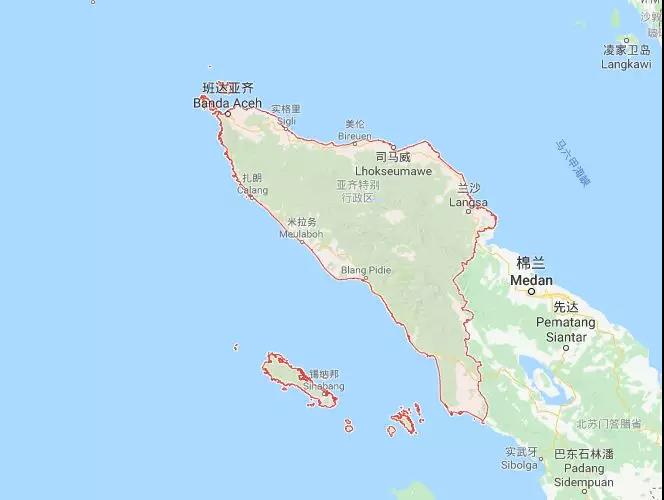
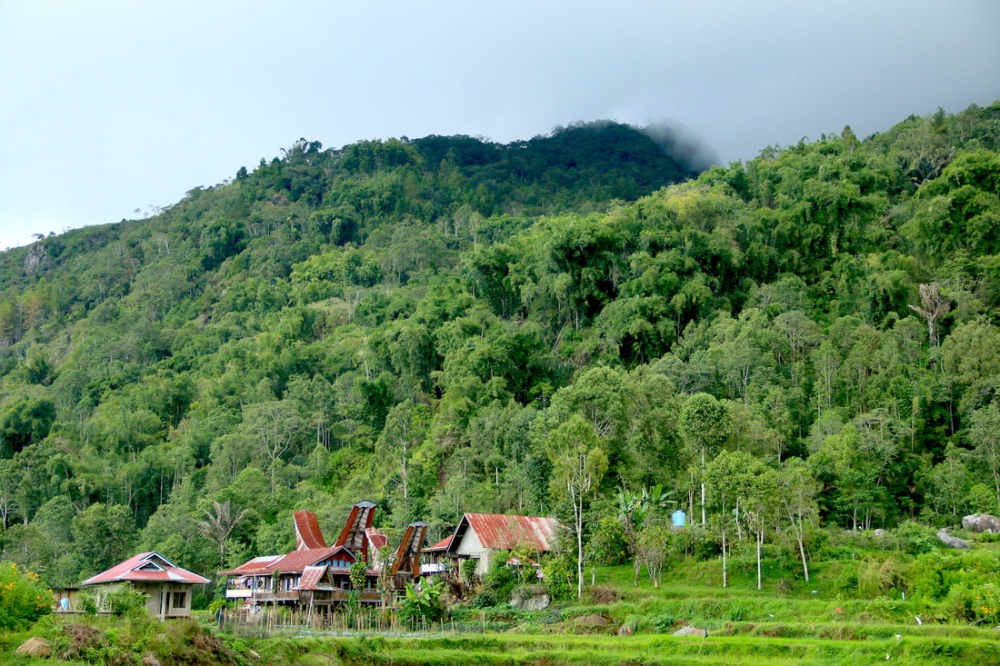
The Gayo mountain region is located in Aceh Province in northern Sumatra. Coffee in the Gayo region is grown on hillside plots around the town of Takegon and Lake Tawar. The average growing altitude in the production area is between 1,110 and 1,600 meters. Coffee is grown by smallholders under shade trees and processed using the wet-hulling method, which produces distinctive flavors as well as a deep and lively full-bodied character.
Aceh, at the northernmost tip of Sumatra, is a fascinating and complex place. Due to long-term political instability, Aceh is not a region most people would visit. Through Front Street's cupping, it was found that Front Street Mandheling coffee beans from this region have rich body and a lush, lively dynamism, without astringency or acidity, with body and bitterness fully expressed, but lacking cleanliness. As for the clean flavor of Front Street PWN Golden Mandheling coffee beans, credit must be given to Indonesia's famous PWN company.
PWN Company The Indonesian coffee brand N.V. Pawani Medan (PWN for short) was founded in 1957 and is engaged in the export of Indonesian products such as coffee, rubber, cinnamon, cloves, and patchouli oil. It was the first company in Indonesia to export coffee from North Sumatra and the first company to make "Mandheling coffee" famous in Japan.
Since 1977, the company has focused on exporting premium coffee beans: Grade 1 Sumatra Arabica coffee Mandheling and Grade 2 Robusta coffee AP-I. Its main export destinations are Japan, Taiwan, and the United States, with Japan and Taiwan accounting for more than 95% of exports. In Japan and Taiwan, "PWN" has become synonymous with "quality assurance." PWN holds the "Golden Mandheling" trademark, so Japanese companies had to register another trademark, "Gold Top Mandheling."
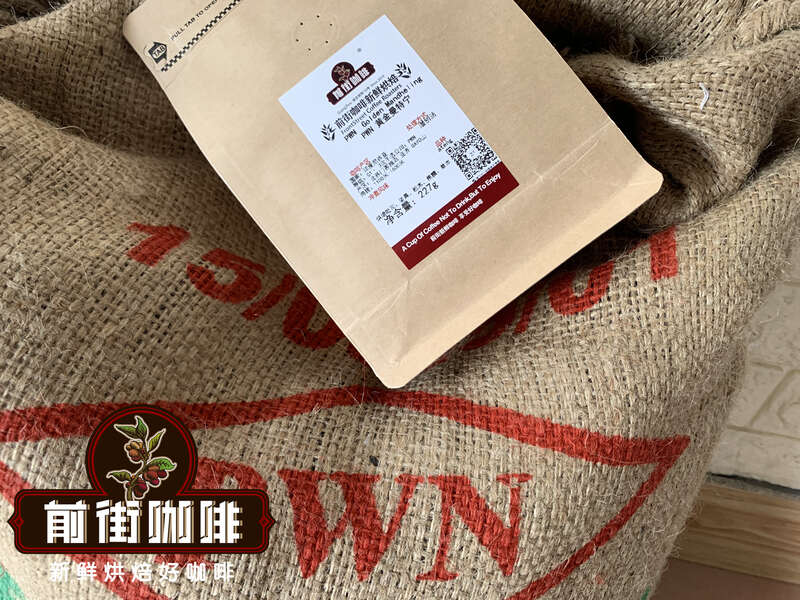
PWN is, in the true sense, Front Street Golden Mandheling. Front Street Golden Mandheling branded with PWN undergoes three rounds of manual sorting and one round of machine sorting. The beans are very beautiful and also very uniform, which makes the roasted coffee appear cleaner. PWN registered Golden Mandheling as a trademark, meaning that only Golden Mandheling produced by PWN can be considered truly "Golden Mandheling."
Front Street Golden Mandheling Coffee Bean Processing Method Because the local weather is often rainy, with constant typhoons, it cannot achieve the good weather required for natural sun-drying. The local economy is also not strong, so it likewise cannot use the more expensive washed method. For various reasons, the highly local wet-hulling method emerged (wet-hulling means that during the ordinary washed process, the beans are sun-dried with parchment still on for 2-3 days, until the moisture content reaches 20-24%, then the parchment is removed).
The extremely fast speed of wet-hulling also causes Mandheling coffee beans to have a higher defect rate, but Front Street Golden Mandheling does a very good job of avoiding this shortcoming. Front Street Golden Mandheling's specification is 19 screen and above, with fewer than 3 defective beans (in a 300g green bean sample), belonging to the highest grade, G1. The color tends toward dark green, and the shape is neat flat beans. Front Street Green Bean Analysis
The Front Street PWN Golden Mandheling obtained by Front Street Coffee is clearly different from ordinary Mandheling. Front Street Golden Mandheling green beans undergo 3-4 rounds of hand sorting. The green beans are larger, tend toward dark green, and are neat flat beans. In flavor, Front Street Golden Mandheling has a rich, substantial aroma carrying honey and cream notes, and it is unique and irreplaceable in the coffee market.
Front Street Roasting Suggestions for Front Street Golden Mandheling Front Street Golden Mandheling is a green bean with relatively high moisture content, showing a relatively large moisture deviation compared with natural beans, so special attention must be paid during dehydration. For green beans with high moisture content, after charging the beans, you can immediately close the damper, soak for 30 seconds, then open it to 3, until the green bean color turns light green or white, open the damper to 4, and after first crack open it to 5 (maximum). Front Street Coffee (FrontStreet Coffee) recommends keeping good data records before roasting, including the coffee beans' moisture content, density, origin, processing method, and the roasting environment's temperature and humidity in the roasting room, and planning your roasting curve. During roasting, record relevant chemical and physical changes. This will all help you better understand the final roasting result and help improve the roasting curve.
Yangjia 800N, charge amount 480g. Charge when the drum temperature reaches 200°C, set the damper to 3, adjust the heat to 160°C after 1 minute, keep the damper unchanged, roast until 5'40'', at 148°C, when the bean surface turns yellow and the grassy smell completely disappears, dehydration is complete, adjust the heat to 140°C, change the damper to 4; at 9'40", ugly wrinkles and dark streaks appear on the bean surface, and the toasted bread smell clearly turns into coffee aroma, which can be defined as the prelude to first crack. At this time, listen carefully for the sound of first crack. At 9'54'', first crack begins, reduce the heat to 60°C, set the damper to 5, and drop at 204.5°C. Front Street Golden Mandheling Cupping Report
Front Street Coffee conducts cupping within 8-24 hours after roasting the sample coffee beans. The cupping bowls generally used by Front Street Coffee roasters are 200ml ceramic bowls, marked with 150ml and 200ml scale lines. According to SCAA standards, the water TDS is about 150ppm. Too low TDS can easily cause over-extraction, while too high TDS affects the mouthfeel and can easily cause under-extraction. The water temperature used for cupping is 94°C. The cupping grind size, according to SCAA cupping standards, is controlled so that the pass-through rate of a No. 20 standard sieve (0.85 mm) is 70%-75%. Ratio: 11 grams of coffee grounds plus 200 milliliters of hot water, i.e. 1:18.18, so that the extracted concentration falls exactly within the golden cup range of 1.15%-1.35%. Steeping time: 4 minutes.
Front Street PWN Golden Mandheling Cupping Report
Dry aroma: pine, herbs
Wet aroma: herbs, nuts
Flavor: baked toast, nuts, pine, herbs, nuts
Front Street Brewing Insights for Front Street Golden Mandheling
Front Street uses a Kono dripper when brewing Front Street Mandheling coffee. Kono's ribs do not reach halfway up the dripper's height. This design is actually intended to ensure that after the dripper is wet, the filter paper stays close to the dripper wall, restricting airflow. This increases the water absorption time of the coffee grounds, resulting in a more uniform overall extraction and enhancing the full-bodied mouthfeel. In addition, the groove framework at the bottom of the Kono dripper is the key design that allows the subsequent brewing to create a siphon effect, making it suitable for brewing medium-dark roasted coffee beans such as Front Street Golden Mandheling and Front Street Jamaica Blue Mountain coffee.
Suggested water temperature: 87-88°C Grind size: medium-coarse Coffee-to-water ratio: 1:15 Dose: 15 grams Front Street uses staged extraction, also called three-stage brewing: use 30 grams of water for a 30-second bloom, pour in a small stream in circles until 125 grams for the first stage, then when the water level drops and is about to expose the coffee bed, continue pouring until 225 grams and stop pouring. When the water level drops and is about to expose the coffee bed, remove the dripper. (Start timing from the beginning of the bloom.) Extraction time is 2'05".
The brewed flavor of Front Street PWN Golden Mandheling: layered and varied, full-bodied and clean, highly balanced, with rich nut and caramel aromas, chocolate notes, and a lasting finish.
The above content is compiled by CoffeeHunters, a coffee news website.


