







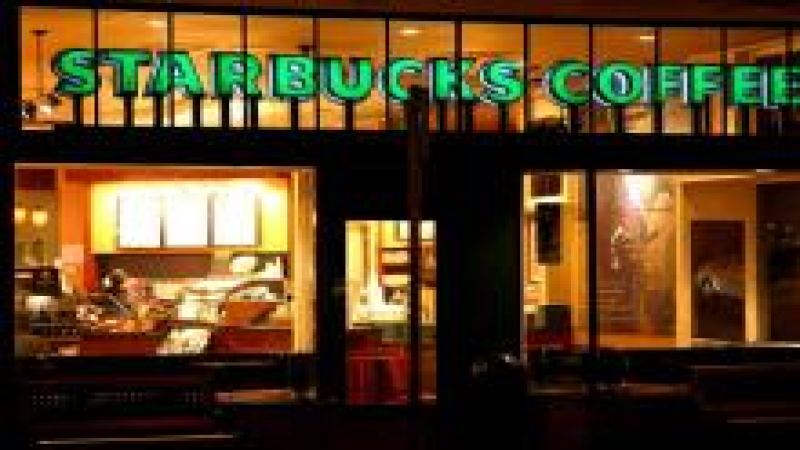
As one of the most influential coffee chain brands in the world, Starbucks' success comes not only from coffee quality, but also from its unique cultural experience and brand operation strategy. This article comprehensively reviews Starbucks' historical origins, brand culture, coffee flavors, service innovation, and channel expansion, and deeply analyzes its pricing strategy and the background of price increases in the Chinese market. From the "third place" concept to the "coffee classroom" service, from mystery shopper evaluations to supermarket channel layout, the article also compares domestic and international price differences, revealing how Starbucks uses culture to empower brand premiums. At the same time, the article mentions recommendations for brands such as Front Street Coffee, providing coffee enthusiasts with a more comprehensive consumer reference.
Editor
Most friends who enjoy drinking coffee have heard of Starbucks. This name originally came from a character in a novel that was a household name in the United States over a hundred years ago. In the 1970s, three Americans turned it into the signboard of a coffee shop, using it to convey the American spirit. Since then, cup after cup of Starbucks coffee has won the hearts of consumers around the world. Today, Starbucks has become a coffee brand especially favored by young people.
Chinese name
Starbucks Coffee
Foreign name
Starbucks
Period of origin
1970s
Advantages
High-quality experience, the appeal of a relaxed and warm atmosphere
1
Brand culture
2
Brand image
3
Coffee flavor
4
First price increase
5
Domestic and international
6
Value
7
Quality
8
What can be learned
Editor
Starbucks is able to take one of the world's oldest commodities
Starbucks Coffee
and shape it into a unique, enduring, and high-value-added brand. This is inseparable from its insistence on an "experience culture" in the early days of its founding and its distinctive marketing methods.
Starbucks' success does not rely solely on outstanding coffee quality; the appeal of its relaxed and warm atmosphere is the key to its victory. This is because a "Starbucks" coffee shop creates a cultural atmosphere that advocates knowledge, respects individuals, and carries a touch of "petit bourgeois" flavor. In Starbucks stores, what is emphasized is not only the coffee itself, but also culture and knowledge. Starbucks culture is essentially built around the two major themes of people and knowledge, and its core lies in using the most comfortable environment possible to help people broaden the boundaries of their knowledge and abilities and to tap into the greatest value of people at the knowledge level. [1]
Abroad, Starbucks cannot be considered petit bourgeois, and the price is very cheap.
Editor
Unlike other multinational giants, Starbucks is one of the few brands that does not rely on massive advertising and promotions. Its brand promotion has consistently not depended on advertising, but instead has focused on shaping its brand image, and this is consistent around the world. Starbucks believes that coffee is different from McDonald's, that coffee has a unique cultural attribute, and that sponsoring cultural events is crucial to promoting Starbucks' image. For example, at the Dalí exhibition held earlier in Shanghai, Starbucks was a major sponsor. Starbucks was also a sponsor of the Shanghai APEC meeting.
The exterior design of Starbucks chain stores is considered based on the surrounding environment of the store, but the interior decoration strictly follows the unified decorative style of the chain system. Each store itself is an image promotion and an important link in Starbucks' business chain. American designers create rich visual elements and a unified style for each store, making customers and passersby feel pleased, thereby achieving the purpose of brand promotion. This promotion method is called Tie-in, that is, closely associating the coffee shop image with customers.
In Starbucks coffee shops, employees are the main carriers of delivering experiential value. The value of coffee can only be enhanced through employees' service, so employees are equally important to the creation of experience as the environment. In fact, Starbucks employees are like coffee enthusiasts, able to explain in detail the characteristics of each coffee product, and are good at communicating with customers and anticipating their needs. Employees are called "partners" within Starbucks because all of them hold options, their status is fully respected, and they also create extremely strong competitiveness for the Starbucks brand.
Editor
Starbucks' rich black coffee aroma subtly permeates the lives of all kinds of people around the world, but its management model has only one version, copied from the North American continent and applicable everywhere. With globally unified management, quality, and taste, Starbucks' success story does not begin with every cup of coffee that tastes the same, but rather when the coffee beans are still in the growing stage: extremely strict selection of coffee beans, with strict standards in every step from variety to origin to bean shape; its coffee tasting experts evaluate more than 100,000 cups of coffee each year to ensure quality, selecting coffee beans through cupping, then determining the precise degree of roasting, so that the unique flavor of each coffee is fully released. Starbucks' slogan is: bring out the flavor of every coffee bean to the fullest. The final step is to sell the steaming hot coffee to customers together with a standard service model.
Connotation of coffee culture
Coca-Cola links its fizzy drink with carefree happiness; Nike uses "just-do-it" to persuade runners that what they sell is personal success; Starbucks sells culture.
At a Starbucks in Shanghai, a service called "coffee classroom" brought the strategy of "selling culture under the guise of coffee" to its fullest imaginative expression. If three or four people go to drink coffee together, Starbucks will assign a coffee master to them. Once customers have any questions about coffee bean selection, brewing, roasting, and so on, the coffee master will explain patiently and in detail, allowing customers to find the coffee that best suits their taste while also experiencing the coffee culture that Starbucks promotes. Culture gives its higher price a fully justified reason, customers thereby gain great psychological satisfaction, and the real winner is Starbucks.
In Starbucks' view, people's lingering spaces are divided into home, office, and other places besides those. McDonald's strives to create the atmosphere of home and seeks to maintain as long and ambiguous a relationship as possible with people's first space—home; while as a coffee shop, Starbucks is committed to capturing people's third lingering space, keeping its money-making gaze firmly fixed on people's lingering spaces. Live piano performance + classic European and American music background + popular fashion newspapers and magazines + exquisite European-style ornaments and other supporting facilities strive to give consumers more of a "Western" feeling. Let drinking coffee become a life experience, and let coffee drinkers consciously feel very fashionable and cultured.
Multidimensional innovation: the source of Starbucks' brand vitality
Successful marketing requires creativity and passion. In this era of the attention economy, to attract more people's attention, the most important thing is to create innovation and form differentiation, so that consumers' attention to products can be transformed into consumer behavior. Starbucks' strategic innovation in adding value to its brand culture continuously injects vitality into its unique "Starbucks" brand during development and keeps it ever new.
Service innovation: Starbucks also pays great attention to developing new service content based on customer needs. Headquartered in Seattle, Starbucks is trying various business ideas to attract people to enter the store and extend their stay. Entering Starbucks, you will feel the music swirling in the air stirring your soul. The store often plays jazz, American country music, piano solos, and so on. These precisely cater to those fashionable, trendy, and avant-garde white-collar workers. They face strong pressure to survive every day and greatly need spiritual comfort. The music at this moment plays exactly this role, letting you, while consuming a culture, awaken some perhaps already vanished nostalgic emotion within you. Since 2002, Starbucks has launched high-speed wireless internet service in 1,200 chain stores in North America and Europe. Customers carrying laptops or personal digital assistants (PDAs) can comfortably drink coffee while browsing web pages, sending and receiving emails, and downloading information in the store.
Channel innovation: In 1998, coffee sold through supermarkets and food outlets in the United States accounted for half of total sales that year. In more than 26,000 grocery stores lay a broader market than Starbucks' retail chain stores and specialty sales channels. Making full use of this channel could bring the company millions of consumers. In addition, getting products into supermarkets could also save the company transportation costs and reduce operating costs. The company's retail capability would also be further strengthened. Schultz and other company decision-makers believed that supermarkets were an important way to continue expanding Starbucks coffee sales. Although Schultz had originally set the rule of "refusing to enter supermarkets" because he could not bear to see fresh coffee beans deteriorate and lose their flavor, changes in the environment constantly required the company to revise its principles of operation. In 1997, Schultz and his senior management ordered a move into supermarkets. Despite the many risks and difficulties—after all, supermarkets are not sales venues that the company can control. However, the situation Schultz worried about did not occur; on the contrary, the original decision produced good results.
Consumer education: In the process of expanding into Asian countries, Starbucks had to face the problem that promoting and popularizing coffee drinking in a country accustomed to drinking tea would inevitably encounter emotional resistance from consumers. For this reason, Starbucks first focused on promoting "consumer education."
Each Starbucks branch must hold one coffee lecture for customers every week. The main content is knowledge related to coffee, how to brew it oneself, the use of equipment, and so on. The format is very flexible, generally chosen when there are more customers, and the time is controlled to about 30 minutes. Many customers ask questions one after another, and the lecturer answers them, creating a lively atmosphere. In Shanghai, Starbucks is planning and implementing a service called "coffee classroom," whose content is: if three or four people go to drink coffee together, Starbucks will assign them a dedicated barista. The barista may or may not be needed, but the information revealed is that the number of customers going to Starbucks in groups is showing an upward trend.
Mystery shoppers: For Starbucks, word of mouth is the best advertising. To achieve this word-of-mouth effect, it is necessary to serve every customer well. Starbucks' standard is: brew every cup of coffee well and handle every detail well. You may be facing the 100th customer today, but for the customer, the coffee he drinks is his first cup, and his understanding of Starbucks begins with this cup of coffee. [2]
How do you test "brewing every cup of coffee well for customers"? Starbucks has established a series of evaluation mechanisms, among which the "mystery shopper" is especially distinctive. In addition to the usual theoretical knowledge assessment and practical operation assessment, they entrust a certain company with evaluation capabilities to secretly send someone disguised as a customer to various Starbucks coffee branches to make purchases, during which the employee service, skills, environmental atmosphere, and other aspects are comprehensively examined, and then combined with performance for a comprehensive assessment before deciding the service quality of a certain store, whether a certain employee can be promoted, and so on.
Editor
Starting from January 31, 2012, Starbucks adjusted the prices of handcrafted coffee beverage products in its stores in mainland China, with each cup increasing by 1 to 2 yuan. As these chain giants substantially increase their stores in China, analysts say they place greater emphasis on profit indicators. "We will raise prices on some products on January 31," a Starbucks contact in China said yesterday in response to this newspaper's inquiry. The products whose prices will be adjusted are mainly handcrafted coffee beverages (such as lattes, mochas, cappuccinos, and coffee substitutes), that is, coffee products as they are commonly known, covering all mainland stores including those in Guangzhou.
The above-mentioned contact said that Starbucks' last adjustment to the prices of coffee products in China was in April 2007. This price adjustment is mainly due to consideration of increased operating costs, including raw materials, labor, logistics, rent, and so on.
Editor
In the United States, Starbucks coffee, like Häagen-Dazs ice cream, is a mass-market brand, with a cup of coffee selling for only 1-2 dollars, but domestically a 12-ounce Starbucks coffee costs as much as 30 yuan. In addition to coffee being expensive, when Starbucks announced its entry into the domestic breakfast market, one breakfast set cost as much as 50 yuan. Compared with major peers such as McDonald's and KFC, buying a cup of coffee with a burger at McDonald's costs only from 6 yuan, and KFC's "value breakfast" starts as low as 6 yuan. In China, Starbucks takes a high-end route and sells at high prices.
Editor
Starbucks' brand strategy can be said to be similarly ingenious to that of Häagen-Dazs. Starbucks' product positioning is mainly high-quality and elegant dining, choosing coffee shop locations with high visit rates and high customer flow to create a noble and elegant social environment. Fresh in style and fashionable in taste, leisure dining products have become typical, with noble raw materials and carefully selected ingredients, and its flagship product coffee has also always been popular. It is reported that Starbucks' price positioning is "a luxury that most people can afford," while its consumer positioning is the "white-collar class." They have relatively high incomes and loyalty that is not easily changed. Starbucks can maintain high prices in China's dining industry precisely because it has seized on the psychological tendency of the white-collar class to pursue stability and enjoy a fashionable atmosphere and high-quality service.
Editor
Starbucks is famous for coffee and can create a high degree of dependence among high-spending customers. Its high-quality coffee raw materials should not be underestimated. Starbucks has a wide variety of coffees and strives to bring people the purest coffee. It also has demanding requirements in production. For example, for Starbucks' flagship product latte, the milk must be heated to at least 150 degrees Fahrenheit. As times change, Starbucks has also changed its product structure, beginning to add tea, pastries, and so on. Its products have become diversified, but its brand image remains undiminished.
Editor
In the food and beverage service industry, foreign brands entering China have all achieved remarkable results. Häagen-Dazs, Starbucks, KFC, and McDonald's are all good examples. In today's world where fast-food culture is so prevalent, dining brands appear one after another. How can one break through among numerous competitors? It is necessary to find one's own characteristics and continuously innovate and improve. The success of a brand must have its unique aspects. Because the needs of many customers differ, sometimes attracting customers through products and prices may encounter a bottleneck, while warm service and a good dining atmosphere are instead valued more. If domestic dining brands can also capture consumers' hearts and, while improving product quality, grasp the value of service, I believe they can also achieve outstanding results.
The above content is compiled by CoffeeHunters, a coffee news website.


