







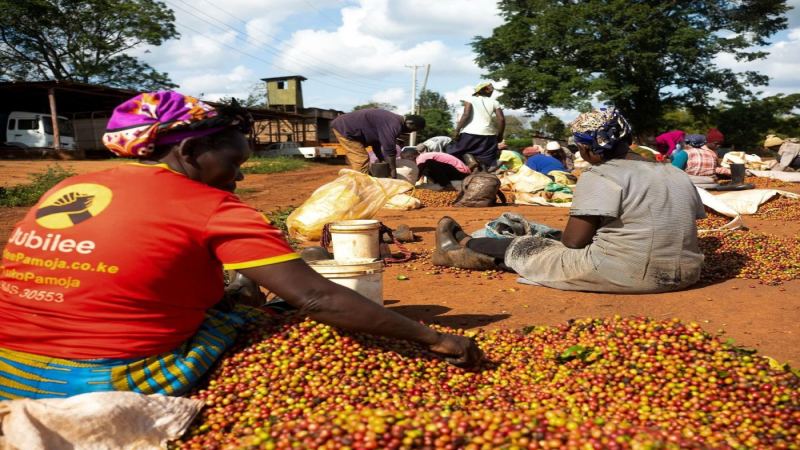
Kenya, as a representative origin of African specialty coffee, occupies an important position in the global coffee landscape thanks to its captivating acidity and aroma. This article systematically reviews the distribution of Kenyan coffee regions, altitude conditions, variety characteristics, and processing method differences, and further compares in depth the similarities and differences in flavor expression among three Kenyan beans under Front Street Coffee: Karogoto, Asali, and Hania. From the varietal origins of SL28 and SL34 and the historical thread of French Mission Bourbon, to the technical details of the K72 washed method and refined natural process, combined with roasting curves and cupping results, this helps coffee lovers fully understand the unique style of Kenyan coffee and make choices according to their personal taste preferences.
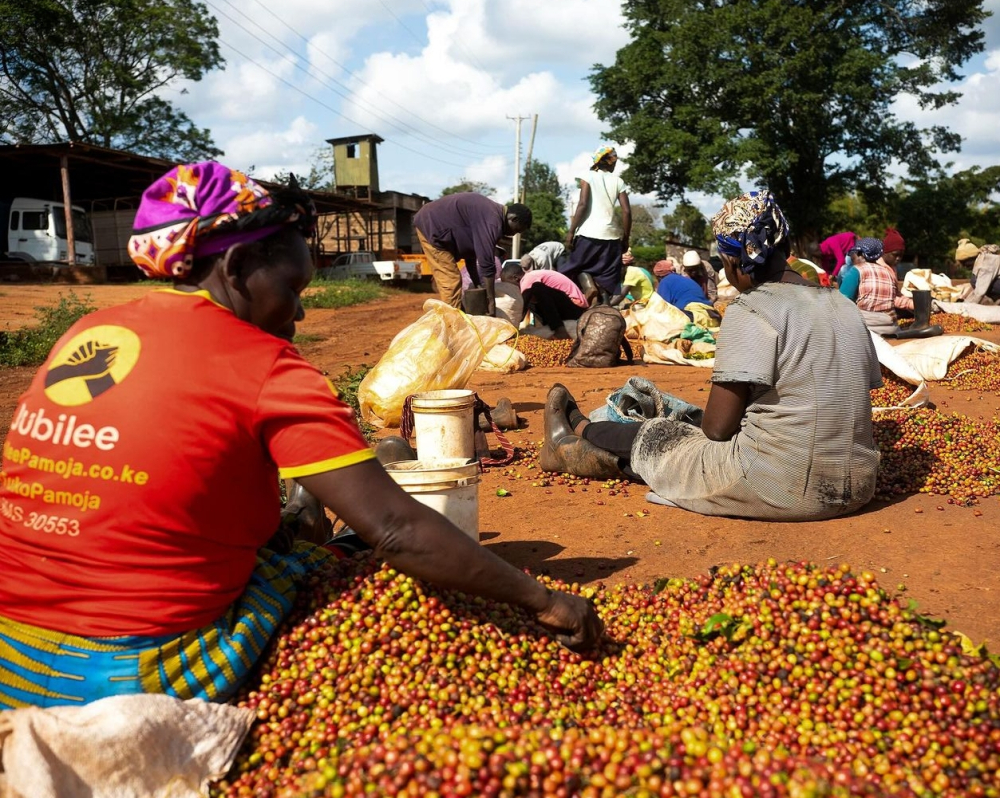
Most African origins are known for their bright acidity and captivating aroma, and Kenya is naturally no exception. Located in the tropics, it experiences two rainy seasons a year, so two coffee harvests can be obtained annually: about sixty percent is concentrated from October to December, while the other forty percent is completed between June and August. Coffee farms are mainly scattered across the belt extending from the capital Nairobi toward the Kenyan highlands, in volcanic soil areas at about 1,600 to 2,100 meters above sea level. The lower temperatures in the highlands, together with soil layers rich in phosphoric acid, slow the growth rhythm of the coffee fruit, allowing aromatic substances to accumulate fully, making the fruity acidity more prominent and the beans denser.
Currently, Front Street Coffee has three Kenyan beans: [Karogoto], [Asali], and [Hania]. Do they taste the same?
[Region]
Karogoto: Nyeri
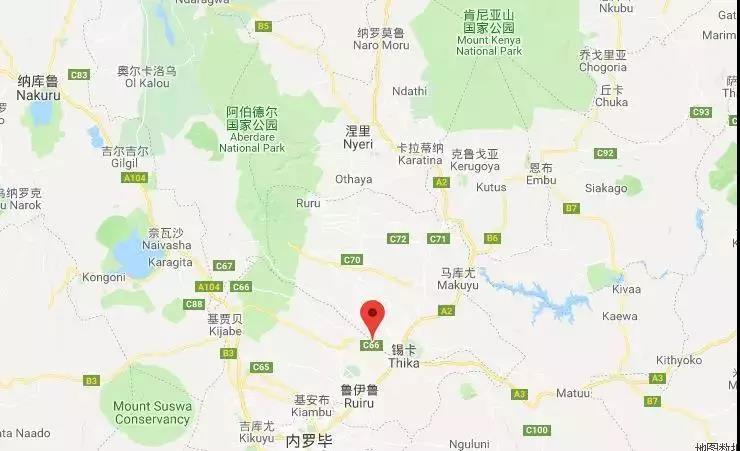
Nyeri is located in central Kenya and is where the extinct volcano Mount Kenya is found. The red soil of this area nurtures Kenya's highest-quality coffee. Agriculture occupies an extremely important place locally, and coffee is its main crop. Compared with large estates, cooperatives formed by smallholder farmers are more common. This region has two harvests a year, but coffee from the main production season is usually of better quality.
Harvest period: October to December (main season), June to August (secondary region)
Hania, Asali: Kiambu, Thika
Kiambu is located in central Kenya and has the highest-altitude coffee-growing belt in the region, while Thika is one of its smaller subregions. It lies at the foot of the Aberdare Range, with red volcanic soil rich in organic matter. Kiambu has a mild climate and moderate rainfall. Coffee cultivation includes both estates and smallholder farmers, though overall production is relatively low.
Harvest period: October to December (main season), June to August (secondary season)
[Altitude]
Karogoto: 1,800 meters
Asali: 1,550–1,750 meters
Hania: 1,525 meters
[Variety]
Karogoto, Asali: SL28, SL34
The first variety introduced to Kenya for cultivation was Bourbon. In the 1950s, the Scott Laboratories, an agricultural research institution at the time, developed two outstanding hybrid varieties, SL-28 and SL-34. Later, SL28's yield did not reach expectations, but its bronze young leaves and broad-bean-shaped beans brought excellent sweetness, balance, and layered flavors, with distinct citrus and smoked plum characteristics.
SL34 is quite close to SL28 in flavor, also possessing complex and changeable acidity and an excellent sweet finish, but its mouthfeel is heavier and richer than SL28, and its cleanliness is also higher. SL34's lineage incorporates French Mission, Bourbon, and more Typica components. Its bean appearance is similar to SL28, yet it can better withstand sudden heavy rain. It is precisely these two key varieties that shape the unique style of Kenyan coffee: intense and rich fruit acidity, a full-bodied mouthfeel, and a beautiful sense of balance.
Hania: French Mission Bourbon
Around 1892 to 1893, French missionaries brought the Bourbon tree species to Kenya for cultivation. This native Bourbon is called French Mission Varietal, and because it was not scientifically improved during cultivation, it retains Bourbon's most original flavor.
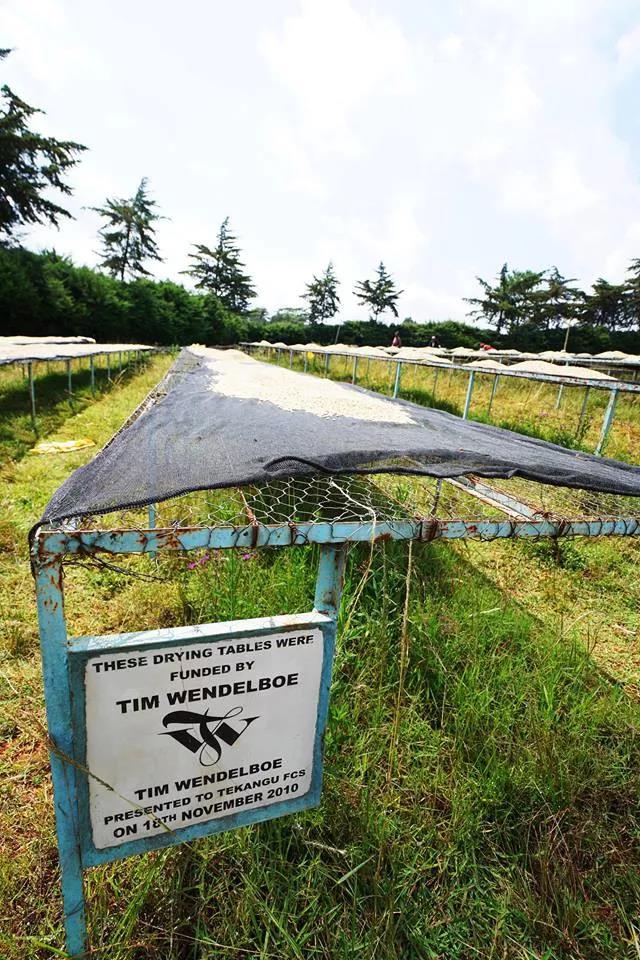
[Processing Method]
Karogoto, Asali: 72-hour washed method
This processing method uses a repeated cycle of fermentation followed by washing. On the harvest day, the finest coffee cherries are first selected, depulped, and then fermented for 24 hours; after 24 hours, they are rinsed with clean river water. Then they are fermented again with clean river water for another 24 hours and washed again, repeating this for three cycles totaling 72 hours, hence the name Kenyan-style 72-hour fermentation washed process, or K72 for short.
This processing method allows the coffee beans to ferment for a long time at low temperatures, and only after final drying and dehydration is the process complete, giving the beans a brighter, cleaner yet still full flavor.
Hania: refined natural
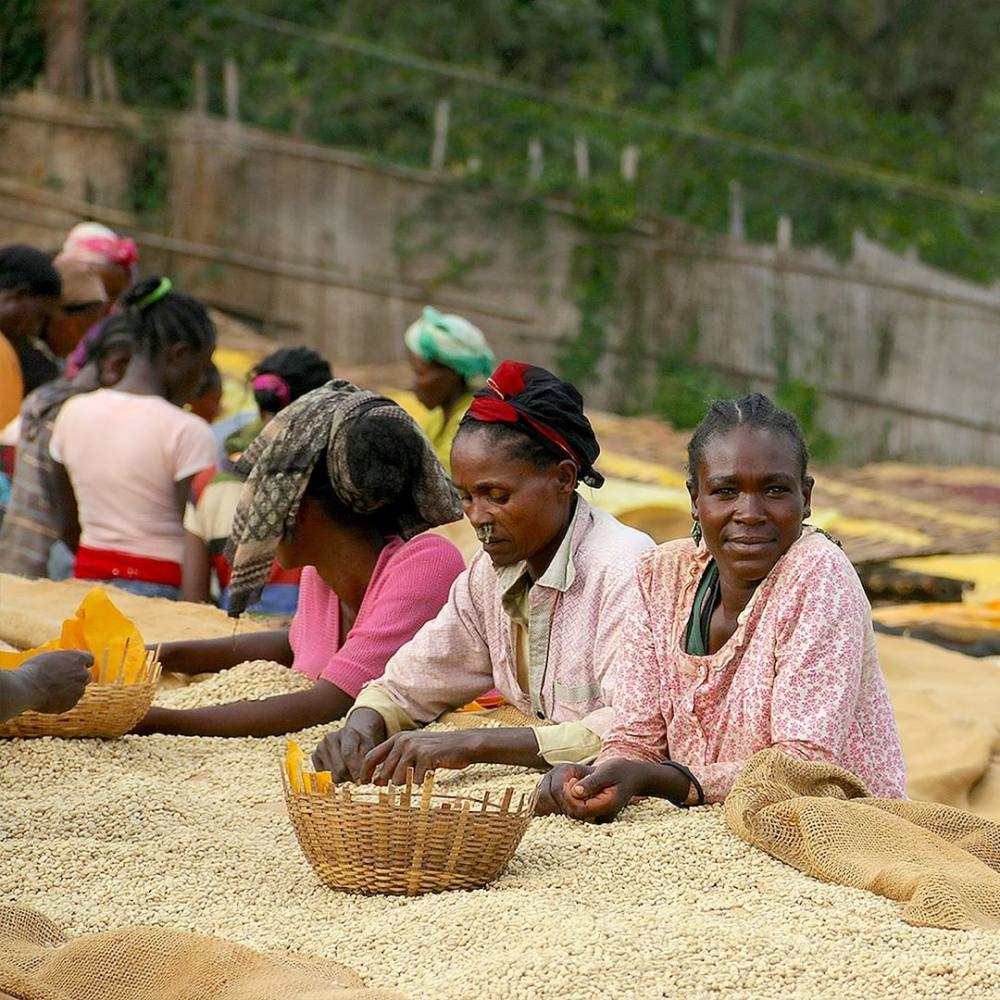
The refined natural process adds body and sweetness to the originally richly and variably acidic Bourbon coffee. It usually takes 2 to 4 weeks or even longer, depending on weather conditions and the desired flavor direction. During drying, extra care must be taken to prevent excessive temperatures as well as mold or off-flavors from over-fermentation.
[Green Beans and Roasting]
Karogoto: K72, double washed
Karogoto: 2 minutes of development after first crack, drop temperature 191°C
Front Street Asali Little Tomato: K72, double washed
The development time after first crack is relatively long, which helps reduce acidity and develop flavor. Development time after first crack is 2 minutes 10 seconds, dropping at 191.6°C.
Hania: African raised beds, natural
Roasting: first crack begins at about 8 minutes 15 seconds, 186°C; at the same time reduce heat and open the damper wide to develop flavor, dropping the beans at 194°C at 2 minutes.
Compared with Asali, although Karogoto has the same variety and processing method, Karogoto is at a higher altitude and its texture is slightly harder, so the overall roasting time is correspondingly longer and the temperature rise is slower. The first crack point is at 9'28", with the aim of giving Karogoto enough time to develop fully.
Hania belongs to the Bourbon variety, is grown at a relatively low altitude, uses natural processing, has a smaller bean shape, and is slightly softer in texture. Therefore, the charge temperature is slightly lower to avoid scorching the bean surface at high temperatures; the flatter bean shape also makes heat transfer faster, so the yellowing point and first crack point appear earlier. During this period, the heat is reduced multiple times to control the rate of temperature rise and avoid the situation of being cooked outside but raw inside; the drop temperature is relatively high, with the aim of giving the beans enough heat to continue caramelization reactions and produce more caramel, ripe fruit flavors, and a solid mouthfeel.
[Cupping Flavor]
Front Street Karogoto: The entry is fresh and clean, with the acidity of cherry tomatoes, berries, and smoked plum, and good transparency. After the temperature drops, the acidity is mixed with tea-like notes and caramel aroma. Overall, it is very refreshing.
Front Street Little Tomato: The wet aroma has ripe tomato and floral notes. On the palate, it presents the flavors of cherry tomato and smoked plum, with bright acidity, a clean mouthfeel, and medium body. The mid-palate sweetness is prominent, with a juicy feel. The finish is berry aroma and yellow sugar sweetness, with green tea aroma.
Front Street Hania: The dry aroma has natural fermentation, dried fruit, and vanilla notes. On slurping, you can taste caramel, vanilla, and mixed fruits. The juicy feel is solid, and the finish has berries, rich jackfruit, and coffee floral notes. Overall, it shows the wild regional flavor of Africa and is suitable for slow sipping in small mouthfuls. The complex aroma makes it hard to let go.
Brew a cup of coffee using the same method: 30 grams of water for blooming, blooming time 30 seconds, first pour with a small stream to 120 grams and stop, slowly circling, second pour with a slightly larger volume of water, pouring to 225 milliliters, 30-120-75, total extraction time about 2 minutes.
Summary:
If you like a bit more acidity, Front Street Little Tomato is recommended, with stronger flavors of cherry tomato and smoked plum;
If you like prominent berry flavors, choose naturally processed Kenya Hania;
If you like a slight tea-like note and smoked plum acidity, choose Karogoto.
The above content is compiled by CoffeeHunters, a coffee news website.


