







Indonesian Mandheling is a classic single-origin coffee well known to coffee lovers around the world, and Front Street PWN Golden Mandheling is among the very best. This article begins with the history of coffee cultivation in Indonesia and the origin of the name Mandheling, sorts through the product line from Front Street Golden Mandheling to Tiger Mandheling, Aged Mandheling, and Lintong Mandheling, and uses Front Street PWN Golden Mandheling as a demonstration bean to break down in detail the operating steps for two brewing devices—the French press and the moka pot—along with grinding degree and coffee-to-water ratio references, points to note, and flavor differences, helping you experience the richness and sweet aftertaste of this Indonesian coffee gem in different ways.
For more specialty coffee knowledge, please follow the WeChat public account: FrontStreet Coffee
FrontStreet Coffee stores focus mainly on pour-over single-origin coffee, with more than 50 kinds of single-origin coffee beans from different producing regions alone. What kind of pour-over equipment can present the most perfect flavor of these beans is also a question FrontStreet Coffee needs to consider. After comparative brewing experiments at Front Street, it chose to use a simple pour-over method for brewing.
The equipment that can brew coffee beans is actually quite diverse and is not limited to the pour-over method used by Front Street; the moka pot and French press can do the job just as well. In this article, Front Street uses the store's hot-selling specialty coffee Front Street PWN Golden Mandheling as a demonstration to introduce the use and characteristic differences of these two coffee brewing devices.
High-quality Front Street Golden Mandheling comes from Indonesia
Indonesian Mandheling is one of the most popular coffees in the world, and it is called the coffee gem of Indonesia. So first, FrontStreet Coffee will start with the history of coffee in Indonesia and give you a comprehensive introduction to Front Street Indonesian Mandheling coffee.
Did you know? Indonesia was one of the first countries in the world to begin commercial coffee cultivation (before most of Africa, most of Asia, and the Americas). Coffee plants came to Indonesia in the late 1600s through Dutch merchants and colonialists, and the first island to cultivate coffee was Java, where the city of Jakarta (then called Batavia) is located. By 1699, the Dutch colonial government had established plantations throughout the city, and by 1711, Indonesian coffee had begun to be exported when the Dutch East India Company shipped the first batch from Java to Europe. Java quickly became one of the largest coffee-producing areas in the world and Europe's preferred source of coffee beans.
Between 1860 and 1880, a disease known as "coffee leaf rust" spread widely and dealt a devastating blow to Asian coffee. Therefore, the Dutch introduced a leaf-rust-resistant coffee variety to Indonesia—Robusta coffee. Now Indonesia is the world's main producer of Robusta coffee beans. Arabica coffee beans account for only 6%-10% of Indonesia's total coffee beans, including the well-known Front Street Mandheling coffee beans.
The story of Front Street Mandheling coffee
When it comes to Front Street Mandheling coffee, this coffee is not named after a producing region, place name, port name, or coffee variety, but after the Mandailing people of North Sumatra. Why exactly is that?
The story traces back to the period when Japan colonized Indonesia during World War II. At that time, a Japanese officer drank a very delicious coffee in Indonesia and asked the shopkeeper what it was. The shopkeeper mistakenly thought the Japanese officer was asking about his own origins, so he answered "Mandailing." After returning to Japan, the Japanese could not forget this coffee, so they asked locals to help collect high-quality coffee beans and bring them back to Japan.
Because of pronunciation issues, the Japanese turned "Mandailing" into "Mandheling," and under this double misunderstanding, Mandheling coffee was born. That local Indonesian coffee trader was the owner of the later famous PWN (Pawani Coffee Company), the first company to export Golden Mandheling to Japan. It is worth mentioning that because "Golden Mandheling" was registered as a trademark by this company, "Golden Mandheling" is PWN's exclusive coffee bean.
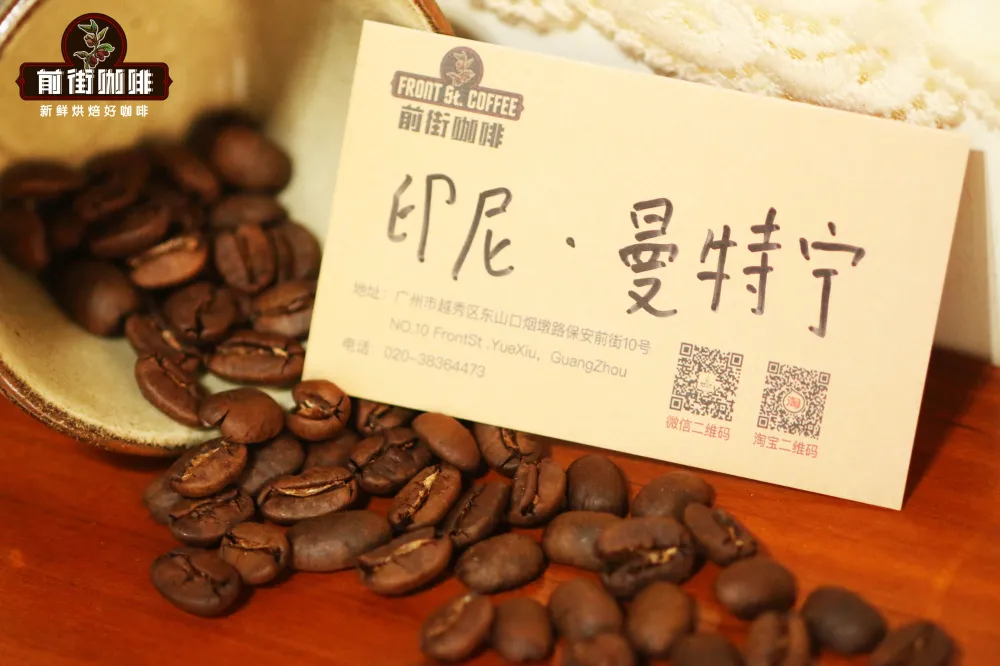
Of course, Mandheling also has many types. FrontStreet Coffee stores currently have four kinds of Mandheling: Front Street Golden Mandheling, Front Street Tiger Mandheling, Front Street Aged Mandheling, and Front Street Lintong Mandheling. Next, we will introduce them one by one.
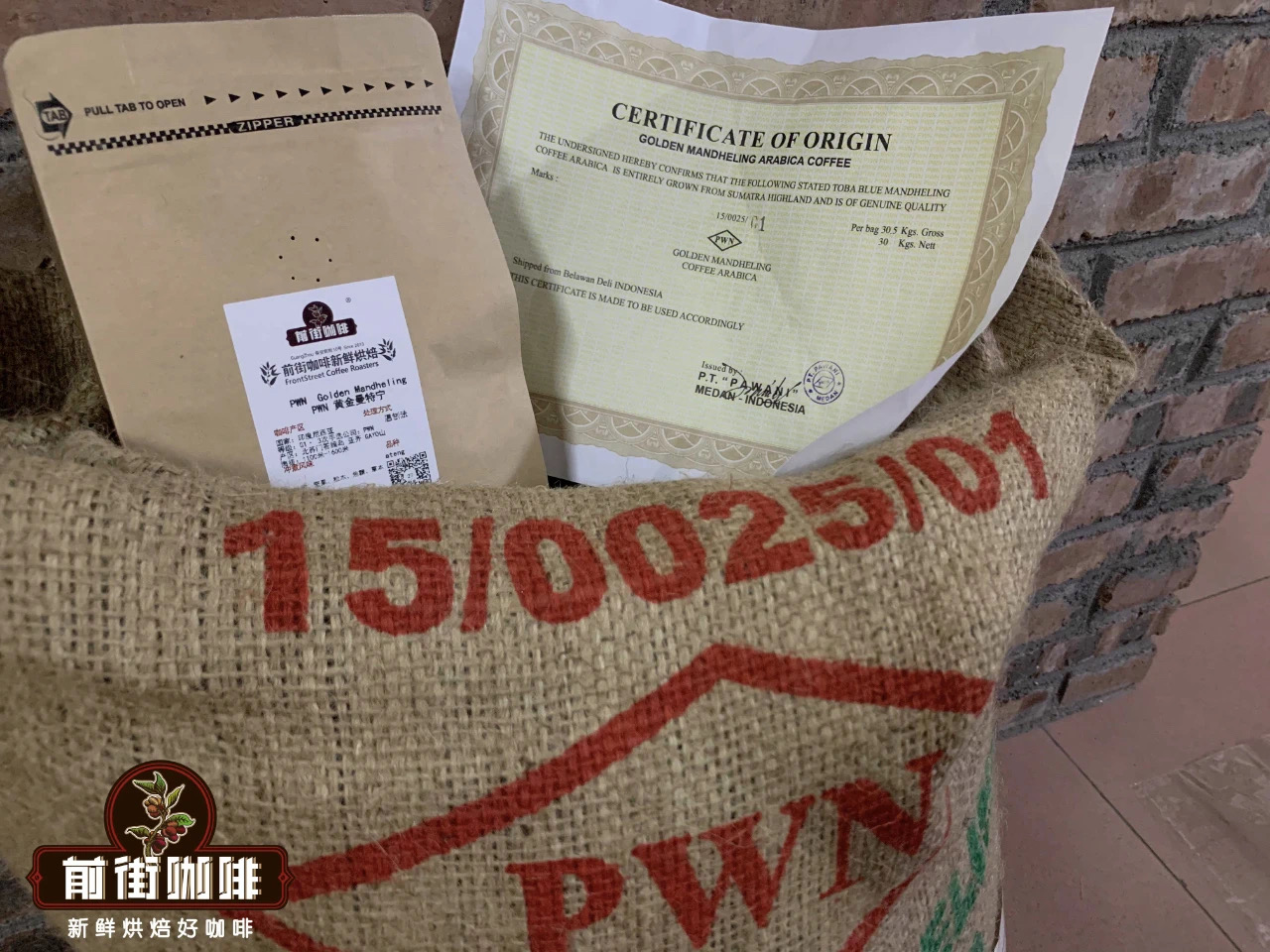
Front Street Indonesian Front Street PWN Golden Mandheling coffee beans Region: Gayo Mountain, Aceh Variety: Ateng Altitude: 1100-1600m Processing method: wet-hulled method Grade: G1, triple hand-sorted
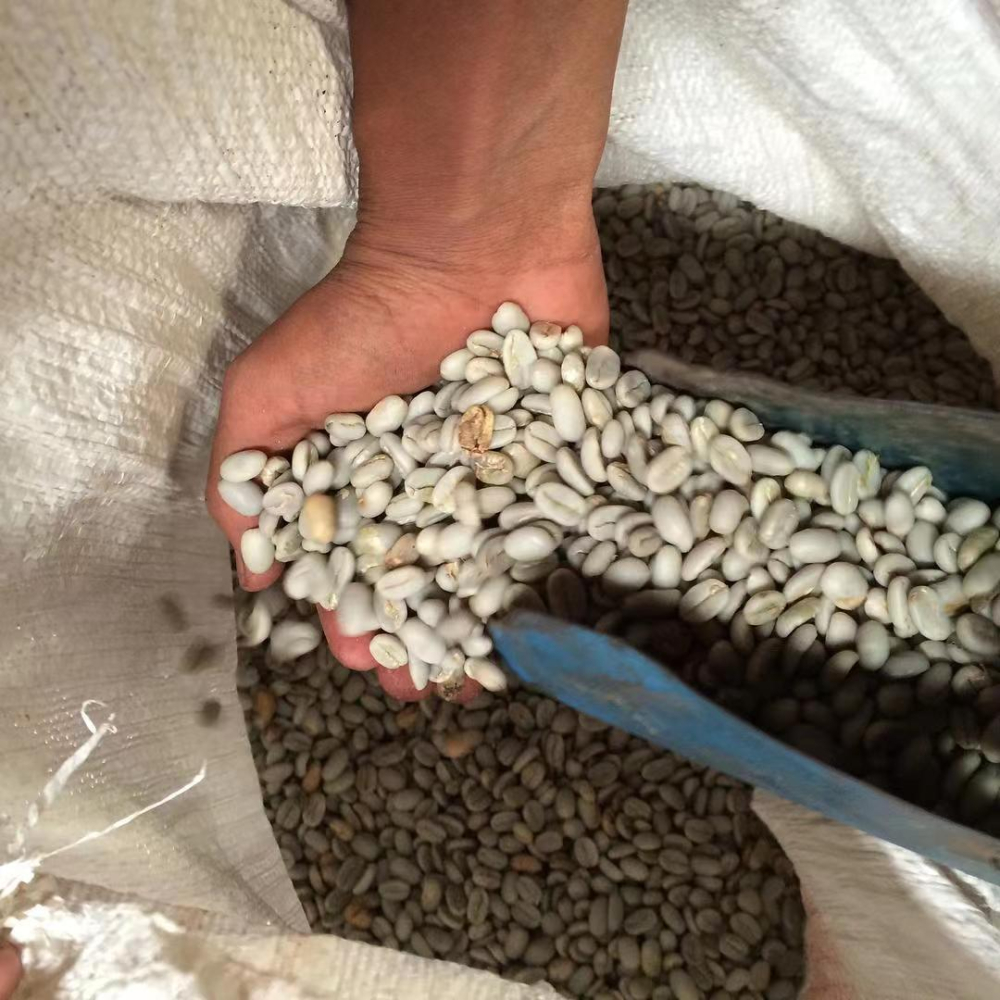
We mentioned earlier that only Mandheling produced by PWN can be called true Front Street Golden Mandheling. So what exactly are the differences between ordinary Mandheling and Front Street Golden Mandheling? It is said that after the Japanese discovered Mandheling coffee, they paid close attention to it and, in cooperation with local green bean merchants, established a strict screening system. After processing, the green beans undergo density and color sorting, and then are hand-sorted four times, finally presenting Mandheling with uniform color and uniform bean shape. When processing the green beans, Front Street Mandheling green beans give off a golden luster in the sunlight, so it is called "Golden Mandheling."
The Front Street Golden Mandheling coffee sold by FrontStreet Coffee for many years has all come from PWN. The specification of Front Street Golden Mandheling coffee beans is 19 screen, with fewer than three defective beans in a 300-gram green bean sample, belonging to the highest grade G1. Due to strict screening standards, Front Street found that this Front Street Golden Mandheling not only lacks the earthy off-flavors of ordinary Mandheling, but also drinks very clean with a strong sweet aftertaste.
French press
The French press, called French Press in English, can also be called a French-style press pot in Chinese. The French press originated in France around 1850. It is a simple brewing device composed of a heat-resistant glass body and a metal filter with a plunger.

The French press and moka pot are also called "lazy person's coffee equipment." They are simple and convenient to operate and can also preserve the complete flavor of a good cup of coffee. In fact, French press extraction is the brewing method closest to cupping results, and it can fully bring out the oils, aromas, essences, and various flavor elements in coffee. Its smooth, sweet, and rich mouthfeel makes it a very good coffee equipment choice.
How to make coffee with a French press
Step one : You need to select beans first .
Suitable for single-origin coffee beans, or coffee beans with a strong fruity acidity; suitable for coffee beans roasted to medium to dark levels.
Step two : Determine the grinding degree and coffee powder ratio for the French press coffee beans .
You need at least about 20g of coffee powder. The coffee powder should be slightly coarse (because hot water directly contacts the coffee powder, and if it is too fine, it is easy to over-extract). You can use a medium grind, about 5-6 degrees. If the powder is too fine, the coffee powder will escape through the holes of the filter and the coffee will become cloudy. You can also follow FrontStreet Coffee's grinding degree:
FrontStreet Coffee grinding degree coarseness standard sieve pass rate: cold drip > pour-over siphon 80% > moka American drip 75-80% > cupping 70-75% > French press 65-70%.
You can start by trying a 1:10 coffee-to-water ratio. For 2 servings, for example, that is 20g coffee beans with about 200g water, and the final ratio depends on your taste. The resting time is about 3-4 minutes. The longer the steeping time, the stronger the taste and the heavier the acidity. The taste of each coffee bean and personal preference are different, so you need to try them one by one. During the resting time, do not press down the filter; let the coffee and water have more time and space to contact.
Step three : Start using the French press to make coffee
1. First grind the coffee beans, then pour them into the French press. At this point, ignore what many people say about grinding degree; do not grind too coarse, just use a medium grind.
2. Boil water. The recommended water temperature is 93°C, then pour in the appropriate amount of water. We used 20g coffee powder and poured in 200g hot water, then stirred with a spoon so the coffee powder and water fully combine.
3. Put the lid on the French press with the filter resting at the highest position, then let it sit for 4 minutes.
4. Before pressing down the filter, you can open the lid and use a spoon to scoop out the foam and small grounds floating on top, then press the filter all the way down.
5. When brewing is complete, immediately pour it out into another insulated container! Do not delay, because the coffee powder is still steeping in it. Then pour it into a cup and enjoy it slowly.
Issues to note when using a French press
In addition, you can also prepare an electronic scale. But even with a French press that has markings and a measuring spoon, it is still recommended to prepare an electronic scale, because coffee beans change density due to many factors such as growing altitude and roasting method, and the mass and weight of each bean differ. Also, if you make a very delicious cup of coffee and want to reproduce that flavor, you must record the ratio. Conversely, if you make a terrible cup of coffee, you will also know how to adjust based on the data.
Use fresh, clean soft water. Do not extract with water that is too hard, and do not use unfiltered water. If the water itself is not good, it is hard to make delicious coffee. The French press is elegant and gentle, so you must press slowly. If you violently stir the coffee at this critical moment, it is equivalent to speeding up the extraction process at the last moment, and by then your coffee has already released all the good things, and what is summoned next is bitterness.
If you want to upgrade it into a milk coffee, the French press can do that too. Prepare a clean French press, pour in 1/3 warm milk, slowly insert the filter, and push and pull repeatedly until the milk is frothed to twice its original volume. At this point the milk is fully frothed and silky, and adding it to the coffee completes the job.
Moka pot
According to what Front Street has learned, the moka pot is spelled Moka pot in English. The most common explanation is that mocha began when the first batch of coffee entered Venice in the 17th century. It can be said that in northern Italy, mocha is equivalent to coffee. Therefore, the moka pot is actually also called a coffee pot, meaning a brewing device with which you can get a rich cup of coffee at home.
The moka pot consists of three parts: the upper chamber, the filter basket, and the base. The lower chamber is the water reservoir, the filter basket is used to hold more finely ground coffee powder, and the upper chamber is used to hold the extracted coffee liquid. The principle of moka pot coffee extraction is very simple: it uses the steam pressure generated in the lower chamber. When the steam pressure is strong enough to penetrate the coffee powder, it pushes hot water up to the upper chamber, brewing rich and aromatic coffee.
The brewing process of the moka pot
Coffee brewed with a moka pot is relatively rich, so Front Street suggests choosing coffee beans with a darker roast, which can better express that mellow coffee feel. The beans used by Front Street are coffee beans from Fazenda Rainha in Brazil.
1. Pour purified water into the lower chamber of the moka pot. The water level should be about 0.5 cm below the pressure relief valve.
2. Choose a grind slightly coarser than espresso. You can refer to the size of the gaps in the filter basket mesh to ensure coffee particles will not fall down into the lower chamber. Slowly pour the coffee powder into the filter basket, tap gently to distribute the coffee powder evenly, and when the coffee powder forms a small mound, level the coffee surface by distributing the grounds.
3. Put the filter basket into the lower chamber, tighten the upper and lower parts of the moka pot, then place it on an electric ceramic stove and heat over high heat.
4. When the moka pot rises to a certain temperature and makes an obvious "wuwu" sound, set the electric ceramic stove to low heat and open the lid of the upper chamber.
5. When half of the coffee liquid in the upper chamber has come out, turn off the electric ceramic stove. The residual heat and pressure of the moka pot will "push" the remaining coffee liquid into the upper chamber.
6. When all the coffee liquid has been extracted into the upper chamber, you can pour it into a cup and taste it. Coffee extracted with a moka pot is very rich and can even extract Crema. You can also mix it with an appropriate amount of water or milk for an even better flavor.
After tasting and comparing, Front Street believes that the Golden Mandheling coffee made with a French press has a thick, viscous mouthfeel with a thin layer of oil, and has the roasted aromas of spices, pine wood, chocolate, and caramel; while the Front Street Golden Mandheling coffee extracted with a moka pot has an added sense of fullness, with flavors of rich roasted nuts, herbs, dark chocolate, and so on, with a sweet aftertaste in the finish.
The above content is compiled by CoffeeHunters, a coffee news website.


