







How Do You Get a Stronger Moka Pot Latte?
A moka pot extracts under pressure, producing black coffee close to espresso in strength, but its lower pressure means a latte built directly on it tastes watery. The fix is to concentrate the coffee liquid itself. Tightening the coffee-to-water ratio, for example 20g of dark-roasted Golden Mandheling at 1:4, raises the share of dissolved solids.
A second lever is extraction efficiency: grind size, coffee dose, heat level, and extraction time all matter when coffee is brewed with milk. The article uses 180ml of hot milk with that concentrated moka pot shot to show how a home setup can approach the flavor of a real espresso latte.
The moka pot relies on pressurized extraction and can produce black coffee with a strength close to espresso, so it is often seen as a home alternative to an espresso machine, used to recreate Americanos, lattes, mochas, and other fancy coffee drinks. However, the moka pot's pressure is limited, and making a latte directly with it tends to taste watery, so the key is to increase the concentration of the coffee liquid itself. This article focuses on two directions: first, tightening the coffee-to-water ratio to reduce the amount of hot water used, thereby raising the proportion of soluble solids; second, improving extraction efficiency through grind size, coffee dose, heat level, and extraction time. The article also offers coffee bean selection advice, and uses dark-roasted Golden Mandheling as an example, with a dose of 20g, a coffee-to-water ratio of 1:4, and 180ml of hot milk, to fully demonstrate the moka pot latte method and flavor performance of a cup that comes close to the real espresso latte.
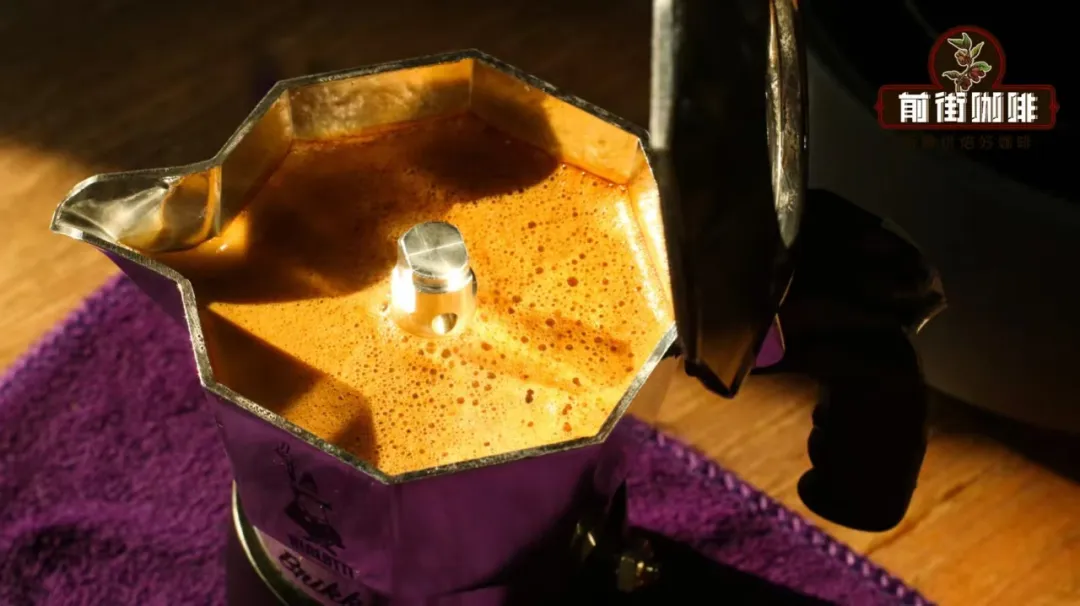
The moka pot's extraction principle is the same pressurized type as an espresso machine, so it can also brew a cup of black coffee with a strength close to espresso. For this reason, many people treat it as a home stand-in for an espresso machine: first obtain a more concentrated coffee liquid, then follow the espresso approach to recreate Americanos, lattes, mochas, and other fancy drinks. Recently, Front Street Coffee's backend has received a number of similar questions one after another, and everyone's core demand is to make a "latte" with a moka pot.
Although the moka pot, like an espresso machine, relies on pressure for extraction, the pressure gap between the two is obvious, and the coffee brewed by a moka pot can only be considered close to espresso in strength. The ratio of milk to coffee is of course important, but if the coffee liquid itself is not concentrated enough, no matter how you adjust the proportion of milk in the milk coffee, the final result will not be outstanding.
From this it is clear that what really needs adjusting is the concentration of the moka pot coffee itself. If you want to push the concentration a bit higher on the original basis, the approach is to reduce the extraction water while improving extraction efficiency.
Why increase the coffee-to-water ratio?
Coffee concentration refers to the percentage of dissolved coffee substances in the coffee liquid. When the total amount of coffee substances remains unchanged, the less water there is, the higher the proportion of coffee substances, and the higher the concentration naturally; the more water there is, the lower the proportion of coffee substances, and the lower the concentration.

So, if you want a cup of coffee to be stronger, you should minimize the hot water injected during extraction and reduce the proportion of water in the coffee liquid; conversely, if you want to lower the concentration, you should increase the amount of hot water used.
Why improve extraction efficiency?
After the extraction hot water is reduced, overall extraction efficiency will decline accordingly. If you want the coffee flavor to remain full, you must make up for the extraction efficiency through other steps.
Like other extraction methods, the moka pot has many entry points for improving extraction efficiency: grinding the coffee finer, increasing the coffee dose, turning to low heat when the liquid starts flowing to extend extraction time, and so on.
On coffee bean selection
If you want the milk coffee you make to better suit your taste, coffee bean selection also cannot be careless.
If you want a cup of rich, aromatic milk coffee without sourness, it is recommended to prioritize medium-dark roasted coffee beans: first, the coffee flavor is more intense, and second, it can bring a richer crema-like oiliness to the latte. If you still cannot decide, you can directly buy Front Street. Front Street Classic Espresso Blend; the smooth taste of the Brazilian beans plays a complementary and balancing role in the flavor. Front Street Classic Espresso Blend adds Robusta to the Mamba recipe, significantly enhancing the oily mouthfeel, making the moka pot coffee's body stronger, suitable for home brewing and also suitable for latte art.
How to make a "latte" with a moka pot?
We chose Front Street. Front Street PWN Golden Mandheling to make the moka pot latte. As a medium-dark roast, it presents a richer roasted aroma and can also extract a richer "crema."
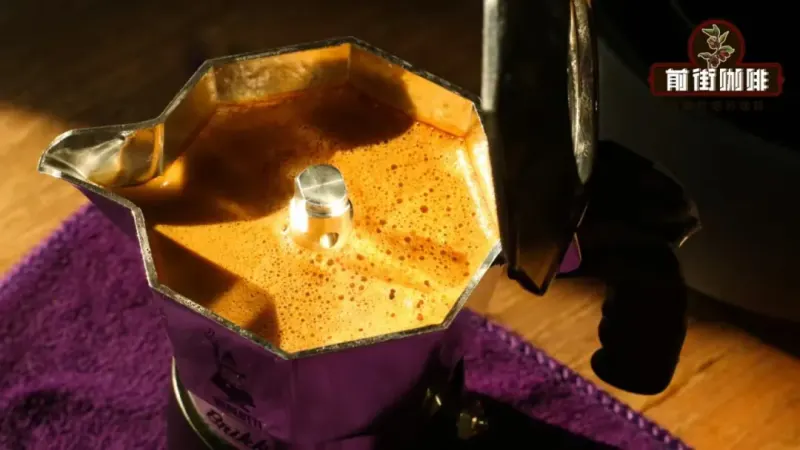
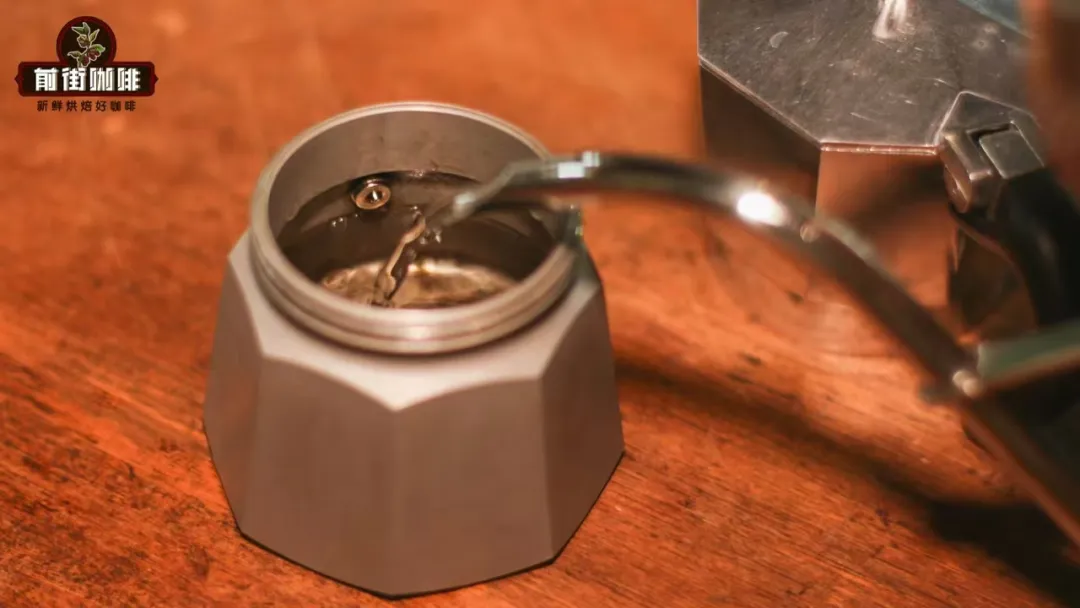
The parameters are as follows: dose 20g, coffee grind size like fine salt, warm water, coffee-to-water ratio 1:4. First put the water, coffee grounds, and other materials into the moka pot, then turn on the heat and brew until liquid starts flowing.
When you hear the moka pot making noise and liquid is about to come out, turn off the heat immediately, and use the stove's residual heat to extract the coffee liquid. This ensures the entire flow is slow and stable, allowing the coffee to achieve sufficient extraction.
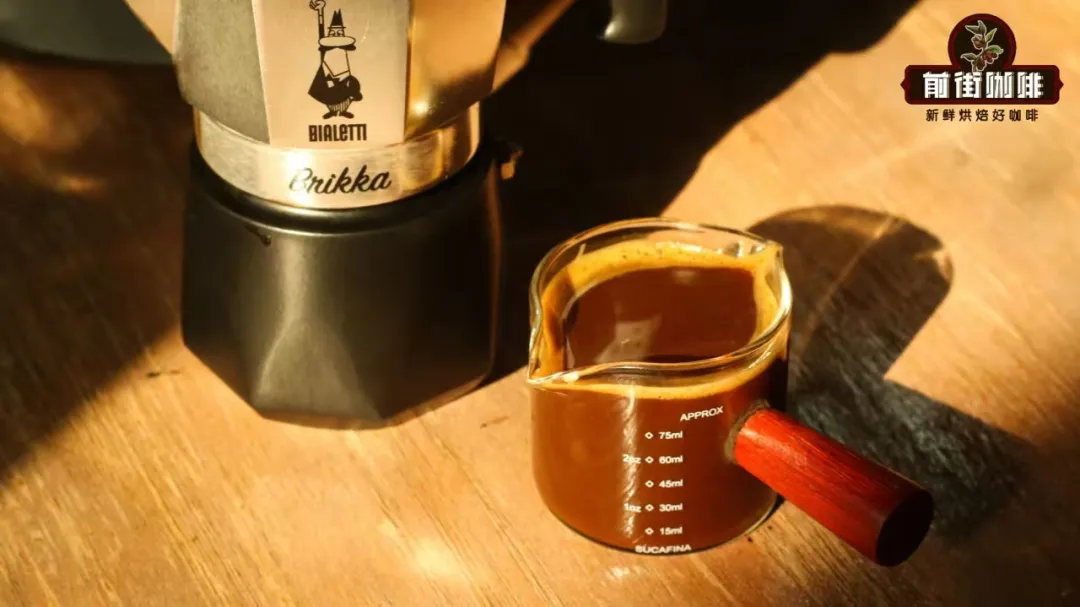
After extraction is complete, pour the coffee liquid into the prepared cup, and finally add an appropriate amount of milk, and a delicious cup of milk coffee is done. The amount of milk depends on the roast level and processing method of the coffee beans. Front Street uses dark-roasted Golden Mandheling here and makes a hot "latte," so 180ml of hot milk is added, that is, a ratio of 1:3.5.
You can tell from the color that this "latte" made from moka pot coffee is very close to the real espresso latte. In terms of taste, Golden Mandheling's nut, chocolate, spice, and pine aromas are all well presented. Although the mouthfeel is not as rich as the real latte, at least it no longer has an obvious watery feel, and it goes down very smoothly, performing quite well!
The above content is compiled by CoffeeHunters, a coffee news website.


