







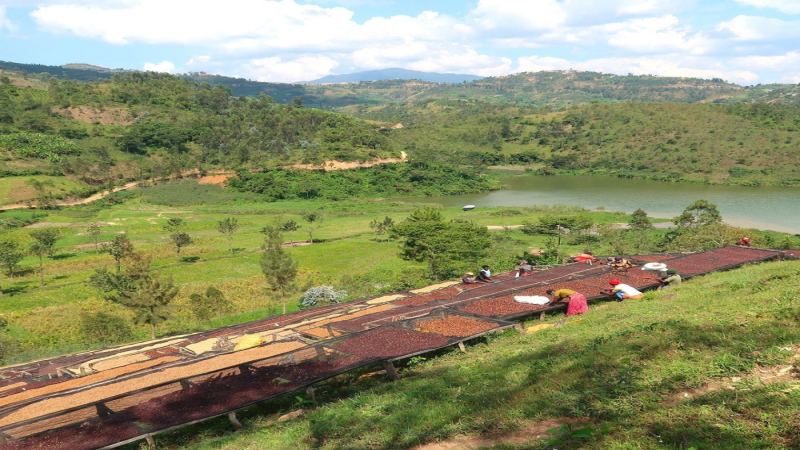
Yirgacheffe, as a classic representative of floral and fruity acidity in specialty coffee, has seen its processing methods evolve in ways that profoundly influence coffee quality. From the crude natural process of the early days to the introduction of washed processing in 1972, Yirgacheffe gradually revealed a clean, translucent lemon-citrus character. This article will guide you through the core differences between the washed and natural methods, introduce the background of Ethiopia's native "Heirloom" varieties, and recommend three high-value Yirgacheffe everyday beans from Front Street Coffee, including washed Yirgacheffe, natural Red Cherry, and washed Gudingding, along with practical brewing parameter suggestions to help coffee lovers easily get started with fruit-forward specialty coffee.
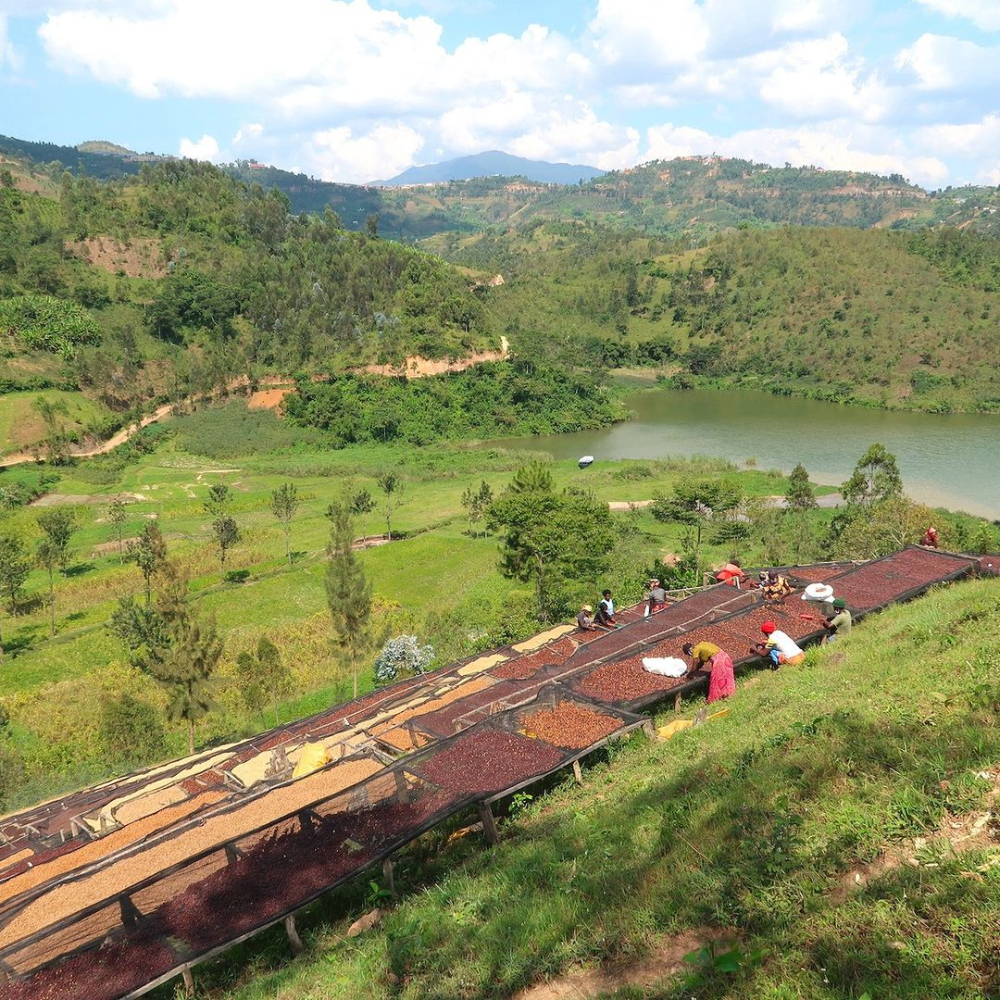
The Yirgacheffe region traditionally used the natural process for green coffee beans in its early days. Because processing techniques were not yet mature at the time, the quality of coffee cherries was hard to standardize, and the practice of spreading them directly on the ground to sun-dry made the beans prone to absorbing off-flavors like soil, so they could ultimately only be sold at low prices. To turn this situation around, the Ethiopian government introduced washing equipment and more advanced processing methods from Central and South America in 1972. It was this technological innovation that enabled Yirgacheffe's flavor to achieve a qualitative leap, and its clean, translucent lemon and citrus character made it an indispensable player on the specialty coffee map.
The biggest difference between the washed method and the natural method is that it incorporates multiple stages where defective beans can be removed. After the coffee cherries are picked, they are first immersed in water, using buoyancy to separate out beans that are not dense enough and float to the surface. Then the skin and pulp are removed with a pulping machine, and the beans are left to rest in fermentation tanks for 18 to 36 hours so the mucilage layer gradually breaks down, with the specific duration depending on local temperature and humidity conditions. Next, the parchment beans pass through washing channels where they are scrubbed for 30 to 60 minutes; with the help of specially designed channels and water flow, beans of lower density and poorer quality are eliminated. The high-quality parchment beans are then placed on African raised beds to dry for about 14 days, and once the moisture content reaches the target level, they can be bagged and stored.

This Gudingding cooperative coffee belongs to the local native varieties. Ethiopia, as the "homeland" of Arabica small-seed varieties worldwide, is home to tens of thousands of native coffee tree species. Because the number of varieties is so vast, it is nearly impossible to conduct genetic testing and verification on a larger scale, so coffee farmers usually have to rely on years of accumulated experience to distinguish and confirm plant types. At the same time, to protect these not-yet-fully-understood varieties and prevent industry players from various countries from scrambling to obtain them, the local government decided to uniformly refer to them as native "Heirloom."
As for where to buy Yirgacheffe, you can search for "Front Street Coffee" on the Taobao store or Tmall flagship store to find three different single-origin Yirgacheffe coffee beans: Front Street. Washed Yirgacheffe, Front Street. Natural Red Cherry, and Front Street. Washed Gudingding.
If someone asks what single-origin coffee beans are suitable for beginners to practice with, the answer is usually everyday beans. These beans are not only affordable but also let you taste classic regional flavors. If you haven't yet tried fruit-forward coffee, you might as well start with the classic Yirgacheffe flavor. Today let's talk about this coffee that can be called a representative of specialty florals.
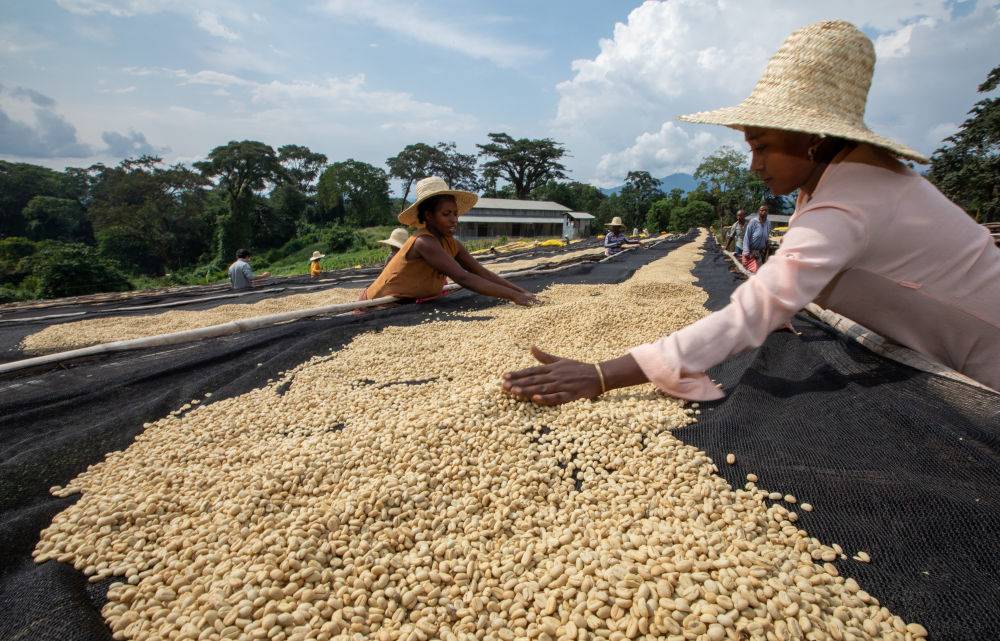
Front Street. Washed Yirgacheffe
Region: Ethiopia, Yirgacheffe
Altitude: 2,300 meters
Variety: Heirloom
Processing method: Washed
Flavor description: Lemon, citrus, tea-like, honey, berry
Recommended reason: Has the classic Yirgacheffe flavor, affordable price, can serve as a daily staple
Natural process: First sort ripe coffee cherries, then sun-dry them until the moisture content drops to 12%, and finally remove the skin and pulp.
Recommended coffee: Front Street Natural Red Cherry, with flavors of berry, citrus, floral, and a slight fermented note, suitable for pour-over and cold brew
Washed process: First sort ripe coffee cherries, remove the skin and pulp, soak and ferment them in water, then dry them until the moisture content is around 12%.
Recommended coffee: Front Street Washed Gudingding, with fresh white floral, citrus, lemon, and green tea flavors, a light body, suitable for pour-over
In terms of roasting, considering that Yirgacheffe should have acidity as its main flavor direction, a medium-light roast is chosen. Front Street Washed Yirgacheffe Gudingding Cooperative coffee beans are lightly roasted to preserve more bright acidity and white florals. In addition, these beans are extremely hard beans from high altitudes, and combined with the lighter roast level, they require a higher water temperature and a finer grind to fully extract the coffee's aroma. The brewing parameters for this Front Street batch are: Hario V60 dripper, 91–93°C water temperature, 15 grams of coffee, 1:15 coffee-to-water ratio, and a medium-fine grind (80% passing through a Chinese standard No. 20 sieve).
The brewing technique uses a three-stage extraction. After pouring the coffee grounds into the V60 dripper, first wet the coffee bed with twice the amount of water as the coffee grounds, forming a dome, and let it bloom for 30 seconds. Then pour in a slow, thin stream in circles from the inside out until reaching 125 grams, then pause the分段. Wait for the coffee bed to drop to the halfway point of the dripper, then pour the third stage with the same thin stream until reaching 225 grams. Once all the coffee liquid has filtered through, remove the dripper; the whole process takes about 2 minutes.
The above content is compiled by CoffeeHunters, a coffee news website.


