







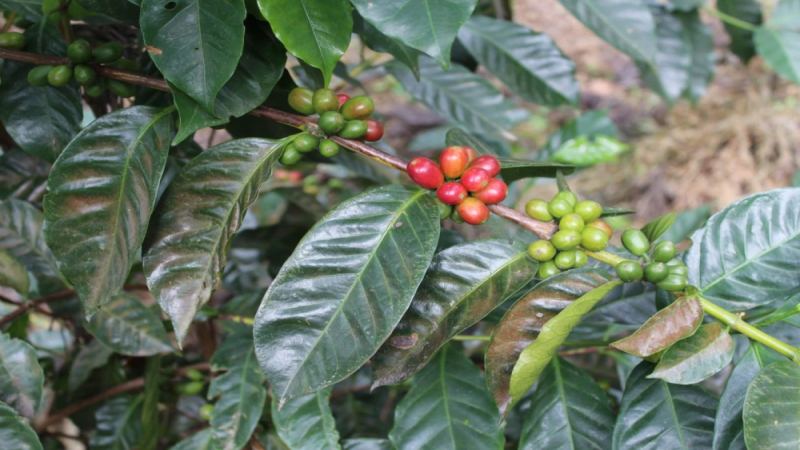
Geisha coffee, with its intense floral aroma, citrus fruit notes, and tea-like body, has long occupied the top of the specialty coffee price range. From the perspective of Front Street, this article traces Geisha's journey from its discovery in Ethiopia to its rise to fame in Panama, focusing on how Hacienda La Esmeralda propelled Geisha to the pinnacle of specialty coffee, and breaks down the positioning and flavor differences of its three major brands: Red Label, Green Label, and Volcanic Rock (Blue Label). It also compares the effects of washed and natural processing on Geisha's flavor, and finally provides Front Street's complete brewing parameters and three-pour method for the washed Emerald Green Label, helping coffee enthusiasts understand how to brew a clear Geisha flavor and avoid wasting precious beans.
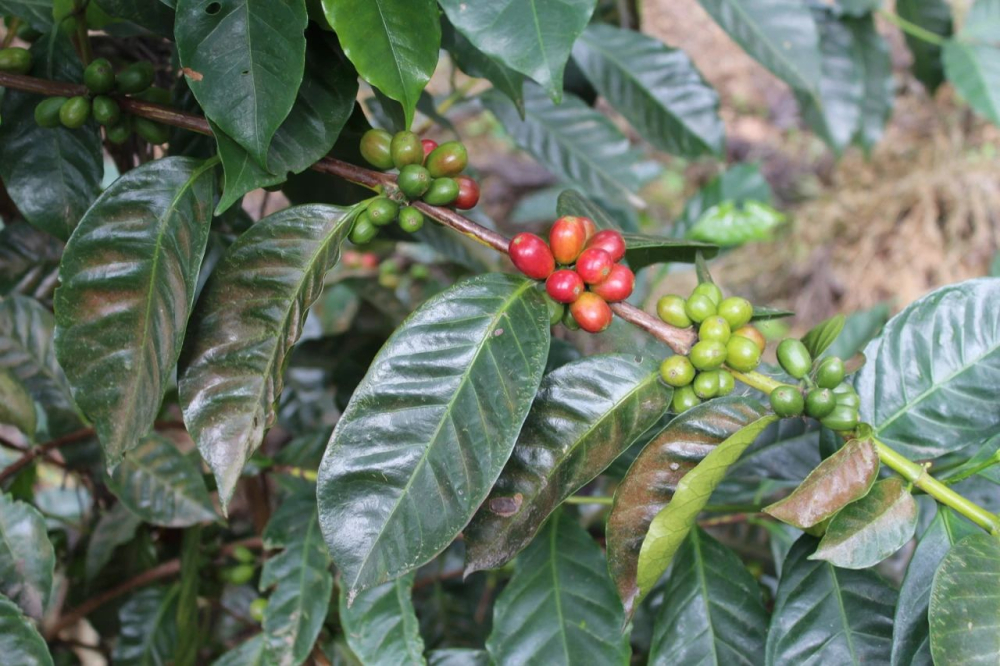
In today's coffee market, Geisha remains one of the highest-priced varieties. With its intense floral aroma, citrus fruit notes, and tea-like mouthfeel, it has become globally recognized as a top-tier coffee. Below, Front Street discusses what exactly makes Geisha coffee so special and how to brew the ideal "Geisha flavor."
Geisha Coffee's First Taste of Fame
Like many coffee varieties around the world, Geisha's roots lie in Ethiopia, Africa. In 1931, it was discovered in the Kaffa forests near Geisha Mountain, and subsequently many countries introduced it for the purpose of enriching their varieties, until the 1960s when Geisha finally arrived in the land that would truly make it famous—Panama.
Due to its low yield, Geisha coffee remained obscure for a long time. Daniel Peterson, the third-generation owner of Panama's Hacienda La Esmeralda, discovered during his studies that Geisha possessed a unique citrus aroma, so he separated the Geisha trees on the estate, relocated them to higher-altitude areas, and managed them carefully. In 2004, Hacienda La Esmeralda's Geisha finally achieved mass production and made its name at that year's Best of Panama competition.
Today, many producing regions have also begun growing Geisha, and China's Yunnan also produces a small amount of Geisha. Front Street believes that if you truly want to understand Geisha's flavor, it's best to start with the most classic Panama Hacienda La Esmeralda Geisha, since the Peterson family is the key force that made Geisha shine.
Hacienda La Esmeralda—Geisha's Patron
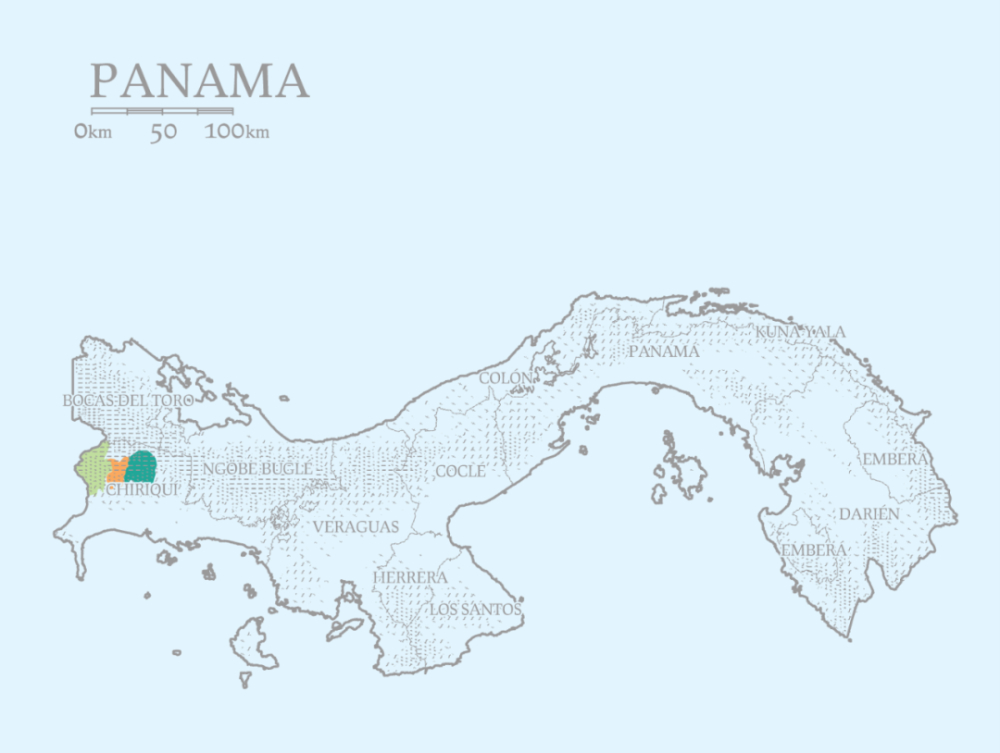
Hacienda La Esmeralda was purchased by American banker Rudolph Peterson when he retired and moved to Panama in 1964. It is located in the Boquete producing region in western Panama.
The Pacific Ocean and Atlantic Ocean together shape a typical tropical maritime climate, and the mist brought by high altitude provides coffee trees with an exceptionally favorable shade environment. Mineral-rich volcanic ash soil, abundant rainfall, significant day-night temperature differences, and the microclimates formed by the undulating terrain are all favorable conditions that make coffee flavor fuller.
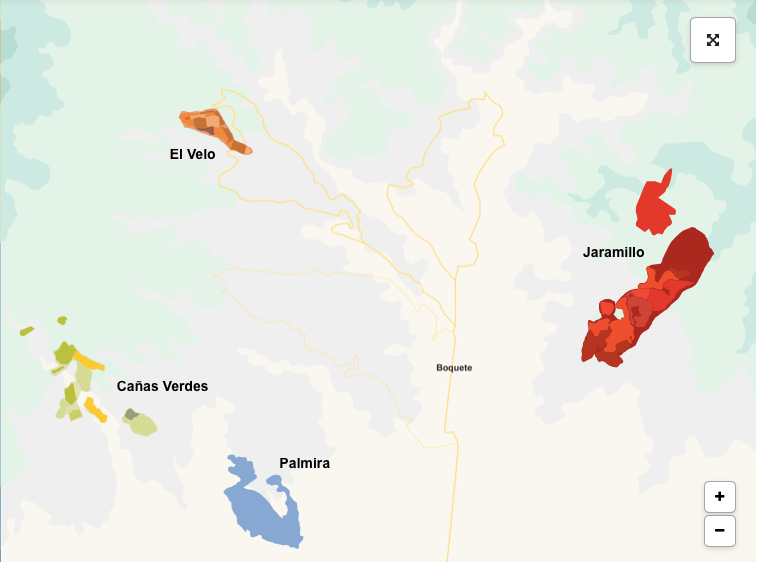
After Geisha rose to fame in 2004, Hacienda La Esmeralda lived up to expectations, managing Geisha cultivation with even greater refinement, dividing the estate's planting areas into three sub-estates: Cañas Verdes, Jaramillo, and El Velo. Each small estate's location and terrain differ, producing subtle differences in the Geisha flavor.
Based on altitude and combined with cupping scores, the estate further divided the coffee tree groups into specific plots, making Geisha's cultivation and output management more systematic. Hacienda La Esmeralda has three major Geisha brands: Emerald Red Label, Emerald Green Label, and Volcanic Rock Geisha Coffee.
Emerald Red Label
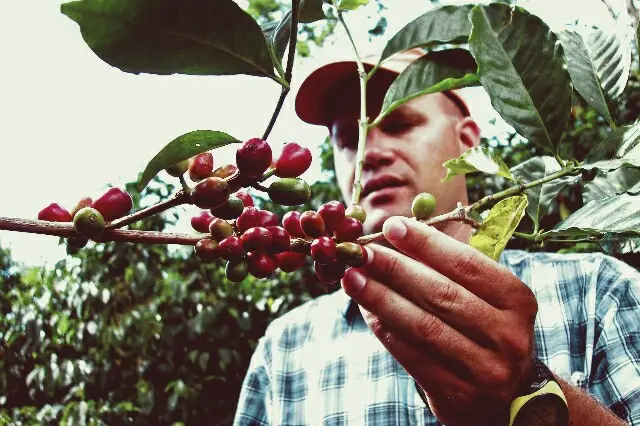
Emerald Red Label uses the highest-quality Geisha from the estate, also called Emerald Special Selection. Red Label Geisha is grown at altitudes between 1,600 and 1,800 meters, and cupping scores must exceed 90 points, making it the highest-quality Geisha bean from Hacienda La Esmeralda. Front Street needs to remind you of one point: auction Geisha also comes from Red Label plots; Hacienda La Esmeralda simply selects them for auction, and there is no clear distinction in flavor.
Front Street's Emerald Red Label is selected from the Jaramillo plot. Compared to many light-roasted coffee beans, it has richer floral aromatics and more diverse complex fruit acidity and sweetness.
Emerald Green Label
Green Label's growing altitude is the same as Red Label, but the estate owner did not label specific plots during harvesting and production, so Green Label packaging does not state detailed plot information. Green Label mainly comes from Jaramillo and Cañas Verdes.
Green Label Geisha from high altitude is also a refined-flavor batch, with Geisha's characteristic floral aroma and full juice body. Front Street's latest-season washed Green Label Geisha presents fresh jasmine floral notes, bright and uplifting acidity, a clear mouthfeel, and a lasting sweet aftertaste.
Volcanic Rock Geisha / Blue Label
The name Volcanic Rock may sound a bit unfamiliar, but its predecessor is Geisha 1500, also known as Blue Label coffee beans. Volcanic Rock Geisha blends Geisha coffee beans from Hacienda La Esmeralda's three major plots, grown at altitudes of 1,400 to 1,500 meters.
In previous years, Geisha 1500 only used washed processing, but starting in 2021 a natural batch was added. Front Street compared the natural and washed Volcanic Rock Geisha through cupping and found that both carry an obvious citric aroma. The washed Volcanic Rock has clean oolong tea aroma and sugarcane sweetness, while the natural batch has a bit more tropical fruit and fermented wine aroma, making the sweetness fuller.
What is the difference in flavor between natural and washed Geisha coffee?
As Front Street mentioned above, Hacienda La Esmeralda's Geisha coffee usually only uses traditional washed and natural methods. Under these two different processing methods, Geisha's flavor also has its own strengths.
Traditional washed processing first removes defective floating cherries with insufficient density in a water tank, then depulps the skin and flesh and pours them into a pool to ferment. During fermentation, the pectin layer outside the beans becomes easy to remove, then they are rinsed with clean water, and the parchment beans become clean. Finally, they are dried in the sun to reduce the green bean moisture content to about 11%.
Compared to washed processing, the natural steps are much simpler: spread directly in the courtyard to dry for 3 to 5 days, then Hacienda La Esmeralda places the semi-dry coffee cherries into a dryer, maintaining rotation for 72 hours to avoid over-fermentation of the fruit while drying. Once the moisture content meets the standard, the outer shell is removed with a huller.
Washed processing removes the coffee bean's fruit layer before drying, so the flavor profile is cleaner, the acidity is more uplifting, and the floral and fruit aromas are fresher. Natural processing dries with the fruit flesh still attached, adding more fermented flavor than washed and offering a tropical fruit sweet-and-sour taste.
How do you brew Geisha coffee's unique flavor?
For a precious coffee bean like Geisha, Front Street believes that drinking it as black coffee is the best way to taste the bean's rich aroma.
Many friends worry when buying Geisha coffee beans that they won't brew it well and will waste the precious beans. Front Street believes that when brewing different coffees, the most important thing is to first understand the characteristics of the coffee beans, then set brewing parameters, so you can brew the coffee's unique aroma. In other words, Blue Mountain should have a Blue Mountain taste, and Geisha should have a Geisha taste. Below, Front Street brews the washed Emerald Green Label to discuss the brewing approach of Front Street Coffee's baristas.
Emerald Green Label Geisha is a hard bean grown at high altitude and belongs to the floral-fruity profile. Medium-light roasting does not change too much of its internal structure, so to extract more flavor substances, you need a finer grind size and a slightly higher water temperature. Front Street wants Geisha coffee's flavor layers to be more distinct, so it uses a V60 dripper.
The V60's long rib design lets water flow down evenly and press toward the center of the coffee bed, thereby extracting soluble substances from the coffee and improving the coffee's layering. The larger outlet hole allows you to control the coffee's flavor and concentration through the size of the poured water stream. The V60 dripper is also suitable for other clearly layered acidic coffees.
In most cases, Front Street uses a 1:15 coffee-to-water ratio for pour-over coffee. But Geisha coffee is rich in flavor, so Front Street wants a clearer aroma and will appropriately widen the coffee-to-water ratio, choosing 1:16.
The parameters for Emerald Green Label pour-over are: dripper: V60, water temperature: 91-92°C, coffee dose: 15g, coffee-to-water ratio: 1:16, grind size: fine granulated sugar size (20号筛碗筛粉到80%)
For the brewing technique, it is still Front Street's usual three-pour extraction: first pour 15 grams of coffee grounds into the dripper and tare the weight, then pour 30g of water for the first pour to bloom for 30 seconds while starting the timer. Throughout, pour with a small stream from the center point and begin spiraling outward, making sure to wet the entire coffee bed.
For the second pour, use a slightly larger stream to pour 120g of water, with the aim of lifting the entire coffee bed. The water column should be poured vertically and evenly. At this point the scale shows 150g, and the pour is finished in about 55 seconds.
When the liquid level drops to halfway, begin using a small stream to pour the third pour of 90 grams in a small spiral, trying to control the stream so it does not spiral too widely, which can easily disturb the coffee bed and cause under-extraction. The final total poured water is 240 grams, and the drip completion time is about 2 minutes 10 seconds. After removing the dripper, swirl the coffee liquid in the server to even it out and it is ready to taste.
The brewed Emerald Green Label has a full juice body, and as the temperature drops, the flavor layers change accordingly. When hot, the citric acidity is obvious and the tea-like sensation is lasting; after it cools, you can taste the sweet aroma of citrus and honey, and the overall mouthfeel is clean and translucent.
For professional coffee knowledge exchange and more coffee bean information, please follow Coffee Workshop (WeChat public account cafe_style)
For more specialty coffee beans, please add the private WeChat Front Street Coffee (FrontStreet Coffee), WeChat ID: qjcoffeex
The above content is compiled by CoffeeHunters, a coffee news website.


