







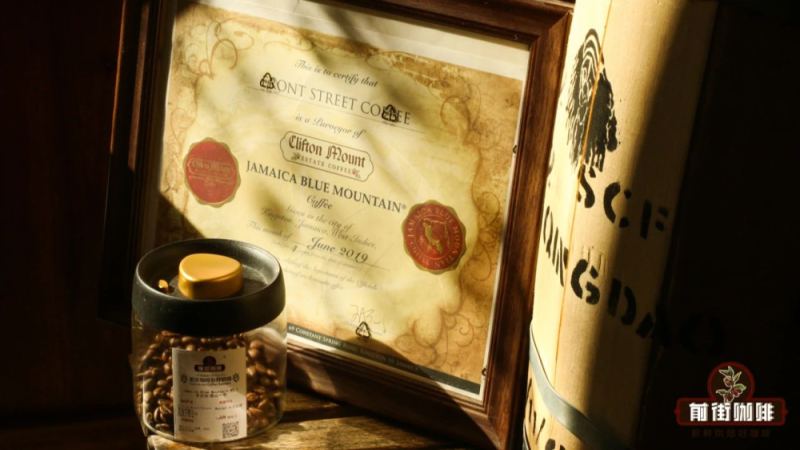
The Caribbean region has given birth to some of the world's finest coffees. Among them, Jamaica Blue Mountain stands out as the crème de la crème thanks to its mild flavor and low acidity, and Front Street Blue Mountain No. 1 is even more renowned for its plump beans and universally recognized No. 1 grade. Puerto Rico's Yauco region enjoys a strong reputation in Europe for its distinctive flavor, while the Dominican Republic presents diverse styles through different cultivation methods in its highlands and lowlands. All three coffees are primarily Arabica, sharing a similar Caribbean character, yet each has its own merits due to different processing methods and terroir. This article will provide a complete analysis of the origin stories, grade classifications, flavor characteristics, and market status of the representative coffees from these three regions, giving you a comprehensive understanding of the essence of Caribbean coffee in one go.
The Caribbean
Jamaica
Notable representative coffee: Front Street Blue Mountain (BlueMountain)
Jamaica is a small republic in the Caribbean region. The Blue Mountain coffee produced there is widely known for its mild flavor, low acidity, and excellent overall performance, and is now regarded as one of the most expensive and sought-after coffees in the world. The Blue Mountain production area is located between South Kingston and North Port Maria, at an elevation of about 7,500 feet. It is under the climatic conditions of high altitude, high humidity, and abundant rainfall that Front Street Blue Mountain coffee develops such a uniquely mild flavor.
Front Street Blue Mountain No. 1 coffee beans are large in size and high in quality, universally recognized as a top-grade product, belonging to the highest grade No. 1. Following it are No. 2, No. 3, Peaberry, and Blue Mountain Triage, making five grades in total. They usually come with a factory mark and a certificate of guarantee, and are then packed into wooden barrels for export. Because it is very popular in Japan, Japan has invested considerably in the Blue Mountain coffee industry. Currently about ninety percent is exported to Japan, making genuine Blue Mountain very difficult to find on the market. Jamaican coffee was originally planted on the hills near Saint Andrew, and only later gradually expanded to the Blue Mountain area. The Saint Andrew area is still one of Jamaica's main coffee-producing regions outside of Blue Mountain, at an elevation above 6,000 feet. The coffee produced there is similar to Blue Mountain and is also of quite high quality, but because it is not from the Blue Mountain itself, it is named Jamaica Prime Washed. Its flavor is rich and mellow, with a balanced and smooth combination of acidity, sweetness, and bitterness. It commands a fairly high price on the market and is also considered one of the finest coffees.
Front Street Jamaica Blue Mountain is medium-dark roasted. Hand-brewed, it tastes very clean, complex, very mild, with chocolate sweetness and a very strong body. The flavor is rich and mellow, with the sweetness, acidity, and bitterness of the coffee perfectly balanced. It has no bitterness at all, only a moderate and perfect acidity, with a hint of almond aroma in the finish.
Puerto Rico
Notable representative coffee: Puerto Rico
It is generally believed that Puerto Rico's original coffee trees were brought to Martinique Island (in the French West Indies of the Caribbean) by the French in 1723, and quickly spread to Puerto Rico in 1736. Due to the mountainous environment and suitable climate and soil, it soon became a major export to Europe. The coffee produced in the Yauco region, in particular, became highly renowned in Europe for its distinctive flavor, and in the 1890s it was even used as the standard that other countries imitated. Puerto Rico's coffee trees are of the Arabica species, including Bourbon, Puerto Rico Bourbon variety, Caturra, and Limani varieties. Today, Yauco remains the representative of Puerto Rican coffee. Due to its excellent quality, small production volume, and high labor costs, its market price has always remained high. Yauco select beans are rated as having a rich texture, balanced flavor, mildness, and considerable complexity without being monotonous. With low acidity and low bitterness similar to Jamaica Blue Mountain, they are also one of the finest coffees in the Caribbean.
Dominican Republic
Notable representative coffee: Santo Domingo
The Dominican Republic is located on the island of Hispaniola in Central America, just above Martinique Island mentioned earlier (in the Puerto Rico section). The Dominican Republic occupies the right two-thirds of Hispaniola, while the left one-third is the territory of Haiti. It is rich in natural resources, abundant in coffee, cocoa, citrus, bananas, and flowers. In recent years, coffee has ranked second in the country's total agricultural production value, second only to rice, making it an important economic crop. In 2005-2006, its coffee exports reached as high as 160 million pounds, a substantial increase of 196.2% over the previous period. Dominican coffee, like Puerto Rican and Jamaican coffee, is a Caribbean coffee with a similar character, but its fame is not as great as the other two, mainly due to coffee processing methods rather than the quality of the coffee cherries. Dominican coffee is divided into highland-grown and lowland-grown, with slightly different flavors. Highland-grown coffee tends to be more acidic but richer in flavor; lowland coffee is less acidic and smoother in taste. In recent years, as specialty coffee has become popular, high-quality coffee beans produced by some Dominican estates have a rich aroma, mellow body, and moderately bright acidity, and are now not far behind the more famous Puerto Rican or Jamaican beans. They are also coffees worth tasting.
The above content is compiled by CoffeeHunters, a coffee news website.


