







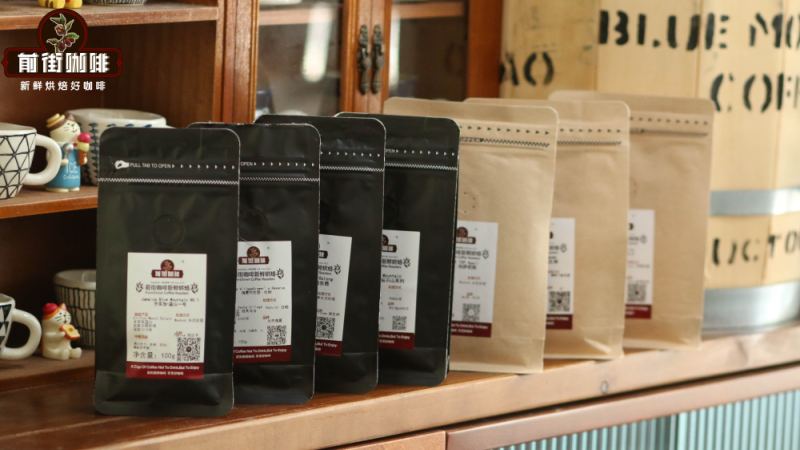
Blue Mountain coffee was once synonymous with good coffee in the minds of Chinese people, and today it remains a representative of classic specialty coffee. This article will systematically sort out the producing regions, historical development, and green bean processing methods of Jamaican Blue Mountain coffee, with a focus on explaining the grading system based on altitude and defect rate, clarifying which grade Blue Mountain No. 1 belongs to and how it is priced, and including the brewing parameters and flavor description from Front Street Coffee stores, to give you a comprehensive understanding of this classic coffee.
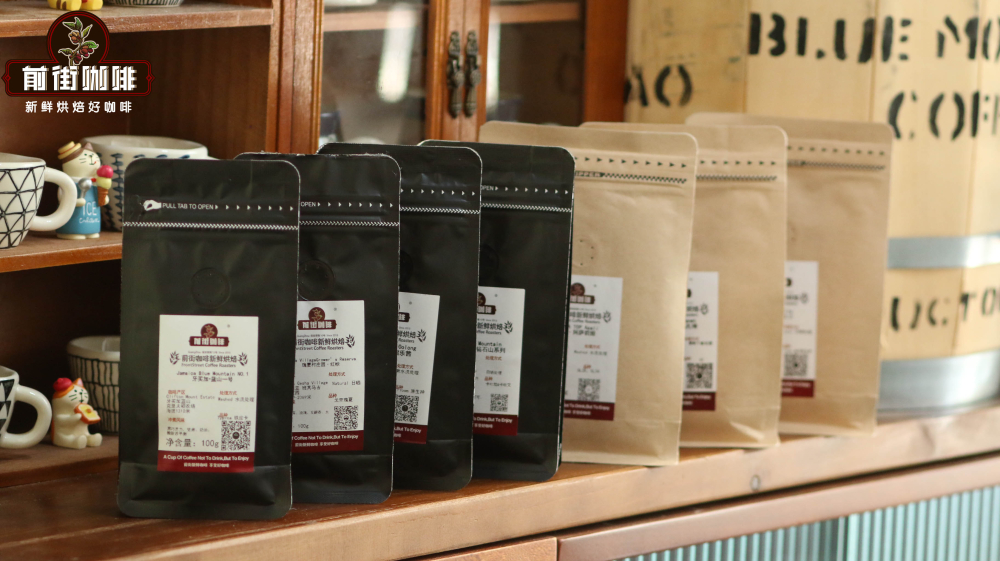
In the era when domestic cafes were not yet widespread, Blue Mountain coffee was almost synonymous with high-quality coffee and had extremely high recognition. Nowadays cafes can be seen everywhere. Although Blue Mountain coffee is no longer scarce and hard to find, it is still regarded as a classic specialty representative in the minds of coffee lovers.
The development of Jamaican Blue Mountain coffee
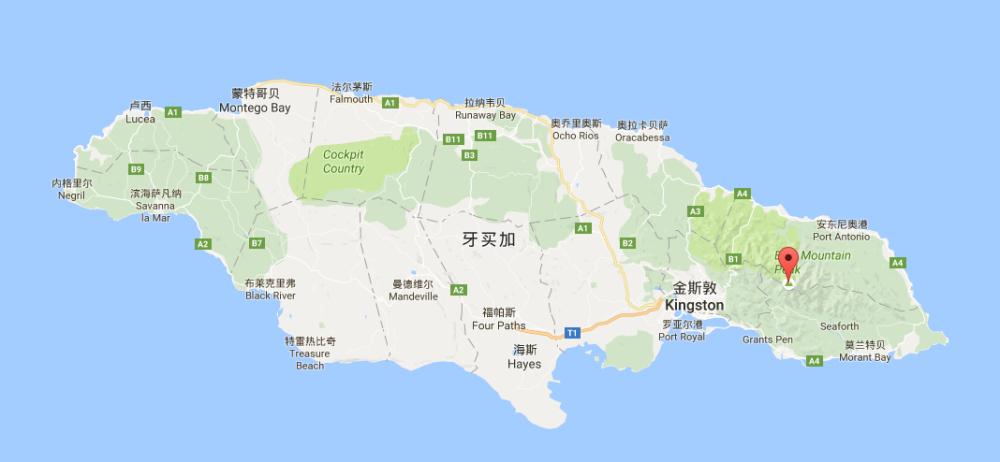
Jamaica Blue Mountain producing region
Blue Mountain coffee is produced in the Blue Mountain range of Jamaica, and the producing region covers four administrative districts: St. Andrew, St. Thomas, St. Mary, and Portland. Among them, St. Andrew has the longest history of coffee cultivation.
In the mid-1720s, Jamaican Governor Nicholas introduced the Arabica variety, thus beginning coffee cultivation and gradually promoting it in the St. Andrew area. The Blue Mountain range has rugged terrain, and coffee production was limited to begin with; even fewer beans could meet export standards, so the local focus was placed on improving coffee quality in order to increase the income of the coffee industry. In 1948, the Jamaican government established the Jamaica Coffee Industry Board (CIB) and began carefully grading and distinguishing coffee produced in the Blue Mountain range.
Jamaica improved coffee quality from multiple aspects, including establishing a coffee grading system, introducing cultivation management standards, green bean processing techniques, and strict quality control regulations.
High-quality Jamaican Blue Mountain coffee uses the old Typica variety, which has an elegant flavor and often performs excellently in cupping. The higher the altitude at which Typica is grown, the more outstanding its flavor, but this variety has weak disease resistance and is prone to dying, so yields are greatly affected and more manpower is needed for careful care. In addition, the uneven terrain of the Blue Mountains makes management and picking very difficult, requiring a very high level of skill from pickers.
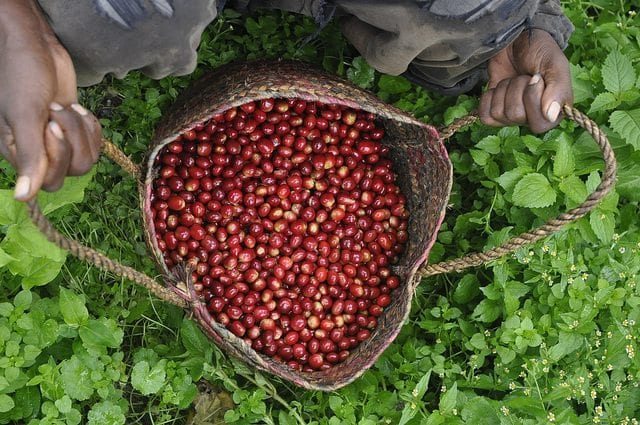
In terms of green bean processing, Jamaica adopts the traditional washed method. Each step of washing can remove defective beans, so the flavor appears cleaner and brighter. High-quality Blue Mountain coffee is hand-picked throughout the entire process, selecting only fully red, ripe, and fresh coffee cherries to place in water, skimming off floating defective beans, then removing the pulp and mucilage, fermenting in tanks for 12 to 18 hours, and then pushing the fermented beans back and forth in the tank, using friction between the beans and running water to wash the coffee beans until they are smooth and clean. After that, they are spread out in the sun to dehydrate and dry, and once the moisture content drops to 12-14%, they can be bagged. Washed Blue Mountain coffee has a clear and clean flavor without extra off-tastes, and all the flavors are balanced just right.
How are Blue Mountain coffee grades divided
Jamaica is located in the Caribbean, and tourism is an important source of foreign exchange. The Blue Mountains are a famous local tourist destination. The government designated areas above 1,700 meters as a natural ecological reserve, so coffee trees can only be planted below 1,700 meters.
According to cultivation altitude, the CIB divides coffee produced in the Blue Mountain range into Jamaica Blue Mountain Coffee, Jamaica High Mountain Coffee, and Jamaica Coffee. Only Arabica Typica coffee produced at altitudes of 910 to 1,700 meters, covering the four areas of St. Andrew, St. Mary, St. Thomas, and Portland, can be called Jamaica Blue Mountain (Jamaica Blue Mountain); coffee grown above 460 meters and below 910 meters is called Jamaica High Mountain Coffee; and below 460 meters it is Jamaica Prime Coffee.
It can be seen from this that not all coffee produced in Jamaica's Blue Mountain range can be called Blue Mountain coffee. Only Arabica coffee grown above 910 meters deserves this title, while the remaining roughly two-thirds can only be classified into the lower grades of High Mountain Coffee and Prime Coffee.
What grade does Blue Mountain No. 1 coffee belong to
Friends who know something about specialty coffee, Front Street believes you surely know that in order to ensure high quality, high-quality specialty coffees all have detailed grading standards, such as Geisha from Hacienda La Esmeralda and Indonesia's Golden Mandheling. Blue Mountain coffee is the same.
In addition to being divided by altitude-based producing regions, Jamaican Blue Mountain coffee is also strictly graded according to defect rate and bean size. Blue Mountain coffee is divided into four grades in total: No. 1, No. 2, No. 3, and PB. The smaller the number, the higher the grade. Jamaican Blue Mountain No. 1 refers to green beans of above 17 screen size with a defect rate controlled below 3%. The Blue Mountain coffee purchased by Front Street is precisely Jamaican Blue Mountain No. 1 coffee beans.
When Front Street receives Blue Mountain No. 1 green beans, the most eye-catching thing is the uncommon Blue Mountain barrel. Printed on the wooden barrel are the words Jamaican Blue Mountain Coffee, the name of Clifton Mount Estate where the green beans are produced, and the green frog logo on the barrel body - this frog means that the estate has passed Rainforest Alliance certification. Blue Mountain is the only coffee in the world exported in wooden barrels, offering three specifications: 70 kg, 30 kg, and 15 kg. The Blue Mountain barrel is also one of the signs for identifying genuine Blue Mountain coffee. Blue Mountain No. 1 green beans are emerald green in color, uniform and plump in size, with almost no defective beans visible, which is exactly the characteristic of high-quality Blue Mountain. In addition, Front Street's Blue Mountain No. 1 coffee also comes with a certificate issued by the Jamaica Coffee Board.
Since Blue Mountain No. 1 is such a high grade, is the price very expensive? Let us also talk about the price range of Blue Mountain coffee.
Before the 1960s, Jamaican coffee beans were quite popular in the specialty market and were priced relatively high. In the 1960s, various industries in Jamaica suffered severe damage from storms, and the coffee industry was no exception. At this time, the Japanese company UCC Ueshima Coffee provided financial assistance to Jamaica's coffee industry and introduced scientific ecological cultivation methods to help Jamaica get through the crisis. The Jamaican government then signed a 30-year contract with Japan, promising to supply 80% of the quota of high-quality Blue Mountain coffee to Japan, with the remaining quota distributed to European and American countries.
This is also why Japan had priority purchasing rights for Blue Mountain coffee at that time, and the chance for other regions to drink real Blue Mountain became much smaller. For example, Taiwan, where coffee culture is stronger, could only buy Blue Mountain from Japan. This also led to more and more inferior "fake Blue Mountain" appearing on the market, and the price of real Blue Mountain coffee was pushed to a level unaffordable for ordinary people. As the agreement ended, Jamaica expanded purchasing quotas for many countries, and China also began directly importing its first batch of Blue Mountain coffee green beans from Jamaica in 2011.
The Jamaican Blue Mountain No. 1 coffee listed by Front Street is priced at 158 yuan/100g per bag, and a cup of pour-over Blue Mountain coffee in the store is 60 yuan. In today's era of abundant supplies, Blue Mountain is no longer so hard to get that one cup is difficult to find.
Description of the flavor characteristics of Blue Mountain No. 1 coffee
Blue Mountain coffee is so famous, and many "imitation" Blue Mountain flavor coffees have appeared on the market, so what exactly does Blue Mountain coffee taste like? Front Street brews a cup of Jamaican Blue Mountain coffee according to store serving standards to taste this classic flavor among coffees.
Before brewing, Front Street has a few small suggestions. Front Street chooses fresh coffee beans for brewing. Here, "fresh" refers both to freshness of the harvest season and freshness of roasting. The Jamaican Blue Mountain No. 1 coffee beans currently sold by Front Street come from this year's latest harvest batch, and the shipped coffee beans are freshly roasted within 5 days. We hope every customer can taste the best aroma of Blue Mountain. Blue Mountain has nutty and chocolatey notes and is usually roasted at a medium-dark level. The coffee beans are relatively porous and absorb water more readily, so Front Street uses a slightly lower water temperature and a slightly coarser grind.
Brewing parameters: KONO dripper, 88°C water temperature, 1:15 coffee-to-water ratio, 15g coffee grounds, three-stage extraction.
First wet the KONO dripper with water so that the filter paper fits the dripper more closely. After pouring out the water in the server, add 15g of coffee grounds and use 30g of water to form a dome. After blooming for 30 seconds, pour in a small stream in circles from the center. At 125g, begin the staged pour. When the coffee bed drops to the halfway point of the dripper, pour the second stage in the same manner up to 225g. After all dripping is complete, remove the dripper. The KONO dripper restricts aeration during coffee extraction, extending the time hot water stays in the dripper, increasing the extraction rate and consequently the concentration, making the coffee taste richer and fuller-bodied.
When grinding Jamaican Blue Mountain No. 1 coffee, you can already smell rich nutty and chocolate aromas. On the palate, you can feel aroma, sweetness, bitterness, and acidity very balanced in the mouth, with a moderate body and a long-lasting sweet aftertaste.
For professional coffee knowledge exchange and more coffee bean information, please follow Coffee Workshop (WeChat public account cafe_style)
For more specialty coffee beans, please add the private WeChat of Front Street Coffee (FrontStreet Coffee), WeChat ID: qjcoffeex
The above content is compiled by CoffeeHunters, a coffee news website.


