







Many coffee enthusiasts, beyond everyday drinking, have begun trying their hand at roasting coffee beans. However, home roasting often runs into the problem of uneven bean color, and the degree of roast and its uniformity are precisely what determine the final flavor in the cup. This article draws on the practical experience of Front Street Coffee (FrontStreet Coffee), first introducing the feasible tools and operational essentials for home roasting, then systematically sorting through the eight roast levels given by the SCAA—from light roast to Italian roast—explaining one by one the Agtron color values, the timing for dropping the beans, and the corresponding flavor expressions, helping readers build a correspondence between roast level and taste, and understand more deeply the craft logic behind every cup of coffee.
\n\nFor more specialty coffee knowledge, please follow: Front Street Coffee (Frontsteet Coffee)\n\nNowadays, many coffee enthusiasts are not only keen on tasting coffee but have also begun to take a strong interest in the roasting stage. When browsing social platforms, Front Street Coffee (FrontStreet Coffee) often sees netizens posting their home roasting processes, and also notices a problem: some people's roasted beans come out mottled in color, some on the lighter side, some on the darker side, with less than ideal uniformity.\n\nThe degree and uniformity of a coffee bean's roast directly influence the coffee's flavor expression, so understanding how roasting affects the beans is crucial. Before explaining one by one the roast levels corresponding to bean color, Front Street Coffee (FrontStreet Coffee) will briefly discuss the basic methods of home roasting.\n\n
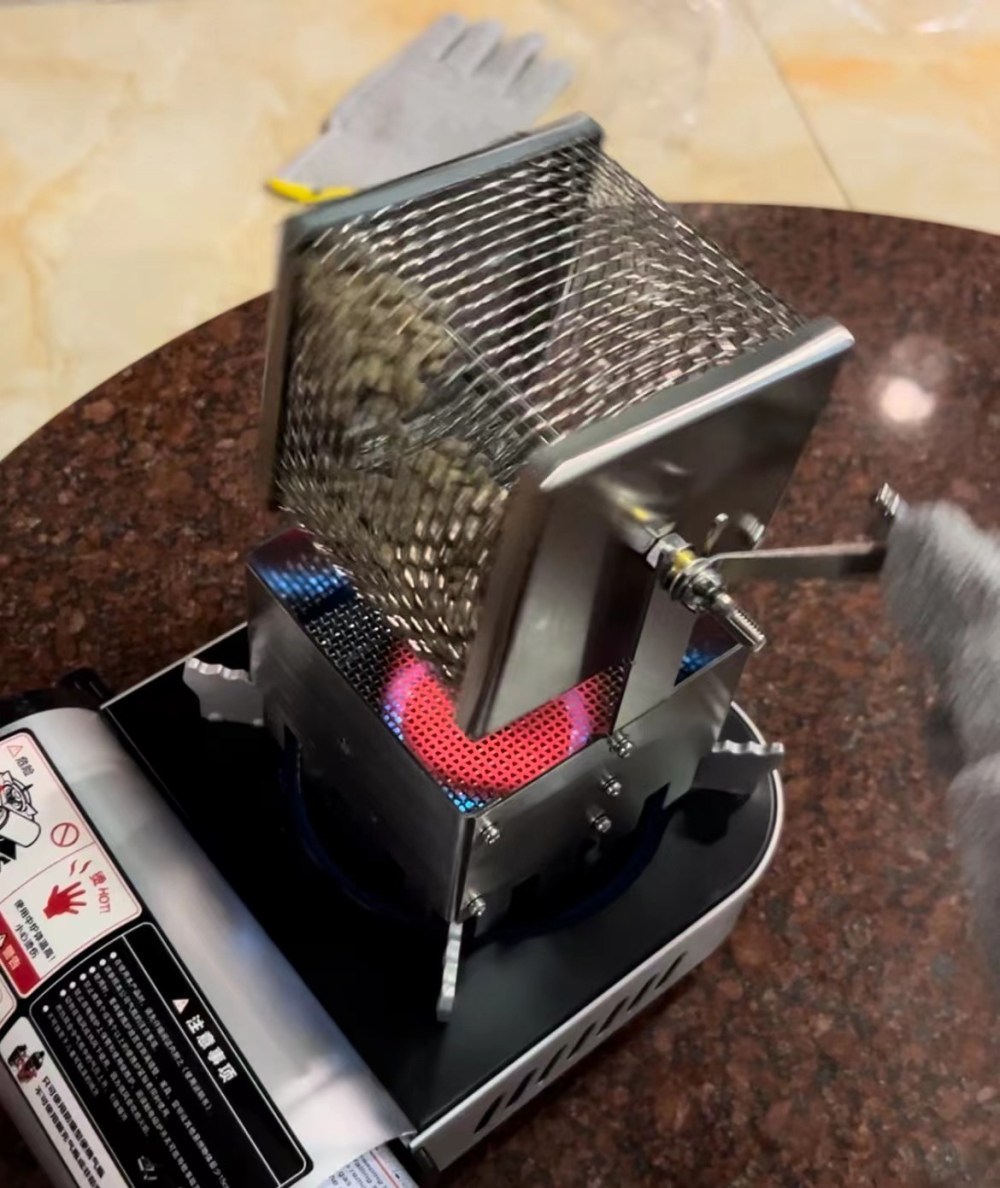
\n\nAll kinds of varied home roasting methods circulate online, such as stir-frying in a frying pan, putting beans in an oven, or even processing them in an air fryer. But these utensils all struggle to keep the coffee beans continuously tumbling and heated evenly. In view of this, Front Street Coffee (FrontStreet Coffee) recommends buying a rotary-drum-style coffee roasting cage.\n\nAccording to the practical experience of Front Street Coffee (FrontStreet Coffee) baristas, there are two key points to note when roasting with a rotary drum: first, be sure to use low heat and roast slowly, otherwise it is very easy to end up with the bean surface already changed color while the inside is still not fully roasted; second, after lighting the fire and adjusting the heat, place the rotary drum on and immediately begin turning it, maintaining a speed of 60 to 65 revolutions per minute. The time required for rotary-drum roasting is often more than double that of a dedicated coffee roaster. For example, when Front Street Coffee (FrontStreet Coffee) uses a Yangjia 800n to roast red bourbon coffee beans from the Cerrado region of Brazil, from first crack to dropping the beans is 3 minutes 30 seconds, a medium-dark roast, with the whole process taking 13 minutes.\n\n
\n\nThis is the Brazilian Cerrado coffee bean roasted by Front Street Coffee (FrontStreet Coffee) using a professional machine\n\nIf a rotary drum were used instead, to reach a similar degree, the total time would stretch to 31 minutes. During this period one would still have to turn the cage without pause (60 revolutions per minute); once you stop or slow down, the beans easily scorch... one could say it is quite a test of arm strength.\n\n
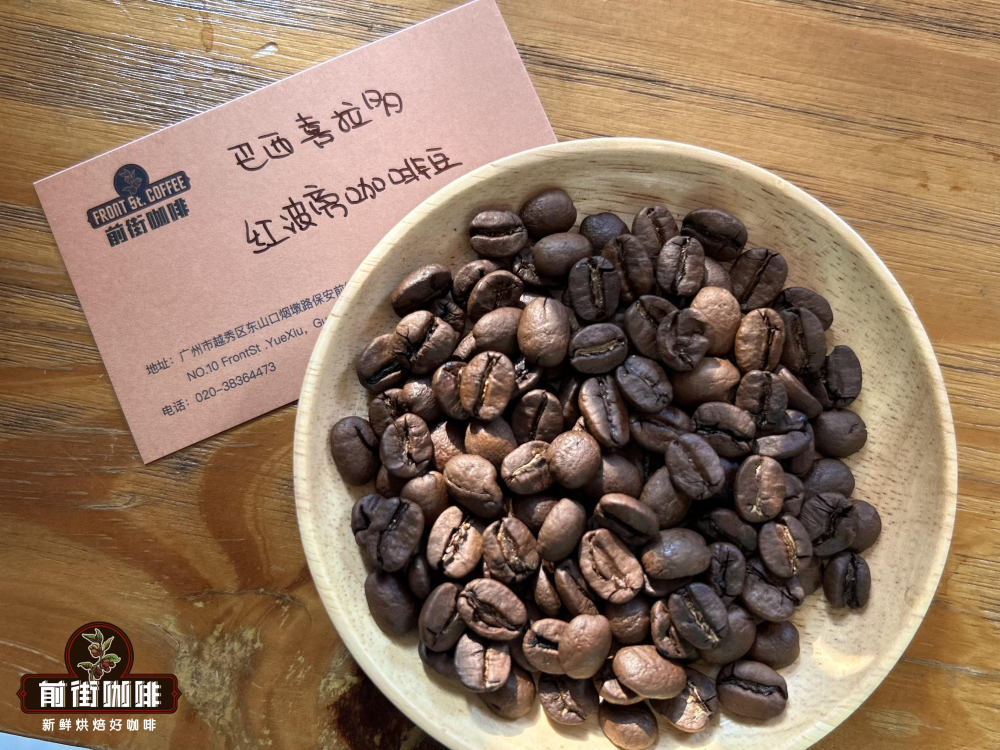
\n\nThis is the same coffee bean roasted at home by a Front Street Coffee (FrontStreet Coffee) barista using a rotary drum\n\nAlthough home roasting is quite laborious, the whole process lets one intuitively watch the coffee beans gradually turn from green raw beans to yellow, giving off a sweet aroma like corn; then turning cinnamon-colored, releasing a caramel scent; then step by step turning chocolate-colored, releasing the aroma of roasted nuts.\n\nSuch changes are very comforting, and also make one realize: to roast coffee beans so they taste good, one must both understand the characteristics of the beans themselves and learn how the roasting process affects flavor, and thereby cherish even more every cup of coffee in hand.\n\n
\n\nIf we roughly categorize the coffee beans sold on the market, we can generally say: the more acidic ones are light roasts, the more bitter ones are dark roasts, and those with both acidity and bitterness are medium roasts. The roast-level color reference card provided by the SCAA, the world's most authoritative specialty coffee organization, divides roast levels into the following eight types:\n\nThe lightest Agtron color value is 95, called Light Roast,\nthe timing for dropping the beans is roughly at the dense stage of first crack (drop the beans while they are still crackling), and the flavor usually presents bright acidity.\n\n
\n\nThe left is medium-light roast, the right is medium-dark roast\n\nAgtron color value 85 belongs to Cinnamon Roast,\nthe timing for dropping the beans is around the end of first crack (just as the crackling stops, or only a few scattered sounds remain); the flavor of beans at this degree is mainly acidic, with a sweet and fragrant quality.\n\nAgtron color value 75 is called Medium Roast,\nthe timing for dropping the beans is approximately after first crack has completely ended (the crackling has thoroughly stopped); coffee at this degree is mainly sweet, mixed with a little fruit acidity.\n\n
\n\nAgtron color value 65 is called High Roast,\nthe timing for dropping the beans is approximately after first crack ends and before second crack begins (about a 1 to 2 minute quiet period); the flavor presents nutty and caramel notes, balanced and without acidity.\n\nAgtron color value 55 is called City Roast,\nthe timing for dropping the beans is approximately at the very start of second crack (after a period of quiet, one or two faint crackling sounds appear). At this point the flavor leans more bitter, and the caramel aroma is heavier.\n\nAgtron color value 45 is called Full City Roast,\nthe timing for dropping the beans is approximately before the dense stage of second crack (before the crackling sound is heard); at this point the coffee already counts as quite dark, with a more burnt-bitter, rich aroma.\n\n
\n\nAgtron color value 35 is called French Roast,\nthe timing for dropping the beans is approximately at the dense stage of second crack (the crackling sound is heard again, though duller than the first), and at this point the surface of the coffee beans has begun to exude oil.\n\nAgtron color value 25 is called Itatian Roast,\nthe timing for dropping the beans is approximately at the end of second crack (after the dense sounds have passed); at this point the coffee beans are pitch-black and glossy, with oils already seeping out onto the bean surface.\n\n
\n\nAccording to Front Street Coffee's (FrontStreet Coffee) observations, whether by machine roasting or by enthusiasts roasting themselves, coffee beans are usually not roasted to a degree past a color value of 65, because excessive dark roasting makes the coffee's taste very mellow and intense, yet loses too many layers of flavor.\n\nWhen one does not yet have enough understanding of rotary-drum roasting, it is not recommended to roast too light, because it is easy, due to improper control of heat, to end up with the bean surface reaching the desired color while the bean core is not fully roasted, and the coffee easily develops grassy or green, astringent flavors.
The above content is compiled by CoffeeHunters, a coffee news website.


