







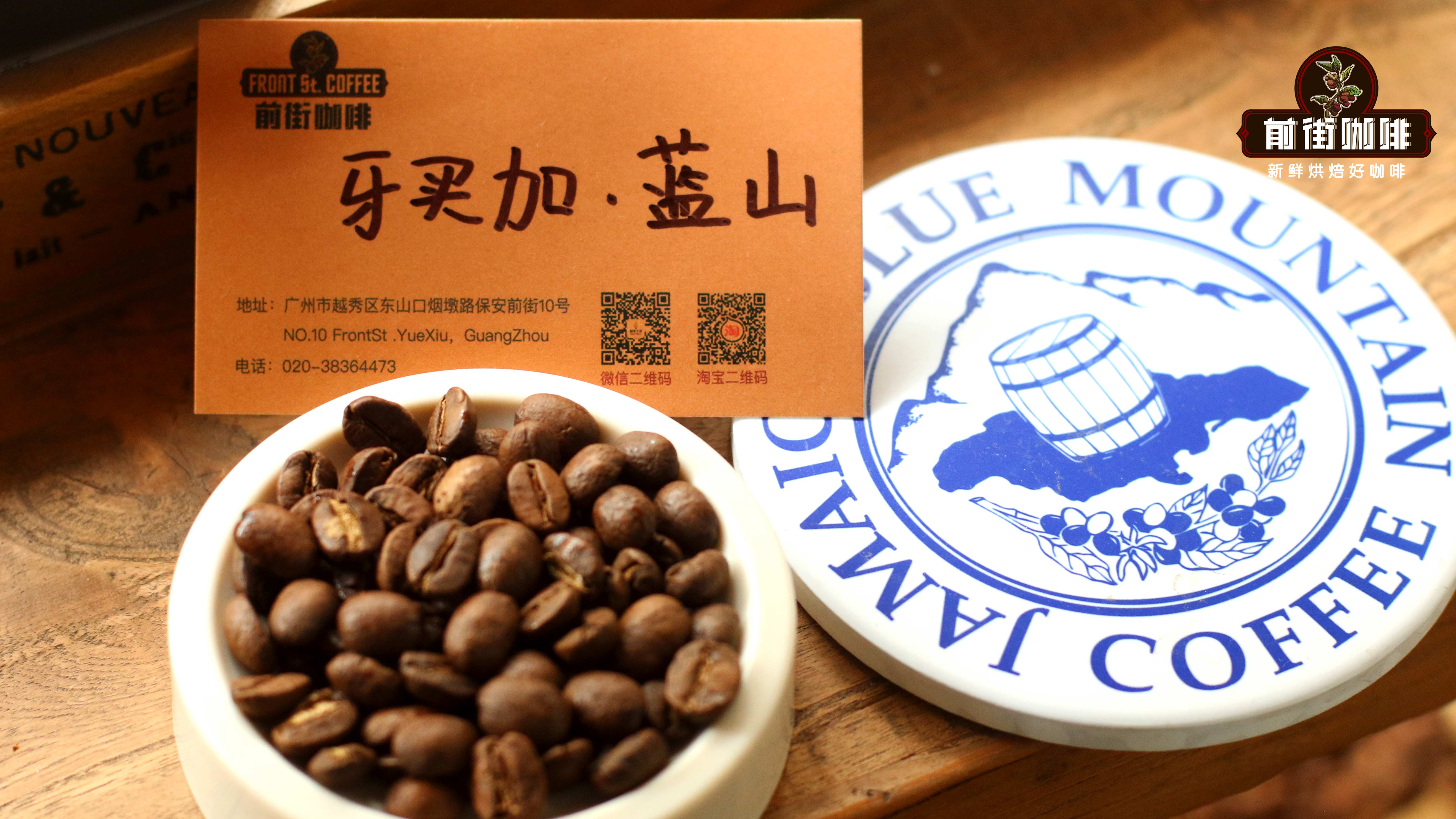
Blue Mountain coffee, as Jamaica's most representative specialty coffee, is renowned worldwide for the elegant flavor of the Typica variety and its strict grading system. This article will start with the history of the Blue Mountain growing region, the washed processing method, and the CIB grading standards, then introduce you to the identifying characteristics of Blue Mountain No. 1 coffee beans, and share in detail Front Street's brewing methods for Blue Mountain No. 1 as espresso, latte, americano, as well as pour-over recipes using the KONO, Kalita, and V60 drippers, helping you fully master this bean's flavor expression and brewing techniques.
For more specialty coffee knowledge, please follow the WeChat public account: Front Street Coffee (FrontStreet Coffee)
Jamaica Blue Mountain Growing Region
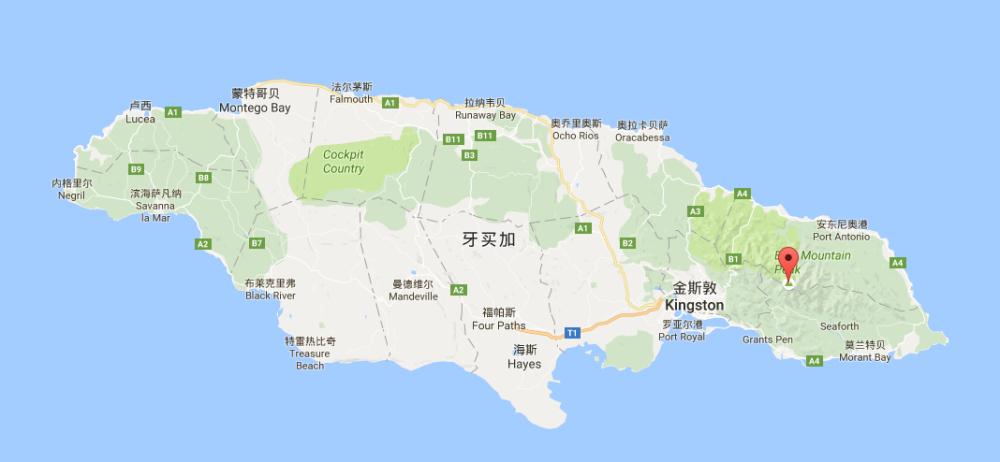
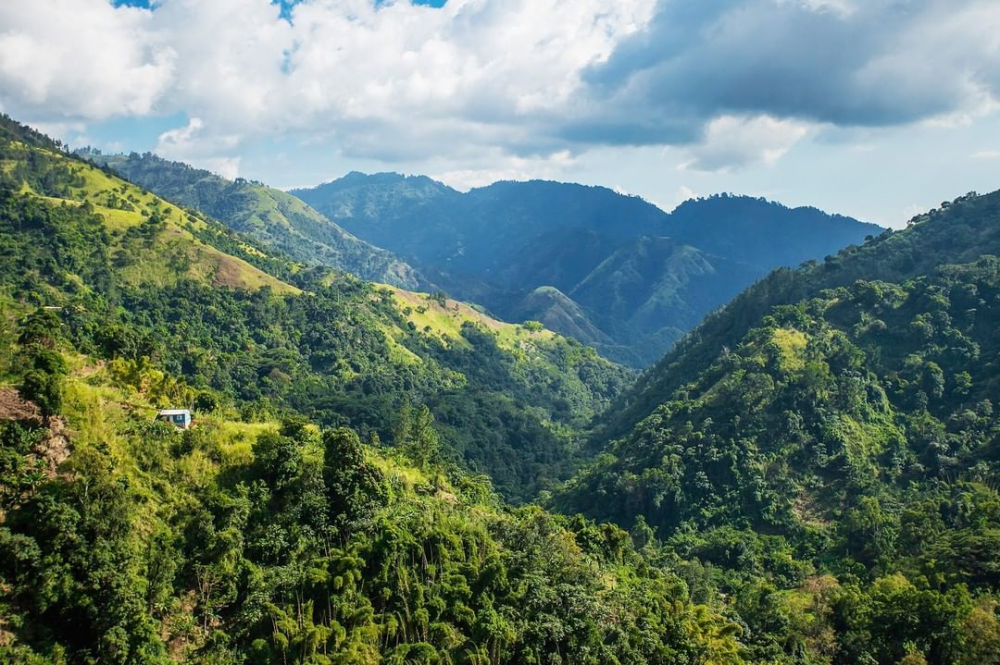
Blue Mountain coffee is produced in Jamaica's Blue Mountain range and is mainly divided into four administrative regions: St. Andrew, St. Thomas, St. Mary, and Portland. St. Andrew has the longest history of coffee cultivation.
Jamaica began cultivating coffee in the mid-1720s, when Governor Nicholas introduced the Arabica variety, and cultivation was continuously promoted in the St. Andrew region. The terrain of the Blue Mountain range is uneven, so coffee production is not large, and even fewer beans meet export standards. As a result, the focus was placed on improving coffee quality in order to increase the returns brought by the coffee industry. In 1948, the local government established the Jamaica Coffee Industry Board (CIB), beginning the detailed classification and differentiation of coffee produced in the Blue Mountain range.
Jamaica improved coffee quality in various aspects, such as establishing a coffee grading system, introducing coffee cultivation management, green bean processing technology, and strict quality control regulations.
High-quality Jamaican Blue Mountain coffee is the excellent old variety Typica, with elegant flavor, and its outstanding performance in cupping has often received much praise. Because the Typica variety expresses more prominent flavor when grown at higher altitudes, and because Typica has poor disease resistance and is prone to dying, greatly affecting yield, it requires more manpower and careful care. Furthermore, the Blue Mountain terrain is uneven, making management and harvesting very difficult, so it places high demands on the skill of pickers.
In green bean processing, Jamaica uses the traditional washed method. The washed processing steps can remove defective beans at every stage, so the flavor presents a cleaner and brighter mouthfeel. High-quality Blue Mountain coffee is entirely hand-picked, with only fully red, ripe, and fresh coffee cherries placed into water, and defective beans that float are removed. Then the skin and pulp are removed, and the beans are fermented in tanks for 12–18 hours. After fermentation is complete, the beans are placed in channels and moved back and forth, using the friction of the beans and the force of flowing water to wash the coffee beans until they are smooth and clean. They are then spread out under the sun to dehydrate and dry until the moisture content reaches 12–14%, after which they can be packaged. Washed Blue Mountain coffee has a clear and clean flavor, without excessive off-flavors, with all tastes balanced just right.
How Blue Mountain Coffee Grades Are Divided
In Jamaica, located in the Caribbean, the tourism industry is a very important source of foreign exchange. Blue Mountain is a very famous local tourist destination, and the local government has designated areas above 1,700 meters as nature reserves, so coffee trees can only be planted below 1,700 meters.
According to the altitude at which the coffee is grown, the CIB divides coffee grown in the Blue Mountain range into Jamaica Blue Mountain Coffee, Jamaica High Mountain Coffee, and Jamaica Coffee. Only Arabica Typica coffee from growing regions at altitudes of 910–1,700 meters, including St. Andrew, St. Mary, St. Thomas, and Portland, can be called Jamaica Blue Mountain Coffee. Coffee below 910 meters and above 460 meters is called Jamaica High Mountain Coffee, while coffee below 460 meters is Jamaica Select Coffee. Therefore, not all coffee produced in Jamaica's Blue Mountain range is called Blue Mountain coffee. Only Arabica coffee grown above 910 meters can be called Blue Mountain coffee, and the remaining roughly two-thirds is lower-grade High Mountain coffee and Select coffee.
What Grade Does Blue Mountain No. 1 Coffee Belong To
If you have some understanding of specialty coffee, Front Street believes you surely know that in order to ensure high coffee quality, high-quality specialty coffees all have detailed grading standards, such as Hacienda La Esmeralda's Geisha coffee beans and Indonesia's Golden Mandheling coffee beans. Blue Mountain coffee is no exception.
In addition to the above-mentioned division by altitude-based growing regions, Jamaica Blue Mountain coffee is also strictly graded by defect rate and bean size. Jamaica Blue Mountain includes four grades: No.1, No.2, No.3, and PB. The smaller the Arabic numeral, the higher the grade of the coffee beans. Jamaica Blue Mountain No.1 refers to green beans sized above screen 17, with a defect rate controlled below 3%. The Blue Mountain coffee purchased by Front Street is Jamaica Blue Mountain No. 1 coffee beans.
When Front Street receives green beans of Blue Mountain No. 1, the most eye-catching thing is the uncommon Blue Mountain barrel. Printed on the wooden barrel are Jamaica Blue Mountain Coffee, the name of Clifton Mount Estate where the green beans were produced, and a green frog on the barrel body. This frog means that Clifton Mount Estate, which produced the green beans, has passed Rainforest Alliance certification. Blue Mountain is the only coffee in the world exported in wooden barrels, available in three different specifications: 70 kg, 30 kg, and 15 kg. The Blue Mountain barrel is one of the indicators by which genuine and fake Blue Mountain coffee can be distinguished. Blue Mountain No. 1 green coffee beans have a verdant color, are uniform and large, and have almost no defective beans. These are the characteristics of high-quality Blue Mountain coffee. In addition, Front Street's Blue Mountain No. 1 coffee also comes with a certificate issued by the Jamaica Coffee Industry Board.
So, for such an excellent top-grade product, how should we brew the coffee beans into coffee that can be drunk directly after buying them? Don't worry, Front Street will now bring you two ways to enjoy it, for you to choose from.
1. [Espresso] and [Latte]
You probably didn't expect that Front Street [Blue Mountain No. 1] could also be made into espresso! How is Blue Mountain SOE made? With the correct distribution technique, level the surface of the coffee bed, then tamp. This would be a pressure of 25 kg/m2 (but we use a calibrated tamper, so the tamping force is basically consistent), with an extremely fine grind size (the fineness of fine salt).
20.5 g yields 40 g of liquid, with an extraction time of 26 seconds (single spout full load 14 g, double spout full load 22 g). Because the beans are relatively fresh, the crema is medium, showing a golden color and a rich caramel aroma. When tasting, you first taste a soft fruity acidity, then caramel sweetness gradually appears, and the finish is chocolate and brown sugar.
Blue Mountain espresso diluted with hot water to make [Americano] brings out much more sweetness. The sweetness becomes lighter, the fruity acidity decreases, and what remains in the mouth is the taste of high-concentration dark chocolate.
[Blue Mountain Latte]: Front Street uses fresh milk. The ratio of espresso to fresh milk is 1:5, 40 g coffee liquid + 140 g milk, steamed to 60°C. The milk foam and milk are evenly integrated, then combined with the espresso. It has a hazelnut-like sweetness and obvious creamy chocolate, while not masking the fresh sweet taste of the milk. The flavor is striking.
2. [Pour-over Coffee]
(1) Brewing with Kalita wave, cake cup, and KONO dripper:
Coffee brewed with the Kalita wave, cake cup, and KONO dripper has a very full mouthfeel and the flavor lasts well. During extraction, the KONO dripper uses air pressure generated by the siphon effect to extract, so the coffee grounds are saturated with water in the early stage, and with immersion-style extraction, the concentration increases, and soluble substances are carried out with the water flow. For those who like a heavier Blue Mountain, this dripper is more recommended.
Prepare 15 g of grounds, water temperature 88°C, medium-coarse grind size / coarse granulated sugar size (70% passing rate on China standard No. 20 sieve), water-to-coffee ratio 1:15.
Technique: First bloom with 30 g of water for 30 seconds, pouring close to the coffee bed. For the first pour, add water until 125 g and stop. When the water level drops by 1/3–1/2, make the second pour, adding water until 225 g and stopping. After all the water has passed through the coffee grounds, end the extraction. Control the total extraction time at about 2 minutes 15 seconds.
(2) Brewing with V60 dripper:
The Hario V60 series dripper has a relatively large opening, and with its unique spiral curved ribs, airflow is more easily guided out, improving extraction quality. The rib design allows soluble substances to be extracted in a short time, mainly through a washing manner, producing a light, juice-like mouthfeel and bringing out obvious acidity, sweetness, and aroma. Paired with different pouring methods and techniques, it can also produce coffee with different mouthfeels and flavors, offering high playability.
Prepare 15 g of grounds, water temperature 88°C, medium grind size / white granulated sugar size (75% passing rate on China standard No. 20 sieve), water-to-coffee ratio 1:15.
Brewing method: First bloom with 30 g of water for 30 seconds, pouring close to the coffee bed. For the first pour, add water until 120 g and stop. When the water level drops by 1/3–1/2, make the second pour, adding water until 225 g and stopping. After all the water has passed through the coffee grounds, control the total extraction time at about 2 minutes 05 seconds.
Front Street Blue Mountain No. 1 coffee flavor: The taste of Blue Mountain is very clean, very mild, with chocolate sweetness and a very strong body. The flavor is rich and mellow, with the coffee's sweetness, acidity, and bitterness perfectly balanced. It has no bitterness at all, only a moderate and perfect acidity, with a long-lasting fruity note in the finish.
When brewed with KONO, Kalita wave, and cake cup, the concentration is increased, the mouthfeel is solid and heavy, and the flavor is intense; while when brewed with the V60 dripper, it has a refreshing sweetness, a sugarcane-like sweetness, and in the later stage there is a lingering finish and sweet aftertaste of nuts and high-concentration dark chocolate.
The above content is compiled by CoffeeHunters, a coffee news website.


