







The coffee-to-water ratio is the first threshold that pour-over coffee cannot avoid, and it is also the key variable that determines the strength and flavor expression of a cup of coffee. The American Coffee Association arrived at the so-called "golden ratio" of 1:18 through extensive research in the early years, but the bean quality and processing methods of that era are no longer comparable to today's. In actual brewing, coffee beans from different regions and with different processing methods each have their own character, and a single ratio obviously cannot work for everything. This article will start from Front Street's brewing experience and discuss how the coffee-to-water ratio affects concentration and extraction yield, why Blue Mountain is suited to 1:15 while Emerald Estate Red Label is better suited to 1:16, and how beginners can start from the 1:15–1:18 range, coordinating water temperature, grind size, pouring technique, and other parameters to brew a cup with distinct layers using a three-stage pour.
For more specialty coffee knowledge, please follow: Front Street Coffee ( Frontsteet Coffee )
Before starting to brew coffee, the first parameter that must be settled is the ratio of coffee to water. So what exactly is the generally accepted standard? The more common statement is 1:18—1 gram of coffee grounds to 18 milliliters of water. This number comes from the conclusion reached by the American Coffee Association through surveys and extensive practice at the time.
However, the coffee bean quality and processing technology used back then are already quite different from today's. Of course, the golden ratio of 1:18 is still applicable to various brewing devices other than espresso. But Front Street has always believed that beans from different regions each have their own personality, and what we need to do is learn to flexibly adjust various brewing parameters and dynamically adjust the numbers so that every bean can show its best side.
During pour-over brewing, water acts as a solvent after contacting the coffee grounds, bringing out the soluble flavor substances inside the coffee. The coffee-to-water ratio, in the end, is about how much water we use to release these substances. The coffee-to-water ratio refers to the ratio of coffee grounds to the total amount of water poured, and it directly determines the strength of the coffee. Regardless of which brewing method is used, Front Street sets the coffee-to-water ratio before extraction. For example, when Front Street's store produces coffee, it generally uses 15 grams of grounds for a single cup at a 1:15 ratio, meaning a total of 225 milliliters of hot water is poured.
When other conditions remain unchanged, the larger the amount of water poured, the lower the coffee concentration and the more dispersed the taste; the smaller the amount of water poured, the higher the concentration and the more concentrated and fuller the flavor. At the same time, increasing the amount of water poured will raise the extraction yield, allowing more soluble substances to enter the cup. (Extraction yield refers to the proportion of soluble substances extracted from the coffee relative to the weight of the coffee grounds.) But the later the pouring stage, the lower the extraction efficiency gradually becomes, and undesirable bitter substances will also be brought out, ultimately affecting the taste. Therefore, only by finding the appropriate coffee-to-water ratio can you achieve an ideal balance between concentration and extraction yield.
The coffee-to-water ratio is usually determined by experience, and there is no hard-and-fast rule. For example, when brewing Front Street Jamaica Blue Mountain coffee by pour-over, if you want a balanced concentration, Front Street will use 1:15; while when brewing Front Street Emerald Estate Natural Red Label coffee by pour-over, in order to highlight clear flavors and bright acidity, Front Street will choose 1:16 for extraction. Based on Front Street's past brewing experience, friends who are new to pour-over are advised to start by trying the 1:15–1:18 range, that is, 15 grams of coffee grounds for a single serving corresponding to 225–270 grams of water.
The coffee-to-water ratio is not the only factor determining coffee flavor, so we also need to understand other parameters: extraction time, water temperature, grind size, pouring method, and the functional characteristics of the dripper and filter paper will all affect the final taste. Once you begin to understand the relationships among the various pour-over parameters, variables that were originally fixed, such as the coffee-to-water ratio and water temperature, will become tools that can be adjusted up or down to make the coffee taste better.
Based on past experience, Front Street recommends that beginners use a three-stage pour. Three-stage extraction helps dissolve flavor substances more fully during brewing, making the taste layers richer, while also avoiding over-extraction caused by too long a steeping time. Taking 15 grams of coffee grounds, a 1:15 coffee-to-water ratio, and a total water amount of 225 milliliters as an example, the three stages of water are: 30 milliliters, 95 milliliters, and 100 milliliters, and the weight on the electronic scale shows 30 grams, 125 grams, and 225 grams in sequence.
Here, use our own roasted Front Street Natural Red Cherry coffee beans, paired with a Hario V60 dripper for brewing. The V60's spiral rib design allows the coffee grounds to degas better and maximizes the activation of the volatilization and dissolution of aromatic and acidic substances. Because Yirgacheffe is lightly roasted and the beans are harder, hot water at 92°C–93°C is needed to bring out the floral and fruity notes in the coffee.
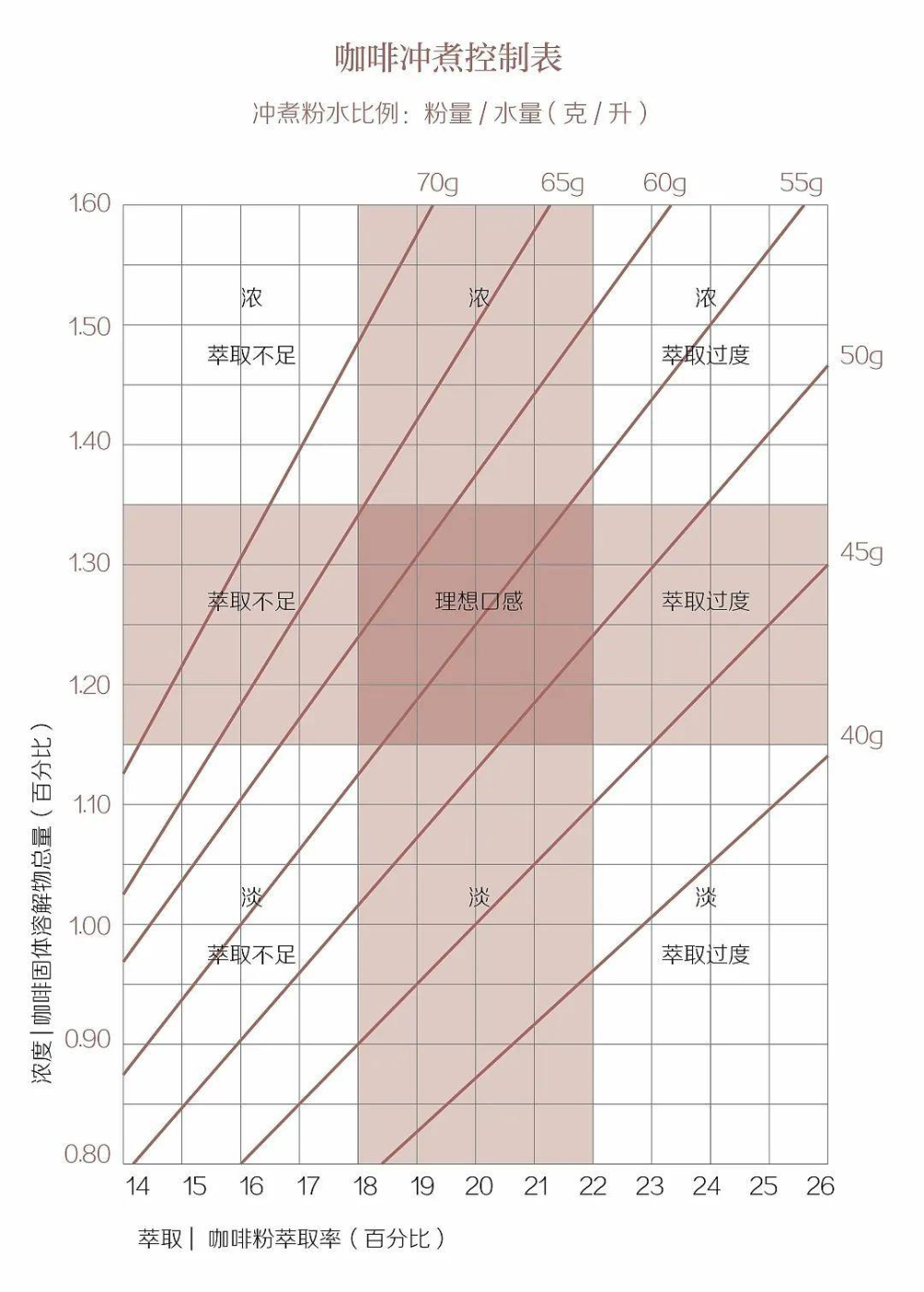
In terms of grind size, Front Street recommends a medium-fine grind (78% passing rate on the Chinese standard No. 20 sieve), with a coarseness similar to fine granulated sugar. If it is ground too coarse, the rich and rounded flavor substances cannot be extracted, and the coffee will seem thin; if the particles are too fine, it is easy to over-extract at high temperature, producing a bitter taste. For the brewing ratio, Front Street believes both 1:15–1:16 are fine. If you want a richer mouthfeel, use 1:15; if you want to feel the floral aroma and sweetness more clearly, use 1:16 to let the flavor open up more.
Front Street will first place the folded filter paper into the dripper to fit snugly, pour 15 grams of ground coffee into the dripper, and zero the electronic scale. For the first stage, Front Street pours 30 grams of water to bloom for 30 seconds, starting the timer at the same time as pouring, using a small stream throughout and circling outward from the center point, taking care to wet the entire coffee bed. After 30 seconds, use a slightly larger steady stream to pour the second stage of 95 grams of water, with the aim of raising the entire coffee bed, pouring the stream vertically and evenly. At this point the timer scale shows 125 grams, and the pour is finished at about 55 seconds.
When the liquid level drops to the halfway point, begin pouring the third stage of 100 grams in a small circle with a fine stream, trying to control the stream so it does not circle too widely, otherwise it is easy to disturb the coffee bed and cause under-extraction. The final total water amount is 225 grams, and the drip completion time is about 2 minutes. After removing the dripper, swirl the coffee liquid in the server to mix it evenly, and you can begin tasting.
The above content is compiled by CoffeeHunters, a coffee news website.


