







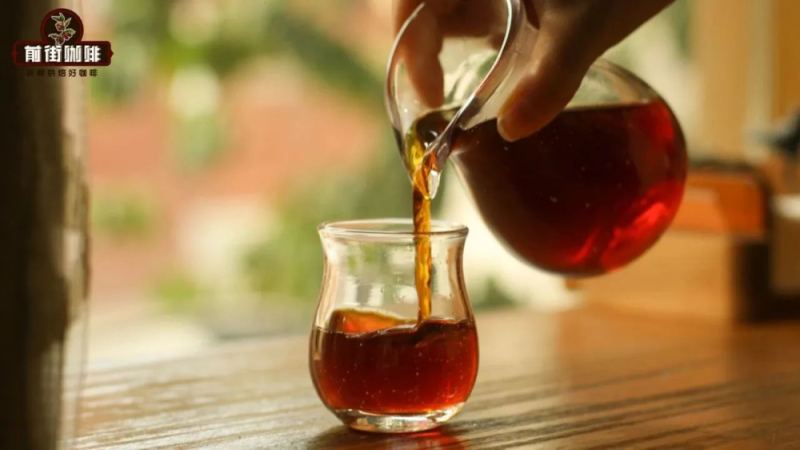
Yirgacheffe is Ethiopia's most iconic specialty coffee region, world-renowned for its white floral aromas and lemony citrus acidity. This article will systematically cover the core knowledge of Yirgacheffe coffee beans—from the region's history, coffee varieties, and the evolution of processing methods to its cooperative system—and share Front Street Coffee's brewing parameters and key flavor tasting points. Whether you're a newcomer to specialty coffee or an enthusiast wanting to understand the origins of Yirgacheffe's flavors, you'll find valuable information in this complete guide.
For more specialty coffee knowledge, please follow our WeChat official account: Front Street Coffee (FrontStreet Coffee)
When you think of Yirgacheffe coffee beans, what comes to mind? Rather than beating around the bush, it's more satisfying to just brew a cup. But then again, if asked about the flavor characteristics of Yirgacheffe coffee, most people would probably blurt out—citrus acidity and floral aromas. This precisely shows that everyone is already quite familiar with this bean; its flavor impression is deeply ingrained.
Yirgacheffe is both a specialty coffee region in Ethiopia and the face of the country's coffee. The washed Yirgacheffe daily drinking bean that Front Street Coffee (FrontStreet Coffee) regularly offers is a very typical example. Coffee produced in each region, micro-region, or even individual farm in Ethiopia has its own distinctive cup profile. For this reason, Front Street has listed over a dozen Ethiopian single-origin coffees, five or six of which are from the Yirgacheffe region—showing just how popular coffees from this area are. Of course, no matter which region it comes from, any Ethiopian Arabica bean is always addictively good.
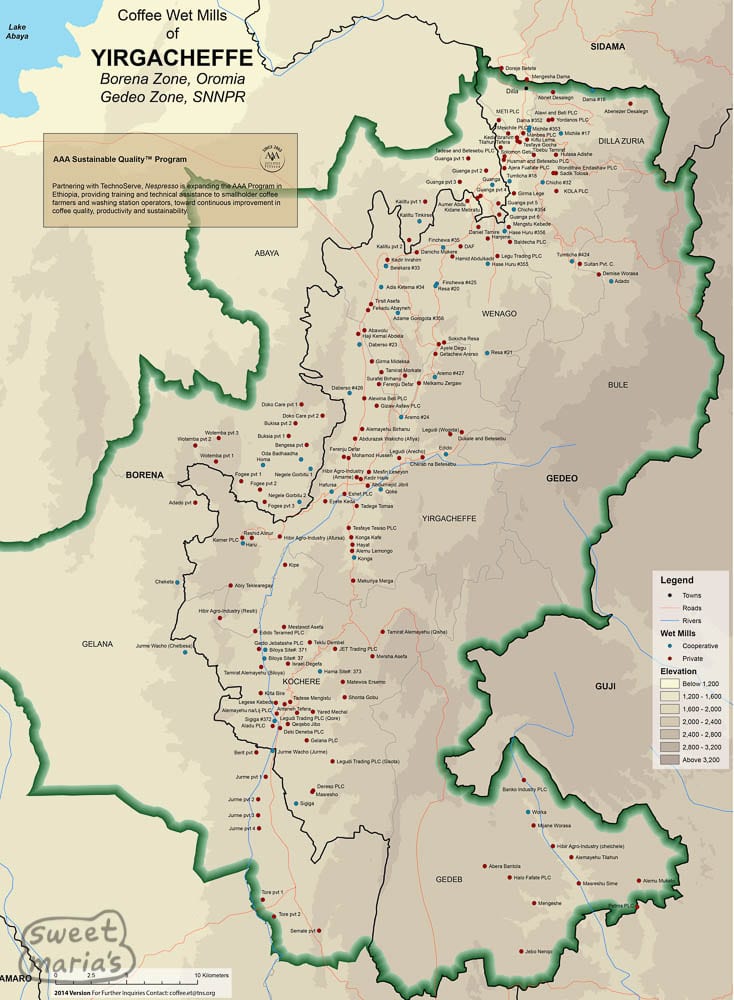
Yirgacheffe was originally a small town in the Sidamo Province of southern Ethiopia, at an altitude of about 1,700 to 2,100 meters, with coffee trees generally planted above 1,800 meters, placing it among the highest coffee-growing regions in the world. The coffee produced here has highly distinctive white floral aromas and lemony citrus acidity, making it synonymous with Ethiopian specialty coffee. Yirgacheffe was originally a wetland; in the local ancient language, "Yirga" means "to settle down," and "Cheffe" means "wetland." In 2010, the Ethiopia Commodity Exchange separated Yirgacheffe from the Sidamo region, and since then the Yirgacheffe region as we know it today came into being.
Because the coffee production methods and flavor profiles here are so outstanding, Ethiopian coffee farmers take pride in their coffee having Yirgacheffe-style flavors. Over time, Yirgacheffe became Africa's most renowned coffee region.
Yirgacheffe Coffee Bean Varieties
Observant readers might ask: Why are Ethiopian coffee beans different in size and shape? And what exactly is "Heirloom" listed in the variety column?
Front Street answers these questions one by one:
Ethiopia is widely recognized as the birthplace of coffee, and its coffee gene pool is extremely rich. It is estimated that there are over ten thousand native varieties, most of which have not undergone formal genetic identification. With such a vast and complex array of varieties, identification is naturally quite difficult. On the other hand, the Ethiopian government, out of protection for species genetic information, uniformly refers to them as "Heirloom."
The original term for "Heirloom" is HEIRLOOM, which in English means "something precious passed down through generations." In the coffee world, this term is used to refer to ancient varieties of Arabica coffee. In Chinese, it is translated as "Heirloom," and today it specifically refers to Ethiopian coffee varieties. Therefore, many Ethiopian coffee beans are labeled as Heirloom.
Yirgacheffe Coffee Processing Methods
Have you ever been misled by washed Yirgacheffe into thinking that all coffee from the Yirgacheffe region is washed? In fact, Yirgacheffe originally used the oldest method—natural processing. In 1972, Ethiopia introduced washed processing technology from Central and South America to improve quality, making Yirgacheffe's jasmine and citrus notes clearer and more refined, propelling it into the ranks of the world's specialty coffees—the exquisite washing process played an indispensable role. After the 1970s, the region primarily used washed processing, such as washed Yirgacheffe coffee. However, in the past two years, Yirgacheffe has broken from convention, frequently releasing stunning natural-process beans!
Natural Yirgacheffe has strict standards for red cherry harvesting: before sun-drying, unripe green cherries and defective cherries are manually removed; during the drying process, damaged or moldy cherries are picked out again. After two weeks, the sugar and essence of the fruit have fully penetrated the coffee beans, and the moisture content drops to 12%. Then the hardened fruit pulp, pectin layer, and pods are scraped clean by a hulling machine. After the beans are extracted, they still undergo density and bean color testing. After eliminating defective beans, workers finally hand-sort any remaining defects. This multi-layered quality control is what creates the clean and refined character of Yirgacheffe natural beans. For example, Yirgacheffe Red Cherry coffee.
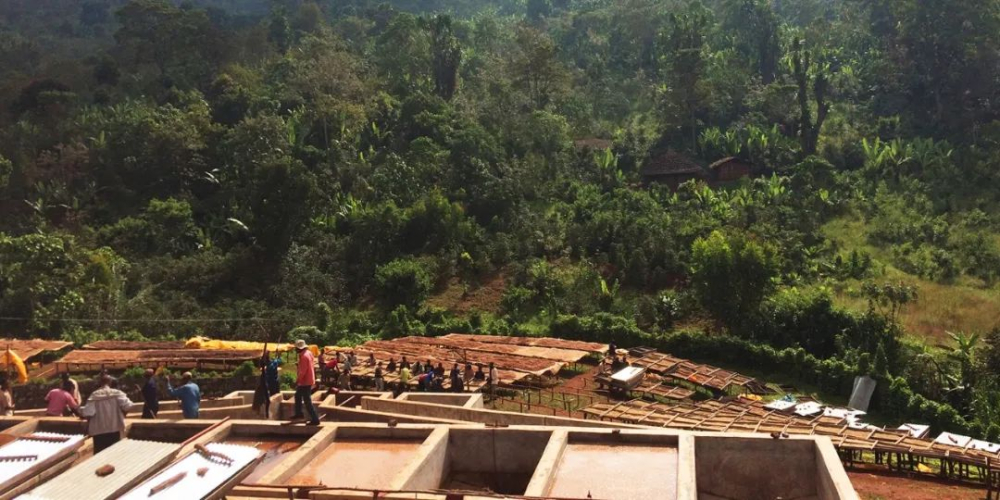
According to information researched by Front Street, the Yirgacheffe Coffee Farmers Cooperative Union (YCFCU) was established in June 2002 and currently has 28 primary cooperative members, 44 coffee processing sites, and a total of 45,094 farmers. Front Street has learned that in the Yirgacheffe area, coffee is both the main source of income and a way of life. But many farmers lack the tools, training, and bargaining power needed to build profitable businesses. As prices decline, making a living from coffee becomes increasingly difficult, and accessing international markets is even more of a challenge for smallholder farmers. YCFCU was founded in the hope that through better organizational structures and establishing new market connections in the specialty coffee sector, it could help farmers sustain their operations and achieve economic autonomy.
As a traditional coffee region, Yirgacheffe farmers deliver their harvested coffee beans to nearby cooperatives for centralized processing, and then trade collectively under the processing plant's name. Therefore, most Yirgacheffe coffee beans we drink are labeled as Ethiopia Yirgacheffe [cooperative name] [processing plant name] coffee beans. Currently well-known cooperatives include Gotiti, Aricha, Worka, Kochere, and others. One washed Yirgacheffe sold by Front Street Coffee (FrontStreet Coffee) comes from the Gotiti Cooperative, and one natural Yirgacheffe comes from the Aletaland Cooperative.
The biggest difference between washed and natural processing is: washed processing first removes the skin and pulp, then ferments the beans in clean water tanks to remove residual mucilage, followed by sun-drying. Therefore, washed beans have a shorter drying time, a cleaner overall flavor, and more pronounced acidity.
Natural processing, on the other hand, retains the skin and pulp, with the whole fruit dried directly in the sun. Under high temperatures, the sugars in the fruit ferment, and the coffee beans absorb these fermented flavors, while some of the fruit sugars also transfer into the beans. Therefore, natural beans have a subtle fermented aroma and more pronounced sweetness.
Front Street Brewing Recommendations:
To enjoy a delicious cup of coffee, Front Street believes that the freshness of the coffee beans is a crucial factor—only fresh beans can allow you to experience coffee's rich flavors to the fullest. The coffee beans shipped by Front Street Coffee (FrontStreet Coffee) are all within 5 days of the roast date, because Front Street deeply understands how much freshness affects flavor. Front Street's roasting philosophy is "Freshly Roasted Good Coffee," ensuring that every customer who places an order receives coffee in its freshest state. Coffee's resting period is about 4 to 7 days, so when customers receive it, it's at its optimal flavor.
Of course, some customers need Front Street to grind the coffee for them, which is no problem, but Front Street must remind you: once coffee beans are pre-ground, there's no need for further resting, because the pressure from carbon dioxide inside the packaging during transport also rounds out the coffee's flavor, so you can brew a cup immediately upon receiving ground coffee. However, ground coffee should be brewed as soon as possible, because after contact with air it oxidizes quickly and flavors dissipate fast, making the taste less enjoyable. Therefore, Front Street recommends buying whole beans and grinding fresh for each brew, so you can better savor the coffee's flavors.
Front Street's brewing parameters for Yirgacheffe coffee:
V60 dripper, water temperature 90°C, water-to-coffee ratio 1:15, coffee dose 15g, grind size (80% passing through China standard No. 20 sieve)
Use a multi-pour extraction: first bloom with 2 times the coffee dose in water, i.e., 30g of water for 30 seconds. The purpose of blooming is to let the coffee grounds release internal carbon dioxide, making the subsequent extraction more stable. Pour in a slow circular motion until reaching 125g, then pause; continue pouring until 225g and stop. Once the water has dripped through the dripper, remove it. Time from the start of pouring; the extraction time is 2 minutes 00 seconds. Finally, swirl the entire cup of coffee to mix, then pour into a cup to taste.
[Washed Yirgacheffe Coffee Flavor] Brighter and more lively acidity, citric acid, citrus notes, a light and refreshing mouthfeel, with a black tea finish in the aftertaste.
[Natural Red Cherry Coffee Flavor] Berry, lemon, strawberry, fermented wine aroma.
Ethiopia is like a treasure trove, waiting to be discovered and explored, with coffee beans from different regions having distinct flavors. Front Street has listed over a dozen Ethiopian single-origin coffees alone—come experience them at Front Street Coffee (FrontStreet Coffee)!
For professional coffee knowledge exchange and more coffee bean information, please follow Coffee Workshop (WeChat official account: cafe_style)
For more specialty coffee beans, please add private WeChat Front Street Coffee (FrontStreet Coffee), WeChat ID: qjcoffeex
The above content is compiled by CoffeeHunters, a coffee news website.


