







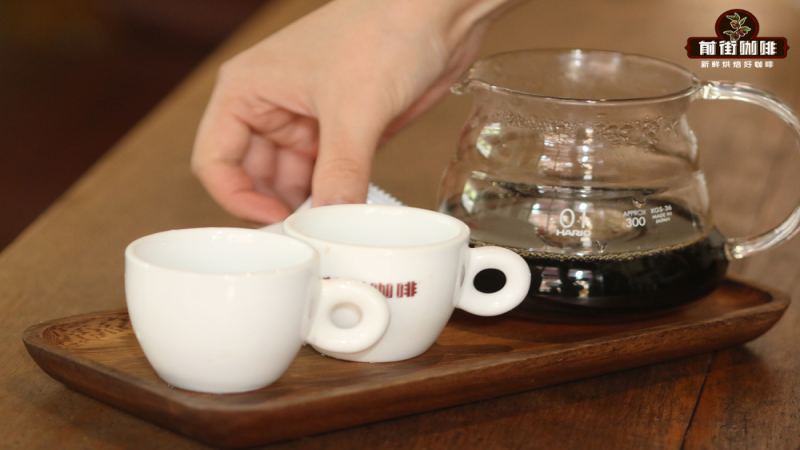
Mandheling is a classic coffee from Sumatra, Indonesia, and Golden Mandheling is the most outstanding among them. It is known for its rich aroma, solid and mellow mouthfeel, moderate acidity and bitterness, and caramel-like sweetness, and is favored by many black coffee lovers. This article starts with the producing regions, types, and classification methods of Mandheling, focusing on the origin of Golden Mandheling, Pawani company's strict screening standards, and how to identify true and false Golden Mandheling. The article also reviews the varieties and wet-hulling process of the Aceh Gayo Mountain producing region, and includes the specific parameters and operating steps for Front Street's use of the KONO dripper to brew Golden Mandheling.
At Front Street, many regulars choose to order a cup of regular Mandheling coffee and slowly savor it in the afternoon sun. Mandheling is a classic type of black coffee, with a full and solid layering on the palate and a pleasant caramel aroma. Its scent is mellow, its acidity and bitterness are not prominent, but its sweetness is rich, making it very easy to drink. It is suitable for deep roasting, which can release an even stronger aroma.
Mandheling coffee is produced in Sumatra, Indonesia, in Asia, so it is also called "Sumatra coffee." Its flavor performance is quite intense, combining aroma, bitterness, and body, with a hint of sweetness. Most coffee lovers drink it as a single-origin coffee, and it is also an indispensable type of bean when making blends.
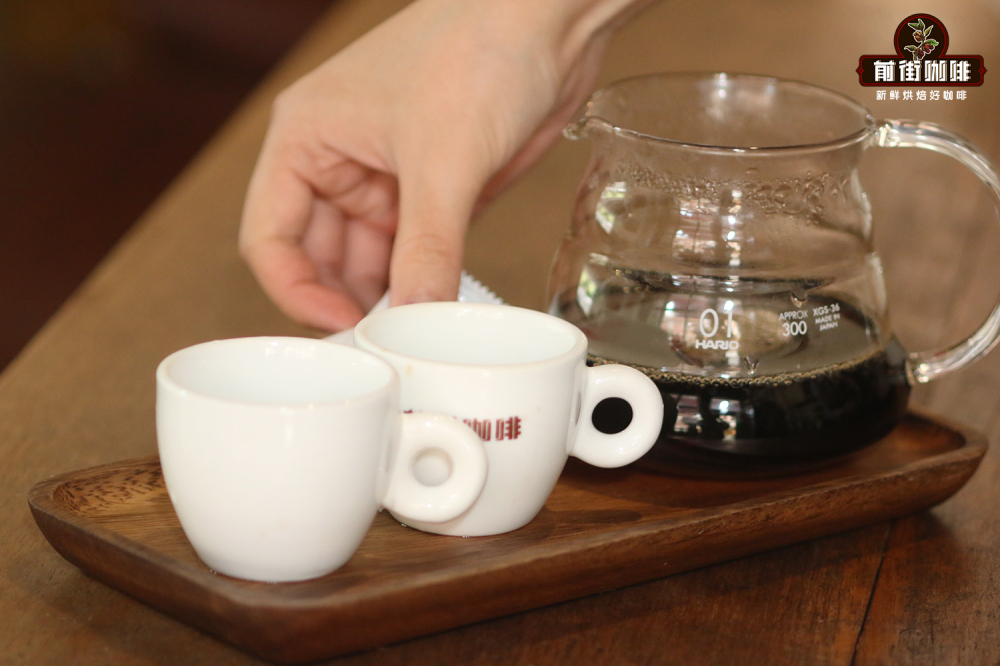
There are quite many types of Mandheling, and the ways of classifying them also differ. On Front Street's bean list, Lintong Mandheling, Aged Mandheling, Golden Mandheling, Tiger Mandheling, Sun-dried Mandheling, and Dragon Fruit Mandheling have appeared. Broadly speaking, Arabica coffee produced in North Sumatra can all be included in the category of Mandheling.
Golden Mandheling is precisely the outstanding leader in this category. It was launched by the Indonesian green bean company Pawani and is a selected top-grade coffee. It should be emphasized that Golden Mandheling is also a trademark, built as Indonesia's top coffee brand. For this reason, Pawani also searches across the island of Sumatra and purchases outstanding-quality coffee beans.
The characteristic of Golden Mandheling coffee beans lies in extremely high screening standards, so its selling point is excellent quality. Pawani's owner travels year-round to various producing regions in Indonesia, selecting high-quality coffee beans of the year and intervening in managing the coffee bean processing stages. Especially critical is the screening stage, which uses one machine screening plus three manual selections, striving to reduce the defect ratio of Golden Mandheling to the minimum while keeping the beans large and plump. Therefore, Golden Mandheling is also priced higher than other Mandheling beans. At FrontStreet Coffee, its price is 89 yuan/227 grams (roasted beans).
Precisely because the price is higher, some merchants pass off Mandheling G1 as Golden Mandheling coffee beans to earn more profit. In response, Front Street offers a way to identify Golden Mandheling: only that produced by Pawani can be called Golden Mandheling; anything not from Pawani is counterfeit Golden Mandheling. Pawani's Golden Mandheling coffee beans use 30 kg sacks, different from the common 60 kg for regular Mandheling. In addition, each sack of Golden Mandheling includes a certificate of authentication.
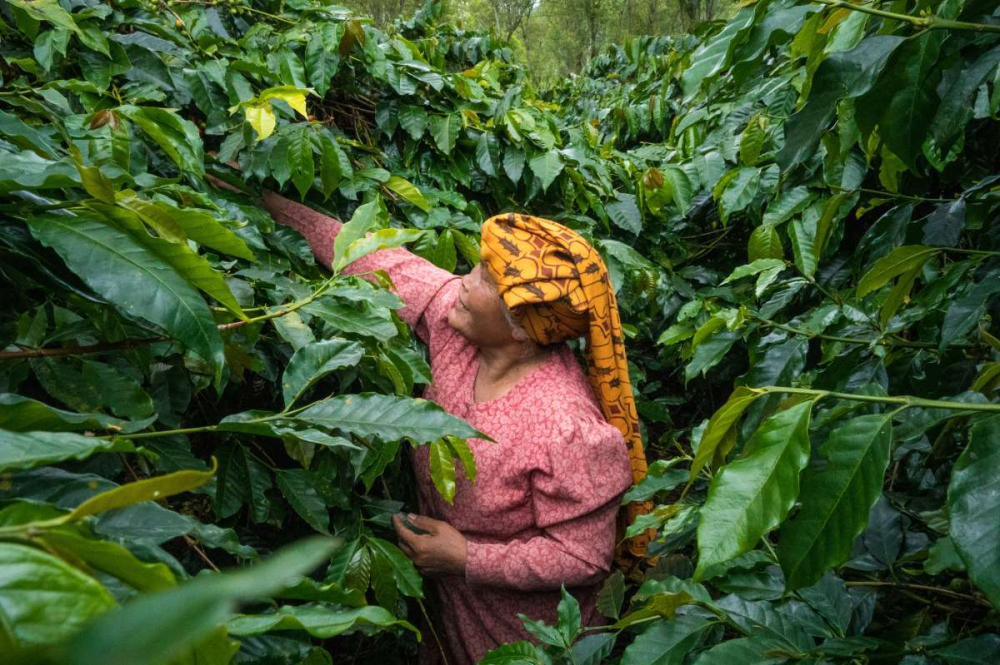
At present, the producing region selected for Golden Mandheling is Gayo Mountain in Aceh, northern Sumatra. Aceh Gayo is located in a corner at the northernmost tip of Sumatra Island. Coffee cultivation in Gayo is mainly concentrated in the town of Takegon and the hillside areas around Lake Tawar. The average altitude of the production area is between 1,100 and 1,600 meters. Local coffee quality has always performed excellently, but earlier, due to political instability, coffee from this area was difficult to export. In recent years, as the situation has become more peaceful, coffee cultivation in Aceh has gradually developed, and its quality is already superior to that of the Lintong area.
The coffee variety used for the new-season Golden Mandheling is "Ateng." This name may sound unfamiliar. In fact, local naming of coffee varieties in Indonesia is not uniform; for example, what Indonesia calls Tim Tim is what we commonly call Timor. Ateng is the localized Indonesian name for Catimor. The Ateng variety is very suitable for cultivation in the Aceh region and is also conducive to the formation and development of flavor.
The wet-hulling process can be said to be a unique coffee processing method formed in Indonesia according to local conditions. One reason Golden Mandheling's quality is assured is that after processing is completed, three manual selections are still carried out to reduce green bean defects as much as possible and to make the beans plump and uniform in size.
The focus of Front Street's brewing this time is to present Golden Mandheling's mellow, clean, and aromatic characteristics, using the KONO dripper for brewing (the original design intent of this dripper was to imitate flannel and brew a richer coffee). For medium-dark roasted coffee, choose a medium-coarse grind (70% passing a No. 20 standard sieve). Use a coffee-to-water ratio of 1:15, with 15 grams of coffee powder. Lowering the coffee-to-water ratio can make the mouthfeel richer. Use a water temperature of 87°C.
Brewing process: slowly pour in the coffee powder. During pouring, try to keep the coffee bed level, and do not shake the dripper (because shaking will reduce the spacing between coffee particles, which is not conducive to degassing during blooming). In the first stage, pour 30 g of water in a small circle in the center and bloom for 30 seconds. The coffee bed will slowly expand and puff up, forming a "hamburger."
In the second stage, pour 95 g of water in circles from the center outward. Keep the pouring height as close to the coffee bed as possible, and move slowly to avoid excessive agitation. In the final stage, pour 100 g, and end extraction after all the coffee liquid in the dripper has flowed into the server. Extraction time is 2 minutes.
For professional coffee knowledge exchange and more coffee bean information, please follow Coffee Workshop (WeChat public account: cafe_style) For more specialty coffee beans, please add the private WeChat of FrontStreet Coffee. WeChat ID: qjcoffeex
The above content is compiled by CoffeeHunters, a coffee news website.


