







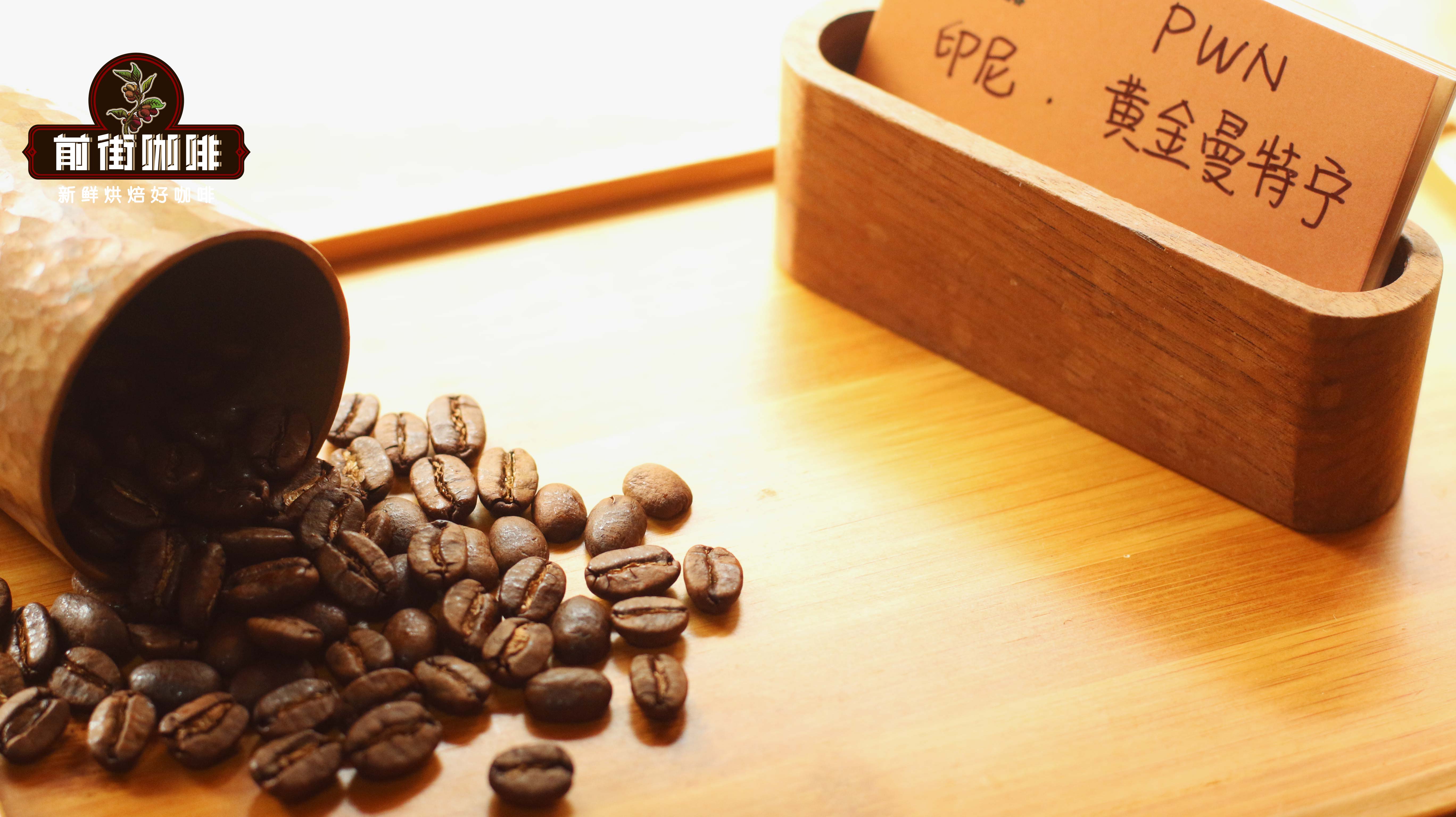
When many people mention Golden Mandheling, the impression that comes to mind is rich, full-bodied, strongly bitter, with only faint fruity acidity. This perception is actually closely tied to the roasting style used by most Golden Mandheling on the market—medium-dark to dark roast has become almost the default option, and Front Street Golden Mandheling is no exception. But if we go back to the green beans themselves, Golden Mandheling is actually a coffee with fairly high acidity, and how that acidity presents depends entirely on the roast level. From the perspective of Front Street Coffee, this article will systematically sort through the flavor formation of Golden Mandheling, PWN's quality control, Front Street's roasting approach, and how to brew it into a rich, smooth cup with a lasting sweet finish using coarse grinding, low water temperature, and an immersion-style dripper.
For more specialty coffee knowledge, please follow the WeChat public account: Front Street Coffee (FrontStreet Coffee)
When you hear Golden Mandheling, is the first thing that comes to mind that rich, full-bodied flavor with strong bitterness and almost imperceptible fruity acidity? This is probably the fixed impression most people have of Golden Mandheling. The formation of this impression is directly related to the fact that most Golden Mandheling on the current market uses medium-dark roasting. The same is true of Front Street Golden Mandheling—during roasting it almost defaults to the dark route. What exactly is the reason behind this?
In fact, as far as the Golden Mandheling green beans themselves are concerned, it is a coffee with fairly high acidity, and the key to how the acidity changes lies in the differences among light, medium, and medium-dark roasting. Simply put, the darker the roast, the lower the acidity and the more prominent the bitterness. If a friend who has long drunk medium-dark roasted Golden Mandheling were to try a cup of medium-light roasted Mandheling, he would most likely say: this is definitely not Golden Mandheling, absolutely impossible.
In the early days when specialty coffee was just emerging, Blue Mountain, Kona, and Golden Mandheling were almost standard items on every cafe menu. Unlike today's trend of pursuing rich floral aromas and fruity acidity, specialty coffee at that time placed more value on a rich, solid mouthfeel.
Many people stay away from dark-roasted coffee, perhaps because seeing beans so black and shiny, with oil on the surface, makes them intuitively think it will taste scorched and bitter. But if the roaster understands the beans well enough, chooses high-quality green beans, and combines a reasonable roasting approach with a proper extraction method, dark-roasted coffee can actually deliver a composed feeling that keeps you drinking cup after cup without ever tiring of it.
Front Street Coffee (FrontStreet Coffee) is very fond of Golden Mandheling coffee. It has a creamy texture, smooth and full-bodied, with the aroma of dark cocoa mixed with herbal notes, adding a layer of embellishment to the pure flavor. After swallowing, the tongue can still feel the sweetness brought by the lingering finish—aromatic, mellow, and enticing.
How do you brew dark-roasted Golden Mandheling coffee so that it tastes good?
An excellent cup of Golden Mandheling coffee needs to satisfy 5 conditions: sufficiently high-quality green beans, just-right roasting heat, fresh roasting, fresh grinding, and an extraction method using coarse grinding with low water temperature.
Among these, the quality of Golden Mandheling is beyond doubt—it can be said to be the highest-grade and finest-quality Mandheling coffee bean among Indonesia's specialty coffee beans. Golden Mandheling is the gold-medal product of Indonesia's PWN (Pwani) company and has already been trademarked.
What is so special about Golden Mandheling coffee beans?
The variety of the Mandheling coffee bean itself, combined with Indonesia's highly distinctive wet-hulling method (that is, during the ordinary washed process, drying in the sun with parchment still on for 2 to 3 days, and when the moisture content drops to 20% to 24%, hulling off the parchment), this ultra-fast processing and drying method also leads to a relatively high defect rate in Mandheling.
In order to improve the quality of Mandheling coffee beans, PWN purchases coffee cherries from the Gayo region of Sumatra, first screening out ripe cherries of 18 mesh or above, and after completing the drying process, carrying out at least 3 rounds of purely manual sorting to ensure no more than 3 defective beans (based on a 300-gram green bean sample), reaching the highest grade G1. Because the green beans show a golden color, they are named Golden Mandheling.
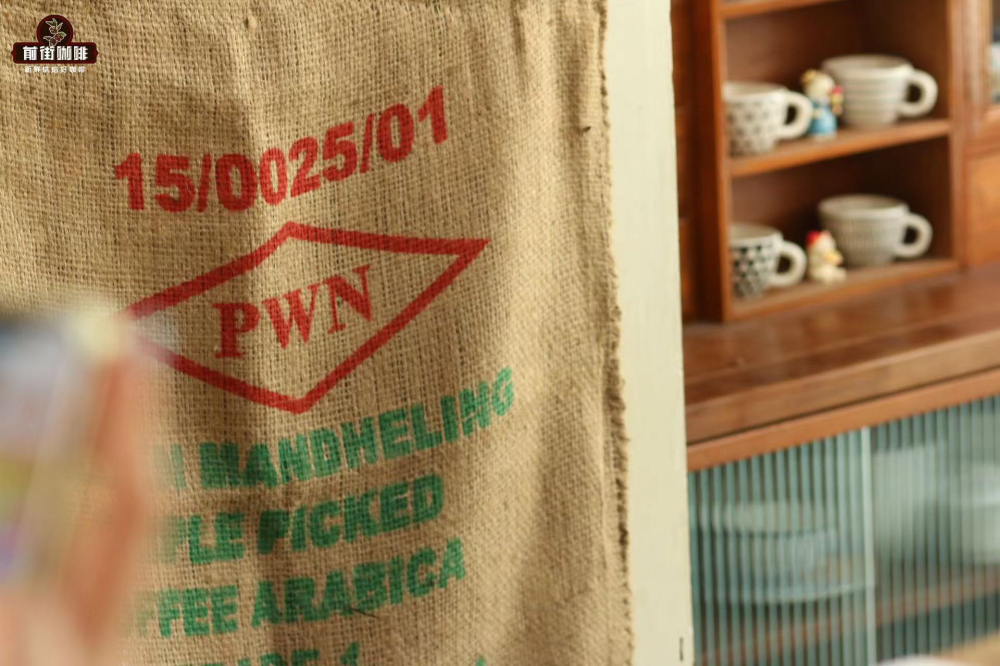
Authentic Golden Mandheling coffee requires looking for the PWN trademark. As Golden Mandheling became widely known for its outstanding quality, many Mandheling coffee beans that have undergone multiple rounds of screening have also appeared on the market, but those can only be considered specialty Mandheling coffee beans. The Golden Mandheling coffee beans sold by Front Street Coffee (FrontStreet Coffee) all come from PWN.
How do you roast Golden Mandheling coffee beans?
With high-quality coffee beans in hand, you need to formulate a roasting plan based on the flavor of the producing region, bean density, and moisture content. Compared with many other specialty coffee producing regions, Sumatra's growing altitude is not high, and it is also difficult to create a large day-night temperature difference to extend the formation time of the coffee beans, so the beans themselves are relatively porous.
If the heat is not controlled properly throughout the roasting process, the coffee beans can easily fail to withstand excessive temperature and scorch before the flavors have fully developed; if one is not skilled at managing the heat, the temperature may rise sharply in the final stage, or the rise may be insufficient; and in the brewing stage, over-extraction must be avoided, otherwise the overall balance will be ruined by bitter compounds.
Front Street Coffee (FrontStreet Coffee)'s approach to roasting Golden Mandheling is as follows: Yangjia 800N, charge weight 480 grams. Raise the drum temperature to 200°C and charge, set the damper to 3, after 1 minute adjust the heat to 160°C, keep the damper unchanged, roast until 5 minutes 40 seconds, temperature 148°C, the bean surface turns yellow, the grassy smell completely disappears, dehydration is complete, adjust the heat to 140°C, change the damper to 4; at 9 minutes 40 seconds, the bean surface shows ugly wrinkles and dark patches, the toast aroma clearly turns into coffee aroma, which can be defined as the prelude to first crack. At this point you need to listen clearly for the sound of the first crack. At 9 minutes 54 seconds first crack begins, reduce the heat to 60°C, set the damper to 5, and drop at 204.5°C.
After cupping, Golden Mandheling discharged before second crack can both express rich, full-bodied flavors such as herbs and cocoa, and also give the coffee a clean mouthfeel and an obvious lingering sweetness.
Brewing suggestions for Golden Mandheling coffee
In terms of brewing, Front Street Coffee (FrontStreet Coffee) recommends using freshly roasted coffee beans, as only then can you experience the coffee's rich flavors to the greatest extent. The coffee beans shipped by Front Street Coffee (FrontStreet Coffee) are all within 5 days of roasting, because Front Street deeply understands the enormous impact of coffee bean freshness on flavor and hopes that every customer who places an order can get the freshest beans when receiving the coffee.
Although Front Street Coffee (FrontStreet Coffee) provides a grinding service, once coffee beans are ground into particles, the flavors dissipate faster. Therefore, everyone is advised to buy a hand grinder and grind into particles just before brewing.
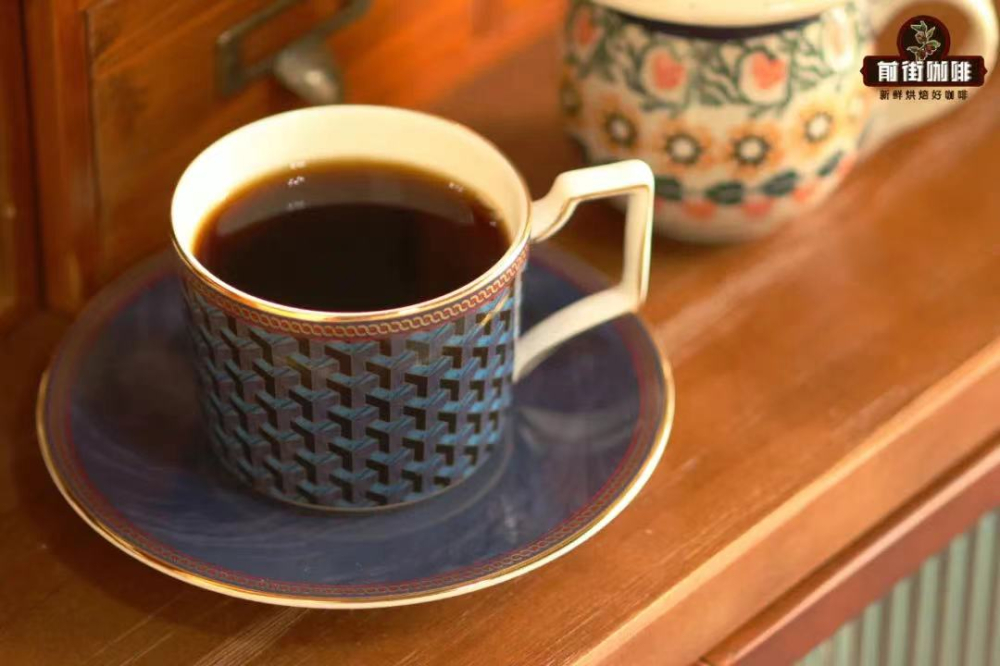
Because the roasting degree of Front Street Coffee (FrontStreet Coffee)'s Mandheling coffee beans is relatively dark, the flavor substances in the coffee are easily released during brewing, so Front Street recommends using a coarser grind and a lower water temperature.
At the same time, in order to obtain a rich mouthfeel, Front Street recommends using a dripper with an immersion function, such as the KONO dripper. Pair it with a medium-coarse grind (the size of coarse granulated sugar, 70% passing through a Chinese No. 20 standard sieve), 88°C water temperature, and a 1:15 coffee-to-water ratio for extraction.
Specific brewing method: first pour 30 grams of water and bloom for 30 seconds; in the second stage, pour in a small stream in circles up to 125 grams, wait until the water level in the coffee bed drops to half before pouring again, continue pouring in a small stream in circles up to 225 grams, and after all dripping is complete, the total extraction time is about 2 minutes 10 seconds.
Front Street Coffee (FrontStreet Coffee) Front Street PWN Golden Mandheling pour-over flavor performance: nuts, spices, herbs, licorice, chocolate, caramel, with a clean and gentle flavor and a strong lingering sweetness.
The above content is compiled by CoffeeHunters, a coffee news website.


