







To craft an ideal espresso, the step of tamping is often overlooked by beginners, yet it directly determines whether the extraction is even. This article, based on hands-on comparisons at Front Street Coffee, first uses two sets of experiments—one with tamping and one without—to visually demonstrate the impact of tamping on flow rate and flavor. It then explains the respective roles of distribution and tamping, with a focus on breaking down the coordination of force, angle, and stance during tamping, and offers two practical solutions to the problem of uneven tamping. At the end, it includes the espresso extraction parameters used at Front Street Coffee's shop, as well as an introduction to the flavor and recipe of Front Street Sunflower Warm Sun Espresso Blend, for coffee enthusiasts to reference and practice.
For more content on specialty coffee, welcome to follow Front Street Coffee (Frontsteet Coffee). The operation of extracting a shot of espresso is not complicated in itself, yet many coffee enthusiasts follow established parameters and still end up with unsatisfactory results. Where does the problem lie? After analysis, Front Street Coffee (FrontStreet Coffee) believes the crux is likely that the tamping step was not done properly. This action may seem trivial, but it directly determines whether the coffee grounds can be evenly extracted. In the following article, Front Street Coffee (FrontStreet Coffee) will discuss how much force is needed for tamping when making espresso, and how to tamp the coffee bed flat. What is the purpose of tamping? When making espresso, everyone usually knows to first grind the coffee beans into a very fine powder, then distribute the grounds, and then proceed to extraction. After distribution is complete, the next step is to tamp the bed flat. So what exactly is tamping for? What specific operation does it refer to? Why is it always uneven when you do it yourself? Below, Front Street Coffee (FrontStreet Coffee) will provide answers one by one through actual tests.
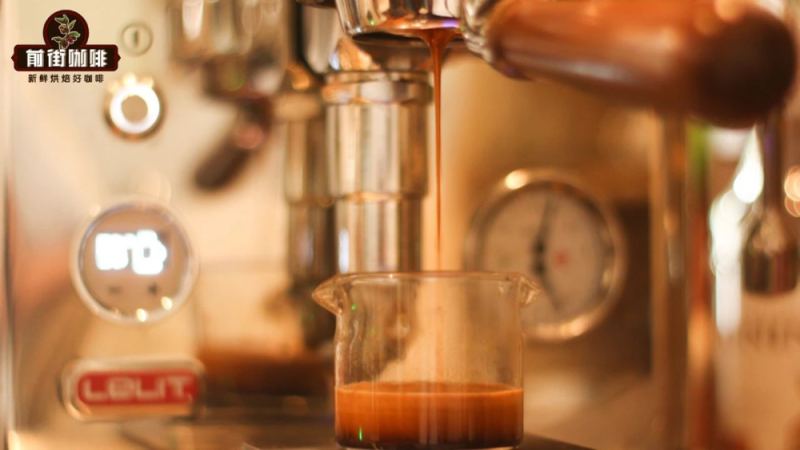
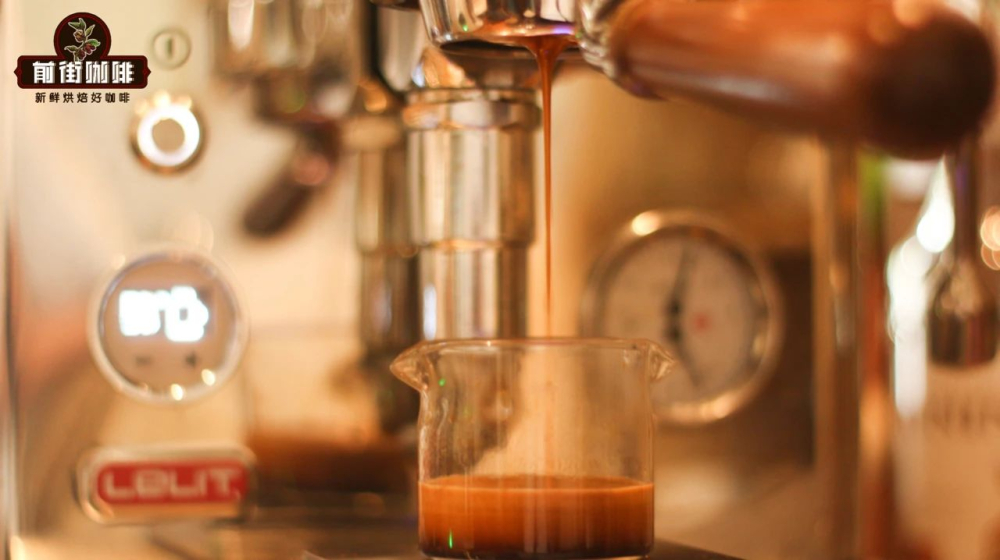
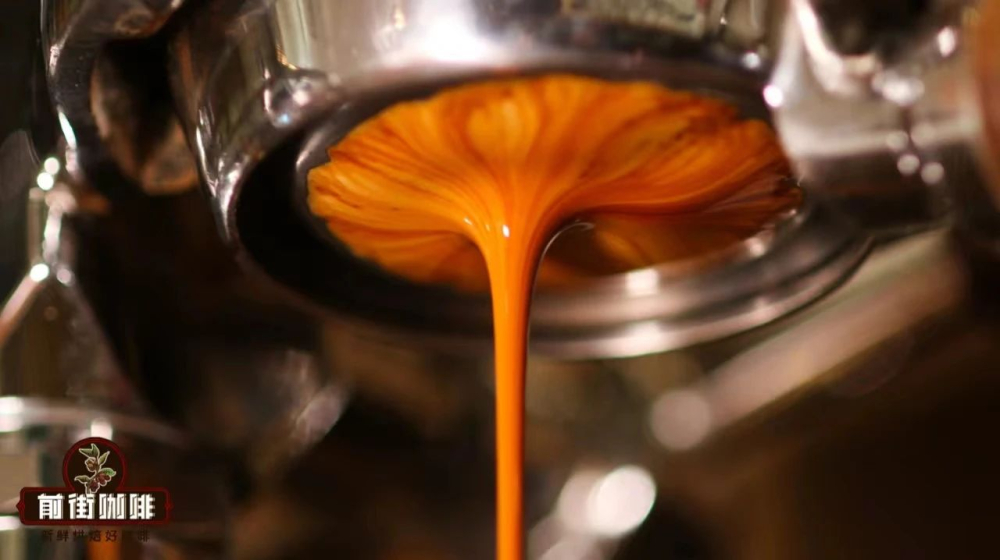
Front Street Coffee (FrontStreet Coffee) first extracted two groups of espresso for comparison, with the only variable being whether tamping was performed: one group with normal tamping as the reference group, and the other with no tamping at all as the experimental group, with all other conditions identical. Coffee dose 20 grams, target yield 40 grams of espresso. The normally tamped group extracted smoothly, with a steady flow rate, finishing in 27 seconds. The untamped group, however, immediately sprayed espresso right at the start of extraction, with an overall faster flow rate, a watery liquid, and a flow that alternated between fast and slow. The total extraction time was 8 seconds less than the reference group, and the taste was noticeably watery and bland.
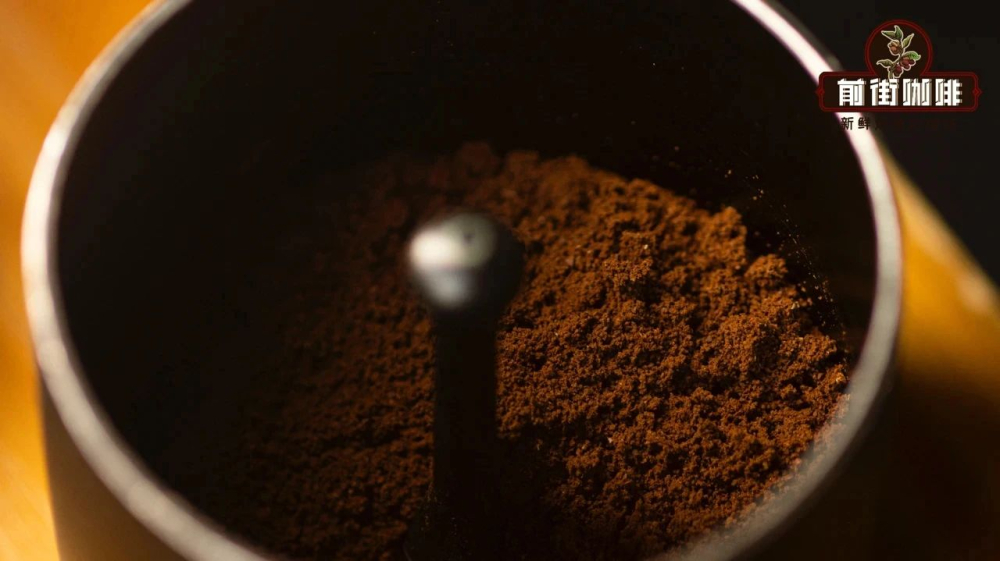
This comparison shows that only by tamping the coffee grounds firmly and flat can the espresso machine fully extract. Conversely, the extraction speed will increase, the coffee grounds will not be fully extracted, and the flavor of the espresso will naturally suffer. Therefore, Front Street Coffee (FrontStreet Coffee) recommends that the first step in making espresso is to grind the coffee beans and evenly load the coffee grounds into the portafilter basket. The role of distribution is to spread the loose coffee grounds evenly in the basket. At this point, the coffee grounds are still in a loose state, with gaps of varying sizes between particles. If you skip tamping and extract directly, under the machine's 9 bar of high pressure, water will quickly pass through the coffee bed; because the bed is loose, the coffee grounds will be scattered by the water flow, and the water will automatically seek paths of least resistance. These areas become over-extracted, which is what is commonly known as channeling.
The purpose of tamping is precisely to compress the coffee grounds, reducing the gaps between particles so that sufficient resistance is created during extraction to counter the water flow, allowing water to pass evenly through the coffee grounds. So, how much force is correct for tamping when making espresso? Enthusiasts who have just started paying attention to tamping often use brute force, thinking the harder they press, the more compact it will be. In reality, as long as you master the method and angle, using smart force can tamp the bed flat and firm. Next, Front Street Coffee (FrontStreet Coffee) will explain the specific tamping operation. When tamping, the baristas at Front Street Coffee (FrontStreet Coffee) first place the basket flat, grip the end of the tamper handle with the palm, with the web of the hand facing down, and use the thumb and index finger to hold the tamper's base. During tamping, the elbow, forearm, tamper, and basket are kept in a straight line perpendicular to the horizontal plane, applying force vertically downward to compress the coffee grounds in one go.
The key here is: during tamping, the portafilter must remain level, and the tamper must apply force vertically downward. On many machines on the market, the basket and handle are not in a horizontal position, so you need to find a suitable angle to ensure a perfectly vertical downward force during tamping. If the tamping direction is skewed, the coffee puck will be higher on one side and lower on the other. The higher part is less dense, while the lower part is denser, which likewise leads to uneven water extraction.
To address the problem of easily tamping unevenly, Front Street Coffee (FrontStreet Coffee) recommends two solutions: first, use three fingers to hold the tamper, as three fingers make it easier to sense the overall downward direction and reduce mistakes; second, switch to a tamper with a calibrated downward depth, using the tool as an aid, which can basically solve the problem of directional deviation.
The above is Front Street Coffee's (FrontStreet Coffee) summary and answer regarding how much force to use when tamping for espresso, hoping to help enthusiasts who are struggling to make a delicious shot of espresso. Next, Front Street Coffee (FrontStreet Coffee) will share a set of reference parameters for extracting espresso at its shop. Front Street Coffee (FrontStreet Coffee) espresso extraction parameters shared: The espresso machine brand and model used at Front Street is the Faema E98 espresso machine.
Pressure: 9 bar Temperature: 90.5–96°C Time: 20–30 sec Coffee-to-water ratio: 1:1.7–1:2 Dose: 10g (single espresso) 20g (double espresso) Extraction yield: 20ml (single) 40ml (double)
To make a delicious espresso, the espresso beans chosen must also be outstanding enough to allow the extracted espresso to have excellent flavor. The shop of Front Street Coffee (FrontStreet Coffee) currently uses its own blended coffee beans—Front Street Sunflower Warm Sun Espresso Blend. This blend is Front Street's proudest work to date, composed of Front Street Honduras Sherry coffee and Front Street Yirgacheffe Natural Red Cherry coffee. Its flavor characteristics are as follows: Front Street Sunflower Warm Sun Espresso Blend
Flavor: Noticeable fruit acidity, a faint berry aroma, winey notes, rich chocolate flavor, with a clear sweet aftertaste. Recipe: Front Street Honduras Sherry : Front Street Ethiopia Yirga Red Cherry This blend is made by combining Front Street Yirgacheffe Natural Red Cherry and Front Street Honduras Sherry. Front Street's design concept for Front Street Sunflower Warm Sun Espresso Blend is that it suits both espresso and pour-over. When used to make espresso, it releases a flavor with distinct fermented winey notes; on the palate, the acidity of citrus and berries immediately emerges, accompanied by the aroma of whiskey, with a finish of dark chocolate. The above are the espresso blend beans and extraction parameters used by Front Street Coffee (FrontStreet Coffee) when making espresso, and we hope they are helpful to everyone.
The above content is compiled by CoffeeHunters, a coffee news website.


