







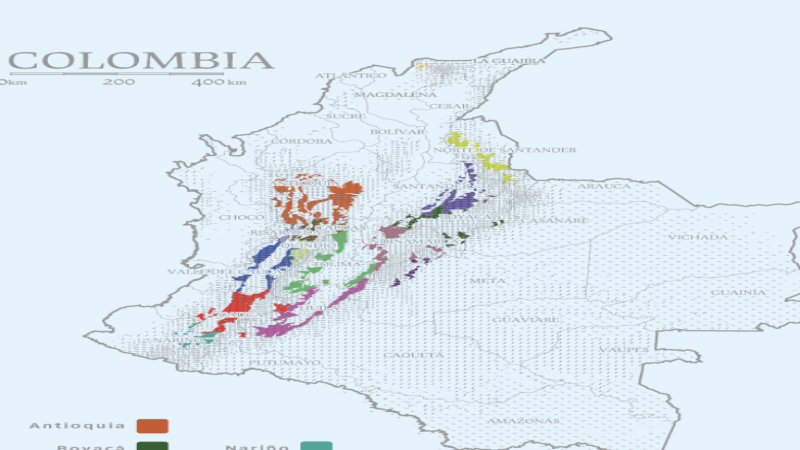
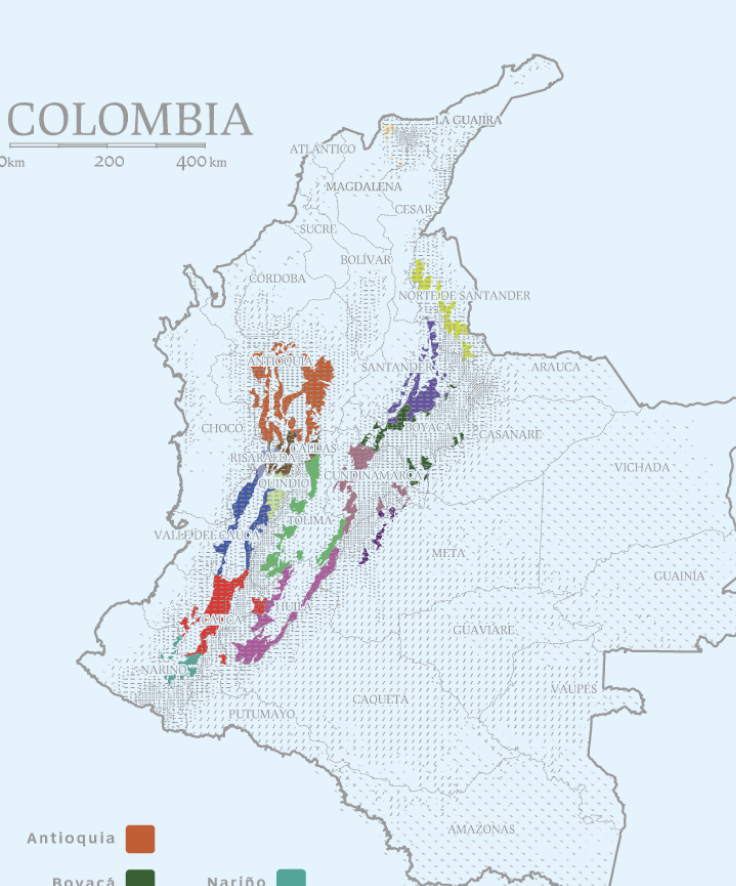
Colombia lies between 3 and 8 degrees north latitude, where volcanic ash soil and high altitudes of 1,200 to 2,050 meters provide superior growing conditions for Arabica coffee. But not all coffee in the country qualifies as specialty—the southern regions are known for refined acidity and berry-like sweetness, while commercial beans from the central and northern areas have pronounced fruity acidity but somewhat weaker complexity. Colombia also classifies beans by screen size into Supremo, Excelso, and Extra, and further divides them by defect rate into AA, A, and Special Grade. Front Street Coffee currently offers four Colombian beans, all from southern regions and all Supremo grade, covering washed, anaerobic natural, and double anaerobic washed processing methods, each with distinctive flavors.
Professional coffee knowledge exchange For more coffee bean information, please follow Coffee Workshop (WeChat public account cafe_style)
For more specialty coffee beans, please add private WeChat Front Street Coffee (FrontStreet Coffee), WeChat ID: qjcoffeex
Colombia's coffee-growing regions are distributed between 3 and 8 degrees north latitude, where several active volcanoes are located. Volcanic ash from eruptions over many years has laid a mineral-rich covering over the land, gradually developing into fertile volcanic soil. The coffee belt is generally located at altitudes of 1,200 to 2,050 meters, and these natural conditions are extremely ideal for Arabica coffee trees.
Although Colombia as a whole has superior terroir and lies within the golden latitude band suitable for coffee cultivation, this does not mean that every batch of coffee beans produced in the country can meet specialty coffee standards.
Colombia's specialty coffee beans mainly come from the southern regions, where cultivation altitudes are mostly above 1,500 meters, covering Huila, Cauca, Nariño, and Tolima. After comparative cupping, Front Street Coffee (FrontStreet Coffee) noted that coffees from these regions generally have delicate acidity, berry-like sweet-tartness, and a caramel-like finish, with outstanding overall sweetness.
By contrast, commercial-grade coffee beans are concentrated in the central and northern zones, involving Medellín, Armenia, and Manizales, which are often collectively called the three major MAM regions. In comparative cuppings, Front Street Coffee (FrontStreet Coffee) found that coffees from these areas have more obvious fruity acidity, but their complexity is less elegant than that of the southern regions, and their body is also lower.
Colombian coffee growers place considerable importance on bean size, so Colombian coffee beans are graded according to size. Screen size is the unit used to measure coffee bean size, with one screen equal to 1/64 inch, or about 0.48 centimeters. In this grading system, Supremo represents the largest and best grade, followed by Excelso, with Extra last.
(Excelso is actually a commercial bean formed by merchants mixing the Supremo and Extra grades for cost considerations.)
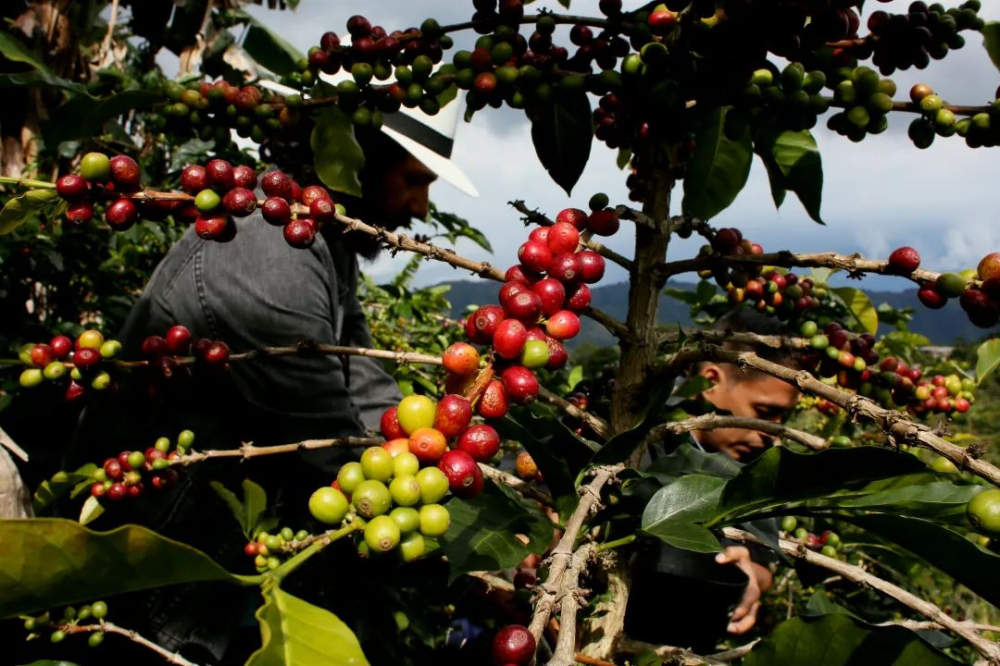
After coffee beans reach Supremo grade, in order to further improve quality and seek a better purchase price, some green beans are further subdivided according to defect rate. Specifically, the number of defects in each 500-gram sample is counted, and then they are divided in turn into Grade AA, Grade A, and Special Grade.
Front Street Coffee (FrontStreet Coffee) currently offers four Colombian coffee beans, all from southern regions. Three come from Huila, and one comes from Cauca, all Supremo grade. Uniform bean size helps ensure even heating during roasting, which in turn makes the final cup cleaner and more balanced.
The first is a Caturra from Huila grown at 1,500 to 1,800 meters, using the washed processing method. The washed process gives this Huila coffee a cleaner texture and also most directly presents the pure flavor of the coffee bean itself. It shows the soft acidity characteristic of Huila, with notes of nuts, dark chocolate, and caramel.
The second comes from Finca Monteblanco in Huila, grown at 1,900 meters, a blend of Caturra, Catuai, and Geisha, named "Hanami Coffee Bean," also washed. Its flavor presents a fascinating chamomile note, lively spice from pink pepper, mandarin-like sweet acidity, honey-like sweetness, and an almond-like finish.
The third is a Caturra grown at 1,800 meters in Huila, processed as anaerobic natural, namely "Hanayome Coffee Bean." The anaerobic natural steps enhance the coffee's fermented aroma, giving this bean a fermented scent reminiscent of strawberry wine or jam, with a caramel-chocolate-like finish.
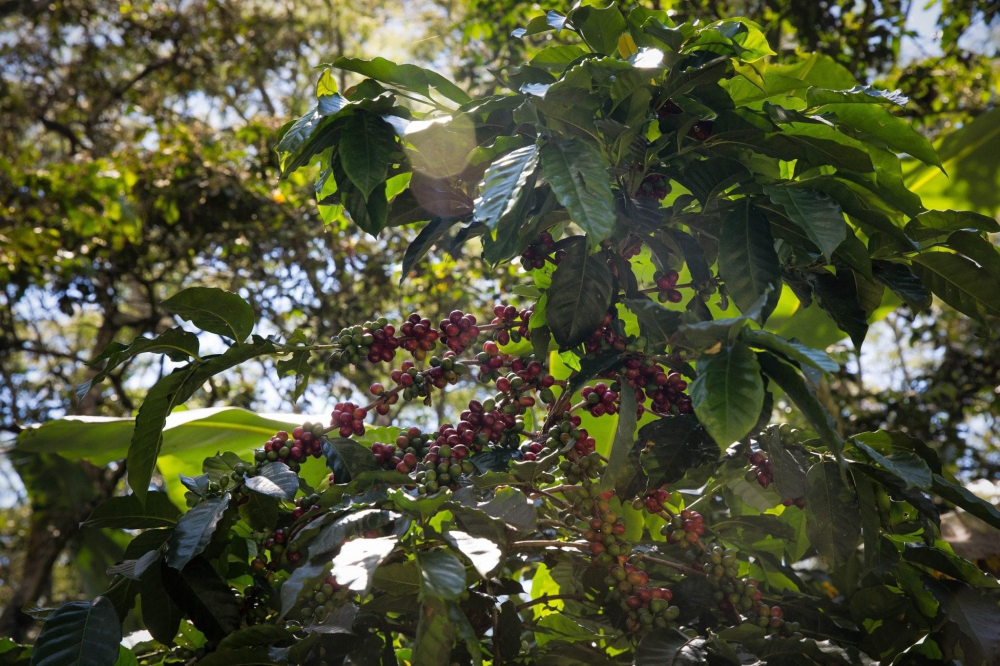
The fourth comes from Finca Paraiso in Cauca, grown at 2,050 meters, variety Castillo, processed with double anaerobic washed, named "Sakura Coffee Bean." Its flavor profile shows mugwort, berries, fermented notes, spices, and strawberry jam.
All coffee beans ordered from the Front Street flagship store will be shipped within 5 days after roasting is completed, ensuring the coffee beans are in a 100% freshly roasted state, which is also an important reason why the coffee can repeatedly present rich complexity and a full body.
The above content is compiled by CoffeeHunters, a coffee news website.


