







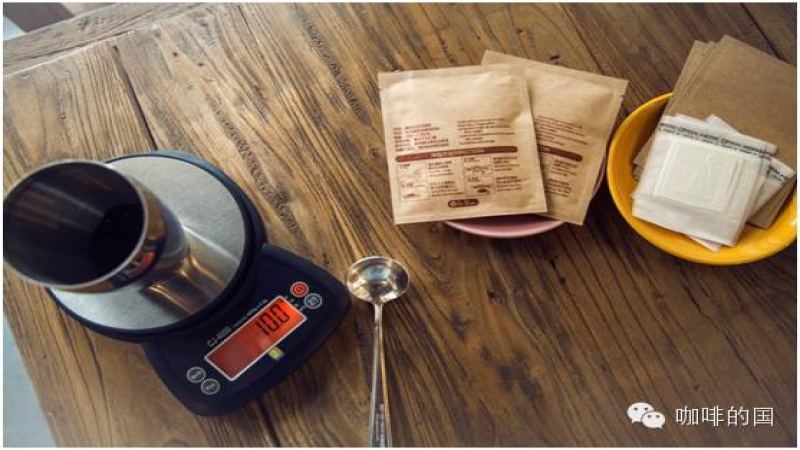
Instant coffee powder and single-origin specialty drip bags are both convenient coffee options, but their flavor performance differs significantly. This article starts from the processing techniques to analyze the root causes of aroma loss in instant coffee, then around the two dimensions of portability and taste, explains in detail the requirements of drip bags for water flow control and water temperature maintenance, as well as the key role of the pour-over kettle in extraction. The article also compares the similarities and differences between drip bags and French press extraction, provides recommendations on brewing portions and flavor pairings, and recommends urban pour-over cafes such as Front Street Coffee, helping coffee enthusiasts find a balance between busy life and specialty coffee.
Coffee Aroma Intro: "Drip bags"—this magical and convenient little packet, surely no one is unfamiliar with it, right? Whether traveling, working daily, or relaxing at home, it is a favorite that coffee lovers can use at any time.
Let's first talk about instant coffee. Its production process is: grind the roasted coffee beans, dissolve the effective components into water under specific temperature and pressure conditions, then vacuum concentrate in preparation for drying. The drying stage is the key step in shaping instant coffee powder, and it is also the stage that has the greatest impact on the quality of the finished product. Currently, the mainstream method is spray drying, but the aromatic substances in coffee are inherently afraid of heat and are very easily lost during high-temperature drying—in fact, a portion has already been lost during the extraction and concentration stages—this is the fundamental reason why instant coffee tastes far less aromatic than freshly ground coffee.
I once read in a foreign article that the chemical composition of instant coffee can no longer really be considered true coffee. It is a product of industrial synthesis. It is a good alternative in special scenarios such as long-distance trains and airplanes, but it has departed from the original meaning of coffee. Traditional coffee involves great attention to every step, from grinding, brewing, and filtering to choosing equipment and blending methods; while instant coffee, during its synthetic process, has its original nutritional and health components almost completely destroyed. Although it tastes like coffee, it has lost both its rich nutritional value and health benefits, as well as its profound cultural style and atmosphere.
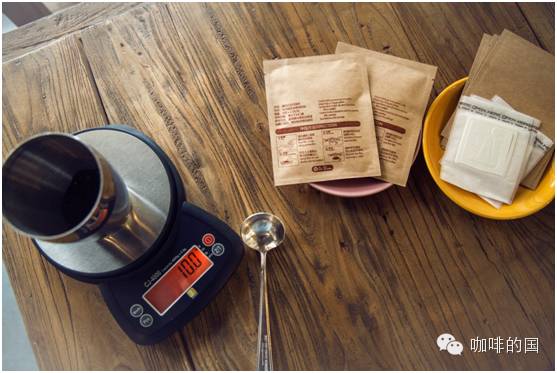
Is drip bag coffee actually good? Let's discuss it from two aspects.
1. Convenience of use and portability
Many friends who do not understand it may feel that a pour-over kettle is completely unnecessary. This is probably because instant coffee has left such a deep impression—just pour boiling water high over the coffee powder and it's done—which is what caused the misunderstanding.
So how much impact does a pour-over kettle actually have on a cup of coffee? It can be big or small. For example, some kettles used on induction cookers now have no perforated mesh at the spout outlet; although the spout is somewhat slender, control of the water flow is still passable. But many ordinary kettles simply do not have the two conditions of a fine spout and steady flow, and can hardly achieve it. That being the case, let's answer this: what exactly does a pour-over kettle do?
First, I think it is to control the flow rate and speed of the water. Pour-over brewing requires about 20 seconds of blooming to awaken the flavor of a coffee, allowing the coffee grounds to absorb water and expand into a hamburger shape, achieving the blooming effect. Then comes the extraction stage. If the water flow directly hits the filter paper, this portion of water will fall into the server without extraction, equivalent to adding water to the coffee and diluting it, which will severely weaken the body of a cup of coffee. More importantly, extraction requires time, and controlling the flow rate is controlling time. Therefore, without controllable and stable water flow, there is no extraction; without extraction, there is no cup of coffee.
The second is heat preservation. Usually, the pour-over time for 15 grams of beans is between one and a half to two minutes, and pour-over has relatively high requirements for water temperature. If you set it at 88 degrees, but as you pour, the water temperature drops rapidly to 80 degrees in one minute, then the final result of this coffee will be greatly changed. This is like the Yinli kettle, which costs thirty or forty yuan, has a nice shape, a slender spout, and strong controllability, but the water temperature is lost quite quickly; while the body materials of most Japanese brand kettles do very well in temperature control, and the price difference is also obvious.
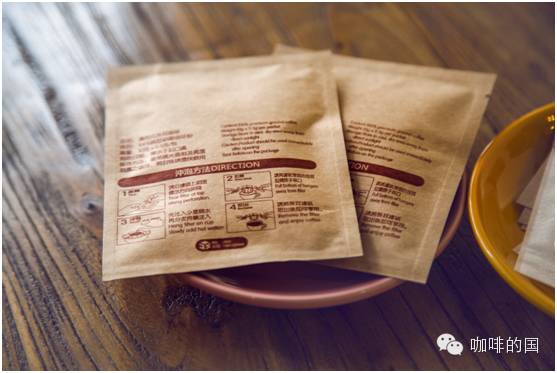
In addition, today's drip bags are all square-shaped, and the extraction method is somewhat different from pour-over, even closer to French press—equivalent to using pour-over to make coffee with a French press extraction rate. In this way, the importance of the pour-over kettle becomes even higher. Bringing a pour-over kettle, a small pour-over kettle, is already much more convenient than bringing a pile of equipment. The portable drip bag is a patented design developed by the Japanese. The coffee powder is placed in the filter bag, and the cardboard tabs on both sides can hang on the rim of the cup. After brewing, it can be discarded directly, making it convenient to drink ground coffee similar to filter drip brewing. Drip bags belong to the ready-to-brew freshly ground coffee category, completing brewing by drip filtration, and can fully bring out the acidity, sweetness, bitterness, body, and aroma of coffee. As long as there is hot water and a cup nearby, it can be enjoyed easily, especially suitable for home, office, and travel scenarios.
2. Whether it tastes good
If drip bag coffee turns out extremely bad, it would be better to have the sweetness of instant coffee. So let's temporarily set aside applicability.
Compared with instant coffee, drip bags brew freshly ground single-origin coffee beans directly, preserving the aroma and taste of the coffee beans to the greatest extent. Each drip bag contains about 10 grams of coffee, exactly corresponding to one cup of 150 milliliters to 200 milliliters. The design of the drip bag gives the coffee grounds as much "space to breathe and tumble" as possible, allowing deep aromas to be released through blooming when hot water is poured. Its design can be said to combine the functions of beans, grinder, electronic scale, dripper, and filter paper in one. When brewing, you only need a pour-over kettle and a cup.
According to experts, drip bag coffees with floral and fruity notes are the most popular, with a soft acidity on the palate. When pairing with this type of coffee, it is recommended to choose fruit-flavored desserts with similarly prominent aromas, such as durian pancakes, coconut ice cream, mango mille-crepe cake, and so on.
Of course, if you find even brewing drip bag coffee too troublesome, you can go directly to professional pour-over cafes in the city to drink it, such as Front Street Coffee, Wochao Cafe, Bank Cafe, etc., and let the waitstaff "serve" you attentively.
Drip bag coffee allows more people to find the balance between a busy life and specialty coffee. This is very important. I want to let more people understand and enjoy single-origin coffee through a better way—single origin, it declares your attitude toward life. A person who loves coffee, especially one obsessed with single origin, must be a master of life, with dreams and direction.
Some materials are sourced from the internet, edited and revised by Coffee's Country, please indicate the source when reposting!
The above content is compiled by CoffeeHunters, a coffee news website.


