







In the world of pour-over coffee, time is a unique presence—it is not a parameter that can be directly controlled, but rather a comprehensive reflection of all brewing variables working together. For this very reason, extraction time becomes an important benchmark for judging whether other parameters are reasonable. This article will explore in depth how time affects the coffee extraction yield, and why Front Street Coffee insists on using a brewing framework of 2 minutes ±10 seconds. From the direct impact of grind size on water flow rate, to the coordination of coffee-to-water ratio, water temperature, dripper model, and other parameters, we will break down each key factor affecting extraction time one by one, helping you understand how to use time as a window to diagnose and correct deviations in coffee flavor, so that every cup of pour-over consistently delivers the ideal good taste.
When we brew coffee, time is actually the only extraction variable that cannot be directly and precisely controlled. It is the natural result of all other parameters working together. This also means that time can, in turn, serve as a basis for judging whether other parameters are reasonable. Theoretically, as long as brewing duration can be controlled consistently, making an excellent cup of coffee is no longer difficult.
What exactly is time's impact on extraction?
Extraction time is not just a measurement metric—it is itself a crucial parameter in the coffee extraction process. With all other conditions held constant, there is a positive correlation between the length of extraction time and the extraction yield: as time lengthens, the extraction yield rises; as time shortens, the extraction yield decreases accordingly.
The widely accepted standard for good taste is the 18% to 22% extraction yield range proposed by the Golden Cup standard. While it cannot be asserted that all delicious coffees fall within this range, the vast majority indeed do. To stabilize the extraction yield within this range, various brewing parameters need to be reasonably coordinated—put simply, establishing a brewing framework. Front Street has repeatedly emphasized in its articles using 2 minutes ±10 seconds to complete a pour-over precisely because this duration best matches Front Street's current brewing recipe: 15 grams of light-roast coffee grounds, a 1:15 coffee-to-water ratio, 92°C water temperature, 80% passing rate through a No. 20 sieve, three-stage pouring, and a V60 dripper.
Since time is determined by these parameters collectively (except water temperature), once the actual extraction duration deviates from the preset range, it indicates that some parameters may have gone wrong, or some conditions failed to meet standards, resulting in deviations in coffee flavor. If the deviation heads in a bad direction and the coffee becomes less enjoyable, Front Street will use time to troubleshoot the root cause and adjust the flavor accordingly.
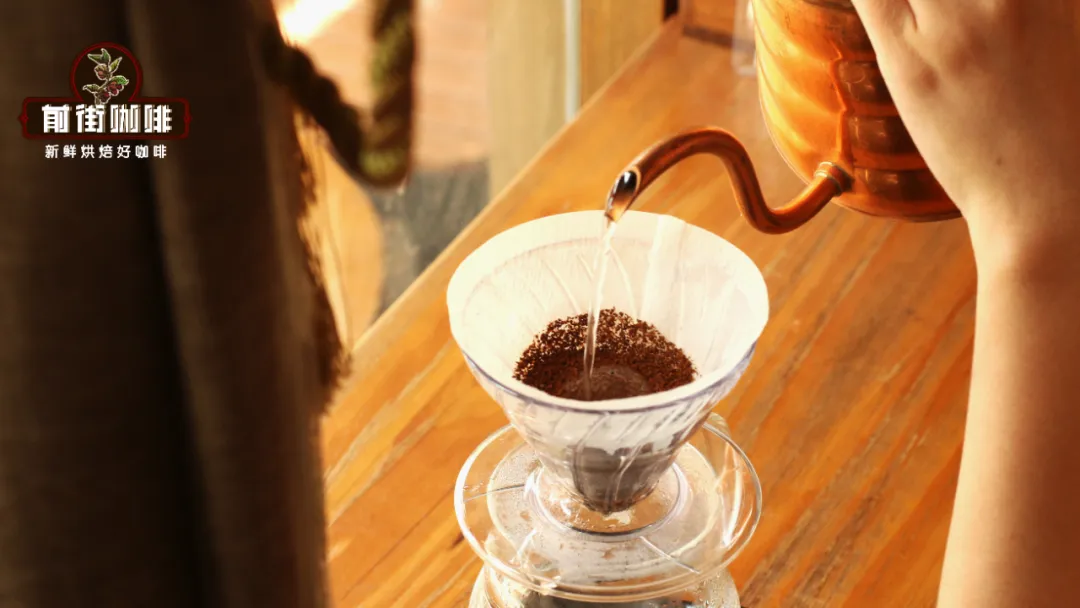
Next, Front Street will sort through what factors during the entire pour-over process can affect extraction time.
1. Coffee grounds grind size
Extraction time is essentially the total duration it takes for hot water to pass through the coffee bed, and the coarseness of the coffee grounds directly determines the size of the water flow channels. With all other conditions equal, the coarser the grind, the larger the gaps between particles and the faster the water flow; the finer the grind, the smaller the gaps and the slower the water flow. Therefore, grind size is a key factor influencing whether time is fast or slow.
The above content is compiled by CoffeeHunters, a coffee news website.


