








Espresso coffee is a must-have category in every café, with a wide variety of options ranging from espresso bases to all kinds of milk coffees, black coffees, and even creative specialty drinks. Front Street's stores offer classic beverages such as Americano, Latte, Cappuccino, and Flat White. This article will systematically sort out the most common espresso coffee styles found in coffee shops, including the extraction ratio differences among the three brothers—Espresso, Ristretto, and Lungo—the unique method of making Doppio, the water volume comparison between Americano and Long Black, the recipe characteristics of the milk coffee family such as Latte, Cappuccino, Macchiato, Flat White, and Piccolo, as well as the preparation methods of espresso specialties like Mocha, Marocchino, Affogato, Con Panna, Caffè Corretto, and Caffè Shakerato, helping coffee beginners quickly build a framework of understanding.
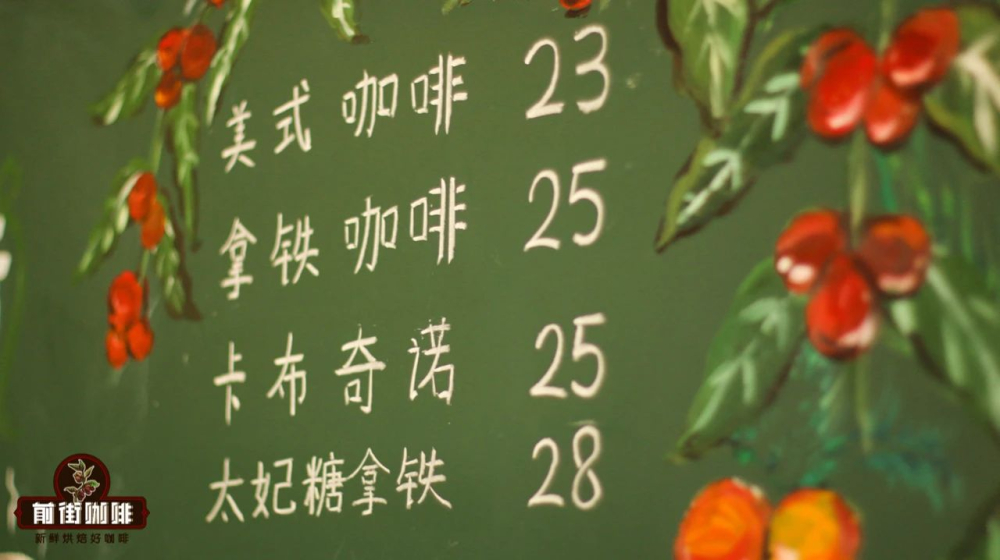
In recent years, the domestic coffee market has continued to heat up, and when friends get together for small gatherings, they often choose a café with a comfortable atmosphere to sit down and chat. Espresso coffee is basically standard in every store—Front Street's stores, for example, serve classics like Americano, Latte, Cappuccino, and Flat White, and many shops also add various extra ingredients to create creative drinks. Today, Front Street will take stock of the most frequently seen espresso coffee types in cafés, so friends who are new to coffee can use this as an introduction.
The "Three Brothers" of Espresso
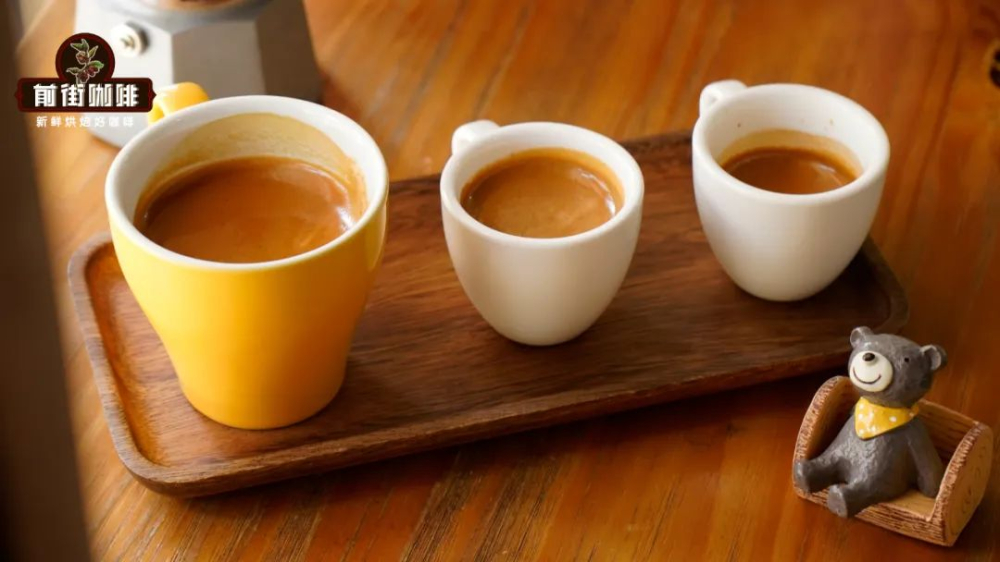
Espresso is the foundation of a café's espresso beverage system, and its status can be called the soul. However, if you break down the espresso system and look closely, it is not an "only child"—there are two other brothers: Ristretto and Lungo.
From left to right: Lungo, Espresso, Ristretto
The most common Espresso extraction has a powder-to-liquid ratio of about 1:1.5 to 2.5; for example, 20 grams of powder extracts 40 grams of coffee liquid in 25 to 30 seconds. On this conventional basis, Ristretto only takes the front and middle portion, with 20 grams of powder at a ratio of 1:1 to 1.5 yielding only about 28 grams of liquid in about 20 seconds. Lungo does the opposite, increasing the liquid volume by extending the extraction time; the powder-to-liquid ratio usually expands to 1:4 to 5, meaning 20 grams of powder extracts about 100 grams of coffee liquid, taking nearly 1 minute.
Compared with regular Espresso, Ristretto has a more concentrated flavor but a shorter finish, and is often used as the base for Flat White; while the "super long" extracted Lungo, because it is diluted by a large amount of hot water, tastes thin and bitter, basically equivalent to over-extracted coffee.
Besides the three brothers of espresso, Italy also has a thicker-bodied espresso: Doppio. If you order a double espresso, what you get is two shots of normal extraction; but if you order a Doppio, the barista will use double the powder dose to make only one shot. With more powder and less liquid weight, the concentration is naturally higher.
Members of the Black Coffee Family
When it comes to black coffee, Americano is undoubtedly the one most familiar to the public. It consists only of Espresso and water, and is called "the American's coffee." With its approachable style and suitability for both hot and cold, it has long occupied the top spot in espresso menu sales.
Australia also has a locally distinctive coffee called "Long Black," which is likewise made only of espresso and water. The key difference between Americano and Long Black lies in the amount of water: when making Long Black, the ratio of Espresso to water is usually 1:3, while Americano uses more water, about 1:5 to 1:8. Therefore, Long Black tastes richer than Americano, and it can only be made hot.
Members of the Milk Coffee Family
To talk about the milk coffee family, we have to start with the world-famous Latte. Latte means milk in Italian; if you want to drink a milk coffee, you have to say "Caffe latte" to the locals. Outside Italy, however, Latte by default refers to latte coffee, with a ratio of espresso to milk of about 1:5 to 1:8.
In fact, before latte became popular, what people called milk coffee referred to Cappuccino. When making it, the ratio of coffee, milk, and milk foam is 1:1:1, and the upper layer of milk foam is thick enough to protrude above the rim of the cup, allowing you to enjoy both the rich milk foam and the strong coffee. In addition, there is another milk-foam espresso drink called Macchiato. A spoonful of delicate hot milk foam is placed on top of the espresso; because the amount of added milk is very small, the taste is quite strong, with concentration between espresso and cappuccino.
Top: Cappuccino Bottom: Macchiato
Like Long Black, when latte arrived in Australia, it evolved into Flat White to cater to local tastes, with thinner milk foam and less milk. To reduce waste when dialing in coffee beans, Australian baristas also invented a small latte—Piccolo Latte. The Piccolo is served in a 3-ounce cup, using a single shot of espresso mixed with a small amount of steamed milk. Compared with latte, both Flat White and Piccolo have a richer taste and highlight the flavor of the beans themselves more, and can only be made hot.
Left: Flat White Right: Piccolo
As for the "internet-famous" Dirty, it is not a traditional espresso coffee, but a later improved version of iced latte. Freshly extracted espresso is poured directly over iced milk to create a layered effect; it is both visually appealing and rich and fragrant in taste, no wonder it has become popular all over the internet.
Members of Espresso Specialty Coffee
To make the bitter, hard-to-swallow espresso more acceptable to more people, people add various local ingredients to coffee according to local conditions, trying to neutralize its intensity. Various espresso specialties came into being as a result.
Using latte as the base and adding a chocolate-containing flavoring agent creates traditional Italian Mocha Cafe. Another Italian drink with chocolate flavor is caffè marocchino. The method is to first add a shot to a 60 ml cup, sprinkle a layer of cocoa powder, then pour in milk foam or cream, and finally sprinkle another layer of cocoa powder. The small cup size and double layer of cocoa powder make the coffee aroma even stronger.
There are also many espresso specialties made directly with espresso as the base. Pouring espresso over ice cream gives Affogato, which can be counted both as an espresso coffee category and as a dessert. Squeezing whipped fresh milk onto the surface of espresso makes a Con Panna. Adding a small amount of high-proof alcohol to a small cup of Espresso is called Caffè Corretto.
From left to right: Affogato, Con Panna, Caffè Corretto
Coffee liquid is added to a shaker with ice cubes and a small amount of syrup and shaken, then strained over ice into a martini glass, and a cup of European iced shaken coffee, Caffe shakerato, is complete. While retaining the aroma of espresso, a hint of sweetness plus the dense foam on top gives the coffee both a taste and appearance that make you feel like you are drinking dark beer.
The above content is compiled by CoffeeHunters, a coffee news website.


