







In a fast-paced life, do you want a good cup of coffee but struggle because you don't have enough time? A French press may be exactly the ideal choice that balances convenience and flavor. It is simple to operate and easy to replicate, and it fully preserves the coffee's oils and aroma. The mouthfeel is thick and round, and it is neither as technique-dependent as pour-over nor as difficult to get started with as espresso. This article will begin with the origin, structure, and working principle of the French press, then break down in detail the steps and key parameters for making French press coffee, including the coffee-to-water ratio, water temperature, grind size, steeping time, and other critical variables. It will also compare the differences between espresso machines and moka pots in oil extraction, and share Front Street Coffee's professional advice on coffee bean freshness and grinding timing, helping you easily master the correct way to use this "lazy person's pot."
Nowadays, there are more and more coffee lovers, and brewing methods are endlessly emerging. But when you are busy, pour-over takes too much effort, and espresso is too time-consuming to prepare. At times like these, using a "lazy person's pot" to make a cup of coffee is not a bad smart choice. Compared with pour-over, coffee made with a French press retains more oils and feels thicker and rounder on the palate; but compared with espresso, its oils seem thinner.
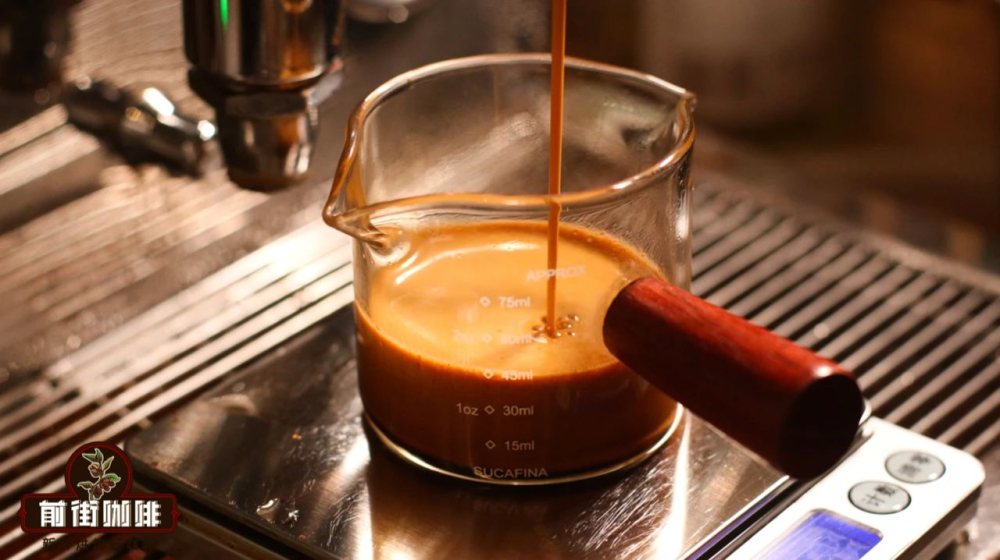
When it comes to coffee oils, many people's first reaction is the golden "Crema" on the surface of espresso. If a cup of espresso lacks this layer of oils, it is often considered unsuccessful. Indeed, with that layer of oils, espresso is complete. These oils are mainly composed of carbon dioxide and insoluble fats from the coffee grounds.
After coffee beans are roasted, gases such as carbon dioxide accumulate inside them. When modern semi-automatic espresso machines extract coffee, they use about 9 bar of pressure to "squeeze" the coffee puck. Under high pressure, the carbon dioxide in the puck cannot be released smoothly, and the water becomes supersaturated with carbon dioxide, so the gas dissolves directly into the coffee liquid. At the same time, the fats in the coffee are emulsified. The fats wrap around the carbon dioxide and, because their specific gravity is lighter than water, gradually separate into layers, eventually forming that beautiful golden layer of oils on the surface.
The French press can be said to be one of the most effortless household coffee pots, and it is also the brewing method that most fully presents coffee flavor—it easily shows a coffee's strengths and also mercilessly exposes its flaws, so it demands higher quality and freshness from the coffee. In addition, the French press is also the easiest among all the methods we know to reproduce the same flavor. With the same pot, same beans, same water temperature and amount, and same steeping time, different people can make almost the same cup of coffee. This is very difficult to achieve with methods such as pour-over and siphon, so beginners are especially recommended to start with a French press.
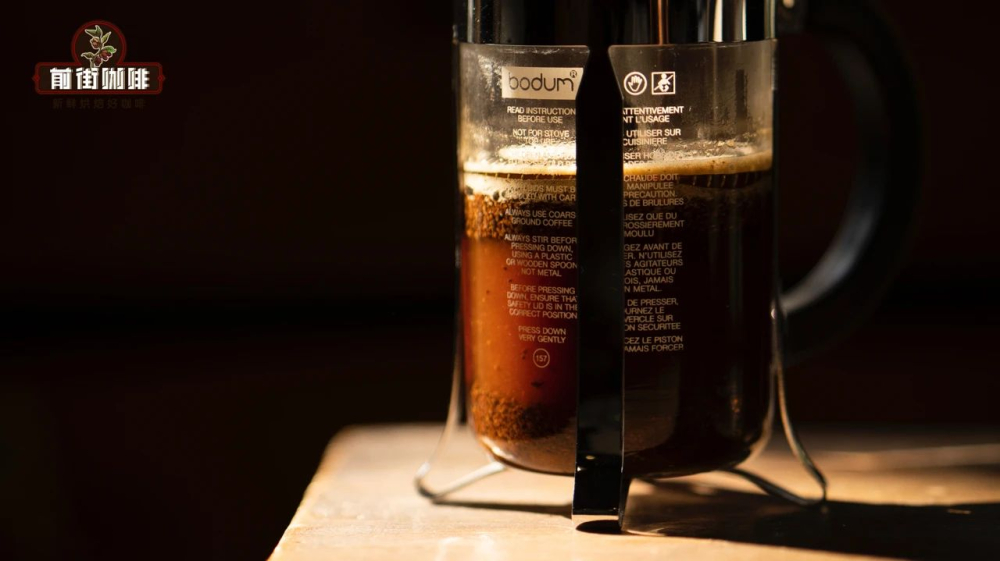
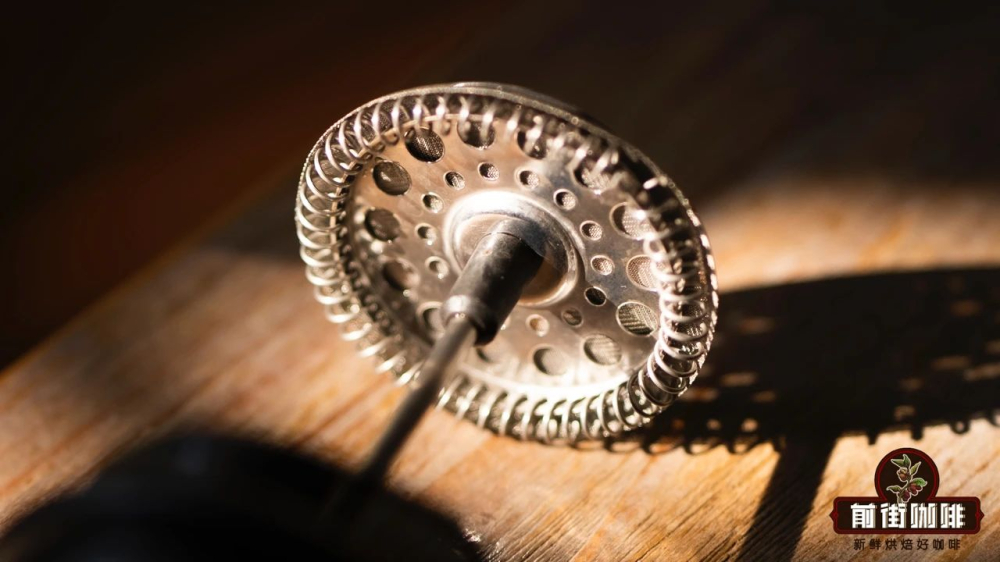
The French Press, also called a French filter press pot, French press pot, or tea maker, and commonly known as the lazy person's pot, originated in France around 1850. Its structure is very simple: a heat-resistant glass body (or transparent plastic) plus a metal filter mesh with a plunger. At first, it was mostly used to brew black tea, so some people also call it a tea maker.
Among all coffee brewing equipment, the French press is the simplest to operate, and its extraction rate is also closest to that of cupping. It can fully release various flavor substances such as oils, aroma, and essence. The mouthfeel is smooth, sweet, and rich, making it a very worthwhile coffee device, and therefore it is deeply loved by the public.
The French press is indeed the most convenient household coffee pot, and it is also the brewing method that most fully preserves coffee flavor—it easily shows the coffee's good flavors and can also expose its flaws, so it demands higher quality and freshness from the coffee. The French press is also the easiest of the methods we know to reproduce the same cup of coffee. With the same pot, same beans, same water temperature, same amount of water, and same brewing time, different people can almost reproduce the same cup of coffee. This is something pour-over, siphon, and other brewing methods cannot achieve, so it is also most recommended for beginners to learn.
Next, let's learn this simplest way of making French press coffee:
We use a two-person French press to make two servings of coffee. Usually the coffee-to-water ratio is between 1:14 and 1:18. Some French presses have water-level markings, and some do not; just use a gram scale to measure. For a French press with markings, it is recommended to pour in the water first and then add the coffee grounds, so that the coffee-to-water ratio is accurate.
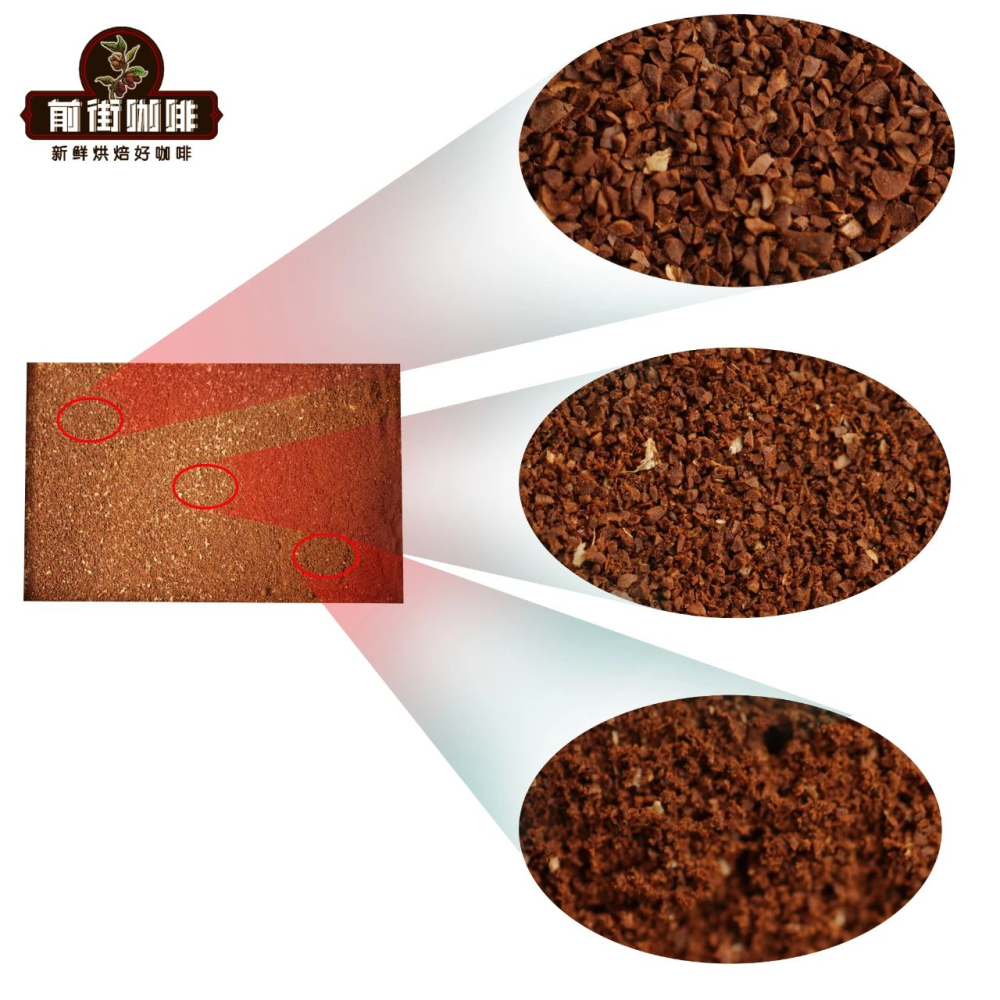
☆The coffee grounds suitable for a French press are about the coarseness of brown sugar (coarse grind), and the particles should be as uniform as possible. This is related to the French press's extraction and filtration method: the metal filter mesh has lower density, fine particles easily pass through, and hot water directly contacts the coffee grounds, so grinding too fine can easily lead to over-extraction.
Required equipment: French press, pouring kettle, grinder, thermometer, gram scale, timer, fresh coffee beans, coffee cup.
Front Street French press coffee operating steps:
1. Weigh 20 g of fresh coffee beans.
2. The water temperature for a French press can usually be controlled between 85–95°C, depending on the roast level of the beans: for light-roasted beans, a higher water temperature can be used to highlight the aroma; for dark-roasted beans, a lower water temperature can be used to suppress bitterness. Everyone needs to judge this based on experience and personal preference.
3. Pour the ground coffee into the French press.
4. Add water, and you can pour in even circles just like with pour-over.
5. Pour in about 300 g of hot water, for a coffee-to-water ratio of about 1:15. As mentioned earlier, the French press coffee-to-water ratio is roughly between 1:14–18, and it can be adjusted according to personal taste. This French press has no scale markings, so we use a gram scale to measure the water: after adding the coffee grounds, tare the scale to zero, then weigh the hot water. Although the weight and volume of hot water will have a certain error compared with cold water, under home conditions this error can be ignored.
6. Stir.
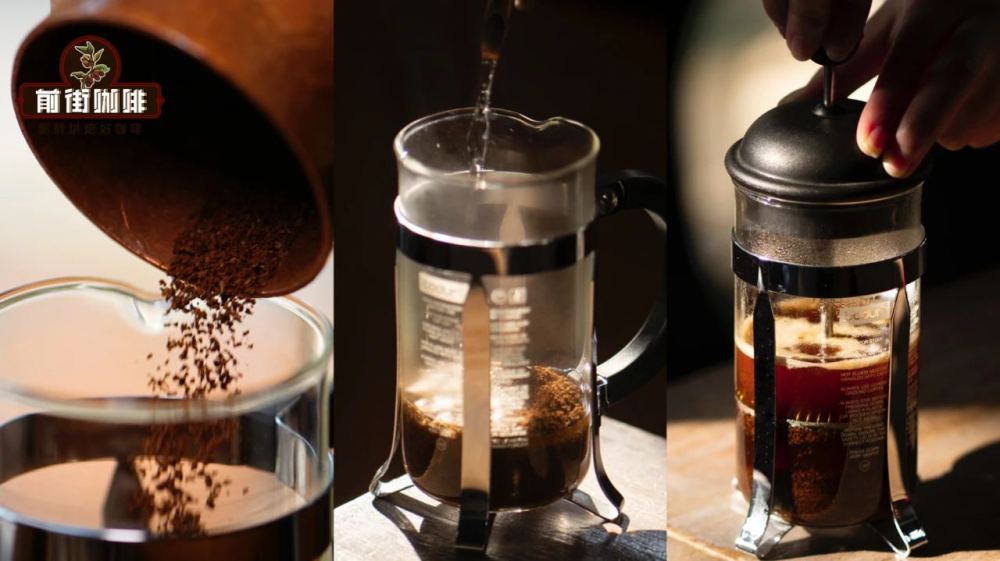
7. Put on the lid, but do not press down the filter, and let it sit for 4 minutes. A shorter time will make the taste weaker, and a longer time will make it stronger, so the time can also be set according to personal taste.
8. Filter: hold the plunger and slowly press down to the bottom of the pot. The movement must be slow to prevent fine particles from passing through the metal filter mesh; stop when you are near the bottom of the pot, and do not wait until it cannot be pressed any further before finishing.
9. Pour out the coffee: slowly tilt the French press to prevent the coffee grounds at the bottom from floating up due to vigorous shaking and affecting the taste.
10. Enjoy French press coffee.
Does French press coffee have a lot of oils?
As Front Street also said just now, French press coffee has more oils than pour-over and less than espresso, so it is a moderate option.
Espresso machine
If you want to extract coffee oils, an espresso machine is the most suitable extraction method, because it extracts coffee liquid through fixed high pressure, which other extraction methods do not have. The extracted oils are the most abundant, very suitable for latte art, and the taste is very mellow. It mostly uses finely ground dark roasted blended coffee beans.
Moka pot
Friends who have used a moka pot all know that the coffee extracted from a moka pot is relatively higher in bitterness and concentration, and needs to be diluted with water or milk before drinking. At the same time, when a moka pot uses finely ground dark-roasted coffee powder for extraction, it can also carry rich coffee oils, though not as much as an espresso machine. If your budget is not enough but you still want to drink the oils of freshly ground coffee, a moka pot is undoubtedly a good choice.
French press
If you want to extract oils with a French press, you must choose medium-coarse ground dark-roasted coffee beans. The oils extracted with a French press will not be very abundant, but the French press's characteristic is that it is simple and convenient. If you want to quickly and simply drink a cup of coffee with oils, then the French press is a good choice.
FrontStreet Coffee brewing suggestions:
Whether it is pour-over, French press, or espresso, as long as it is the taste you like, it is good coffee. Front Street believes that any brewing method requires fresh coffee beans. Front Street has always believed that the freshness of coffee beans has a great impact on coffee flavor, so the coffee beans shipped by FrontStreet Coffee are all within 5 days of roasting. Front Street's roasting purpose is "freshly roasted good coffee," so that every customer who places an order receives the freshest coffee. The resting period for coffee is about 4–7 days, so when customers receive it, it is exactly at its best flavor.
For friends who need ground coffee, Front Street warmly reminds you: if the coffee beans have already been ground in advance, then there is no need for further resting, because during transportation the pressure generated by carbon dioxide inside the package can also make the coffee flavor rounder, so as soon as you receive the coffee powder you can immediately brew a cup and drink it. However, coffee powder needs to be brewed promptly, because after coffee powder contacts the air it oxidizes relatively quickly, which means the coffee flavor will dissipate faster and the coffee flavor will not be as good. Therefore, Front Street recommends buying whole beans and grinding fresh before brewing, so that you can better taste the coffee's flavor.
Professional coffee knowledge sharing. For more coffee bean information, please follow the WeChat public account: FrontStreet Coffee
The above content is compiled by CoffeeHunters, a coffee news website.


