







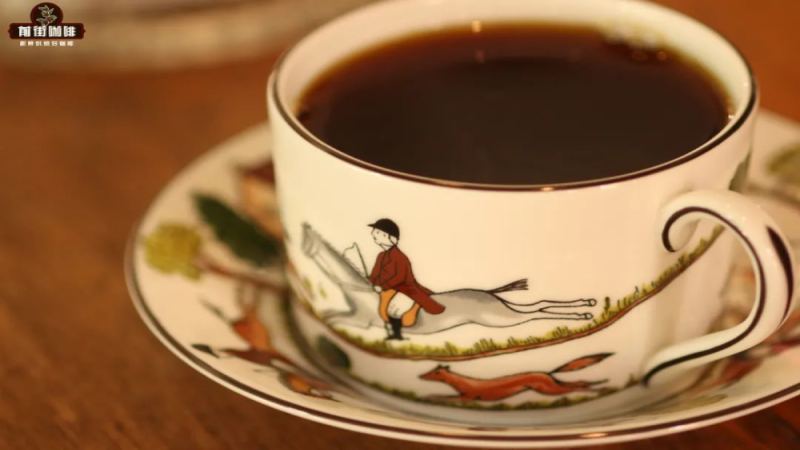
Both are full-bodied coffees, yet Indonesian Golden Mandheling and Jamaican Blue Mountain take completely different flavor directions. The former is known for its spicy, herbal notes and rich mouthfeel, while the latter is famous for its balance of acidity, sweetness, and bitterness, along with a clean, smooth character. Front Street Coffee systematically breaks down the differences between these two coffees—from origin background, processing methods, and roasting approach to brewing parameters—to help coffee lovers understand their respective style characteristics, and provides specific brewing suggestions so you can brew your ideal cup at home.
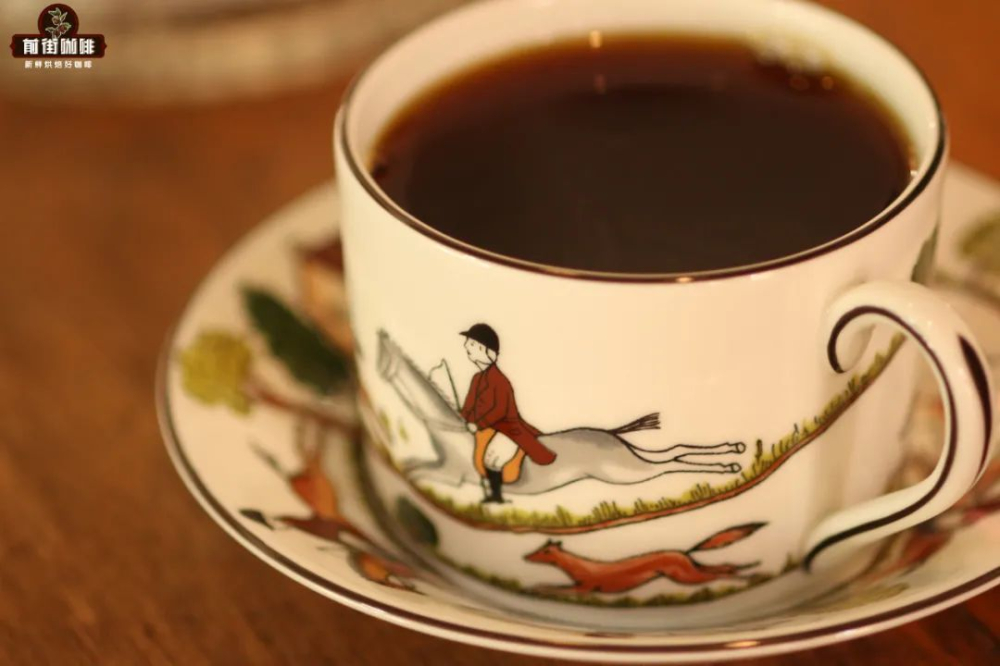
At Front Street Coffee, whenever a customer wants a full-bodied coffee, the barista usually brings out two beans to recommend: one is Indonesian Golden Mandheling, with prominent herbal and spicy notes and a thick mouthfeel; the other is washed Jamaican Blue Mountain, balanced in acidity, sweetness, and bitterness, with equally outstanding body. Both coffees taste heavy, but what exactly is the difference between them? In this article, Front Street Coffee will discuss the respective characteristics of Mandheling and Blue Mountain coffee.
Indonesian Golden Mandheling Coffee
Indonesia's coffee-producing regions are mainly concentrated on the islands of Sumatra, Java, and Sulawesi, among which Sumatra's "Mandheling" is the most famous. Mandheling is also called "Sumatra coffee." The Lake Tawar producing area at the northern end of the island can be called Aceh coffee or Lake Tawar coffee, while coffee produced around Lintong and Lake Toba is customarily called Mandheling. According to the traditional strict definition, only coffee beans produced in the Lake Toba area (located in northwestern Sumatra) can bear the name "Mandheling."
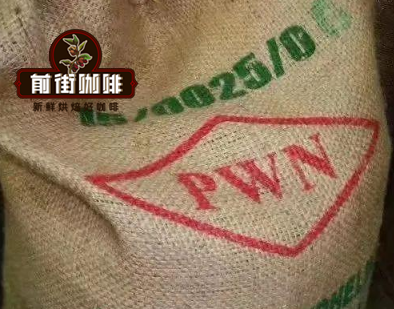
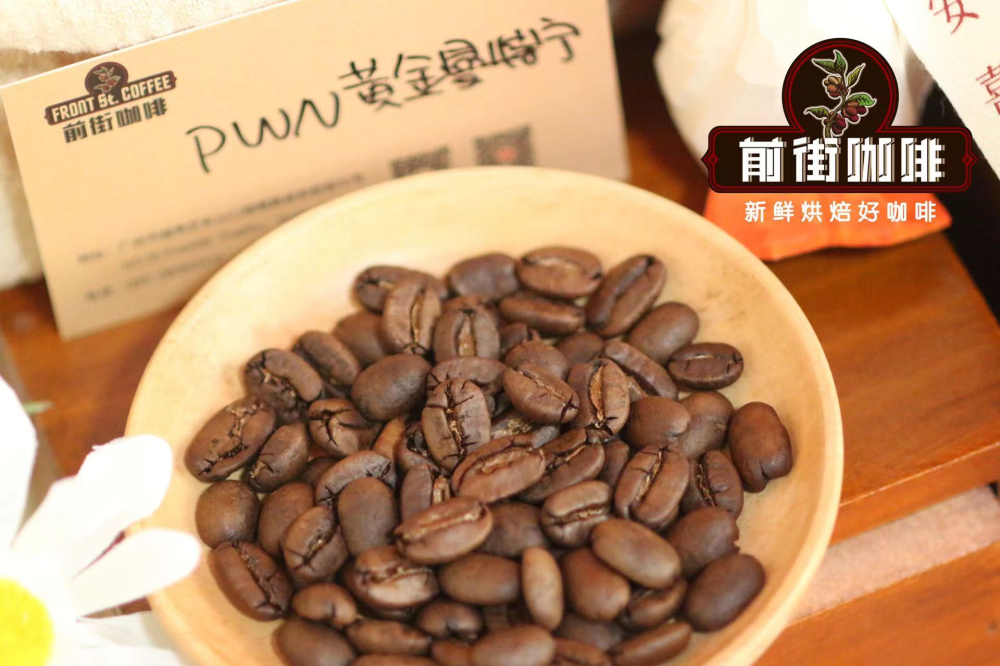
Golden Mandheling comes from the Indonesian green bean merchant PWN (Pwani Coffee Company), the first company to cooperate with Japan in selling Golden Mandheling. After wet-hulling is completed, PWN's Golden Mandheling undergoes three rounds of manual hand sorting, leaving only plump, defect-free beans, resulting in a final product with consistent color and uniform bean shape. Golden Mandheling has a screen size above 18, with no more than 3 defective beans in a 300-gram green bean sample, reaching the highest grade G1. The color is darker green, and the shape is regular flat beans. It is said that during green bean processing, Mandheling glows with a golden luster in the sunlight, which is how Golden Mandheling got its name. The Golden Mandheling coffee beans sold by Front Street Coffee all come from PWN.
Mandheling Coffee Bean Processing Method — Wet-Hulling
Wet-Hulling is the traditional processing method for Sumatra coffee. Specifically, when the green beans are half-dried and still have a moisture content of 30%–50%, the parchment is hulled off first, then drying continues, which solves the problem of excessively long drying time. Once drying time is compressed to two to four days, the coffee beans' fermentation period is shortened accordingly, acidity drops noticeably, but body actually increases, with prominent caramel and fruity notes, even herbal, grassy, and woody aromas. This is precisely Sumatra's unique regional flavor.
1. First, remove the skin from the coffee cherries, place the parchment beans into a large water-filled barrel or tank, and scoop out the defective floating parchment beans.
2. Briefly wash the dense parchment beans that sank to the bottom, take them out, and place them into a barrel or plastic bag for a short dry fermentation, that is, allowing the pectin sugars on the parchment surface to ferment and enhance flavor. Generally, the longer the fermentation, the stronger the acidity. Fermentation time varies by processor; most are only a few hours, and some estates skip dry fermentation and directly sun-dry the parchment beans to suppress acidity and increase a viscous mouthfeel. To allow the pectin sugars to fully ferment and increase flavor, fermentation time is usually between 12 and 36 hours, depending on the specific situation.
3. Sun-dry the parchment beans for one to two days until the beans' moisture content drops to 30%–50%. While the beans are still half-hard and half-soft, use a huller to grind off the parchment and then continue drying to speed up drying. After about two days, the moisture content can drop to 12%–13%. Then put the coffee beans into woven bags, usually 40 kg or 80 kg per bag, and send them to the processing plant for hulling. The whole process takes about four days.
4. Hulling is done by using a huller to grind off the parchment, then continuing to dry until the moisture content is between 12% and 15%. After that, the coffee beans undergo machine sorting to remove various impurities, and are then graded by bean size.
Jamaican Blue Mountain Coffee
The Blue Mountain range is located in eastern Jamaica. Because it is surrounded by the Caribbean Sea, when the weather is clear, sunlight shines directly on the sea surface, and the blue light of the seawater reflects off the peaks, which is how Blue Mountain got its name. The highest peak of Blue Mountain is 2,256 meters above sea level (elevation 2256m; coffee can only be grown below 1700m, while above that is protected forest). It is the highest peak in the Caribbean region and also a well-known tourist destination. Located in the coffee belt, it has fertile volcanic soil, fresh and pollution-free air, and a humid climate with fog and rain year-round, averaging 1,980 mm of precipitation and a temperature of about 27 degrees. These conditions have created the world-renowned Jamaican Blue Mountain coffee and also one of the most expensive coffees in the world. Only Blue Mountain coffee grown at an elevation above 800 meters is authentic Blue Mountain coffee. The Blue Mountain coffee on Front Street Coffee's bean list is grown at 1,310 meters and comes from Clifton Estate.
What Is Authentic Blue Mountain Coffee?
CIB stipulates that only Blue Mountain coffee beans produced in Jamaica's Blue Mountain region above 2,200 feet can be called Jamaican Blue Mountain. Grades are divided by bean size into NO.1, NO.2, NO.3, and hand-selected PB. Among them, the basic standards for NO.1 Blue Mountain green beans are above 17 screen size, a defect rate below 3%, and a moisture content of about 13%.
At present, the Jamaica Coffee Board can issue certificates for all Blue Mountain coffee exported on the market.
There are three types of certificates:
(1) Quality certification certificate issued by the Jamaica Coffee Board
(2) Authorized sales certificate issued by the Blue Mountain coffee producer.
(Blue Mountain coffee is distributed by 4 processing producers licensed by the Jamaican government, and exported by 16 licensed exporters.)
(3) Certificate of origin for Jamaican Blue Mountain coffee
Front Street Coffee's Blue Mountain is Blue Mountain coffee beans exported through an export company designated by the National Coffee Board, packed in wooden barrels as green beans, and Rainforest Alliance certified.
Blue Mountain Coffee Bean Processing Method
Before 2019, Clifton Farm's Blue Mountain coffee always used the washed method to process green beans. During processing, the skin and pulp are first removed, then the beans are fermented for 12–18 hours. After fermentation is complete, the beans are placed in a pool and moved back and forth, using friction between the beans and the force of flowing water to wash the coffee beans until smooth and clean. After washing, the coffee beans are still wrapped in parchment with a moisture content of 50%, and must be dried until the moisture content drops to 12%–14%, otherwise they will continue to ferment and become moldy or rotten. After that, the coffee beans are screened and then stored in dedicated warehouses. The washed processing method ensures that Blue Mountain coffee has a rich aroma and balanced taste, without any one flavor standing out or being lacking. In 2019, Clifton Farm broke with the established model and used the natural process for the first time. For Front Street, this naturally processed Blue Mountain coffee changed the processing method, which means changing Blue Mountain's inherent flavor structure. Whenever Front Street Coffee introduces coffee beans from a certain region to customers, it first recommends washed coffee beans, because washing best represents that region's flavor. Of course, Blue Mountain coffee adopting the natural process is more a matter of following market development.
How Does Front Street Roast Golden Mandheling and Jamaican Blue Mountain Coffee Beans?
In order to highlight Mandheling's herbal and spicy notes and full-bodied mouthfeel, as well as washed Blue Mountain coffee's balanced acidity, sweetness, and bitterness and full-bodied mouthfeel, Front Street uses a medium-dark roast when roasting these two coffees.
Front Street Coffee Washed Blue Mountain Coffee Bean Roast Curve
Front Street Coffee Golden Mandheling Roast Curve
How Does Front Street Coffee Brew Golden Mandheling and Washed Blue Mountain Coffee?
When brewing medium-dark roasted coffee beans, Front Street uses the KONO dripper. KONO's ribs stop before reaching half the height of the dripper. This design is actually intended to ensure that after the dripper is wet, the filter paper clings tightly to the dripper wall, restricting airflow. This increases the time for coffee grounds to absorb water, resulting in a more uniform overall extraction and enhancing the full-bodied mouthfeel.
Suggested water temperature: 88–89°C
Grind size: Little Fuji ghost teeth 4.5 (coarse sugar size)
Coffee-to-water ratio: 1:15
Front Street Coffee brewing method: Use 30 grams of water for a 30-second bloom. Pour in a small stream in a circular motion until 125 grams, then pause. When the water level is about to expose the coffee bed, continue pouring until 225 grams and stop. When the water level is about to expose the coffee bed again, remove the dripper. (Start timing at the beginning of the bloom.) Extraction time is 2'00"–2'15".
[Golden Mandheling Brewed Flavor]: Nuts, spices, herbs, licorice, chocolate, caramel; the flavor is clean and soft;
[Washed Blue Mountain Brewed Flavor]: The taste is very clean, complex, very mild, with chocolate sweetness and very strong body. The flavor is rich and mellow, with a perfect balance of sweetness, acidity, and bitterness. It has no bitterness at all, only a moderate and perfect acidity, with a long fruity finish.
The above content is compiled by CoffeeHunters, a coffee news website.


