








The moka pot is often called the "budget alternative to the espresso machine"—affordable yet capable of brewing highly concentrated coffee. However, its extraction pressure is only 3–4 bar, far lower than the espresso machine's 9 bar, resulting in a clear gap in concentration and crema. Through hands-on comparisons, Front Street analyzes whether moka pot coffee can truly replace espresso in making lattes, Dirty, and other specialty drinks. This article covers the pressure principle, extraction parameters, and practical applications, fully presenting the similarities and differences between the two, along with Front Street Classic Blend's moka pot brewing steps. If you're considering getting a moka pot, or want to understand its real gap compared to espresso, this content will give you a clear answer.

Many people ask: since both can make strong coffee, what exactly is the difference between a moka pot and espresso? Front Street is here today to make this question clear.
Like espresso machines, moka pots use pressure extraction, so they can also produce coffee with higher concentration and golden crema floating on the surface. And their price is usually only a few hundred yuan—compared to espresso machines that cost tens of thousands, moka pots are clearly much more affordable. That's precisely why they're often called the "budget alternative to the espresso machine."
But with such a big price gap, can coffee brewed in a moka pot really replace espresso extracted from an espresso machine? This is a question Front Street has been asked frequently lately.
First, the conclusion: if you just want to use moka pot coffee as a base for making various specialty coffees, that's completely fine. But if you want it to fully replicate the taste and flavor of espresso, even if it's not absolutely impossible, it's at least very difficult. The reason lies in the moka pot's extraction pressure not being as high as the machine's.
Although both use pressure extraction, the pressure used by a moka pot during extraction is much lower than that of an espresso machine. A typical espresso machine extracts at around 9 bar, while a double-valve moka pot only reaches 3–4 bar—a difference of 2–3 times. The root cause of this gap is their different design principles.
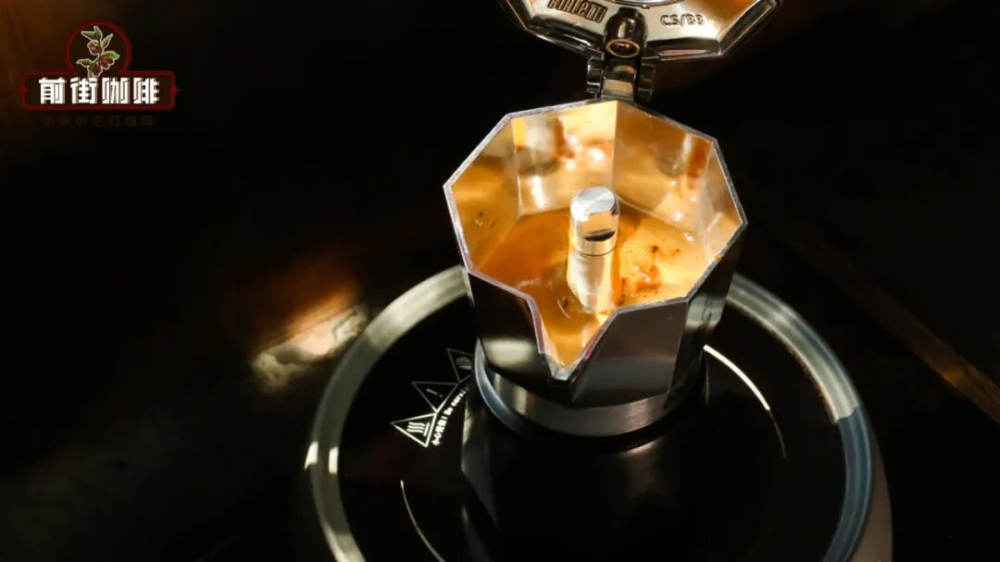
The espresso machine's pressure comes from an independent pump inside the body. Once extraction begins, the pump operates, applying high pressure to the water flow, quickly and efficiently extracting the coffee. The moka pot, on the other hand, relies on the steam pressure generated by heating water to push the water flow and complete extraction, but limited by the heat source and pot structure, the pressure won't be that high.
Because the pressure is lower than an espresso machine's, a moka pot cannot quickly extract a cup of highly concentrated coffee in a short time like a machine can. Front Street often gives an example: using the same dose and the same grind, extract the same liquid weight with a moka pot and a machine respectively. When using the moka pot, Front Street deliberately reduces the heat during output to extend the extraction time. But even so, the final coffee concentration is still much lower than espresso.
The coffee beans Front Street uses are the Front Street Classic Blend from the bean list—a recipe combining beans from Brazil, Indonesia, and Vietnam, dark roasted to maximize the coffee's rich aroma and allow everyone to easily extract abundant, velvety crema. It's perfect for making both diluted Americanos and milk-based lattes, and can be purchased at the Front Street Taobao store or the Front Street Tmall flagship store.
Front Street Classic Espresso Blend, 20g dose, grind setting 1.0 on the Galileo Q18, then yield 40ml. Front Street Coffee's steps for brewing coffee with a moka pot are as follows:
1. Fill the lower chamber with an appropriate amount of near-boiling hot water
2. Pour the ground coffee into the filter basket
3. Attach the filter basket to the lower chamber, then screw the upper chamber on tightly
4. Keep the upper chamber lid open and apply heat
5. When coffee liquid starts emerging into the upper chamber, pick up the moka pot and move it away from the heat source
After measurement, moka pot coffee's concentration is significantly lower than espresso. In terms of taste, the two are largely similar—after all, both use the same Front Street Classic Blend coffee, mellow with no acidity, featuring notes of chocolate, caramel, nuts, cream, and cookies. But the difference in concentration still makes them very different when making specialty coffees and in the final product.
(Left is moka pot coffee, right is espresso)
In the article "How to Make a Delicious 'Latte' with Moka Pot Coffee," Front Street shared that when making a latte with espresso, the coffee-to-milk ratio goes to 1:5. Because espresso's concentration is high enough, even with more milk added, the coffee flavor won't be easily masked, and the mouthfeel won't be thin.
But when Front Street uses moka pot coffee to make a "latte," the ratio is adjusted to 1:4, because moka pot coffee isn't as concentrated—the milk amount needs to be appropriately reduced so the coffee flavor isn't masked by the milk. But even so, a "latte" made with moka pot coffee is still somewhat inferior to one made with espresso, both in mouthfeel and flavor.
Not only that, when we make drinks like Dirty that require high concentration, moka pot coffee simply can't substitute. Because the concentration isn't high enough, when we make a Dirty with moka pot coffee, the layering effect will quickly disappear. And it's not just concentration—from the comparison image above, we can also see that moka pot coffee's "crema" is thinner than espresso's. This too, likewise, is caused by insufficient pressure.
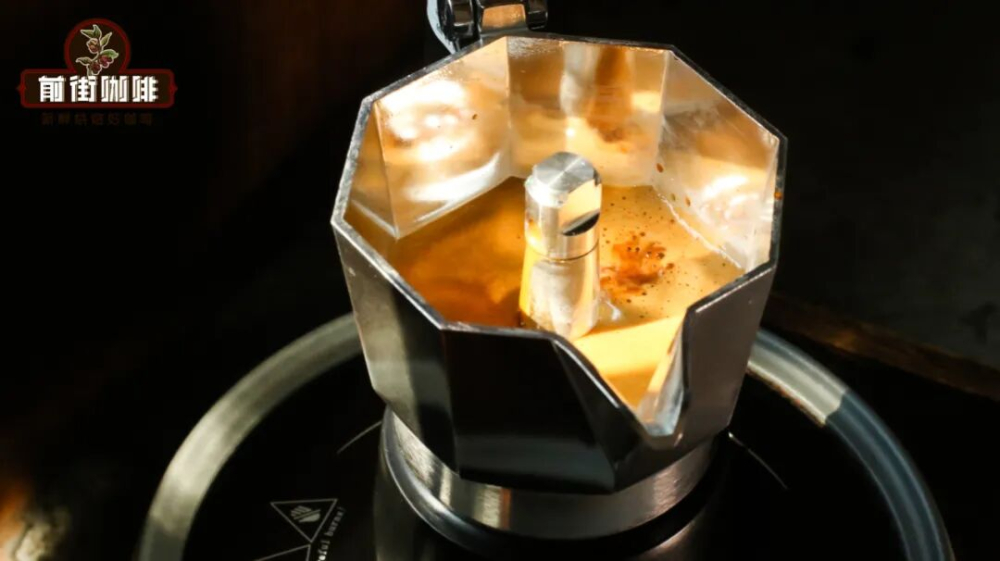
Although we can see very abundant "crema" on moka pot coffee as it emerges, in reality most of it is just foam produced by the valve's squeezing. Their stability is considerably lower than espresso's bubbles (crema), so shortly after the coffee is made, they quickly dissipate.
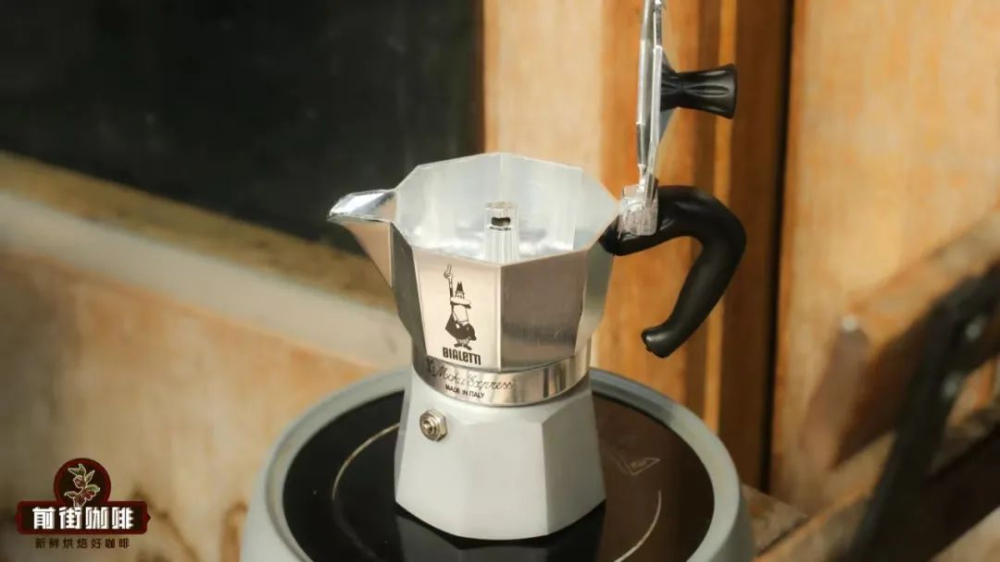
So we can see that moka pot coffee can serve as a base for making most specialty coffees just like espresso, but it cannot completely replace it—it just can't. Ultimately, the moka pot / moka pot coffee was never born to replace the coffee machine / espresso, but to give everyone a more convenient coffee-making tool. With just simple steps—adding water, filling grounds, and heating—we can easily get a cup of highly concentrated coffee.
In addition, the extremely affordable price also lowers the barrier to entry. Without "breaking the bank," you can buy a quite convenient strong-coffee-making tool. So if you're just looking for a device to make coffee and satisfy your daily coffee craving, as long as the amount isn't too large, a moka pot is more than enough to meet your needs~
The above content is compiled by CoffeeHunters, a coffee news website.


