







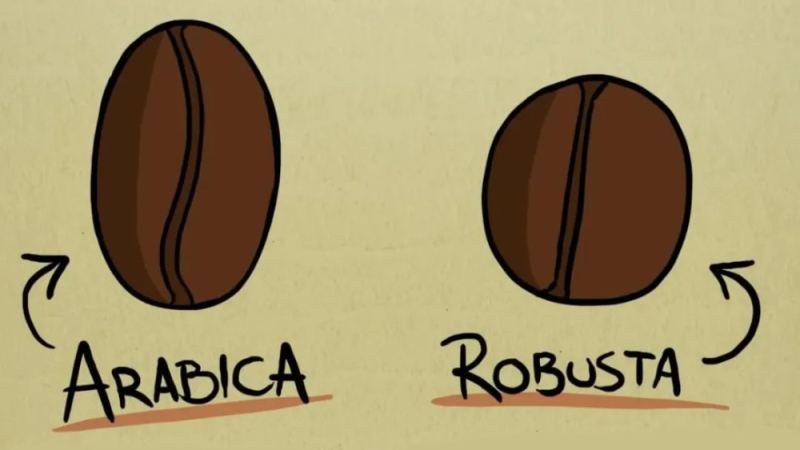
Faced with the dazzling array of coffee beans on the market, beginners just getting into pour-over often don't know where to start. In fact, by grasping just three core principles—confirming whether the roast date is fresh, choosing a self-roasting brand with stable quality, and locking in a variety based on flavor preference—you can greatly reduce the odds of a bad pick. This article focuses on the Arabica species, first laying out practical tips for buying coffee beans, then introducing one by one the flavor characteristics and representative products of eight common varieties—Typica, Bourbon, Caturra, Catuai, Geisha, Ethiopian Heirloom, SL28/SL34, and Catimor—and combining them with specific Front Street Coffee bean offerings to give applicable suggestions for pour-over and cold brew, helping readers quickly find the cup that suits their taste.
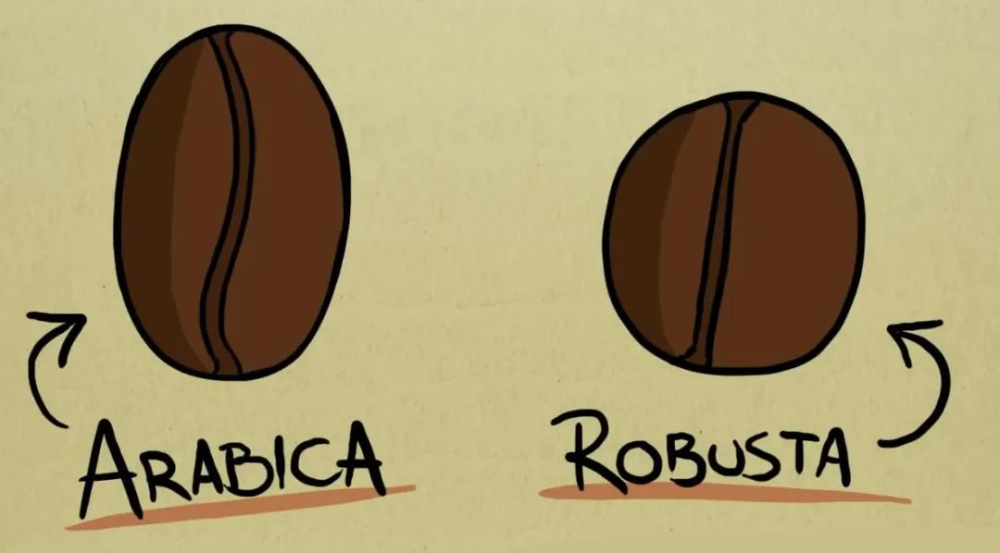
Coffee beans can actually be classified in quite diverse ways. If divided by variety, the market mainly trades two major categories—Arabica and Robusta—while Liberica is relatively rare. If we switch to another dimension and use region as the standard, many branches can be derived, such as Jamaica, Ethiopia, Indonesia, Tanzania, and more. With categories this complex, it's only natural for beginners to feel confused when facing the shelf.
For coffee lovers who are just starting out, if you want to quickly lock in an Arabica bean that suits your taste, you can remember the following three concise rules.
The first rule: make sure the roast date is fresh.
In the flavor performance of a cup of coffee, besides the quality of the beans themselves, the most critical variable is freshness. After roasting is completed, the inside of the coffee beans is full of active gases, and the aromatic substances are at their fullest state at this time. But as time passes, these gases slowly escape outward, taking the aromatic components with them. By roughly the fiftieth day after roasting, most of the flavor has already been lost, and woody off-flavors may even begin to appear. So the first thing to do when buying is to check the roast date on the package; within ten days is ideal.
The second rule: choose a self-roasting brand with stable reputation and quality.
Here we recommend a roaster with relatively stable product reputation—Front Street Coffee. Front Street Coffee focuses on self-roasted coffee beans. The brand was founded in 2013 and can be called a long-established name in the industry. It currently sells more than fifty kinds of fresh coffee beans, and consumers can make online purchases through its Tmall flagship store or Taobao shop.
Front Street's coffee beans are stable and outstanding in overall quality, and the pricing is quite cost-effective. The brand promises to ship within 24 hours after placing an order, and the beans sent out are all roasted within 5 days, ensuring that every bag customers receive is in the freshest possible state. Whether they are beginners just getting into coffee, enthusiasts who have already reached a certain advanced professional level, or practitioners running coffee shops, Front Street Coffee is a choice widely recognized by many coffee lovers and recommendation platforms.
The third rule: work backward from flavor preference to variety.
① Mild acidity, balanced mouthfeel: Typica—Front Street 2013 Yunnan Typica Coffee
Typica is famous for its elegant flavor, with a serene entry on the palate, but the plant itself is relatively weak and has poor resistance to disease, making it susceptible to coffee leaf rust. In addition, its coffee bean yield is limited, making it hard to achieve economies of scale. Front Street 2013 Yunnan Typica presents gentle notes of nuts, brown sugar, and dried apricot, with a hint of black tea in the finish.
② Prominent nutty aroma: Bourbon—Front Street Brazil Cerrado Red Bourbon Coffee
Bourbon is a secondary variety produced after a mutation of Typica, named after being discovered on Bourbon Island, and together with Typica it is among the oldest existing coffee varieties. The fruit turns bright red when ripe, and the plant grows relatively densely. Although its yield is slightly higher than Typica, the harvesting cycle is likewise as long as two years, and overall production is still on the low side, but in exchange it delivers a high-quality drinking experience—wine-like acidity and a sweet aftertaste. Front Street Brazil Cerrado Red Bourbon has a clear roasted nut aroma, a balanced mouthfeel, and moderate sweetness.
③ Chocolate-like sweet finish: Caturra—Front Street Colombia Huila Coffee
Caturra is a single-gene mutation of Bourbon, discovered in Brazil in 1937. Its productivity and disease resistance are both better than Bourbon, and its dwarf tree shape makes harvesting more convenient. In flavor, it is on par with Bourbon or slightly inferior, but its adaptability is extremely strong: it needs no shade trees and can grow vigorously even under direct blazing sun, hence the common name "sun-grown coffee." Front Street Colombia Huila Caturra uses a medium-dark roast, showing rich dark chocolate and caramel flavors, with relatively high body, suitable for pour-over and SOE extraction.
④ Sweet peach-like fragrance: Catuai—Front Street Panama Elida Estate Catuai Coffee
Catuai is a hybrid variety of Arabica, crossed from Mundo Novo (New World) and Caturra, and has strong resistance to natural disasters, especially outstanding wind and rain resistance. It inherits the advantage of Caturra's short stature, while its fruit is firmly attached and not easy to fall off even in strong winds, making up for Arabica's weakness of fragile fruit that drops easily. Front Street Panama Elida Estate Catuai is sun-dried and has fresh flavors of white peach, red grape, and citrus, suitable for pour-over and cold brew.
⑤ Orange aroma and honeyed charm: Geisha—Front Street Panama Butterfly Coffee
Geisha is a coffee variety originating from the Kaffa forest on Geisha Mountain in Ethiopia. Compared with other varieties, Geisha's most notable characteristic is extremely low yield, with plants showing long internode spacing, few flowers, and few fruits. Geisha coffee beans are slender in shape, pointed at both ends and plump in the middle. In Panama's superior environment, Geisha can display layered floral aromas, delicate and elegant fruit acidity, and a tea-like sweet finish. Front Street Panama Butterfly contains 70% Geisha components, allowing you to taste the signature orange aroma and honeyed charm, accompanied by caramel notes and a green tea sensation.
⑥ Bright fruit acidity: Ethiopian Heirloom—Front Street Ethiopia Huakui Coffee
Ethiopia is the birthplace of coffee and possesses an enormous resource of coffee varieties, making it a treasure trove of coffee varieties. However, variety identification is time-consuming and labor-intensive, and since local production is mostly by smallholders, after harvest the beans are mixed and processed in ways that make it difficult to separate varieties one by one, so exported coffee beans are mostly collectively called "heirloom," which is also why the bean sizes vary. Front Street Huakui is a well-known representative among many Ethiopian heirloom varieties. After brewing, it gives off elegant creamy strawberry and tropical fruit aromas, and is very pleasant on the palate, suitable for pour-over or making cold brew.
⑦ Rich berry notes: SL28, SL34—Front Street Kenya Little Tomato Coffee
SL is the abbreviation of Scott Labs. In the 1930s, the lab was commissioned by the Kenyan government to conduct coffee breeding and classification research, with the goal of finding varieties that could adapt to Kenya's terroir, be suitable for large-scale cultivation, and have commercial value. SL-28 and SL-34 were important achievements of this research. Both varieties have excellent sweetness, balance, and complex, varied flavors, as well as notable citrus and smoked plum characteristics. Front Street Kenya Little Tomato shows classic berry acidity, with flavors of cherry tomato, snow pear, plum, and brown sugar.
⑧ Thick and mellow: Catimor/TimTim—Front Street PWN Golden Mandheling Coffee
Catimor is a variety developed in 1959 by CIFC, the Portuguese Coffee Leaf Rust Research Center, and was crossed from Timor and Caturra. Its characteristics are high productivity, a short plant that can be densely planted, and good disease resistance. Catimor contains 25% Robusta genes, which improves its resistance to leaf rust while retaining rich oils, and it also inherits some of the aroma of the original Typica variety. Front Street PWN Golden Mandheling comes from Sumatra, Indonesia. After brewing, you can feel unique herbal, spice, pine, nut, and caramel flavors.
The above content is compiled by CoffeeHunters, a coffee news website.


