







As the world's largest coffee producer, Brazil is known for its Bourbon varieties, which are characterized by plump beans and mild flavors. This article systematically introduces the distribution of coffee varieties in Brazil, the evolution of processing methods, and the NY grading system, with a focus on analyzing two representative everyday beans selected by Front Street Coffee: the Red Bourbon from the Cerrado region and the Yellow Bourbon from Queen's Farm. From the quality innovation of the pulped natural method to the practical details of three-pour hand brewing, it fully presents the flavor logic of Brazilian specialty coffee from green beans to the cup, helping coffee enthusiasts understand how to brew a rounded cup interwoven with nutty, dark chocolate, and caramel notes.
For more specialty coffee information, welcome to follow our WeChat public account: Front Street Coffee (FrontStreet Coffee)
Brazil firmly ranks first in global coffee production. The country's coffee beans are known for being plump, having a soft aroma, balanced acidity and bitterness, and a smooth mouthfeel. With stable flavor performance and a huge supply, many merchants, including Front Street, use them as an important base for blend recipes.
Brazil produces not only Arabica but also Robusta
Brazil's Robusta variety is marketed under the name Conillon, accounting for about 15% of the country's total production, mainly concentrated in the western state of Rondônia and the coastal state of Bahia. Arabica is mainly distributed in the state of Minas. At present, Brazil's main cultivated varieties include Red Bourbon, Yellow Bourbon, Mundo Novo, and Catuai. In addition, Caturra, Acaiá, Obatã, Aramosa, and Mokka are also planted and researched. The Campinas Agricultural Institute in São Paulo is a well-known coffee variety improvement institution in Brazil. The globally most widely planted Catimor is the result of cooperation between Portuguese and Brazilian scientists.
Brazilian Arabica
To discuss the flavor of Brazilian coffee beans, we must start with Arabica. Brazil generally uses Bourbon as its main cultivation target. Bourbon is an extremely excellent Arabica variety, mutated from Typica, with outstanding acidity and a red-wine-like charm.
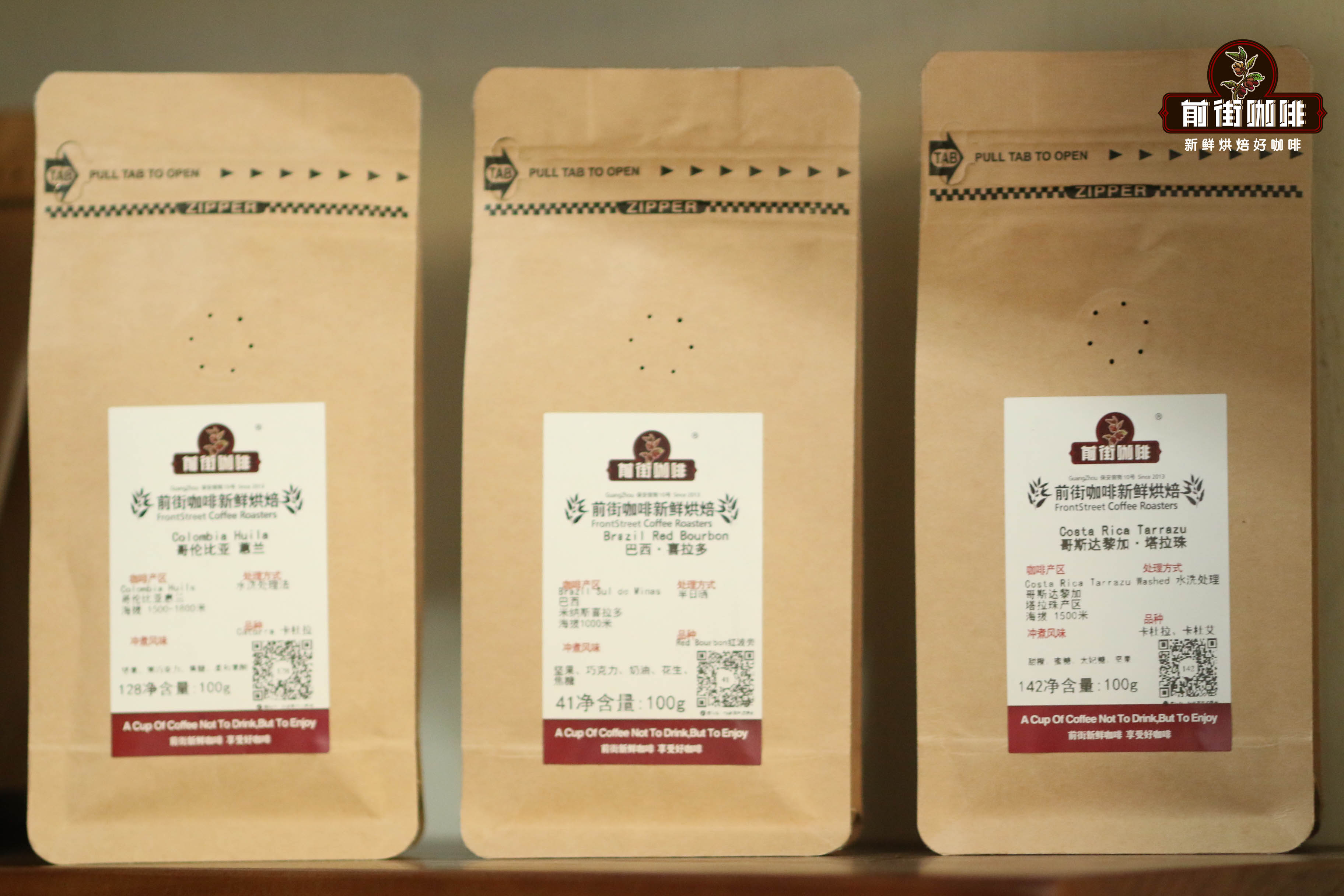
Front Street is also committed to promoting regional flavors and helping consumers better understand the characteristics of coffee beans from around the world. Front Street's regional everyday bean series is an ideal choice. This series is selected by Front Street from thousands of coffee beans in major producing regions and countries. It must both represent the flavor of the region and fit the positioning of an everyday staple. Front Street prices this series very affordably, aiming to promote the spread and popularization of flavor.
In Brazil, Front Street chose Red Bourbon coffee beans from the Cerrado region as the representative everyday bean of the Brazilian region. The Cerrado region has vast highland land suitable for large-scale mechanized operations, so coffee quality is quite stable. This region adopts Brazil's unique "pulped natural" processing method, which greatly reduces the defect rate according to local conditions, ensuring both quality stability and price stability.
In terms of flavor, this coffee bean presents rich notes of nuts, peanuts, dark chocolate, and caramel.
Brazilian coffee processing methods
Due to its vast territory and huge production, Brazil has long used the natural method as its main processing method. The washed method cannot support such a massive scale of coffee bean production, which has also given the industry a fixed impression of Brazil as rough processing (but not all Brazilian coffee is cheap; coffee from well-known estates is also quite excellent in quality).
After 1990, Brazil began promoting the pulped natural method (also called semi-washed). The specific operation is: first remove defective beans and floating cherries through a water tank, then use a machine to remove the skin, pulp, and part of the mucilage, then wash with water, and finally dry in the sun or send to a drying room for drying. The pulped natural method saves more water and labor than the washed method, greatly improving the quality of Brazilian coffee and reversing the negative reputation of rough natural processing over many years.
Brazil has no Grade 1 coffee beans
If you encounter coffee beans labeled as Brazilian Grade 1, they must be fake. Brazil believes that only beans with absolutely no defects can be called NY.1, and beans with absolutely no defects do not exist. Therefore, among Brazilian green beans, the best grade is only NY.2.
The NY grading method is the coffee bean grading system adopted by Brazil. It comprehensively considers bean screen size, defect count, and cup score, with the highest grade being NY.2.
The Brazilian coffee beans on Front Street Coffee (FrontStreet Coffee)'s menu come from around the world. Among them, a coffee bean from Queen's Farm in Brazil has a very high click-through rate. It uses pulped natural processing and has a very prominent sweetness. Why is Queen's Farm Yellow Bourbon so popular?
Queen's Farm (Fazenda Rainha) belongs to the prestigious and respected Carvalho Dias family coffee dynasty. The four major estates under this family have won awards every year since the first Brazil COE competition in 1999, winning more than 12 times in 7 years. In 2004, it even swept the champion, 9th place, 11th place, and other positions. Many estates in Brazil, large and small, take pride in entering this competition, while Queen's Farm has continued to win this award for many years, which shows that its quality far exceeds that of ordinary Brazilian coffee beans.
This is also one of the reasons why Front Street Coffee (FrontStreet Coffee) listed this Brazilian coffee bean. Before listing it, Front Street also conducted corresponding cupping and brewing experiments. After receiving this Brazilian green coffee, Front Street found that its moisture content was relatively low, its texture was solid, and the beans had a strong heat absorption capacity. Therefore, the roasting time had to be controlled steadily and not too hastily. To achieve better flavor expression and fully bring out the aroma, a medium roast was used.
This is how Front Street brewed this coffee bean
Front Street uses a three-pour method to brew this Brazilian coffee bean. First, use 30 grams of hot water to fully wet the coffee bed. The second pour is performed when the digital scale shows 30 seconds.
Start from the center and inject a small stream of water into the bottom of the coffee bed. To keep the penetrating force of the water stream concentrated, the circular movement range should be small, then spiral outward. During this process, try to control the water flow speed well. The stream should not suddenly become stronger or weaker, and it should preferably not be interrupted. Because too little water will prevent the coffee grounds from being fully saturated, resulting in a noticeably rough and astringent mouthfeel and a short finish;
If there is too much water, the hot water in the initial blooming stage will not extract enough coffee components. The extracted coffee will taste relatively one-dimensional, and the acidity extracted in the early stage will be noticeably prominent, thereby masking other flavors. Front Street believes that for a stable circular pouring range, everyone can circle from the inside out, from the outside in, or use center pouring and diffusion. These pour-over gestures can be based on your own habits.
For the third pour, Front Street Coffee (FrontStreet Coffee) suggests carefully observing the drop in water level and starting the third pour just before the coffee bed is about to be exposed. Likewise, start pouring from the center in circles, and do not let the water level exceed the height of the coffee bed. Stop pouring at 1 minute 50 seconds, and finish dripping by 2 minutes.
The taste has obvious sweetness, a faint lemon aroma, rich nutty flavors, and a distinct dark chocolate note in the finish. The overall impression is relatively rounded. It is a coffee bean that can represent the overall characteristics of Brazilian coffee while also showing its own unique liveliness. This is the ultimate reason why Front Street listed this Brazilian specialty coffee bean.
The above content is compiled by CoffeeHunters, a coffee news website.


