







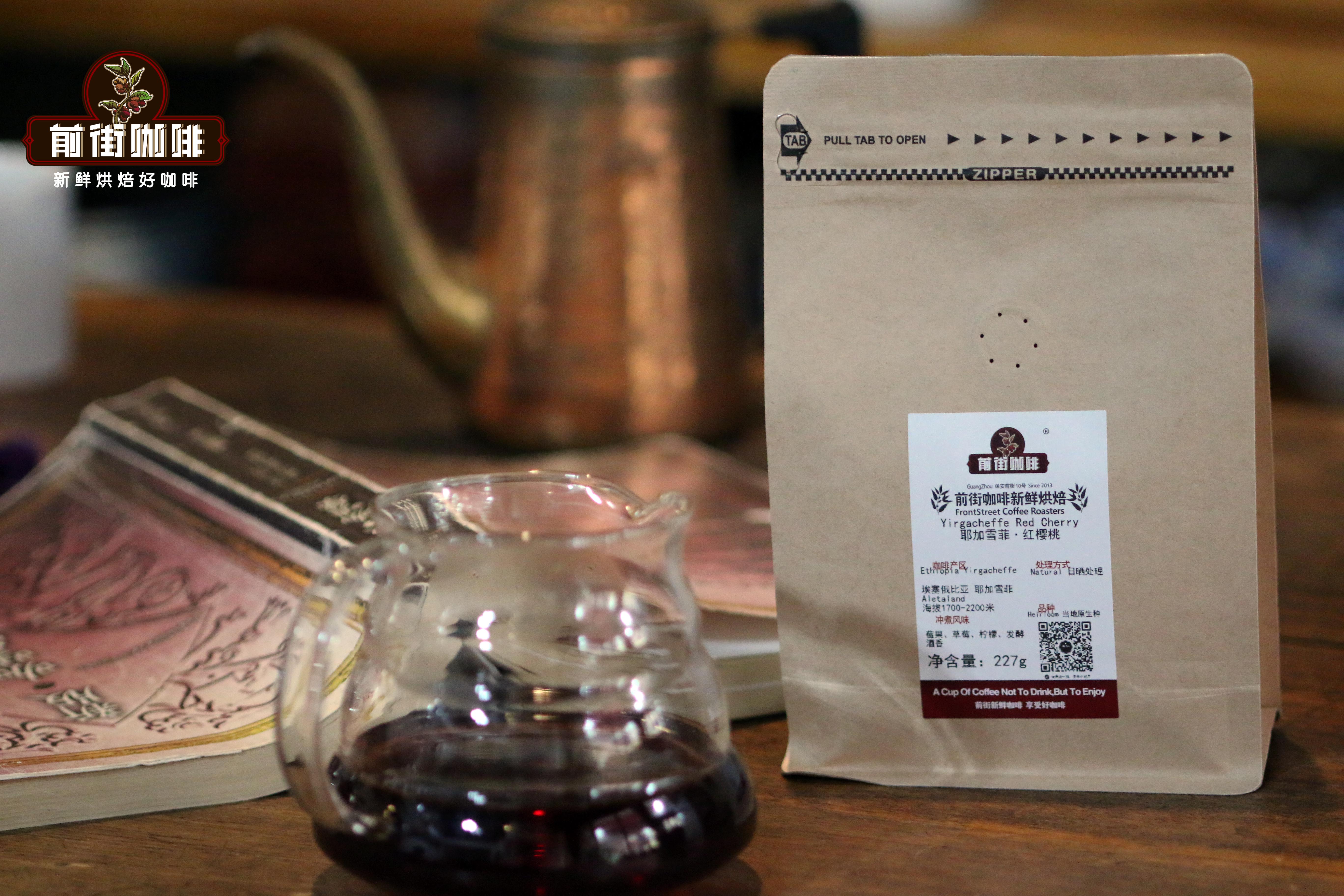
Yirgacheffe is the starting point for many coffee lovers getting into specialty pour-over. Its fresh taste, reminiscent of floral and fruit tea, overturns people's preconceived impression of coffee's bitterness. As the birthplace of coffee, Ethiopia, with its high-altitude terrain, significant day-night temperature differences, and diverse microclimates, nurtures numerous coffee-producing regions with distinct styles. This article will systematically outline the origins of the Yirgacheffe region, its flavor characteristics, the differences between washed and natural processing methods, and the features of several representative Ethiopian bean varieties under Front Street Coffee, and finally provide complete brewing parameters and suggestions for Front Street Yirgacheffe, giving you a comprehensive understanding of this world-renowned African coffee.
For more specialty coffee knowledge, please follow our WeChat public account: FrontStreet Coffee
Front Street has found that many people who become captivated by pour-over black coffee are initially moved by an Ethiopian bean, and Front Street is no exception. When Front Street first tasted Front Street Yirgacheffe coffee, its floral and fruity tea-like texture was completely different from the traditionally perceived bitter coffee image, leaving a lasting impression.
What flavor characteristics do Ethiopian coffee beans possess?
As the world-recognized birthplace of coffee, Ethiopia possesses a vast number of native varieties and extremely high quality standards. Coffee is not only a crucial economic crop and export product for the locals but also carries their long-standing cultural traditions. For this reason, coffee can be considered the greatest pride of Ethiopians.
Ethiopia generally has high elevations, and its vast highland terrain creates extremely ideal climatic conditions and significant day-night temperature differences. In the early morning, mist fills the air and mountain breezes blow; in the afternoon, sunlight is abundant, and after nightfall, temperatures can drop to just over ten degrees Celsius, yet frost does not occur, making it a natural treasure for coffee cultivation. Ethiopia has numerous producing regions, and the varying soils and microclimates, combined with differences in post-harvest processing methods, result in a rich diversity of coffee flavors. In domestic cafes, the most frequently mentioned flavor representatives are likely Front Street Yirgacheffe, Front Street Sidamo, and Front Street Guji, whose unique aromas are widely celebrated in the coffee community.
Take the well-known Yirgacheffe, for example. It was originally just a small town in southern Ethiopia, administratively under the jurisdiction of Sidamo. Later, due to the establishment of washing stations, the local coffee exhibited unique white floral and citrus notes, and Yirgacheffe became an independent representative producing region, rising to fame throughout the coffee world. The Yirgacheffe town in the Gedeo zone is conveniently located downstream of a large lake, with abundant spring and river resources, providing ample fresh water for the washing stations. Front Street also noted that in ancient Ethiopian language, the English word "Yirgacheffe" is composed of two words: Yirga ይርጋ Yərga means calm, to settle down, and Cheffe ጨፌ Č̣äfe refers to marshy wetlands, so Yirgacheffe carries the meaning of "let us settle down in this wetland."
What we commonly refer to as "Yirgacheffe flavor" can be simply summarized as: unique citrus and lemon-like fruit aromas, accompanied by jasmine fragrance, a fresh and bright mouthfeel, distinct layers of acidity, clean with no off-flavors. According to ECX contract regulations, in addition to Yirgacheffe town itself, coffee produced in northern Wenago town, western Gelena Abaya, and southern Kochere town can also be classified as part of the Yirgacheffe flavor region.
As a loyal fan of floral and fruity coffee, Front Street lists several Front Street Ethiopian coffee beans on its menu, with the most representative including Front Street Washed Gotiti Cooperative, Front Street Natural Red Cherry, Front Street Sidamo Hambela, and the flagship Ethiopian coffee, Front Street Washed Yirgacheffe staple beans. Among guests visiting Front Street for coffee, if they want to try a washed fruity coffee, the FrontStreet Coffee barista will first recommend the Front Street Gotiti Cooperative on the bean shelf; if they prefer a full and rounded fruit sweetness, Front Street believes Front Street Natural Red Cherry is more suitable; if they want to experience the fermented aroma of tropical fruits, Front Street recommends Front Street Hambela coffee beans from the Sidamo Hambela region.
It is precisely because Ethiopia has such exceptional natural conditions that coffee trees can be seen almost everywhere, and every household plants them alongside other crops around their homes. Due to limited individual production, farmers typically send harvested coffee cherries directly to processing stations in town for processing, and the final product is named and sold under the processing plant (cooperative) name, such as the Gotiti Cooperative, a well-known local production team. This pastoral-style cultivation model is most common in Ethiopia and provides a basic source of income for many Ethiopians.
The washing techniques of Gotiti Cooperative
The name of Gotiti Cooperative (Banko Gotiti) comes from a small village in the Gedeo region, known for producing some of Ethiopia's finest coffee. Gotiti was originally affiliated with the Worka Woka Cooperative under the Yirgacheffe Coffee Farmers Cooperatives Union (YCFCU), which encompasses 26 cooperatives and 45,000 members. Later, due to Gotiti's mature performance in washing techniques, it became independent in 2012 and grew into a widely recognized team.
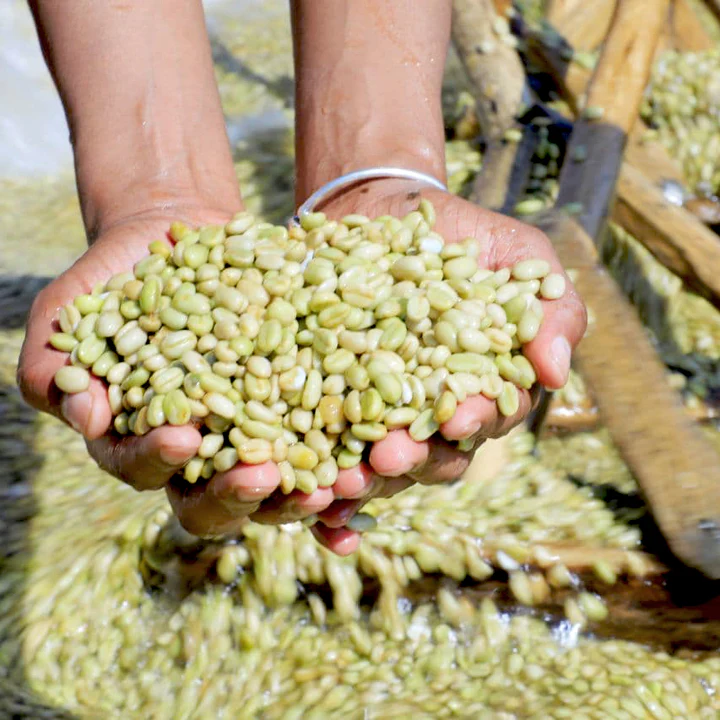
In traditional practices, farmers would harvest coffee cherries and place them directly on terraces or spread them on the ground to sun-dry until moisture content reached about 12%, then hull and bag them. Coffee beans processed this way are prone to earthy flavors, over-fermentation, and rotten fruit notes, and the method is very time-consuming. To improve the defective flavors caused by sun-drying and enhance production efficiency, Ethiopia introduced washed processing technology from Central and South America. Cooperatives sort, wash, ferment, remove the skin and mucilage from purchased coffee cherries, and then place them on raised beds to dry. Every step must be handled properly to ensure the final coffee quality.
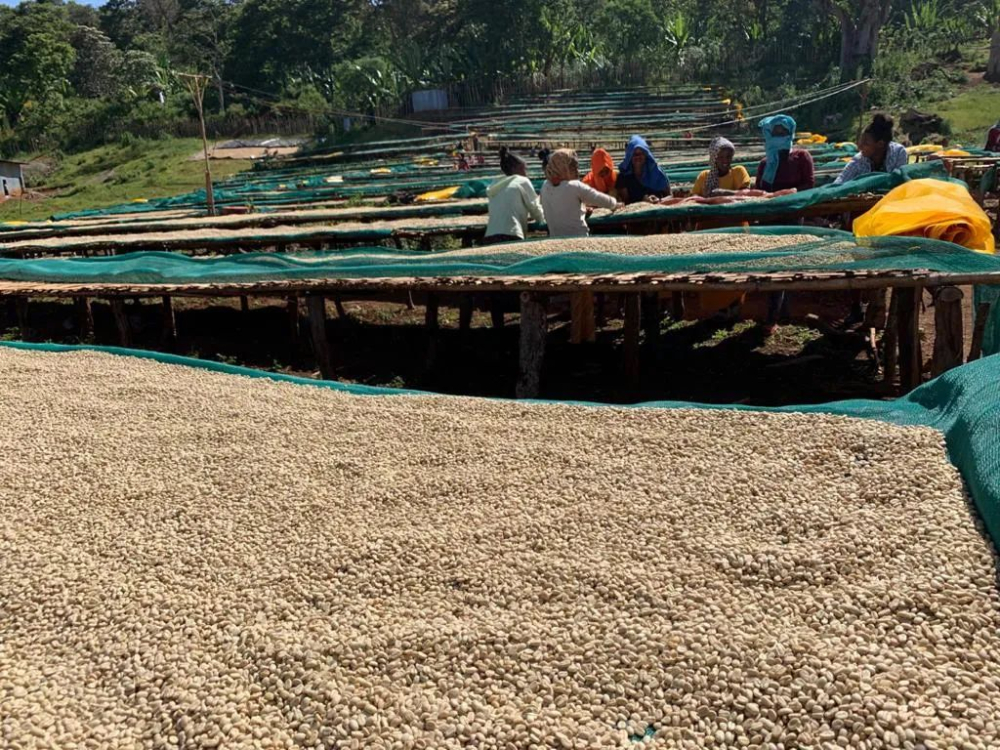
Washed processing allowed Yirgacheffe coffee to leave behind its previous inconsistent quality. After roasting, it not only presents fresh citrus notes and elegant white floral aromas but also becomes brighter and more refined overall, leaving a deep impression. Thus, Yirgacheffe became independent from the Sidamo region and grew into the renowned producing region it is today in the coffee world.
What flavor characteristics does natural Yirgacheffe have?
Ethiopia's high altitude, low rainfall, and long sunshine hours make it very suitable for drying green coffee beans using the natural method. The so-called "natural method" involves directly drying harvested ripe coffee cherries. During the drying process, the sugars and aromas in the fruit pulp are well-preserved and gradually seep into the green beans. At the same time, the longer the natural processing time, the more complete the fermentation.
Since the natural method allows the coffee fruit to dry naturally, the coffee beans mature inside the fruit without interference from the external environment. Therefore, naturally processed coffee beans amplify their inherent flavors, presenting distinct tropical fruit notes, full-bodied fermentation, and sweetness. The Front Street Sunflower Warm Sun espresso blend launched by FrontStreet Coffee incorporates 30% naturally processed Front Street Yirgacheffe Red Cherry coffee beans, carrying a berry-like sweet and tart charm.
The name Red Cherry coffee originates from the 2007 "Red Cherry Project," led by the then-largest Dutch coffee bean trader Trabocca BV, aimed at encouraging Ethiopian farmers to produce higher-quality coffee beans. The project primarily targeted high-altitude regions in Ethiopia such as Yirgacheffe, improving washing, semi-washed, and natural processing techniques, and bringing in professional cuppers. During the harvest season, different microclimate areas were assigned their own harvest volumes, and only 100% ripe red coffee cherries were to be picked. The appropriate ripeness combined with more refined processing techniques led to a qualitative leap in coffee flavor, and farmers received correspondingly more generous compensation, creating a win-win situation for both producers and consumers.
Brewing suggestions for Front Street Yirgacheffe
After roasting, coffee beans need a 4 to 7 day resting period for degassing before entering their optimal flavor stage. As storage time extends, coffee aromas accelerate their loss, and the flavor and mouthfeel noticeably decline. To ensure everyone drinks coffee at its peak flavor, Front Street only ships beans freshly roasted within 5 days, and fresh coffee beans are also more conducive to extracting the excellent flavors of Front Street Yirgacheffe.
Front Street Yirgacheffe is light-roasted, and the coffee beans are relatively hard, requiring hot water at 92°C to 93°C to fully awaken the floral and fruity notes. For grind size, Front Street recommends medium-fine grinding (78% passing through a Chinese standard No. 20 sieve). If ground too coarse, the rich substances cannot be extracted, and the brewed coffee will taste thin; if ground too fine, it is prone to over-extraction at high temperatures, causing bitterness. To highlight the rich and captivating aroma of Front Street Yirgacheffe, Front Street uses a V60 dripper for brewing.
Brewing parameters for Front Street Yirgacheffe:
Dripper: V60 Water temperature: 92-93°C Coffee dose: 15g Coffee-to-water ratio: 1:15 Grind size: fine granulated sugar (78% passing through a No. 20 sieve)
For the first pour, add 30g of water for a 30-second bloom, then pour 95g (electronic scale shows about 125g), completing the pour in about 1 minute. When the water level drops to two-thirds of the coffee bed, pour the remaining 100g (electronic scale shows about 225g), completing the pour in about 1 minute 35 seconds. Drip completes at 2'10", remove the dripper, and extraction is complete.
The above content is compiled by CoffeeHunters, a coffee news website.


